




Monaco Philosophical Meetings: Athletic body, aesthetic body
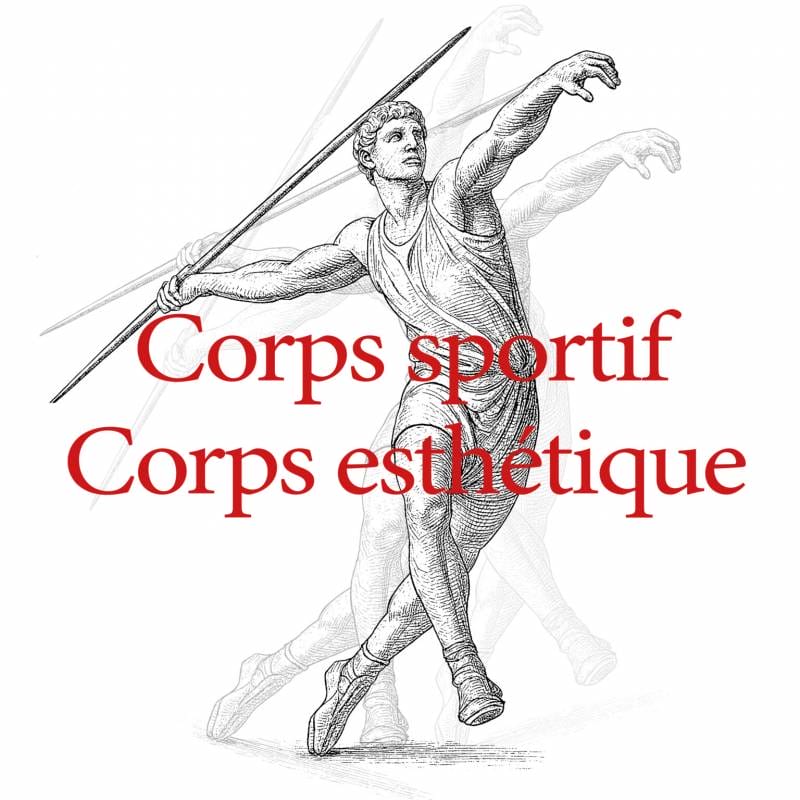
Monaco Philosophical Meetings continue with the topic Athletic body, aesthetic body on 12 March 2026 at 7 pm at the Princess Grace Theatre.
Passing through the Dipylon Gate, in northwest Athens, one arrived, after barely two kilometers, at the Academy that Plato had opened after the death of Socrates. Within the grounds were a large garden, several altars, porticoes, a statue of Apollo, a sanctuary dedicated to Athena, a few dwellings, classrooms, and a gymnasium. Everything seemed devoted to education, the very layout of which suggested that it must be inextricably religious, civic, physical, and intellectual. Coming from all over the Mediterranean, the students—including some women, as Diogenes Laertius attests—fulfilled their religious duties, attended theoretical lectures, learned gymnastics, wrestling, pankration, throwing, running, and, under the porticoes, places for meeting and discussion, they completed their civic education through the art of public debate. These activities were all driven by the same ideal: that of balance—balance between what one asks of the gods through offerings and what one can obtain in return, balance between physical development (gymnastikē) and intellectual development (mousikē), balance between the different parts of the soul within the body (to simplify: reason/head, courage/heart, desire/belly), balance between the components of the city (the head is associated with the rulers, the heart with the warriors, the belly with the people), which becomes the ideal city as balance becomes harmony, and whose name will be justice.
From its Greek origins, philosophy thus posits an equivalence between the athletic body and the enlightened mind, each tempering the other. This is in the sense that purely gymnastic/athletic activity can tend toward strength or brutality, while music, poetry, rhetoric, dialectic, and other “mental arts,” practiced in isolation, could lead to weakness or a “tenderness” devoid of the energy necessary for action, including illocutionary action. Just and beautiful is the action that maintains balance, that allows the intellect to measure and shape athletic development, and that ensures the well-trained body, harmonized by regular exercise, fosters order, effectiveness, and coherence of thought. The harmony of the body is the harmony of the mind, and the harmony of minds is political harmony, the harmony of the city—an ideal that will transform into a dystopia as soon as the body is perceived, with Christianity, as a site of sin, a receptacle of shameful desires, deserving of punishment, humiliation, injury, and mortification.
The harmony of the body does not only have an ethical and political dimension. Classical Greek statuary alone demonstrates that it owes its existence to a kind of mathematics of proportions, which makes it a reflection of a divine or cosmic order, and immediately renders it “aesthetic.” Thus, to theorize the aesthetics of the nude body and perfect beauty, the sculptor Polyclitus (see The Doryphoros) established extremely precise principles of proportion in the Canon (5th century BC): the head is seven times the height of the body, the legs and torso are the same height, three times that of the head, the knees and feet are twice the height of the head, as is the width of the shoulders, the pelvis is two-thirds the length of the torso, the thighs are two-thirds the length of the legs, and so on. A century later, Lysippos modified these rules, striving to make the human figure more slender and elegant. And Leonardo da Vinci (see Vitruvian Man) defined the canon in terms of the golden ratio, or golden section (the unique ratio between two lengths a and b such that the ratio of the sum of the two lengths (a + b) to the larger (a) is equal to the ratio of the larger (a) to the smaller (b)).
In each case, defining the (representation) of “beauty” means defining the most harmonious relationship between the parts of a whole and the whole itself—a relationship that can be found in nature, in the dimensions and proportions of a tree, the arrangement of leaves on a stem or seeds in the heart of a sunflower, the spirals of seashells, and to which the arts, including architecture, have accustomed the eye.
The athletic body, subjected to the regularity of effort, weight training, and discipline, could therefore diverge from the aesthetically pleasing body, especially since each sport requires specific attention to the development of particular muscles and body parts, meaning that the body of a high jumper or discus thrower is not the same as that of a weightlifter or marathon runner. It should be noted, firstly, that the aesthetically pleasing body, associated with painting, cinema, and fashion, is subject to the constant rotation of criteria—so much so that a Martian who suddenly landed on Earth and was shown nudes by Rubens, Bonnard, or Modigliani, or a few films by Fellini, Pasolini, or Fassbinder, would not truly know what ideal beauty is.
Robert Maggiori