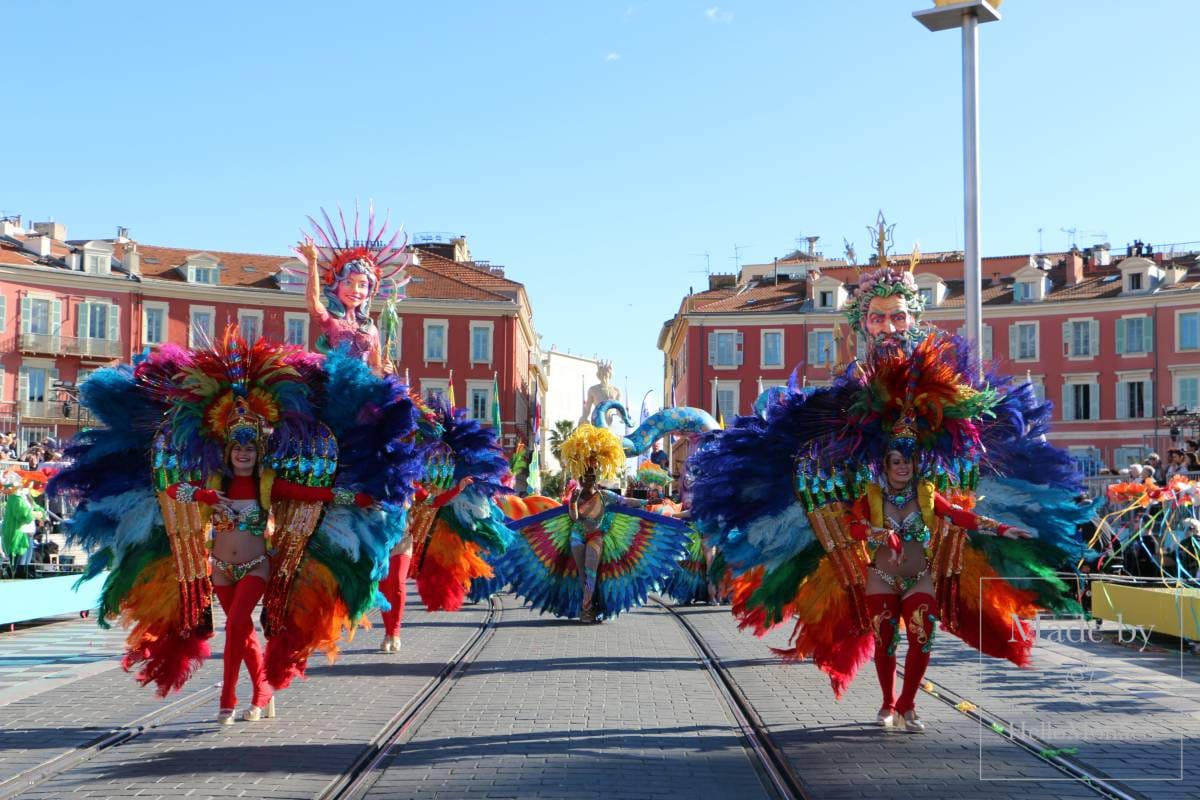


The French Riviera is trading its quiet Winter elegance for spectacle, satire, and exuberant celebration. In 2026, the Nice Carnival is once again transforming the city into a vast outdoor theatre of music, artistry, and civic pride. This year’s festivities, running from February 11 to March 1, embrace a powerful theme, honouring influential women and feminine strength, while maintaining the humour and pageantry that have defined the event for generations.
A Parade Through History and the Heart of the City
The festivities began with the Carnavalina, the free opening parade that threads its way through central Nice. Starting near the Notre-Dame Basilica, performers, musicians, and dancers flowed down Avenue Jean-Médecin before reaching the seafront and Théâtre de Verdure.
This route symbolically connects the commercial heart of Nice to the Mediterranean shoreline, linking modern celebration with a tradition dating back centuries.
For hours, the procession turned the city into a moving stage: drummers set rhythmic pulses, dancers twirled in sequined costumes, and towering floats rolled past cheering spectators.
Valentine’s Day Added a Romantic Glow
This year’s opening parade coincided with Valentine’s Day, and the coincidence infused the spectacle with unexpected romance. Shades of red dominated costumes and face paint, confetti drifted through the air, and couples paused to kiss between bursts of music and laughter.
The carnival’s playful atmosphere briefly doubled as a celebration of love, a reminder that communal joy can take on new meaning.
Carnival Symbols and Local Heritage
Among the performers, one figure captured special attention: a large bat character known locally as the ratapignata. A traditional carnival symbol in Nice, the bat represents satire, civic voice, and renewal. In folklore, it emerges from the shadows to herald the return of light and spring.
Such characters reflect the carnival’s deeper role beyond entertainment, serving as a living expression of Niçois identity.
Local cultural groups continue to sustain these traditions. Folk troupes featuring dancers, musicians, and singers help preserve regional customs while introducing them to new audiences.
“Long Live the Queen”: A Theme of Feminine Power
Breaking from the long-standing tradition of a solitary Carnival King, the 2026 edition crowned a Queen as the symbolic ruler. The theme, often translated as “Long Live the Queen,” paid tribute to influential women, historical figures, cultural icons, and fictional heroines alike.
Illuminated floats featured artistic tributes to figures such as Frida Kahlo and Simone Veil, alongside contemporary references including the #MeToo movement, reinforcing messages of equality, resilience, and freedom of expression.
During the parade, young participants delivered speeches encouraging girls to think independently, challenge injustice, and stand firm in their convictions, giving the celebrations a modern, socially conscious dimension.
Light, Music, and Monumental Floats After Dark
Nightfall brought the illuminated parades, where glowing floats rolled through Place Masséna and the Promenade des Anglais lit with vibrant LEDs and theatrical lighting. Feathers shimmered, satin costumes gleamed and rhythmic music reverberated through the crowds.
The atmosphere felt both festive and theatrical, part street party, part living artwork.
Signature Events
Key highlights throughout the carnival season include the Battle of Flowers, a uniquely Niçois tradition where performers toss fresh flowers to the crowd.
Never to miss are the Illuminated night parades, glowing floats and live performances after dark.
The Corso d’Aqui was a wonderful daytime parade celebrating regional folk culture. And Lou Queernaval is France’s first LGBTQ+ carnival celebration, open to all.
It all culminates in the Finale & fireworks, closing ceremonies and the symbolic burning of the carnival effigy. And there is the Grand Carnival Swim, a spirited seaside tradition marking the festival’s end.
Visitors dressed in full costume can often attend parades free of charge, adding to the immersive, participatory spirit of the event.
There’s still an opportunity to make merry:
Wednesday 25 February is the Battle of Flowers (2:30 p.m.).
On Friday 27 February is Lou Queernaval, open to all (8:30 p.m.). Free admission upon reservation.
And on Saturday 28 February there is another Battle of Flowers at 2.30pm, with the last illuminated parade at 8.30pm. Then follows the burning of the King and fireworks at 10.45pm on the Quai des États-Unis with Free admission.
And finally on Sunday 1 March is the Grand Carnival Swim at the Opéra Plage from 11 a.m. to 6 p.m.
A Carnival That Blends Tradition with Modern Voice
The Nice Carnival remains one of the world’s most distinctive winter festivals. Its monumental papier-mâché figures, often towering 10 to 12 metres (33–40 feet) high and weighing several hundred kilograms to over a ton once mounted on their motorized bases, dominate the parades with theatrical presence. Crafted by specialized artisans over many months, these oversized caricatures embody satire and storytelling on a grand scale. Alongside their flower-filled parades and humorous themes rooted in centuries-old tradition, the event continues to thrill beyond all imagination.