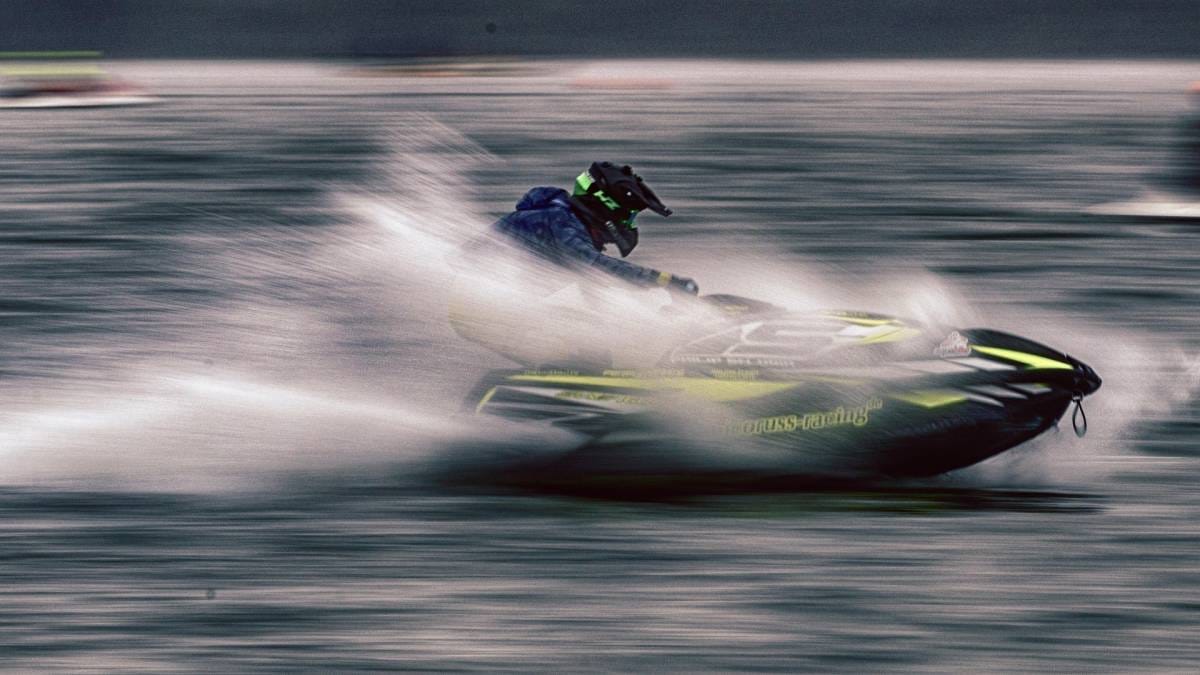


History has just arrived as a spray of seawater, the scream of an engine, and a rider leaning into a turn at nearly 100 km/h.
Somewhere between a wave crest and a finish buoy, Lisa Caussin-Battaglia wrote a new page of Monaco’s sporting story. And she did it on a jet ski.
A Breakthrough for Monaco
At the World Cup Mohammed VI of Jet Ski in Agadir, Morocco — one of the most competitive international events in the discipline — the Monegasque athlete delivered a performance that rippled far beyond the racecourse.
Competing in the Runabout 1100 women’s category, Caussin-Battaglia captured gold, claiming the top step of the podium. She didn’t stop there, also capturing the Silver medal in the Runabout 1100 mixed category and 7th place in endurance, finishing as the top female rider among 18 competitors.
Those numbers tell a story of consistency, but the real headline is larger; it marked the first female podium in runabout racing for Monaco.
For a Principality known for Formula 1 engines echoing through its streets and world-class sailing regattas in its harbour, this was a new kind of roar — one coming from the sea.
Runabout: Where Speed Meets Strength
To understand the achievement, it helps to know the sport. Runabout racing is the heavyweight division of jet-ski competition. Unlike stand-up watercraft — where riders balance like surfers — runabout machines are larger, seated personal watercraft built for raw power and endurance.
A professional racing runabout can exceed 100 km/h, but speed alone doesn’t win races. Pilots must battle violent impacts with waves, tight buoy turns requiring surgical precision and intense physical strain on arms, core, and legs.
Every lap is part motocross, part endurance sport and part chess match with the ocean. By the end of a race, riders are often more exhausted than after a short-distance triathlon.
Born Into a Sea-Loving Family
For Caussin-Battaglia, the ocean was never just scenery. Sport runs deep in the family tide.
Her grandfather, Gérard Battaglia, represented Monaco in sailing at the 1960 and 1976 Olympic Games, carrying the Principality’s colours on the world stage.
Her sister, Coline Caussin-Battaglia, has also made waves internationally in coastal rowing, earning medals in Mediterranean beach competitions.
But Lisa chose a faster relationship with water. Before transitioning to runabout racing, she already had an impressive résumé in stand-up jet-ski competition, including a world vice-champion title.
In other words: this latest triumph was not a sudden splash; it was the crest of a long-building wave.
Monaco’s Small Size, Big Sporting Echo
With fewer than 40,000 residents, Monaco has a unique relationship with sporting success. Every athlete competing internationally carries a piece of national identity far larger than the country itself.
Formula 1 may dominate the headlines, but moments like this broaden Monaco’s sporting horizon.
Caussin-Battaglia’s performance shows that even in niche disciplines like jet-ski racing, the Principality can carve out its place.
Her podium finish also coincided with a symbolic step for the sport: a partnership agreement between Monaco Team PowerSports and Agadir’s jet-ski club, strengthening ties between the two racing communities. Sometimes sport builds bridges faster than diplomacy.
More Than a Medal
In motorsports — on land or water — female athletes are still underrepresented. Every major result therefore carries an additional weight: visibility.
That’s why Caussin-Battaglia’s podium matters. It’s not just a medal. It’s a marker.
When Lisa Caussin-Battaglia crossed the finish line in Agadir, she didn’t just win a race. She proved that even a tiny country like Monaco can send powerful waves across the world of jet-ski racing.