
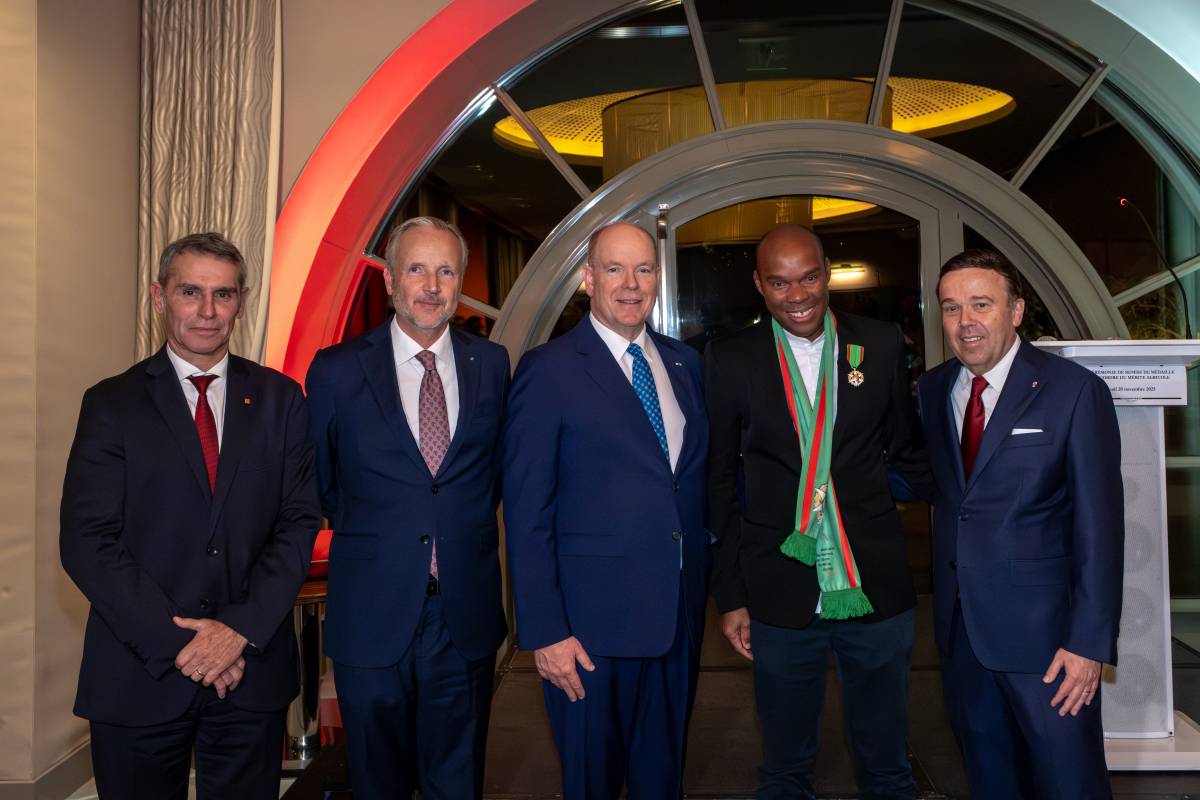


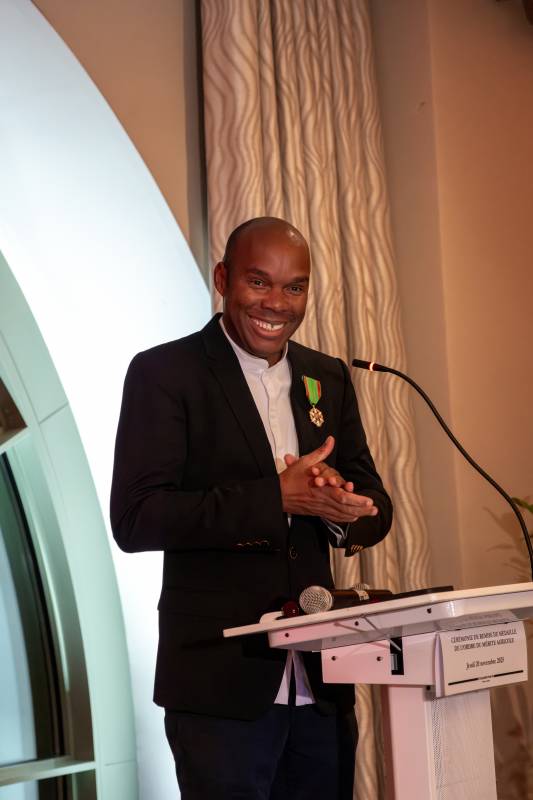
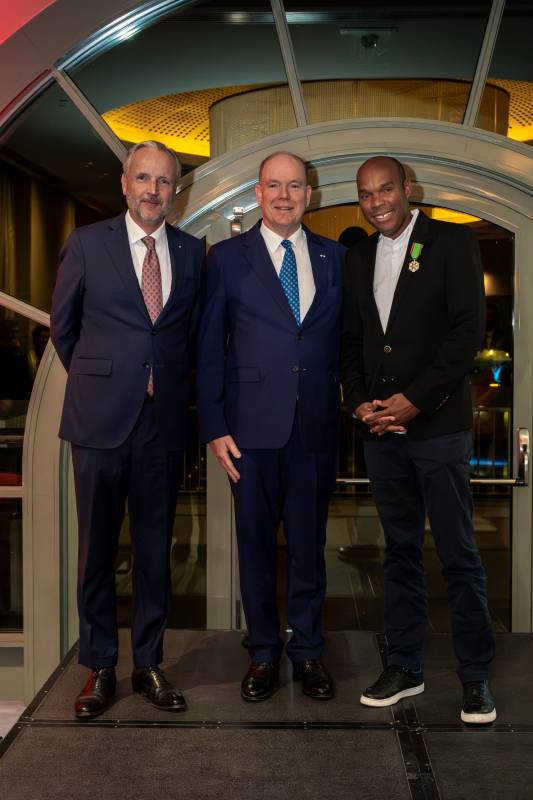
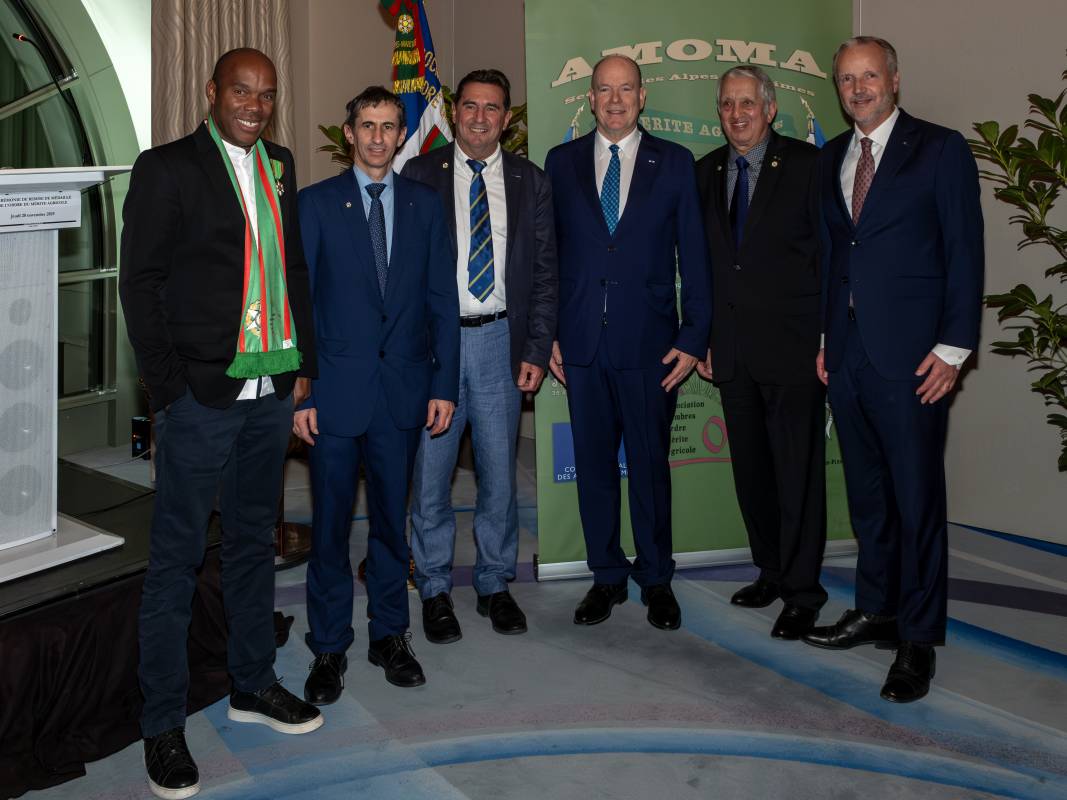
On 20 November, in a ceremony held under the auspices of French diplomatic and Monegasque dignitaries, Chef Marcel Ravin received the Ordre du Mérite agricole. The decoration, colloquially known as « le Poireau » (the Leek) is awarded to men and women who have rendered “outstanding services to agriculture.”
The award is a meaningful addition to Ravin’s growing list of accolades. Already honoured with the Légion d’Honneur since 2017, he leads the kitchens of both Blue Bay and Elsa at Monte-Carlo’s resorts, Blue Bay boasting two Michelin stars and Elsa another.
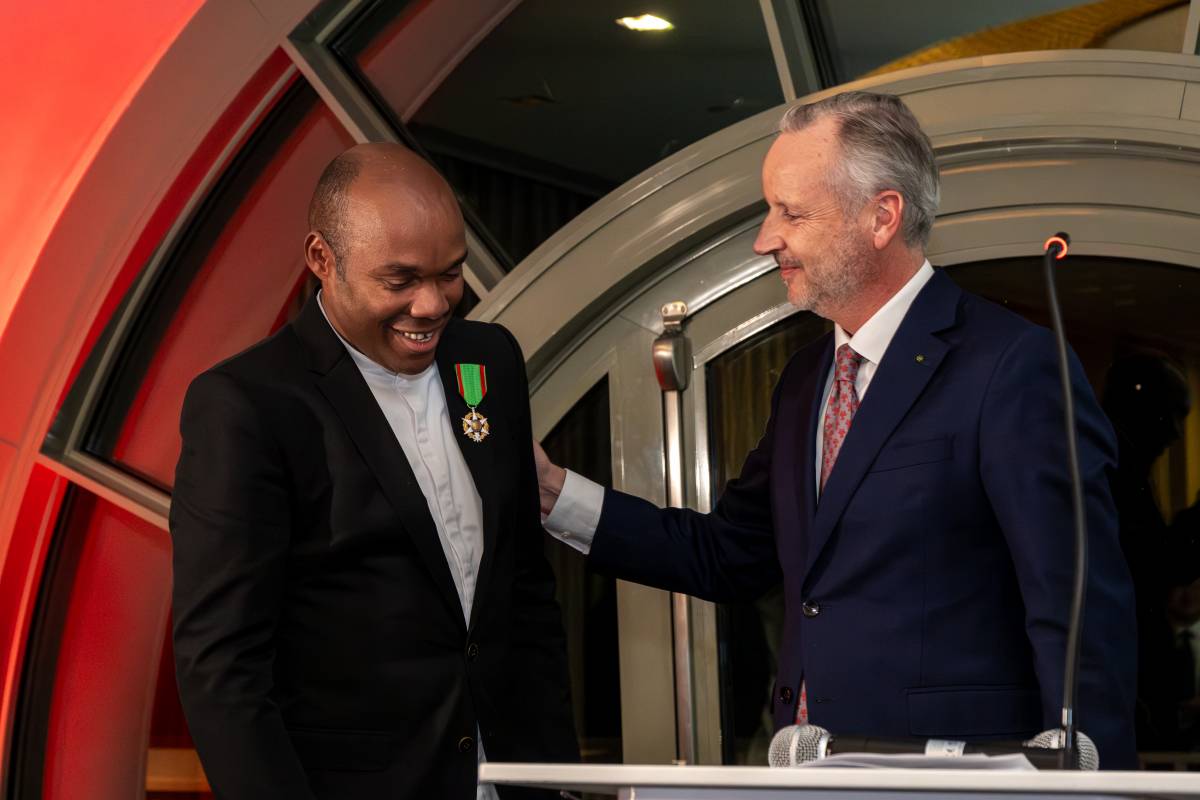
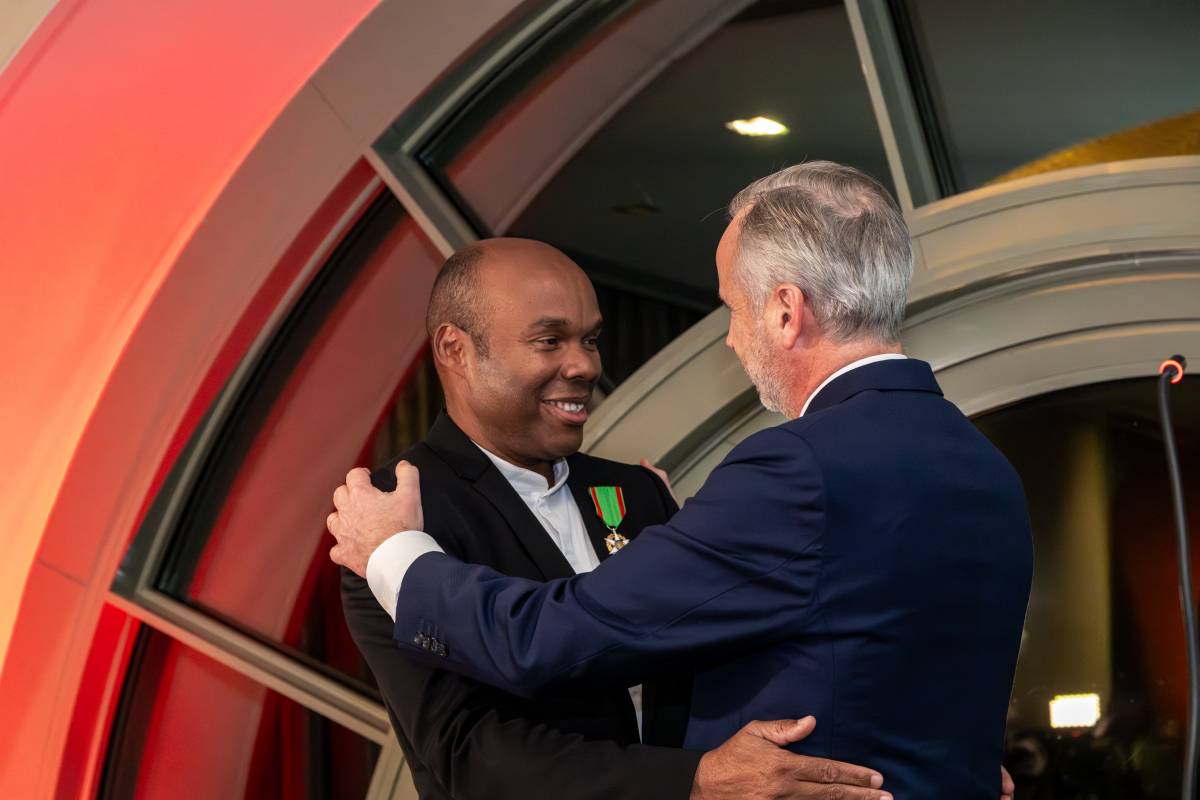
As the French Ambassador to Monaco, accompanied by members of the Principality and the Order, presented him with the insignia, and as Monaco’s own sovereign watched on, the honour felt like more than a career milestone. For Ravin it was a “return to the land, to those who work it, to those who built me.”

A Life Rooted in Soil: Caribbean Soil Then Mediterranean Shores
Born in Martinique, Marcel Ravin’s early memories are steeped in a life far removed from the marble-floored kitchens of Monaco. His childhood, spent between a humble rural home, gardens of sweet potatoes and cassava, open-fire cooking and local produce, instilled in him a respect for nature and provenance.
After arriving in France at age 20, Marcel Ravin’s culinary journey took him through renowned kitchens across Europe. But in 2005, he landed at the Monte-Carlo Bay Hotel & Resort, where he would begin to reshape his identity as a chef.
At Blue Bay, he weaves together the luminous flavours of the Caribbean with Mediterranean sensibilities, a creative signature defined by bold tastes and deep respect for seasonal produce, sustainable fishing, and local sourcing.
His cuisine has been described as raw yet sophisticated and deeply informed by memory, identity, and commitment to responsible gastronomy.
“Poireau” Means Much More Than a Ribbon
The Ordre du Mérite agricole was created on 7 July 1883 by the then Minister of Agriculture in France, with the explicit aim of honouring those who contributed significantly to agriculture, at a time when rural labour made up a huge portion of the nation’s population.
Often ranked just behind the Légion d’Honneur, it remains a prestigious recognition. The narrow imperial-green ribbon of the medal, reminding many of a leek stalk gave it its affectionate nickname, “le Poireau.”
By granting this honour to a world-class chef like Ravin, better known for haute gastronomy than for tilling fields, France signals a broader recognition: that modern gastronomy, when grounded in respect for produce, seasonality and sustainable sourcing, is inherently connected to agriculture itself.
In the words of the Ambassador who presented him the medal: “It is through tables like yours that our agriculture regains meaning, finds a future, and is pulled upward. Your high standards push our producers to always do better.”
More Than a Kitchen: A Garden, a Mission, a Heritage
Ravin’s commitment extends well beyond the plate. At the Monte-Carlo Bay resort, he has helped institute short supply circuits, favouring local producers, seasonal products, and sustainable fishing, bridging haute cuisine with ethical responsibility.
This philosophy finds its purest expression in his “marine-garden” concept at Elsa, where Mediterranean seafood meets conscious sourcing and minimal intervention.
For the chef, receiving the Ordre du Mérite agricole is more than personal recognition. It is a tribute to his origins, to the soil of Martinique, to the hands that plant and harvest, to the notion that food is memory, culture, and community.
It offers a model for future chefs: The recognition of a chef, not a farmer, scientist or politician, by an agricultural order underscores a growing understanding: that chefs today are frontline ambassadors for farming, sustainability and food ethics.
Marcel Ravin’s “Poireau” is a signal that the future of gastronomy may lie not just in Michelin stars, but in soil turned with care, produce harvested responsibly, and tables that honour those who make food possible.