



This Saturday, March 28, the Principality stepped into a moment unlike any in its recent history. From the Place du Palais to Stade Louis II, Pope Leo XIV moved through Monaco to a continuous wave of applause, an apostolic visit marked by emotion.
By eight o’clock, the Place du Palais was already at capacity. Families stood shoulder to shoulder with school groups, children lifted high for a better view. Flags, Monegasque and Papal, shifted above the crowd, phones raised in quiet anticipation. The air carried that particular stillness that precedes something important, even before it begins.
Then, just after nine, the first cannon shot broke across the Rock from Fort Antoine. A second followed, then a third, twenty-one in total. It was the signal: the Pope had arrived.
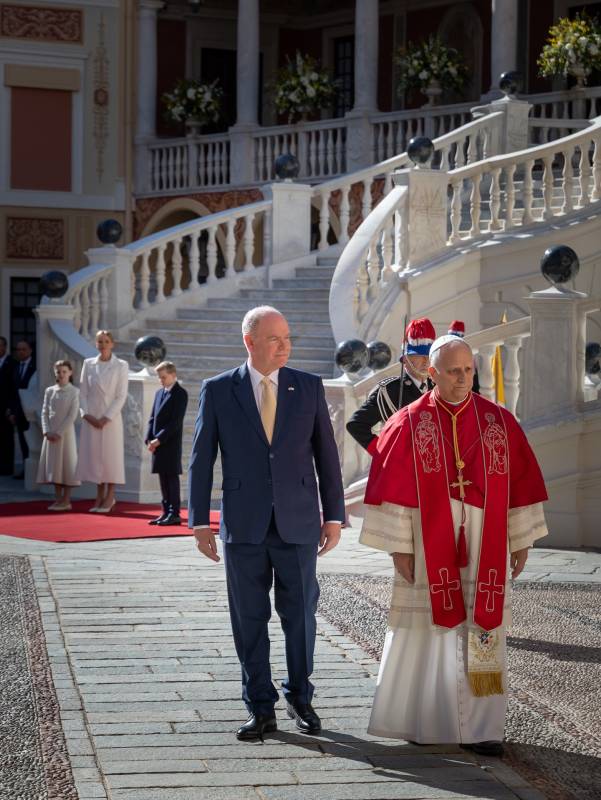
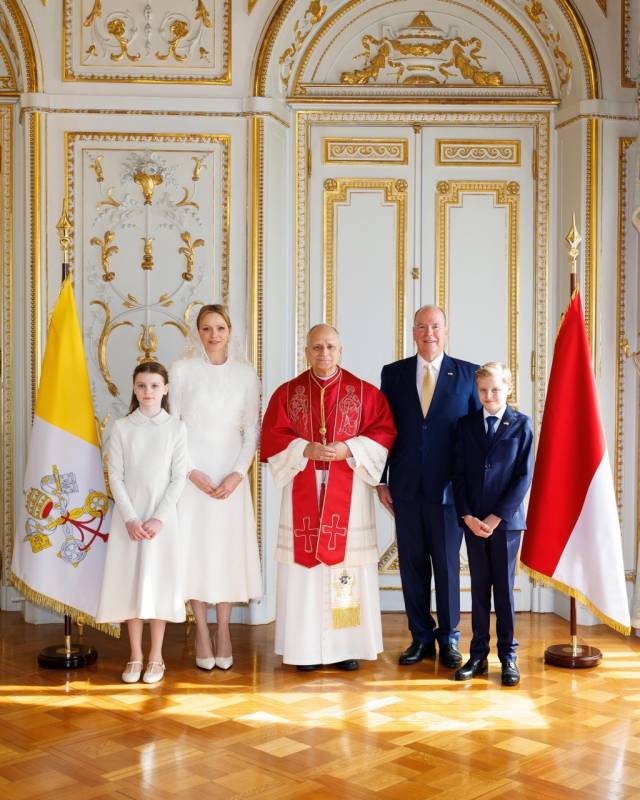
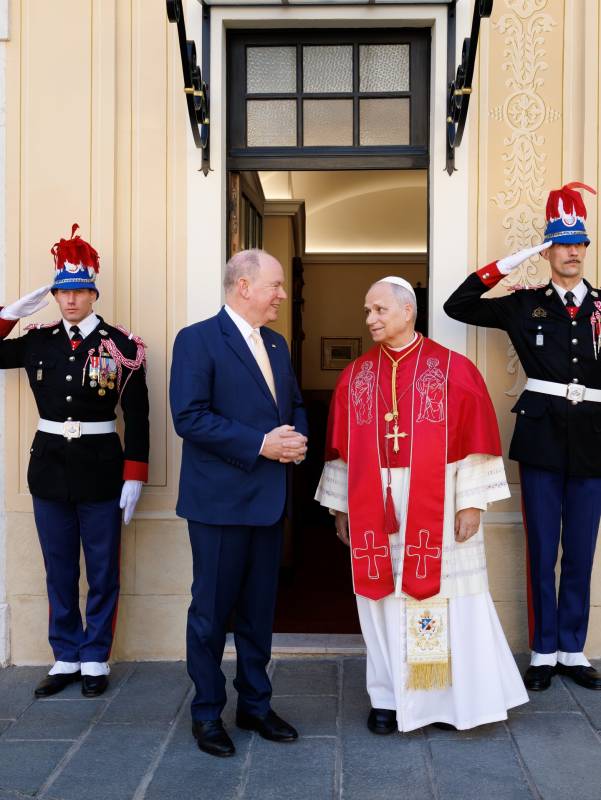
Welcomed by Prince Albert II of Monaco and Princess Charlène of Monaco, he crossed from the heliport toward the Palace. In the Cour d’Honneur, the choreography was exact, Carabiniers, firefighters, orchestra, each element in place. The Papal March rose against the ochre façades, followed by the Monegasque anthem, as the crowd, watching on screens and in silence, absorbed the moment.
The Balcony: History and Scale
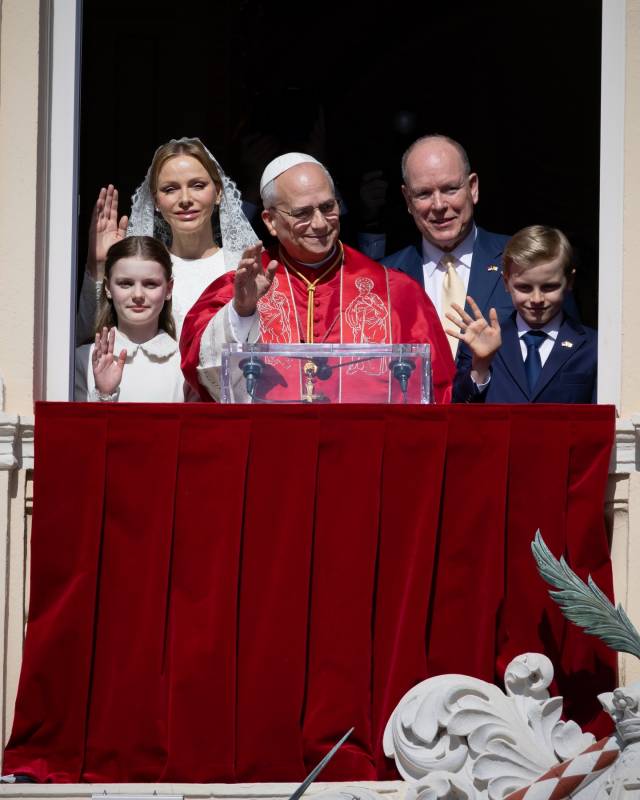
After a private meeting and an exchange of carefully chosen gifts, including a gilded 18th-century monstrance and a work tracing links to his Monegasque lineage, the three figures appeared on the balcony. The response was immediate. Prince Albert II spoke first, placing the moment within Monaco’s longer arc.
“It was out of fidelity to the Pope that the first Grimaldi lords left Genoa to settle on this Rock,” he recalled, drawing a direct line from the 13th century to the present, before pointing toward shared commitments, peace, responsibility, and the protection of the planet.
Then the Pope stepped forward.
Speaking in French, he chose simplicity over grandeur, offering a line that travelled instantly through the crowd:
“In the Bible, as you know, it is the small who make history.”
It was both a remark and a positioning, of Monaco, and perhaps of the day itself.
The Cathedral: A Moment of Stillness
At the Cathedral of Our Lady Immaculate, the tone shifted from visibility to reflection. The Liturgy of the Hours was celebrated in a setting of deliberate stillness, in the presence of Archbishop Dominique-Marie David. After the movement of the morning, this was a moment that re-centred the visit, quiet, structured, and unmistakably spiritual.
The Princely Presence
The role of the Princely Family was not confined to protocol. It anchored the visit.
Prince Albert II’s remarks extended beyond history into direction. He described a Principality shaped by faith yet conscious of the demands of the present, where balance must be actively maintained, not assumed.
“Our faith is our strength,” he noted, not as a declaration of identity alone, but as a framework for decision-making in an uncertain world.
It was a positioning that aligned closely with the message being delivered alongside him.
A Message That Went Beyond Ceremony
Beyond the symbolism, Pope Leo XIV delivered something far more pointed: a diagnosis. Speaking with unusual directness for a first European visit, he challenged the moral architecture of the modern world, questioning whether prosperity without responsibility can ever be justified.
A Principality Called to Purpose
In that context, the message became more specific. Monaco, he suggested, is not defined by its size, but by its choices.
He described the Principality as capable of becoming a place where influence is translated into responsibility, a setting in which economic success, social awareness and moral clarity converge.
It was a subtle but meaningful shift: Monaco not only as a place of privilege, but as a platform.
Youth at Sainte-Dévote: A Different Energy
At the Church of Sainte-Dévote, the tone shifted. Pope Leo XIV spoke directly to a young generation navigating distraction and pressure, warning against the illusion of belonging measured in “likes” and fleeting identities.
His challenge was clear: in a world that moves too fast to reflect, depth must be chosen.
Monaco, he suggested, could become “a laboratory of solidarity”, a place where belief is not abstract, but lived, and where even a small state can project meaning beyond its borders.
The Crowd: Presence Over Spectacle
What gave the day its real meaning was also its participants.
From the earliest hours, people had arrived from across the region, families, volunteers, young couples, some carrying children, others simply waiting.
Along the route, moments unfolded, a child lifted for a blessing, a pause, a glance, a gesture returned. Small details, but ones that defined the day.
A Stadium Transformed
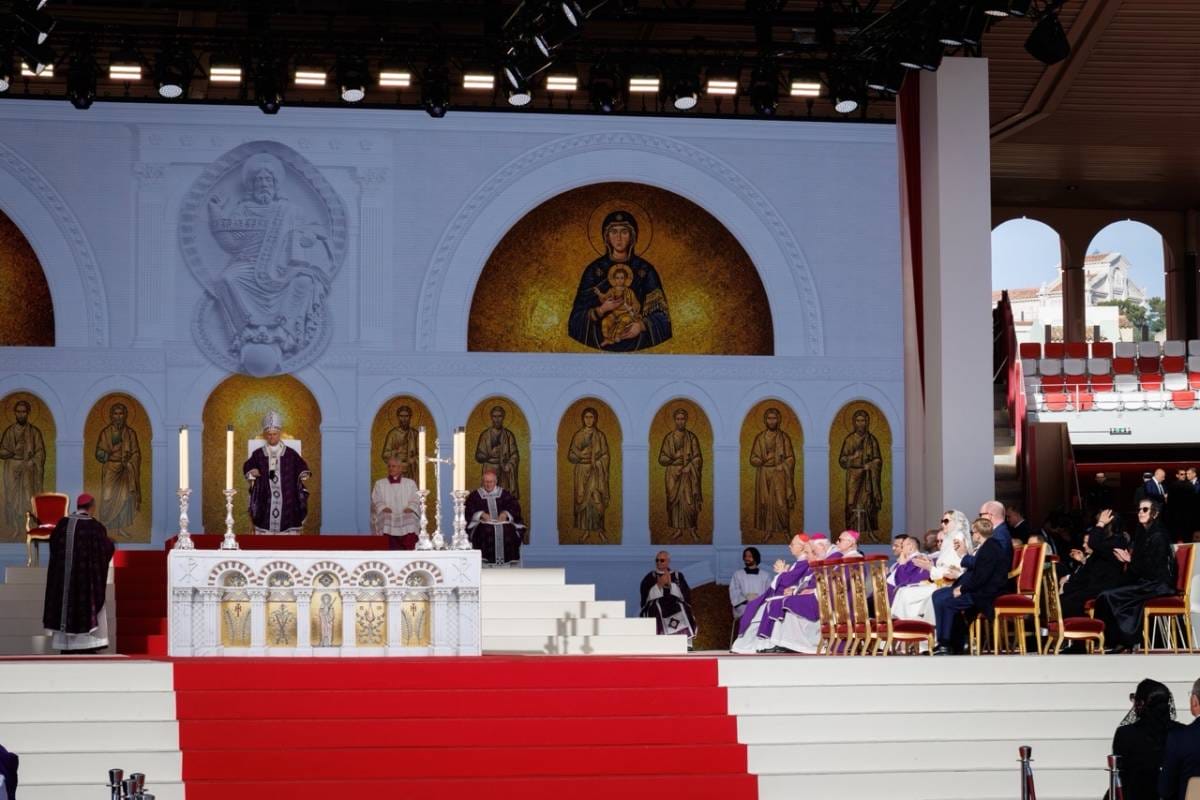
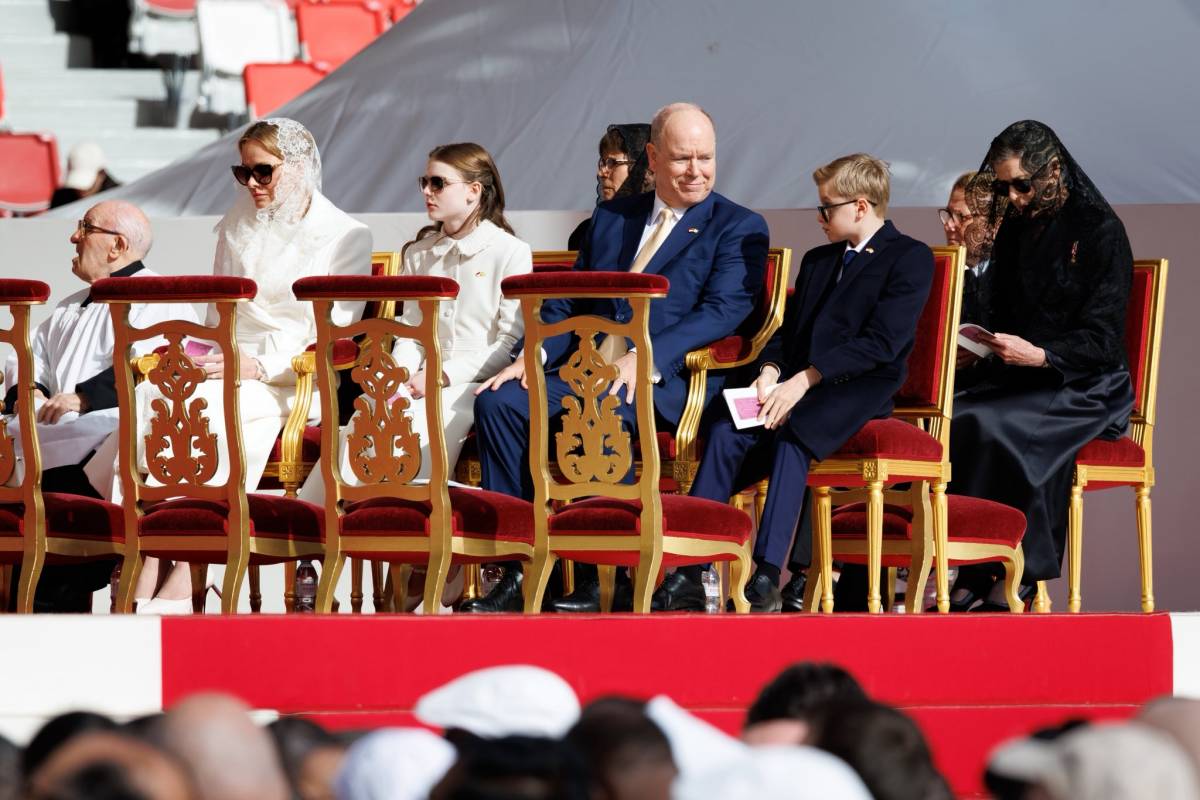
At Stade Louis II, the scale expanded. Thousands gathered, yet the atmosphere remained composed.
Under the baton of Kazuki Yamada, the Monte-Carlo Philharmonic Orchestra accompanied the ceremony.
The presence of the Princely Family, including the twins, alongside Princess Caroline and Princess Stéphanie, reinforced continuity.
As incense drifted across the stadium and the liturgy unfolded, a venue more accustomed to noise shifted into stillness, collective, attentive, unified.
A Day That Will Endure
The Princely Couple accompanied Pope Leo back to the heliport. And by the time the helicopter rose above the Principality, the day had already settled into something more lasting than spectacle. What remained was a sense of alignment, between tradition and purpose, visibility and responsibility.
Monaco had not simply hosted a visit; it had, for a moment, been asked to define what it stands for and its answer was decidedly not lacking.
Photos : Palais princier – Michaël Alesi – Frédéric Nebinger – Sarah Steck – Gaëtan Luci