


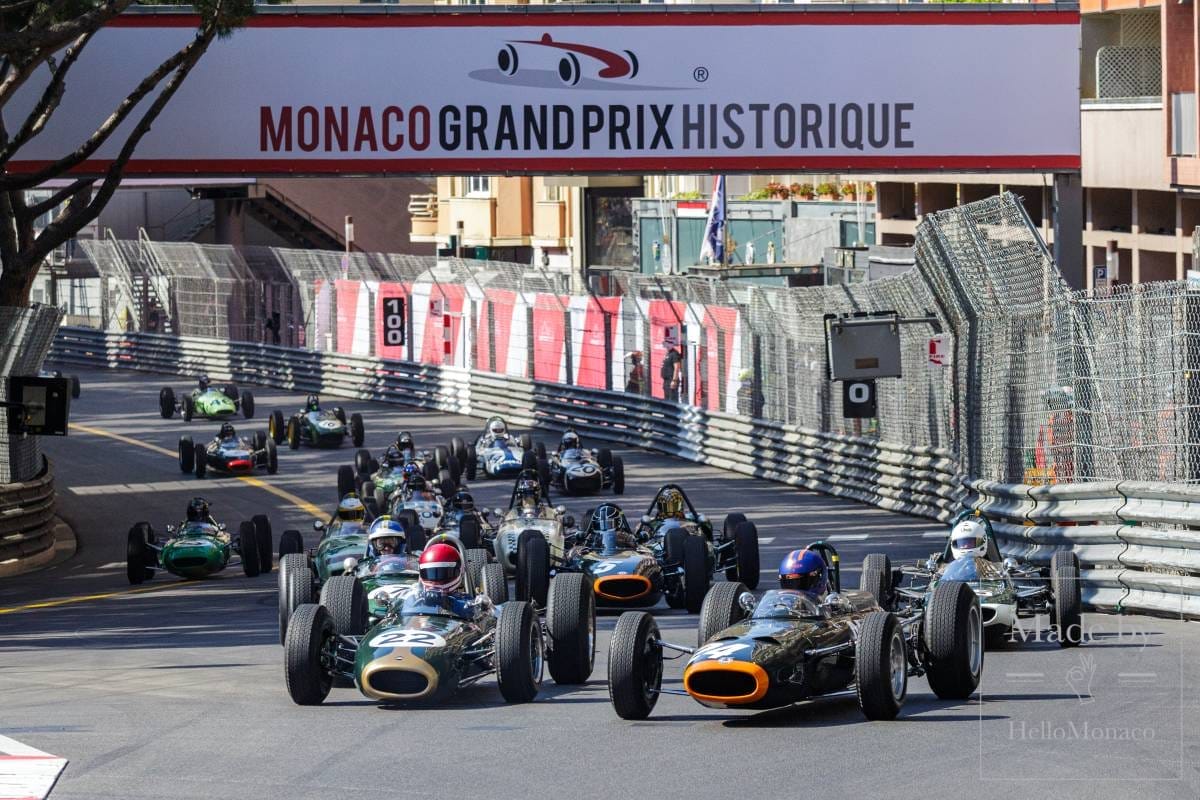


In Monaco, time does not pass, it laps. This April, the principality will again fold decades into a single breath as the 15th Historic Grand Prix of Monaco transforms the streets of Monte Carlo into a living archive of speed. From 24 to 26 April 2026, the legendary circuit will host 205 racing machines spanning 60 years, from pre-war pioneers to turbocharged beasts of the 1980s.
The Circuit That Remembers Everything
The Monaco circuit is a memory carved into asphalt. It threads between balconies and yachts, between café terraces and stone façades, compressed into 3.337 kilometers of unforgiving bends and glittering guardrails.
Built in 1929 to prove racing could exist within Monaco’s tight borders, it remains one of the most prestigious venues in motorsport. And during the Historic Grand Prix, the circuit seems to whisper to each passing engine: I remember you.
205 Machines, One Mechanical Orchestra
The 2026 edition promises an exceptional grid: 205 single-seaters built between 1925 and 1985, organized across eight racing series.
Expect pre-war Grand Prix relics with exposed rivets and stubborn dignity; also front-engined Formula 1 cars from the heroic 1950s and winged missiles of the 1960s and 70s. As a special treat there will also be turbocharged monsters from the early modern era.
Each class represents a technological era. Some cars hum like sewing machine. Others detonate the air.
The Centenarians and the Turbo Age
Among the most intriguing entrants are machines approaching a century of age, mechanical survivors from the dawn of Grand prix racing sharing asphalt with the explosive turbo era that reshaped Formula 1 in the late 20th century.
This coexistence feels surreal: polished brass beside carbon fibre, analog gauges beside boost pressure dials. It is the automotive equivalent of hearing a gramophone duet with a synthesizer.
Monaco Becomes a Museum That Moves
For one weekend, Monaco stops behaving like a luxury destination and starts behaving like a time capsule.The harbour becomes a grandstand. The cliffs become echo chambers. The tunnel becomes an amplifier of history.
The Historic Grand Prix, first staged in 1997 and now held every two years, was born from a celebration that proved so popular it became tradition. Today, it is one of the most evocative events in motorsport, less about winning than remembering.
Ghosts in the Cockpit
Close your eyes near the Fairmont Hairpin and you might hear echoes of past heroes: Ayrton Senna dancing through rain-soaked barriers, Graham Hill threading the impossible line, Juan Manuel Fangio taming machines without mercy.
These ghosts compete in Monaco eternally.
The Historic Grand Prix
Modern Formula 1 dazzles with precision engineering and digital telemetry. But the Historic Grand Prix reveals something deeper when racing was courage first, technology second.
These cars require strength instead of steering assistance and punish mistakes instantly. Watching them is a reminder of what speed once demanded.
In Monaco, the past never retires. It simply waits for the next lap.