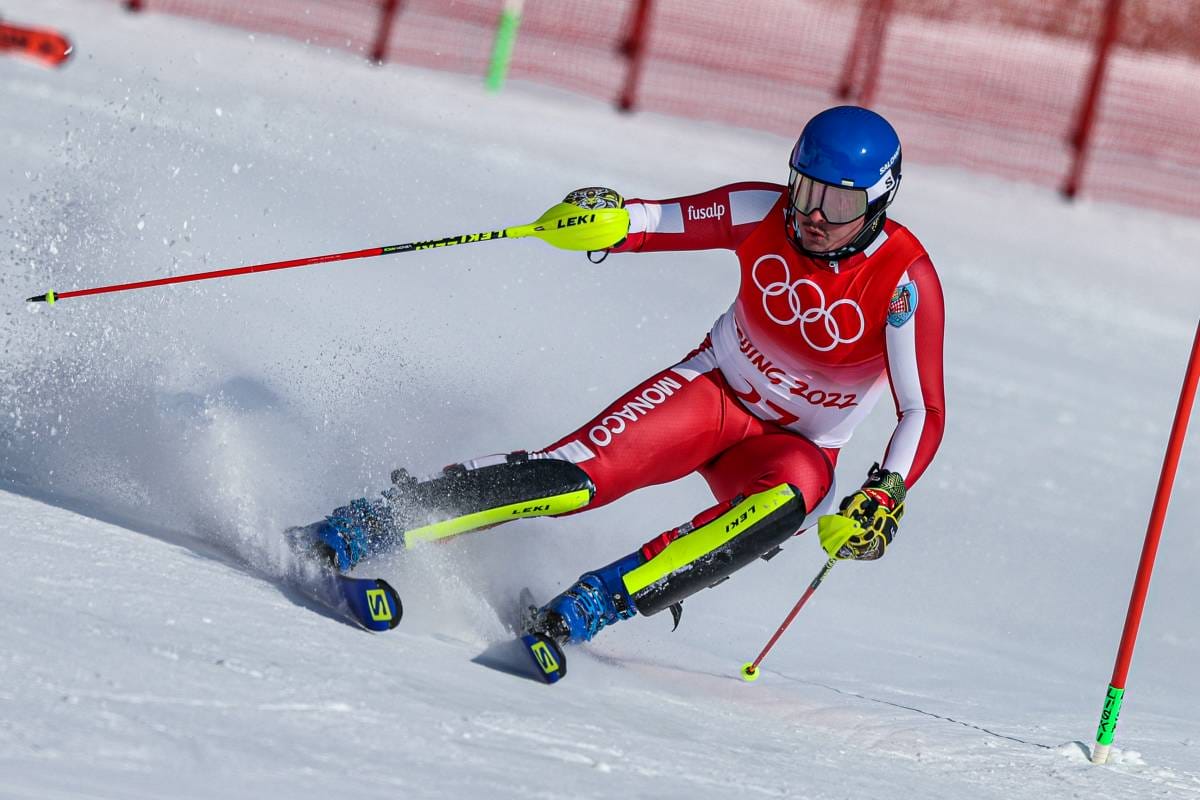
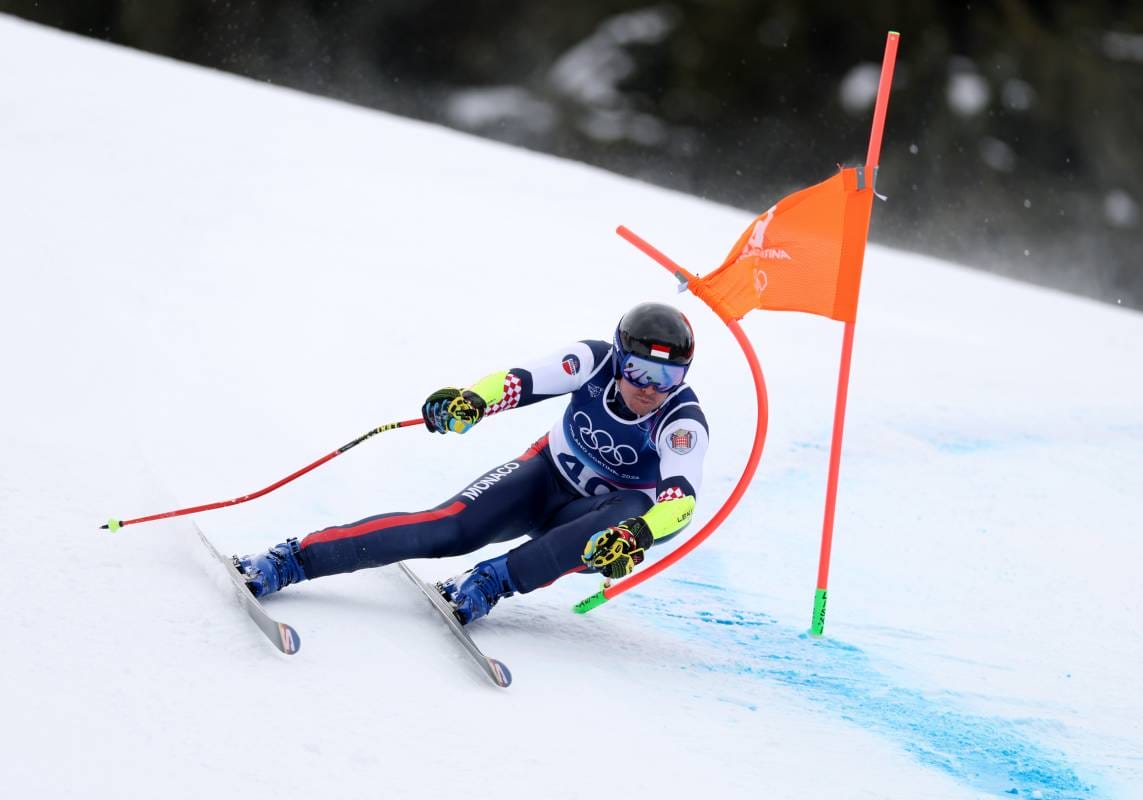


On the fearsome Stelvio slope in Bormio, where speed, precision and nerve collide, Arnaud Alessandria delivered a performance that went beyond rankings. Finishing 30th in the Super-G at the Milan–Cortina Olympic Games, the Monégasque skier closed his Olympic week with conviction, confidence, and a statement of intent.
A morning clouded with doubt
The day began under ominous skies. Thick fog and heavy clouds hung over Bormio, casting real uncertainty over whether the race could even take place. The Stelvio, already notorious as one of the most demanding tracks in alpine skiing, looked particularly unforgiving. Yet at 10:30 a.m., the International Ski Federation gave the green light. The Super-G was on.
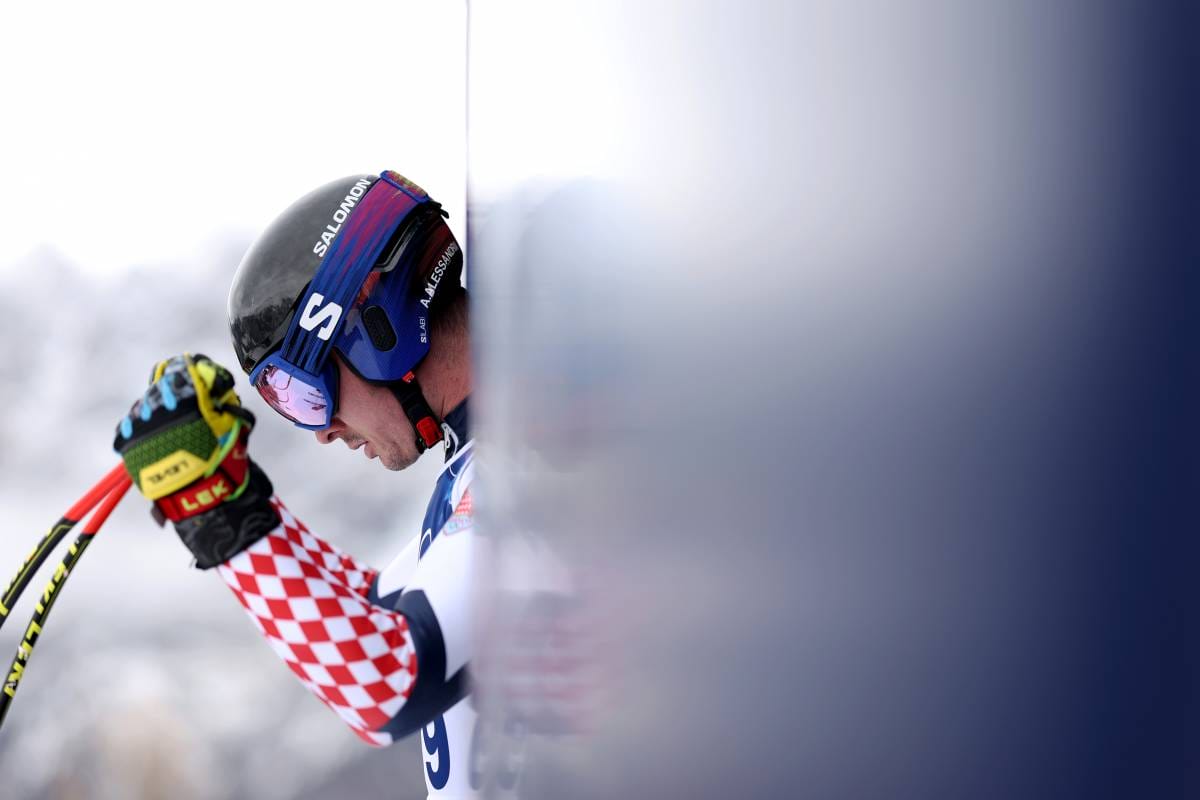
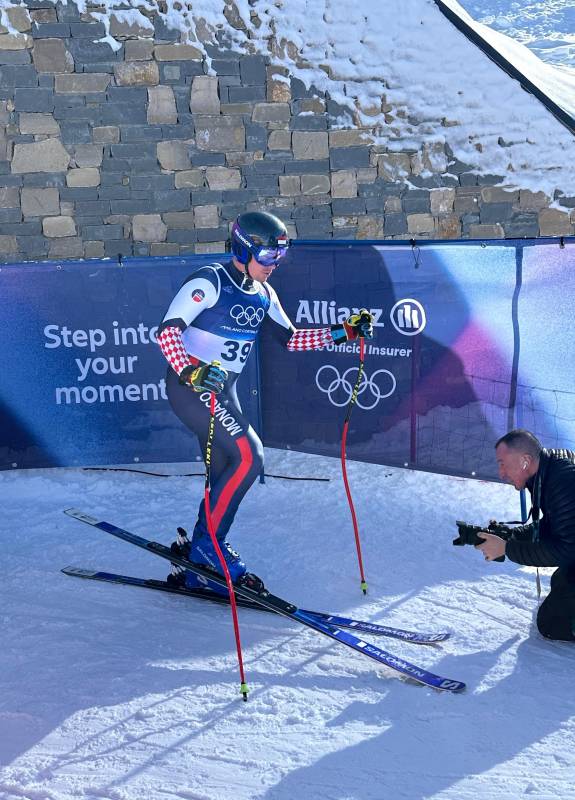
Starting with bib number 40, Alessandria had unfinished business. Just days earlier, he had finished 31st in the downhill—solid, but cautious. Too cautious, by his own admission. “I have to let the horses run,” he had said beforehand, vowing to ski with greater freedom and aggression.
Letting go, leaning in
This time, he did exactly that. From the start gate, visibility was limited, the light flat and deceptive. The snow, softened by warmer temperatures, had been churned up by earlier racers. For those starting later, the piste was a shifting canvas of white-on-white.
Still, Alessandria attacked. He committed fully to the line, absorbed the bumps, and handled the technical traps of the Stelvio with maturity. His time—1:30.13—secured him 30th place, a coveted top-30 finish at the Olympic level.
At the front of the race, Switzerland’s Franjo von Allmen claimed gold in 1:25.32, ahead of American Ryan Cochran-Siegle and Swiss superstar Marco Odermatt. The treacherous conditions also took their toll, with several favorites failing to finish, including France’s Nils Alphand and Italy’s Dominik Paris.
“Zero regret”
What mattered most to Alessandria, however, was not the stopwatch but the feeling.
“I managed to give 100%,” he explained at the finish. “I committed fully. I made some engagement mistakes, but I’m satisfied with the skiing I produced. There’s zero regret. I didn’t keep anything in reserve.”
Those words resonated strongly within the Monégasque camp.
A result that carries weight
For Jacques Pastor, technical director of the Monaco Ski Federation, the performance was rich in meaning.
“This is a very satisfying race—not only because of the result. In high-level skiing, finishing in the top 30 matters. But above all, it’s the way Arnaud skied. He corrected what was missing in the downhill. He trusted himself, trusted the plan, and followed the instructions.”
That trust was built over months of collaboration with coach John Troche and the support structure of the French teams, proof that Monaco’s red-and-white colours belong on the world’s most demanding stages.
More than a ranking
A smile at the finish line said it all. Alongside officials from the Monégasque Olympic Committee, Alessandria looked relieved, proud, and fulfilled. On a slope where courage is non-negotiable, he chose commitment over caution.
At these Milan–Cortina Games, Arnaud Alessandria may not have stood on the podium, but on the Stelvio, under fog, pressure and expectation, he claimed something just as valuable: belief.