


Prince Albert II of Monaco is commonly known as the Grimaldi who represents one of the oldest dynasties in Europe, allegedly founded by Grimaldo Canella, the consul of Genoa in the late 12th century. In 1297, the Grimaldis took possession of Monaco for the very first time. In the early 15th century they finally settled on the Rock. Marrying into other influential families over the centuries, the present-day Grimaldis are thus all closely related to European aristocracy. The Monaco sovereign is a male line descendant of the French Goyon-Matignons.
In early April 2025, Prince Albert II and his family thus travelled to the north-west of France, taking part in a number of events celebrating their Brittany ancestors.
April 9, 2025: Côte d’Armor (Brittany) and Manche (Normandy)
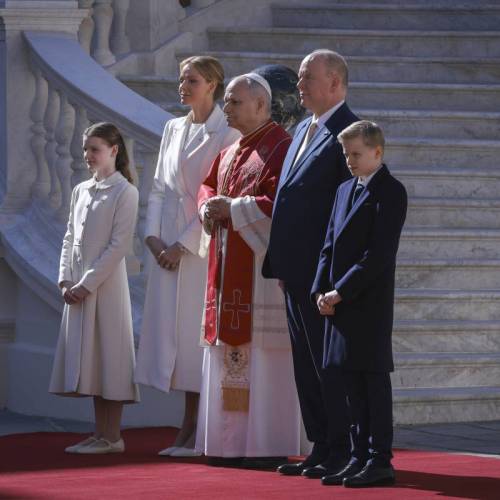
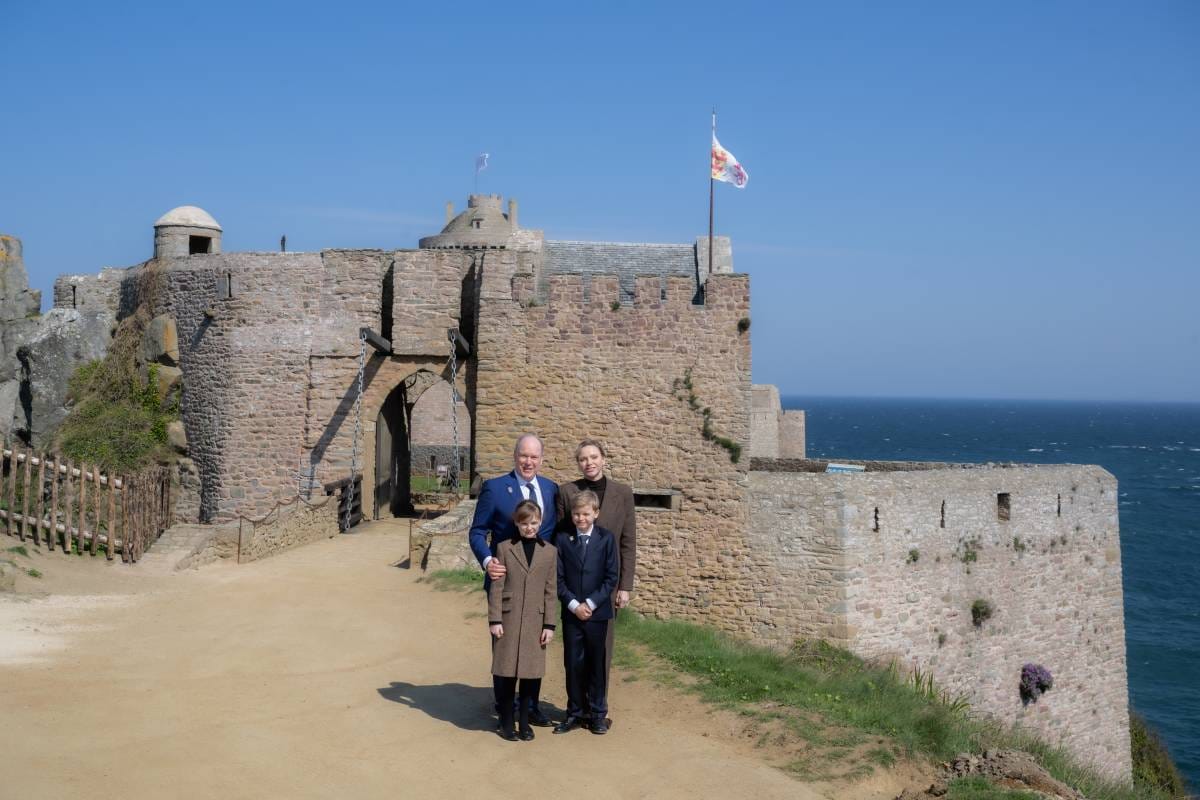
The town of Matignon in the Côte d’Armor where their ancestral lineage started, was the very first destination of the princely family. The Monaco delegation received a warm welcome from the local prefect, François de Keréver, and the mayor of Matignon, Jean-René Carfantan. Prince Albert II, Princess Charlène, Crown Prince Jacques and Princess Gabriella first opened a plaque commemorating their visit. They then explored scenic Fort La Latte, also known as La Roche Goyon, a castle built in the mid XIV century by Étienne III de Goyon de Matignon. The princely family was then present at the opening of yet another plaque in Plévenon, celebrating this Brittany town’s joining the Federation of Historical Sites of the Grimaldis of Monaco.
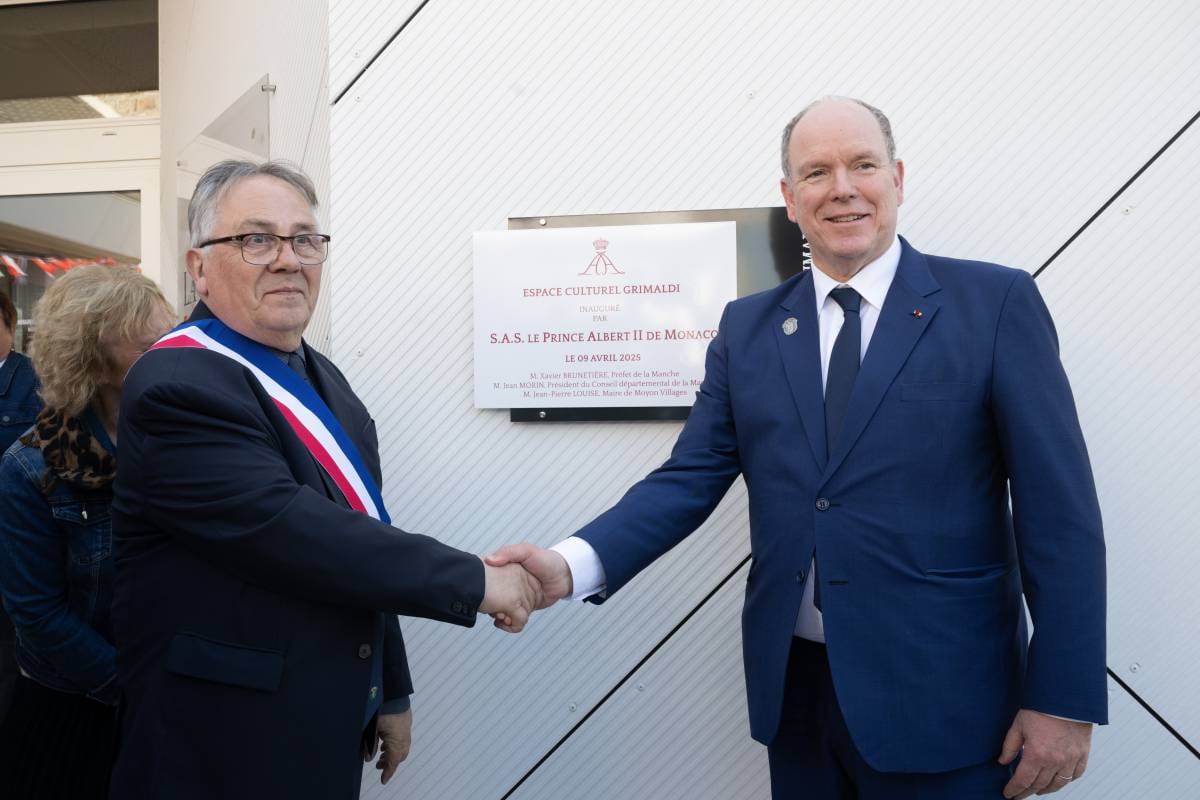
In the afternoon, Prince Albert II attended the solemn opening of the Grimaldi Library in Moyon Villages (Manche). According to the mayor Jean-Pierre Louise, the Principality’s assistance was instrumental in opening the library in their small town of 1500, designed to preserve the regional cultural and historical heritage. Incidentally, to this day, the Prince of Monaco is still bearing the title of Baron de Moyon.
The Monaco Prince and the President of the Manche department Council, Jean Morin, eventually met in Saint-Malo, announcing the digitalization and publishing of the Goyon-Matignon archives kept at the Princely Palace.
A life-changing decision
But let’s go back to the early 18th century. That’s when the Grimaldis of Monaco first married into the Goyon-Matignon family. At that time, the Prince of Monaco Antoine I and his wife Marie of Lorraine had no male heir. The Grimaldi line was thus to end with the Prince’s passing away. By law, the eldest of his six daughters, Louise Hippolyte, was considered heir to the throne. Aiming to preserve the princely title in the family, Prince Antoine I thus had it in mind to marry her to the Grimaldi of Antibes. Louise Hippolyte, however, was adamant not to. It was then decided to seek her future husband among those accepting giving up their own name, taking up that of Grimaldi, and the title of Duke of Valentinois, in order to govern the Principality in the future. A representative of an old French family, Jacques de Goyon de Matignon, was thus considered a perfect suitor.
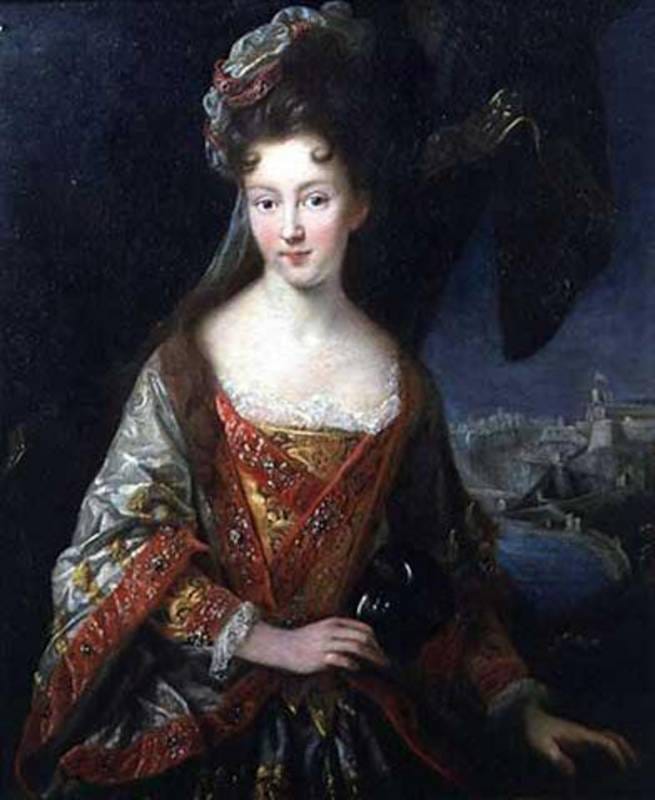
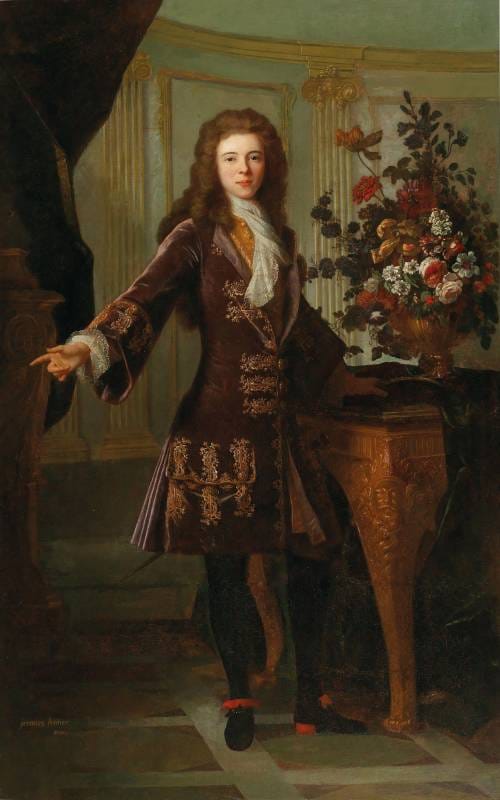
The first mention of the Britanny Goyons dates back to the early 13th century. This oldest branch of the Goyon family, the Matignons, settled in Normandy back in 1421. The very old and influential lineage has given France a number of illustrious personalities, including three marshals and several bishops. In 1596, Charles de Matignon married the cousin of King Henry IV, Eleanor d’Orléans-Longueville, adding a royal lily to the Matignon coat of arms. The future husband of Monegasque Louise Hippolyte, Jacques François Léonor, was but their great-grandson.
Seeking to boost the French influence in Monaco, King Louis XIV approved the candidate. Celebrated in 1688, the marriage of Jacques Goyon, Count of Matignon, and Louise Hippolyte was thus blessed by the Sun King himself.
The newly established Jacques Grimaldi thus had five titles to pass on to his heirs: Sire of Matignon, Count of Torigni, Baron of Saint-Lô, Baron of La Luthumière and Baron of Hambye. All of them were still officially borne by the sovereign prince of Monaco.
Two women on the Monaco throne
18-year-old Louise Hippolyte and 25-year-old Jacques de Matignon got wed on October 20, 1715. Having decided their fate, the Sun King passed away just a month and a half prior to the event. The ceremony was thus the first one to be attended by the new king of France, great-grandson of Louis XIV, the five-year-old Louis XV… the one who went down in history with his «After us, the flood».
Louise Hippolyte dedicated her entire life to her husband and nine children, three of whom died as infants. Prince Antoine I passed away in 1731, trusting the reins of the country to his daughter. To this day, she remains the only princess of Monaco and the second woman in history to have governed the tiny state (her only predecessor back in the 15th century being Claudine, daughter of Catalan, Lord of Monaco, before Monaco was even known as a Principality).
The reign of Louise Hippolyte (just as Claudine’s) was sadly short-lived. Much loved by the Monegasques, just 11 months and nine days after being proclaimed sovereign princess, the 34-year-old Louise Hippolyte died of smallpox on December 29, 1731. Jacques de Matignon thus became Prince Jacques I. Less than two years later, however, with his eldest son Honoré reaching majority, he gave up the throne and set out for France for good.
Ascending the throne at an early age of 13, the fifth Prince of Monaco, Honoré III, thus went down in history as one of the most long-serving European rulers. He was official head of state for almost sixty years. His reign was thus even longer than that of his ancestor, Honoré I, who ruled the country for a long 58 years. By the way, the very first woman on the Monaco throne, Claudine, was Honoré I’s grandmother.
10 April: Manche and Calvados (Normandy)
His Serene Highness then visited the town of Percy-en-Normandie (Manche). A consecration ceremony for a restored bell was held, first installed in 1751 in the presence of Prince Honoré III, son of Jacques I.
After visiting the local market, the Monaco sovereign proceeded with the Matignon Castle (the now City Hall of Torigny-les-Villes), attending a conference and an exhibition dedicated to the 300th anniversary of Jacques III de Matignon’s death. Interestingly, in 1723 that very prince bought and rebuilt the Palace of Matignon, the French prime minister’s official residence. Prince Albert II thanked the organizers for letting him learn so much about his ancestor who had found eternal peace in the Matignon’s family burial at the church of Saint-Laurent de Torigny.
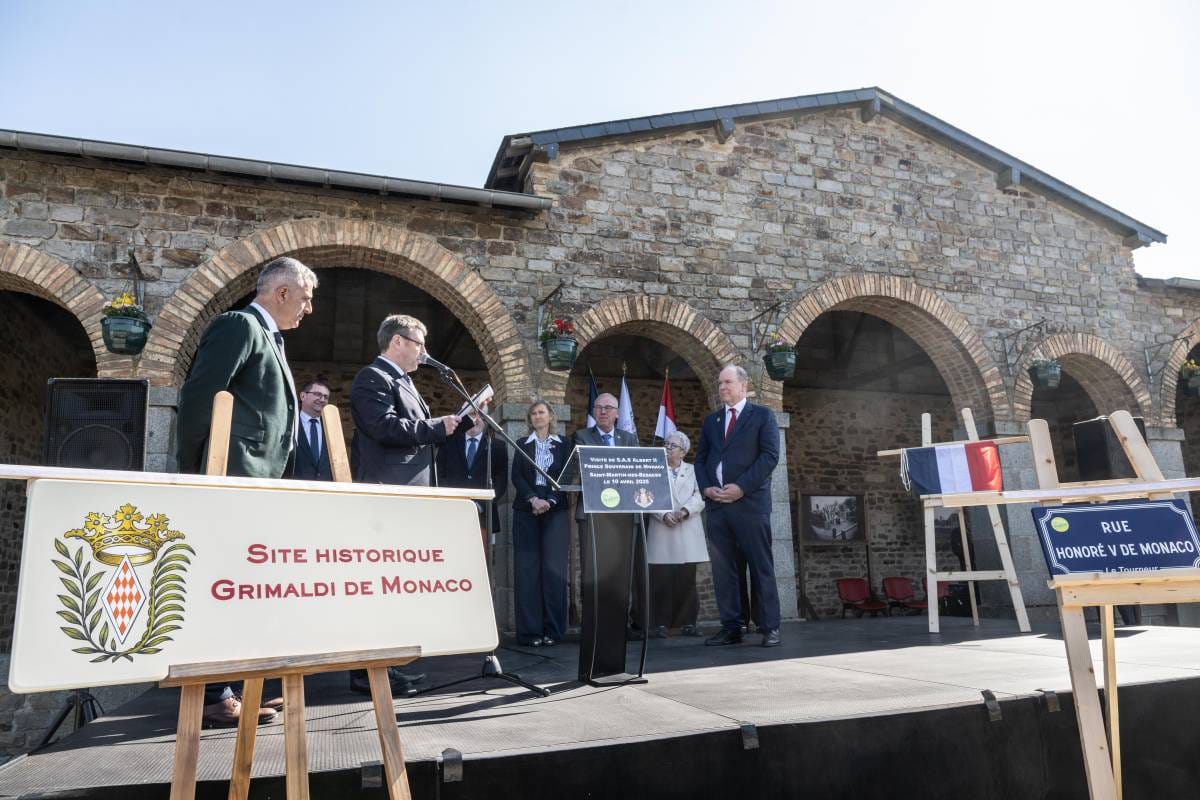
In the afternoon, the Monaco sovereign paid a visit to Saint-Martin-des-Besaces in Calvados. Between 1823 and 1851, the Montbosq estate was well favoured by Prince Honoré V of Monaco, great-grandson of Jacques I. Assisted by Mayor Alain Declomesnil and Deputy Mayor Éric Martin, the sovereign Prince solemnly opened the plaque of the Federation of the Historical Sites of the Grimaldis of Monaco. Alongside Plévenon, Saint-Martin-des-Besaces is now its proud member.
A Dynasty name
The name of Jacques is dynastic for the Matignons, same as that of Honoré for the Grimaldis. From the mid-15th to 18th century, it was thus proudly borne by several generations of men: Jacques IV (husband of Louise Hippolyte), Jacques III (his father), Jacques II (Marshal of France, mayor of Bordeaux, friend of philosopher Montaigne), Jacques I (ardent supporter of the French King François I) as well as Jacques Goyon de Matignon, Bishop of Condome in 1671–1693.
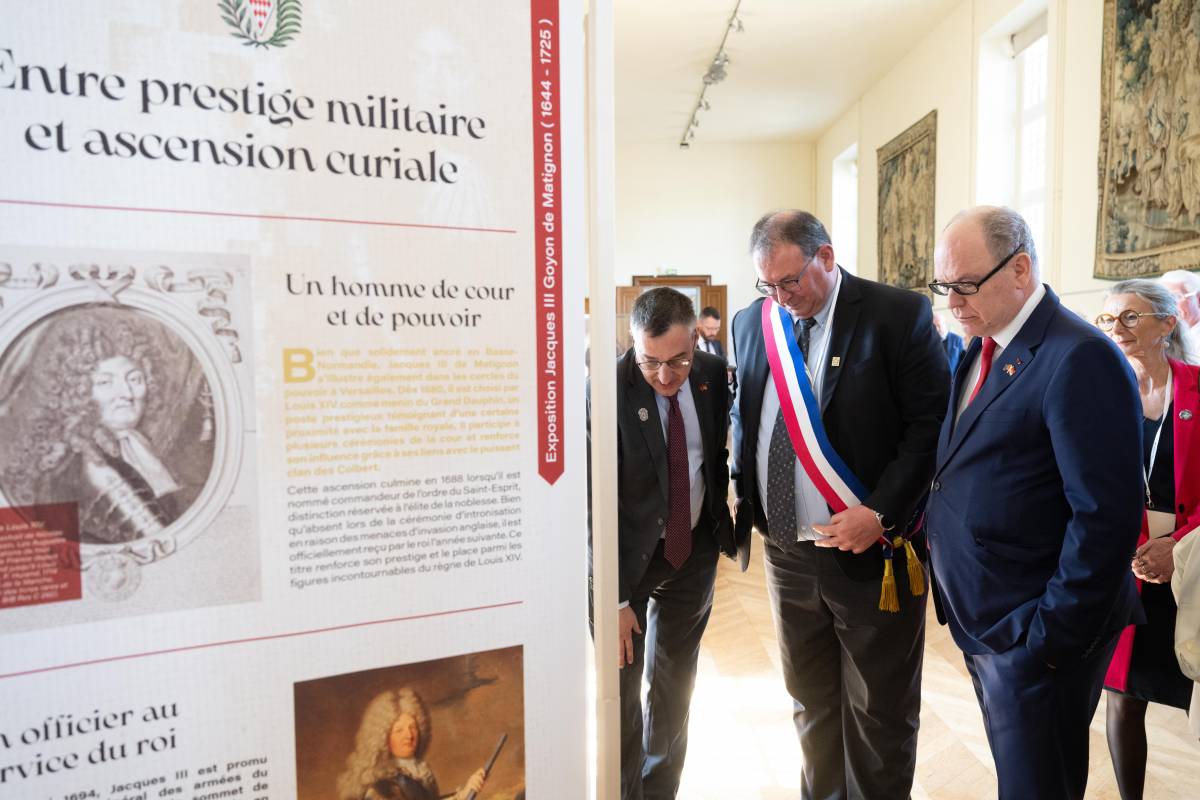
The current Crown Prince of Monaco’s full name is thus Jacques Honoré Rainier. One day he will become Prince Jacques II, bringing the Matignons dynastic name back to the Monaco throne.
The Matignon Campanile
Interesting fact: Matignon still has a tradition of celebrating some important events in the life of the Principality by ringing church bells. Thus, in 1957 its joyful sound marked the birth of Caroline, first daughter of Prince Rainier III, and in 2005 the Matignon bells were mourning the Prince himself. In 2011, Matignon was celebrating the wedding of Albert II and Charlene Wittstock, and in 2014 the birth of their twins, one of whom is interestingly named after his distant Breton ancestor.
In 2015, Matignon was among the first French cities to join the newly established Federation of the Historic Sites of the Grimaldis of Monaco.
Côte d’Armor, Manche and Calvados — what are they famous for?
In addition to the Historic Sites of the Grimaldis of Monaco, Brittany and Normandy have a number of interesting places to see.
Visited by the princely family on April 9, 2025, Fort La Latte is open to the public from early April until late October. Dividing the Bay of Saint-Malo and the Côte d’Armor (The Channel coast in eastern Brittany), offering a fantastic view of the strait and the nearby islands, Cap Fréhel is just 4 kilometres away. As to the Côte d’Armor, it also has a remarkable Pink Granite Coast just an hour and a half away from Matignon. The granite boulders of Perros Guirec boast a striking bright pink colour.
The Mont-Saint-Michel Abbey in Manche is 85 kilometres away from Saint-Lô. Visited by some three million people every year, it is one of the most popular tourist destinations in France.
Calvados is known for its many military and historical museums related to World War II. The town of Falaise (60 km away from Saint-Martin-des-Besaces) has a castle where William the Conqueror was born. This Norman Duke was one of the most remarkable political figures in 11th century Europe. Crowned King of England in 1066, he left a great mark in the country’s history.