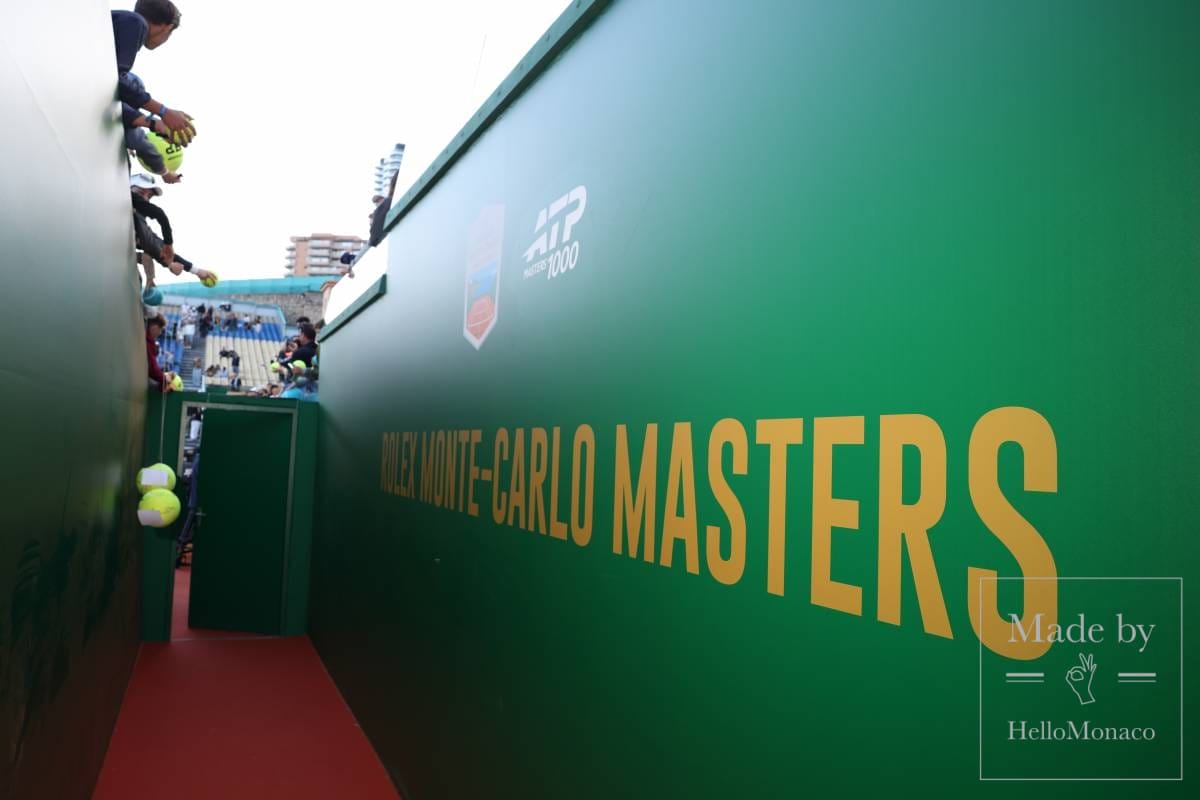

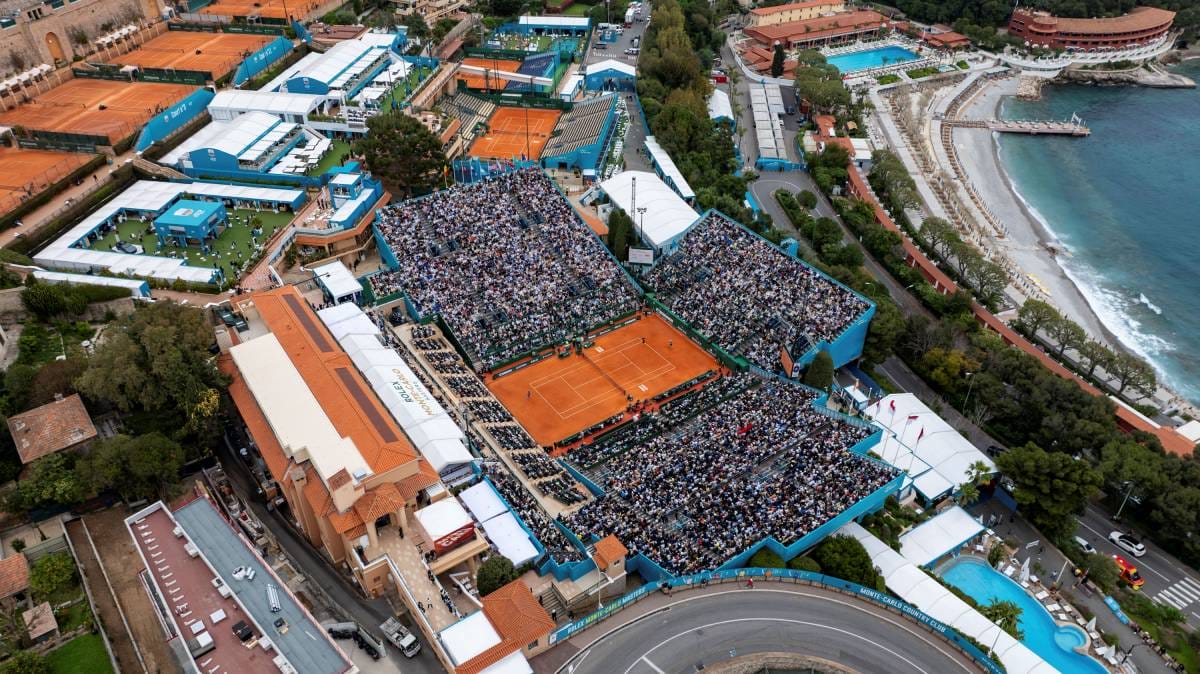


For once, Monte-Carlo was not just hosting greatness, it was part of it. There are finals that crown a champion. And there are finals that define an era.
On a Monaco afternoon shaped by tension, elegance, and unmistakable theatre, the 2026 Monte-Carlo Masters delivered both.
A Ceremony Before the Storm
Before a ball was struck, Monaco reminded the world where it was.
The court transformed into a tableau of red and white. Flags rose in perfect symmetry, the Monegasque anthem played, and the crowd stood, not roaring, but attentive. For a moment, the tournament paused and became something else entirely: a ceremony of identity.
Then, the shift.
Jannik Sinner entered, and the silence broke. Italian flags followed him onto court, and with them came the noise, sharp, immediate, overwhelming. The proximity of the border was no longer geographical. It was audible.
Italy had arrived.
Moments later, Carlos Alcaraz followed. The applause was warm, respectful, but measured. The Spanish presence was there, but quieter. This was not his crowd.
And yet, there was no imbalance.
Because Alcaraz does not rely on atmosphere. He carries his own.
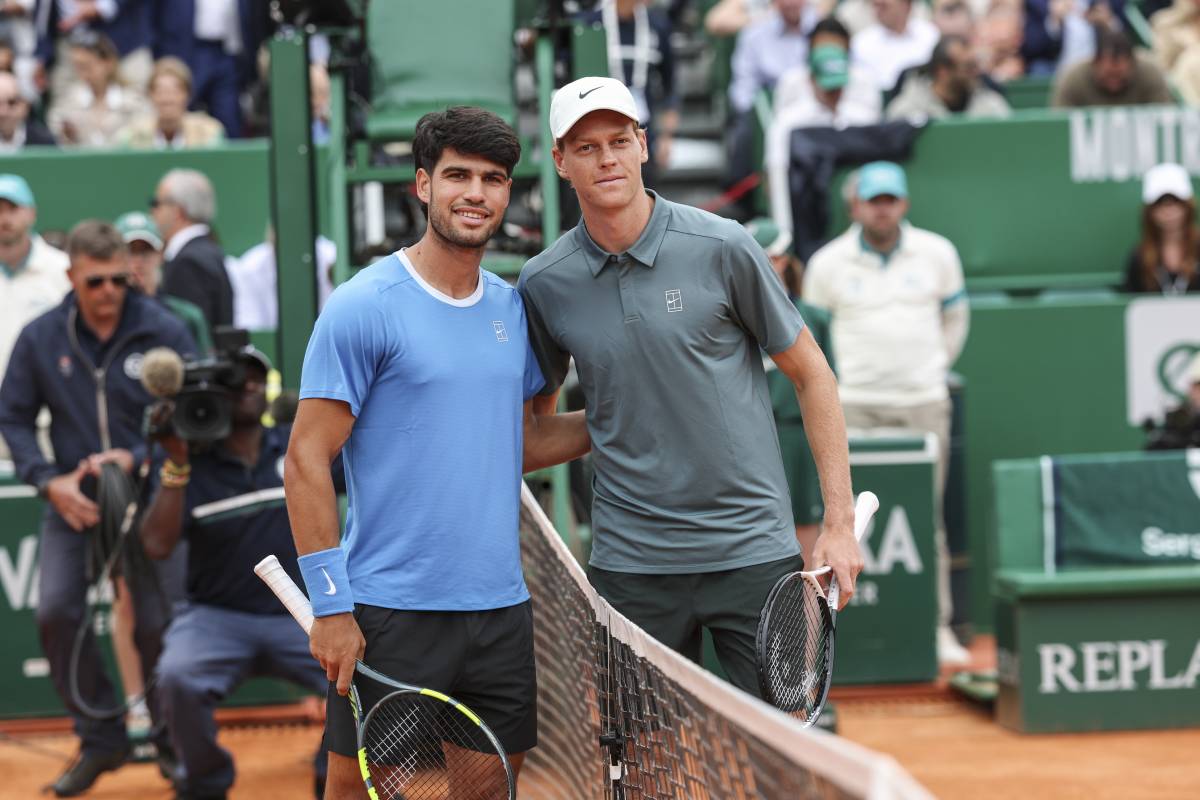
A First Set Without Separation
The match began at full speed.
Alcaraz struck first, breaking immediately and racing to 2–0, imposing his rhythm with clarity and intent. But Sinner answered just as quickly, breaking back to level at 2–2 and igniting the Italian support.
From there, the set settled into something far more intricate.
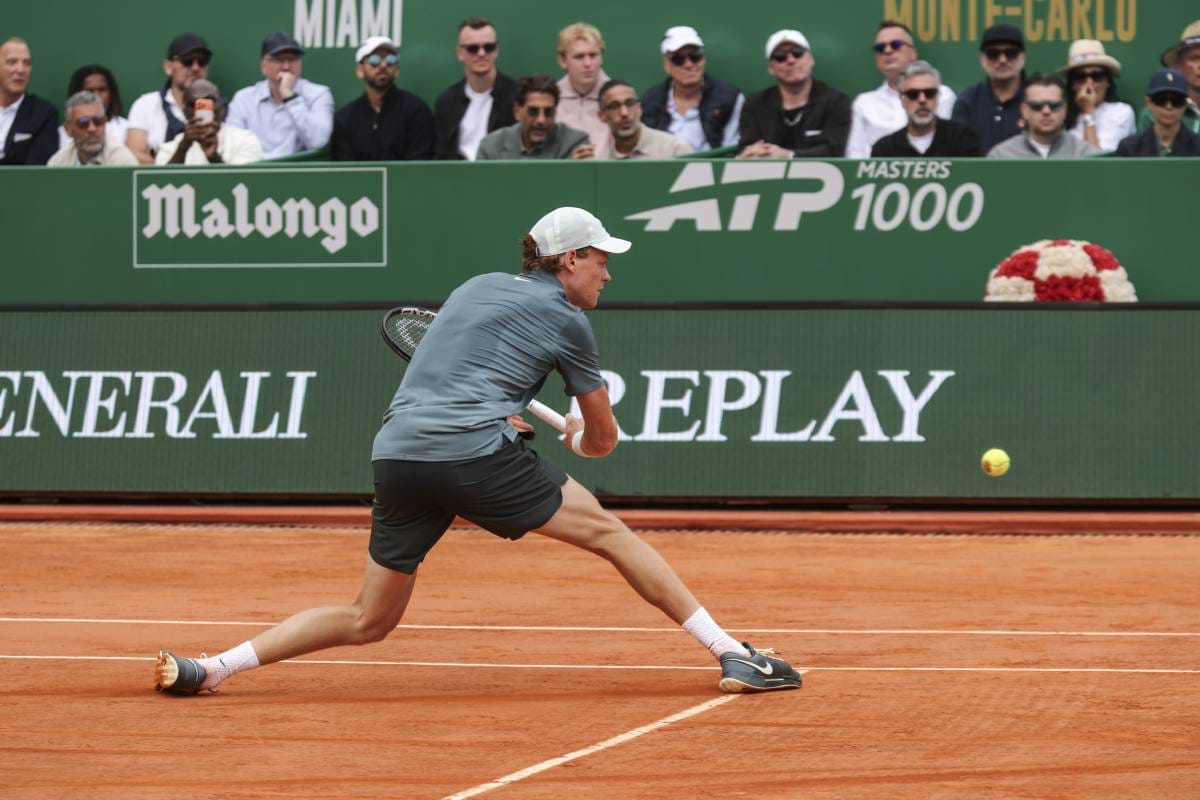
At 4–3, Alcaraz’s drop shot, so often a flourish, became a necessity, repeatedly denying Sinner the break that felt within reach. The wind began to swirl across the court, adding a subtle unpredictability to an already finely balanced contest.
At 5–5, Sinner responded in kind, producing a drop shot of his own, a moment that felt less like imitation and more like evolution.
Neither yielded.
At 6–6, the set arrived where it had been heading all along: a tie-break.
It was there that the first real separation threatened to emerge. Sinner, reading Alcaraz’s intentions with increasing clarity, secured the first mini-break at 4–2, anticipating the drop shot that had defined the Spaniard’s play.
But at 6–6, the moment turned. A routine winner missed. The advantage gone.
And then, immediately, reclaimed.
Sinner struck cleanly on the very next point and closed the tie-break 7–6, a set decided not by dominance, but by nerve.
The Shift of Power
The second set began with intent.
Alcaraz pressed early, testing Sinner’s resolve, but the Italian held firm. At 1–1, there was still no daylight between them. But something was changing, not on the scoreboard, but in the stands.
The Spanish fans found their voice.
What had begun as an Italian-dominated atmosphere shifted, the energy evening out, the tension rising further. And Alcaraz responded, breaking to lead 2–1 before consolidating in a long, draining game, finished, once again, with that now-familiar drop shot.
3–1.
The match tilted.
But only briefly.
Sinner adapted. Reading the drop shot earlier, stepping forward more decisively, he broke back to level at 3–3, even through two aces from Alcaraz.
And then came the decisive shift.
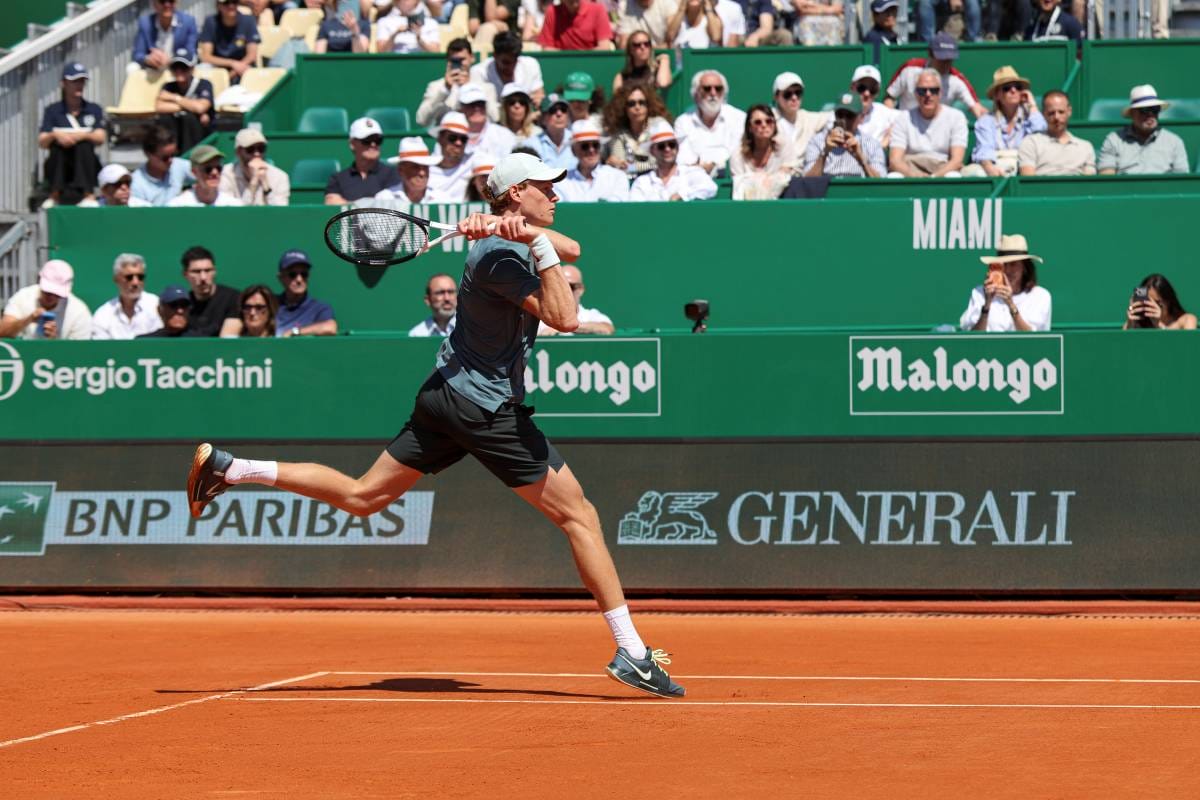
At 5–3, Sinner broke again, this time with authority. The rallies that had once been shaped by touch were now dictated by force. His forehand, heavy and relentless, began to override Alcaraz’s variation.
Killer forehands, trumping killer drop shots.
The Coronation
At two championship points, everything narrowed.
The crowd rose. The noise sharpened. The moment compressed.
And then it ended.
On the first opportunity, Sinner stepped forward and finished it cleanly.
Game, set, match.
7–6, 6–3.
The release was immediate. Italian flags lifted across the stands, voices breaking through the Riviera air in full celebration.
Champion.
New World No.1.
In the end, it was not just a victory.
It was a coronation.
Pageantry and Presence
As the match gave way to ceremony, Monte-Carlo revealed its final layer.
The court was reset with precision. Officials took their positions. The players returned. The energy shifted, not diminished, but refined.
At the centre stood Prince Albert II, presiding with the quiet authority that defines Monaco’s public life. Alongside him, Princess Charlène, elegant and composed, completed the moment. And of course President Melanie Antoinette de Massy.
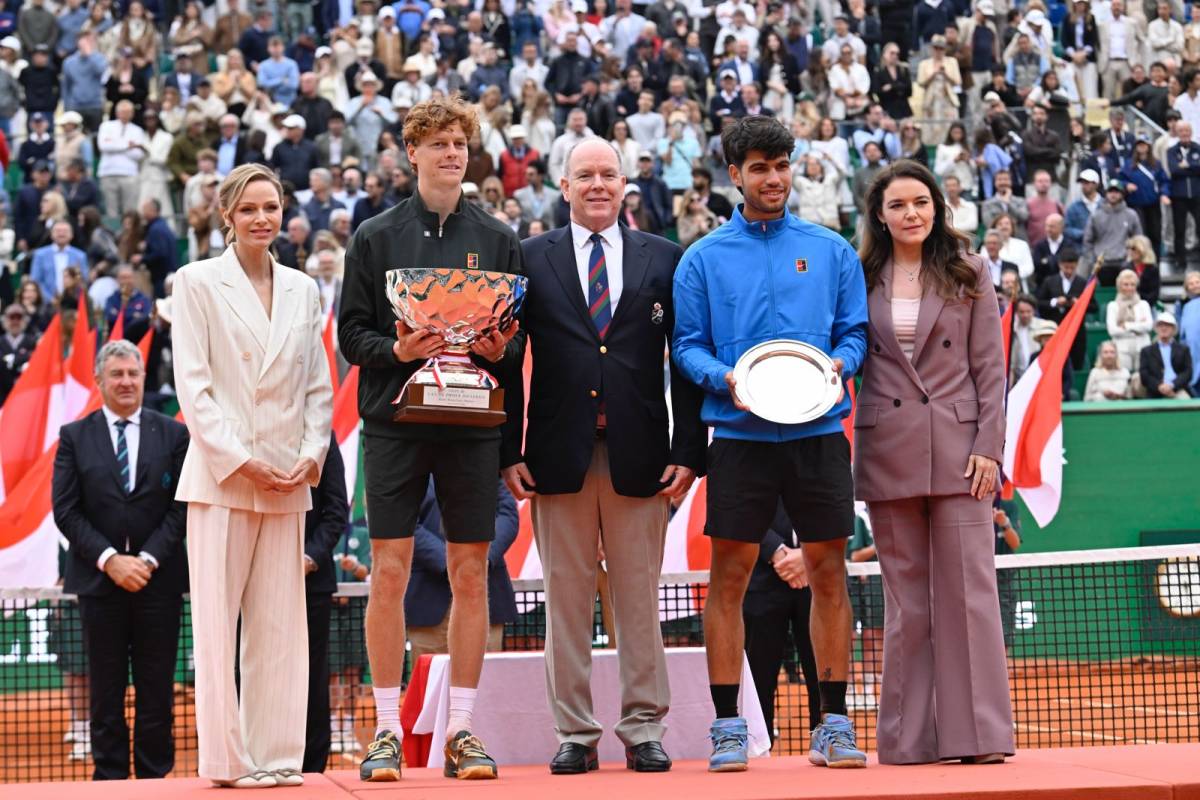
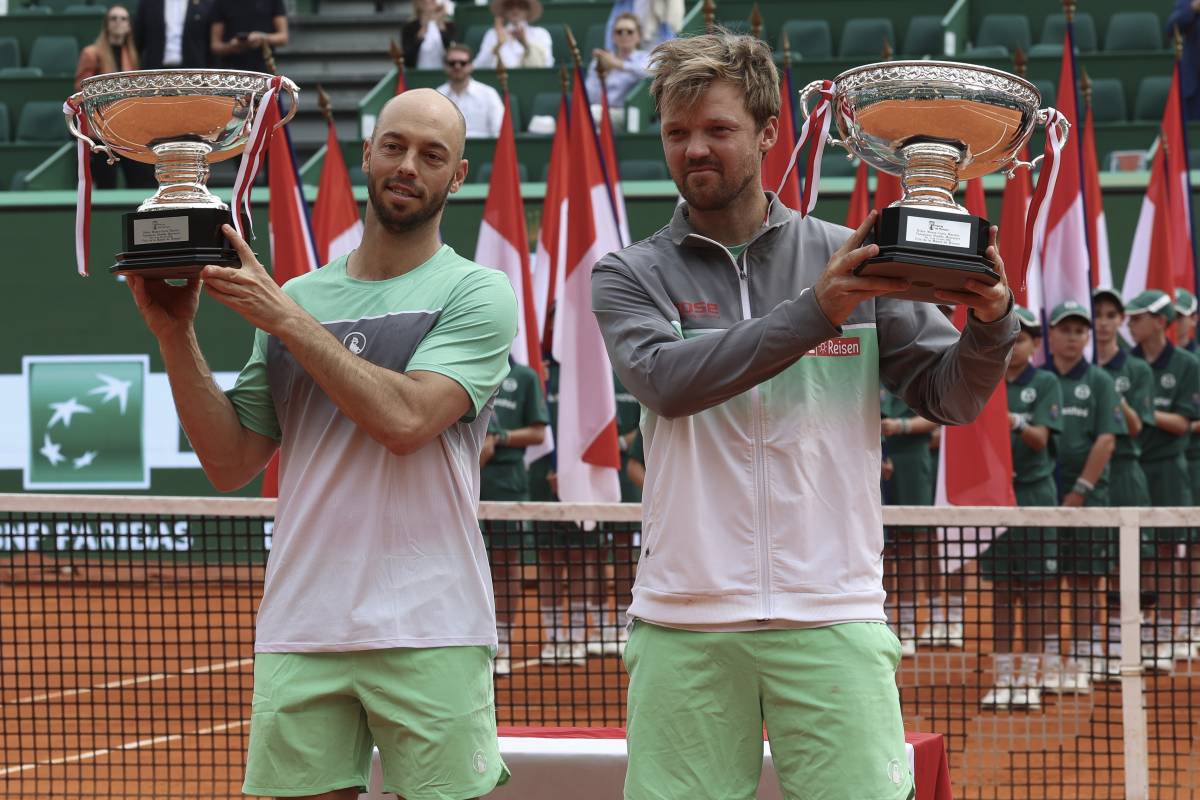
The trophy was presented. Applause followed. And for a moment, the sport gave way to something larger, tradition, continuity, identity.
A Tournament That Meant More
But this final was not the only story.
Because throughout the week, Monaco had already begun to redefine its place in the tournament it hosts.
Valentin Vacherot, the local hope, had carried the Principality to unprecedented heights, reaching the semi-finals with victories over Lorenzo Musetti, Hubert Hurkacz and Alex de Minaur.
For the first time, Monaco was not just a setting.
It was a contender.
The Setting That Elevates It All
And then, beyond the match, beyond the ceremony, there is the setting.
Monte-Carlo does not simply stage tennis.
It frames it.
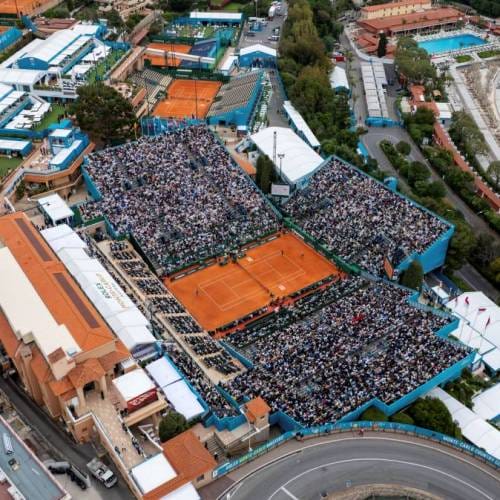
The terraces rise in layers of colour and movement, the crowd dressed in Riviera elegance, the clay glowing against deep green surroundings.
It is, quite simply, the most beautiful tournament in tennis.
And on this Sunday, it delivered something to match.
And the Italians leave Monte-Carlo ecstatic. At last, they have their man, now and for the future.
For years, Monte-Carlo hosted greatness.
Now, it has found its own.