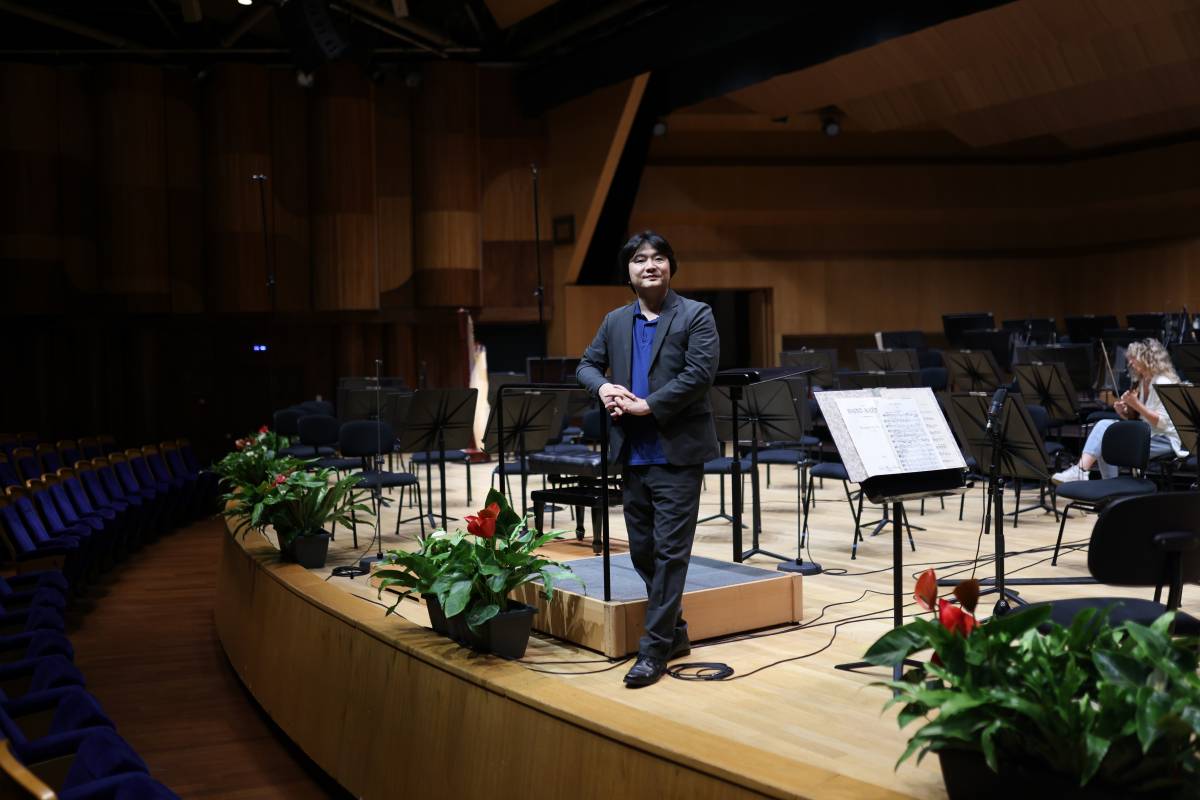


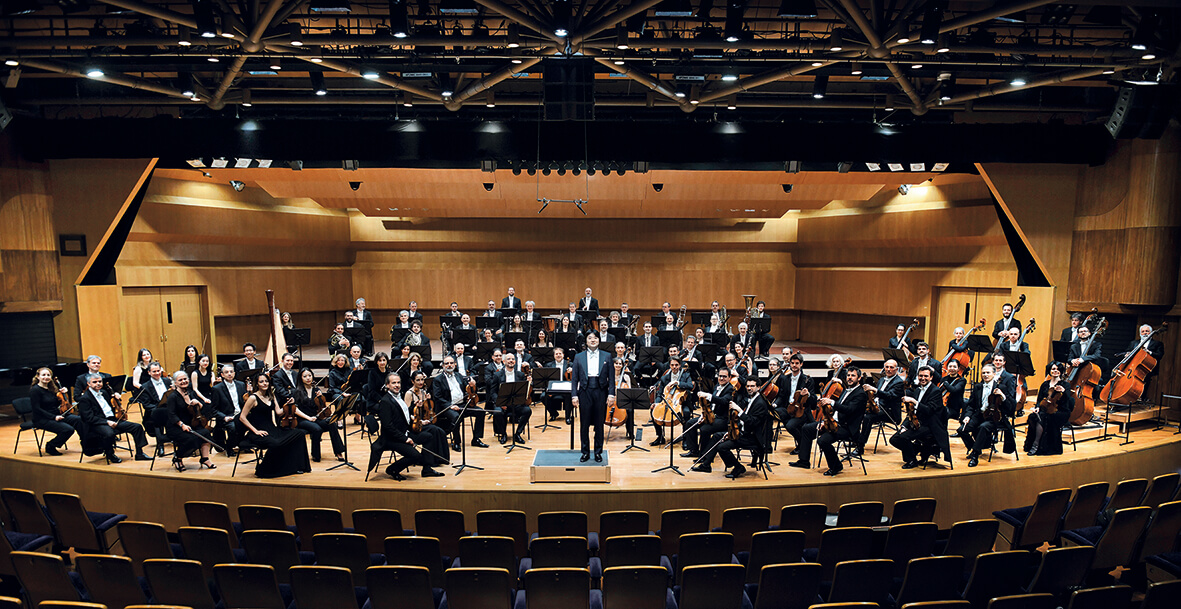
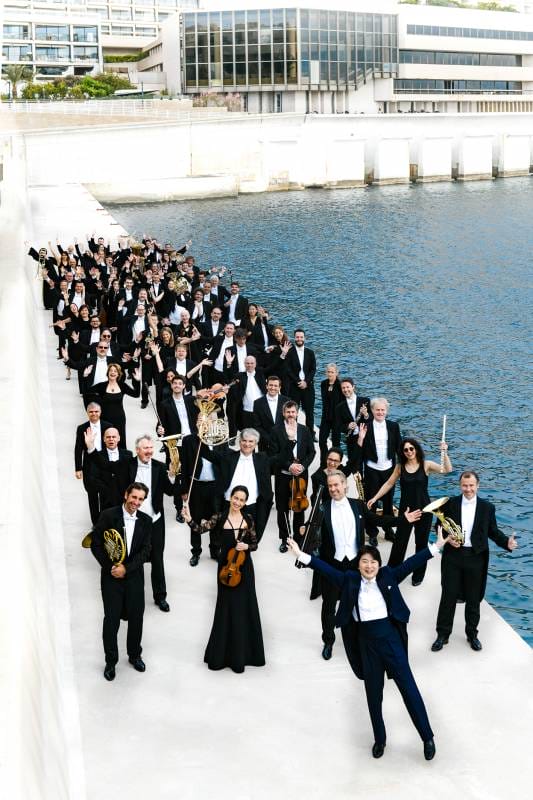
Kazuki Yamada, a talented conductor born in Hadano, Kanagawa Prefecture, Japan, has made a remarkable impact in the world of classical music. Known for his extraordinary conducting skills, he has received notable accolades, including the first prize at the Besançon International Conducting Competition. After initially guest-conducting the Monte-Carlo Philharmonic Orchestra in 2011, he assumed the role of principal guest conductor in 2013 and became the music director in 2016. The Orchestre Philharmonique de Monte-Carlo, founded in 1856, has played an important role in the cultural life of Monaco. The Auditorium Rainier III, which opened in 1980, is a beautiful venue that hosts many memorable musical events.
As Mr. Yamada nears the end of his nearly ten years in Monaco, he looks forward to wrapping up this important chapter with his final season, which takes place from September 2025 to June 2026. The season will conclude with Beethoven’s Symphony No. 9, known as the “Choral” Symphony. Composed between 1822 and 1824, it was the first symphony to feature vocal soloists and a choir in the final movement, centred around the famous “Ode to Joy.” This powerful piece reflects themes of unity and brotherhood, making it a fitting tribute to Mr. Yamada’s time in Monaco. “Symphony No. 9 holds significant meaning for me. Its message of unity and brotherhood is very important, and I want this final piece to reflect everything we’ve built together”, says Kazuki Yamada.
HM: Mr. Yamada, can you tell us about your family background in Kanagawa and how it influenced your journey into music, as well as what initially inspired you to pursue a musical career?
Kazuki Yamada: Certainly. My parents were not musicians, so it could be said that it was not an environment that naturally led me to pursue a career in music. However, there was always a piano in our home, and I was drawn to its sound from a young age. I attended a special kindergarten with a strong music curriculum, which allowed me to explore various activities, but music always interested me the most. I remember staying after classes for extra music lessons. Although my parents and teachers didn’t actively encourage me to pursue music, I followed my intuition. It wasn’t until I was 17 and had my first opportunity to conduct an orchestra that I truly decided to pursue music as a career. That experience changed my life and set me on the path I’m on today.
HM: Do you feel that your Japanese heritage and culture have influenced your work and perspective as a musician?
Kazuki Yamada: Absolutely. While I focus on Western classical music, my cultural background offers a unique perspective. In Japan, classical music is part of everyday life, and there’s often a beautiful simplicity that carries deep meaning. This has shaped my understanding and appreciation of music, allowing my Japanese sensitivity to enrich my interpretations.
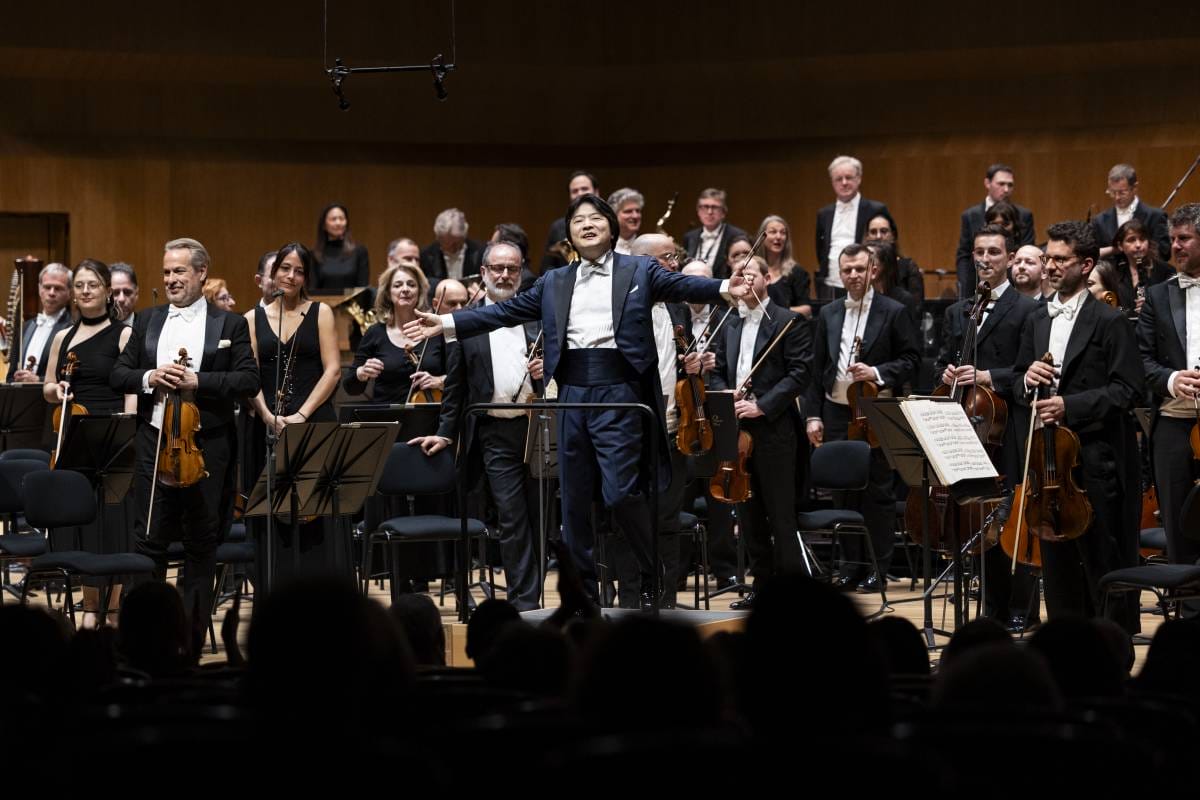
HM: What has been the most memorable moment for you during your time as Music Director of the Orchestre Philharmonique de Monte-Carlo?
Kazuki Yamada: Each moment has been special, but last year’s tour to Japan stands out. We performed seven sold-out concerts, and the connection with the audience was extraordinary. Bringing my orchestra to my homeland and receiving such warmth and appreciation was deeply meaningful.
HM: How have your experiences in Monte-Carlo shaped your approach to music?
Kazuki Yamada: My time here has truly transformed me. I’ve come to understand how important it is to engage with the community. It’s about building connections between the orchestra and its audience, and I’ve really enjoyed creating that bond throughout my journey here.
HM: As you prepare to leave, who do you envision as your successor, and what qualities should they bring to the orchestra?
Kazuki Yamada: I don’t have any news about my successor at the moment. What’s important is that the next conductor understands the orchestra’s unique spirit and continues the work of strengthening the bond with our audience.
HM: Looking back, what impact do you believe you’ve had on the orchestra and the local music community in Monte-Carlo, and what legacy do you hope to leave behind?
Kazuki Yamada: Over the years, I’ve seen our audience grow, and the connection between us has deepened. I genuinely hope my efforts have inspired a lasting appreciation for classical music in the Monte-Carlo community. I would love to leave behind a strong relationship between the orchestra and its audience, and I especially hope that more young people and kids will come to enjoy and participate in classical music long after I leave.
HM: What are your hopes for the future of the Orchestre Philharmonique de Monte-Carlo after you leave, and where do you plan to go next?
Kazuki Yamada: I hope that these past 10 years, in which both myself and the orchestra have grown significantly, will serve as the foundation for further global activities in the future.
And I’m looking forward to my new roles with the City of Birmingham Symphony Orchestra and the Deutsche Symphonie-Orchester in Berlin. It’s definitely bittersweet to leave Monte-Carlo, as this place holds a special place in my heart. But I also feel that it’s time for a new challenge.
***
As Mr. Kazuki Yamada enters his final season with the Orchestre Philharmonique de Monte-Carlo from September 2025 to June 2026, the Monaco community is warmly invited to celebrate music together. This season will feature performances of works by renowned composers such as Tchaikovsky, Brahms, and Mahler, alongside exciting collaborations with talented artists like piano soloist S.-J. Cho, cellist Truls Mørk, and violinist Gil Shaham. Kazuki Yamada’s passion for classical music has led to many memorable experiences, and this farewell season is sure to be truly special.
In closing, there is great gratitude for Mr. Yamada’s work with the Orchestre Philharmonique de Monte-Carlo and the local community. His contributions resonate deeply and will inspire future generations of musicians and music lovers.