

There are very few places in the world where the dress code shifts three times before dinner. Monaco is one of them. A Sunday in May might begin trackside at the Grand Prix, move to a champagne reception on a superyacht moored in the harbour, and end in the gilded rooms of the Casino de Monte-Carlo. Each setting demands something slightly different, yet the thread running through all of them is the same: this is a principality where how you dress is taken seriously, and where the right suit is not a luxury but a prerequisite.
Monaco has always understood that appearance is a form of fluency. To dress well here is to speak the language of the place: its history, its standards, its particular blend of European elegance and Mediterranean ease. And the suit, specifically the custom suit, is the most articulate expression of that fluency.
The Grand Prix and the art of paddock dressing
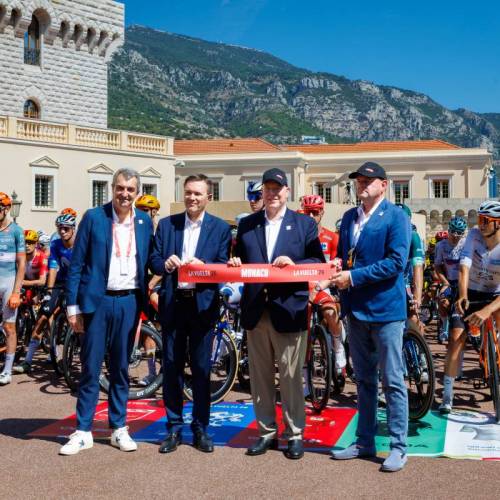
The Monaco Grand Prix is not simply a race. It is the most glamorous event on the Formula 1 calendar and one of the great social occasions of the European summer. The paddock, the pit lane, the yacht-lined harbour: every vantage point is also a stage, and the audience is watching everything.
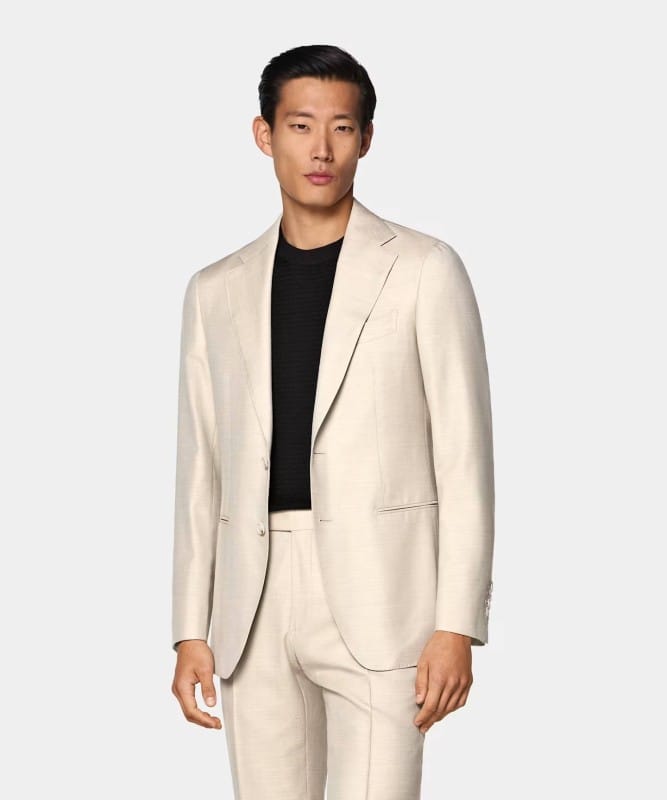
Paddock style at Monaco occupies an interesting middle ground. It is not a black-tie occasion, but it is absolutely not casual either. The men who get it right tend to arrive in something that reads as effortlessly considered: a beautifully cut suit in a lighter fabric, worn with a degree of ease that suggests the clothes belong to them rather than the other way around. Navy, stone, and soft grey are perennial choices. Linen and lightweight wool perform well in the May heat while retaining the structure that separates a suit from merely dressed-up sportswear.
What distinguishes the best-dressed men in the paddock from everyone else is almost always fit. Off-the-rack clothing, however expensive, cannot account for the individual proportions of the person wearing it. A custom suit, cut to the specific measurements and posture of its owner, has a quality of presence that is immediately legible even at a distance.
Yacht club dressing: the afternoon that requires everything
The hours between the race and the evening are uniquely Monaco. The harbour fills with some of the most impressive private vessels afloat, and the social movement between them constitutes its own choreography of introductions, conversations, and impressions formed and reformed over cold glasses and warm light.
This is where the custom suit earns its keep most visibly. The setting is informal enough that a very formal suit would feel stiff and out of place. It is elegant enough that anything underdressed reads as either oblivious or indifferent. The answer is invariably something that splits that difference with confidence: a lighter fabric, a slightly softer construction, a colour that works in afternoon sun without losing authority as the light changes toward evening.
A custom made suit allows exactly this kind of calibration. The choice of fabric, lining, lapel, and construction can be tuned to the specific demands of the occasion rather than approximated by whatever the rack happens to offer. For a setting like the Monaco harbour in late May, that precision is not vanity. It is simply good preparation.
The Casino de Monte-Carlo and the standard it sets
The Casino de Monte-Carlo is one of the great rooms of Europe. Charles Garnier, who designed the Paris Opéra, built it, and the interior makes no apologies for its ambition. To walk through its doors is to enter a space that has maintained its standards since 1863 and shows no signs of relaxing them.
The casino demands a certain quality of dress, and rightly so. It is not a place for approximations. The men who look most at home here are those whose suits appear to have been made for the occasion because, in many cases, they were. Dark navy, midnight blue, and charcoal carry the appropriate weight for the room. The cut is everything: a jacket that sits precisely on the shoulder, trousers that break cleanly, a silhouette that looks as though it was considered rather than assembled.
There is something fitting about wearing a custom suit in a building where craftsmanship has always been understood as its own form of respect. The casino was not built to be functional. It was built to be extraordinary. The right suit is built on the same principle.
The Gala season and the occasion that asks the most
Monaco’s gala calendar is among the most demanding social schedules in Europe. The Rose Ball, the Red Cross Ball, the various princely and charitable occasions that populate the calendar from spring through autumn: each one requires a level of formal dressing that few other cities in the world still expect as a matter of course.
The black-tie occasions of Monaco are not the relaxed, interpretive black-tie of a London charity dinner or a New York fundraiser. They are the thing itself. A well-cut dinner suit in a fine fabric, worn with the details attended to and the fit immaculate, is the minimum. The men who distinguish themselves at these events are those who have understood that formal dressing, like all dressing in Monaco, rewards intention.
A custom dinner suit made to precise measurements, in a fabric chosen for how it moves and how it holds under candlelight, with a lapel width and button stance calibrated to the specific proportions of the wearer, is not an extravagance at this level. It is simply the appropriate response to the occasion.
What Monaco style actually means
It would be a mistake to reduce Monaco style to a set of rules about what to wear where. The deeper quality that characterises the men who dress well in the principality is something more like attention. They have thought about what the occasion requires. They have invested in the right pieces. They wear what they own with the ease that comes from confidence in the choices made before the day began.
The custom suit is central to this because it is, by definition, the product of attention. The process of having a suit made, choosing the fabric, discussing the construction, returning for fittings, makes the final garment an expression of considered preference rather than convenient approximation. In a place like Monaco, where the standards are high and the eyes are sharp, that distinction is always visible.
The Riviera as backdrop, the suit as protagonist
There is a particular image of Mediterranean elegance that Monaco embodies more completely than anywhere else on the Côte d’Azur. The light in late May and early June, the colour of the harbour, the white facades and the impeccably maintained gardens of the Palais Princier: it is a setting that makes strong demands on whatever is placed within it.
A well-made suit in the right fabric and fit does not disappear into this backdrop. It belongs to it. From the Grand Prix grid to the Casino’s baccarat tables, from the superyacht deck to the gala ballroom, the custom suit remains the single most reliable way to meet Monaco’s standards on its own terms.
And in a principality that has been setting those terms for centuries, that is not a small thing.