


The streets in Monaco remember Fangio flying past the harbour. They remember Senna racing through the rain. They remember engines screaming between walls so close you can almost hear the paint scrape.
And now they remember a rule that arrived with fanfare… and disappeared almost quietly. The experiment lasted one season.
A Rule Born in a Ballroom
In February 2025, Formula 1 gathered in London for a glittering anniversary gala marking 75 years of the world championship. Beneath chandeliers and speeches, the sport’s governing body, the FIA, presented a small revolution designed specifically for Monaco.
The proposal sounded simple. Every driver would be required to make two pit stops during the race.
In technical language, the rule demanded that each car use three sets of tyres, and in dry conditions at least two different compounds. The intention was clear: shake up strategy and create overtaking opportunities on a circuit where passing has always been a complex art.
On paper, the concept promised intrigue. On asphalt, it produced something else.
The Monaco Paradox
The circuit is narrow, the barriers close, the rhythm precise. It is the last place in modern Formula 1 where qualifying often matters more than the race itself.
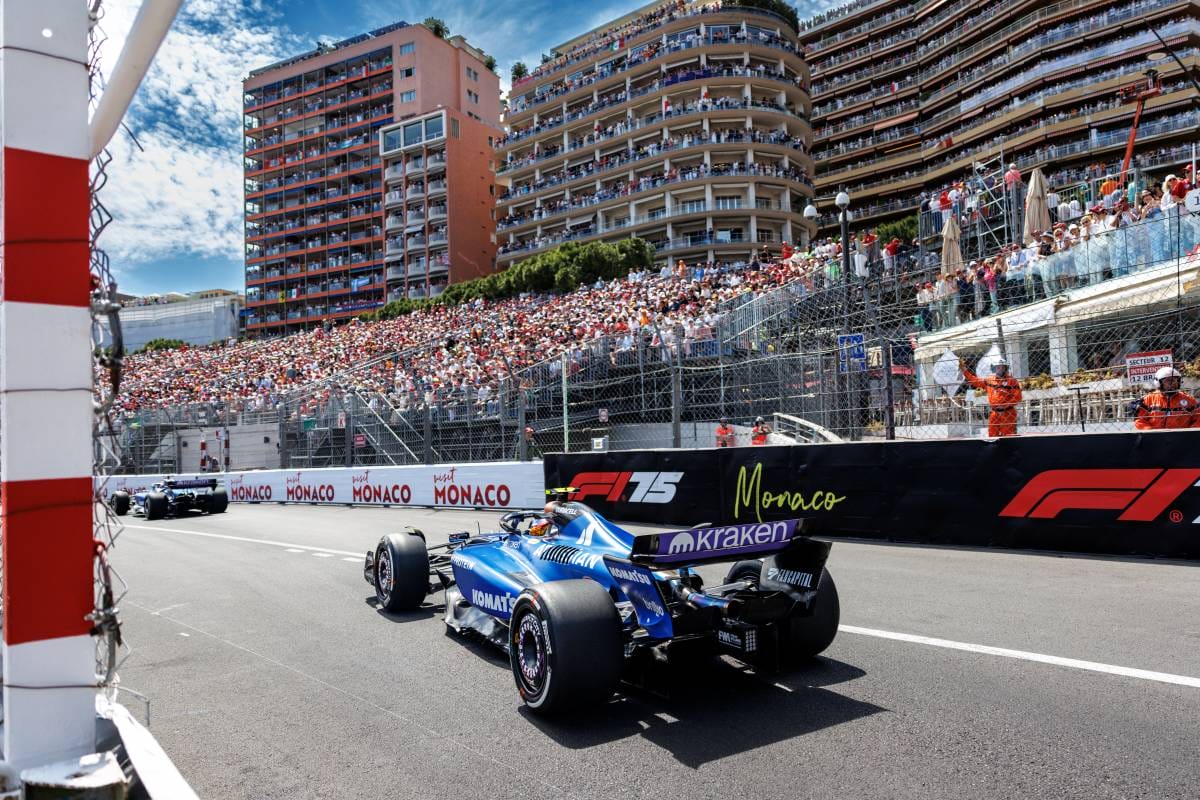
So when the two-stop rule finally met the reality of race day in 2025, something curious happened.
Rather than unpredictable strategies, the paddock converged on similar approaches. Engineers ran the same simulations, arrived at the same conclusions, and executed near-identical pit windows.
The result was strategic symmetry.
Overtaking remained scarce, the field remained compressed, and whispers spread through the paddock that some teams had even slowed the pace deliberately to protect track position during pit cycles.
The Quiet Reversal
And so, almost as discreetly as it appeared, the rule has now vanished.
In the 2026 Formula 1 sporting regulations, published by the FIA at the end of February, the clause requiring three tyre sets during the race has simply been removed.
The regulation still demands that drivers use two different tyre compounds in dry conditions, a long-standing rule across Formula 1. But the obligation to make two pit stops, the heart of the 2025 experiment, has been quietly retired.
One Small Change for Saturday
If Monaco’s Sunday returns to tradition, Saturday gains a little more breathing room.
With the arrival of a new eleventh team in 2026, potentially Cadillac, the FIA has slightly extended the final qualifying session, Q3.
Instead of 12 minutes, the decisive battle for pole position will now last 13 minutes.
Sixty seconds may not sound like much. But at Monaco, sixty seconds can mean everything.
One extra lap.
One more chance to find perfection between the walls. One more moment where a driver risks everything for a single, flawless lap.
And in Monaco, pole position still feels like destiny.
And Monaco is still about the terrifying intimacy of speed on a public street. It is about a qualifying lap that borders on madness.
It is about threading a Formula 1 car through Casino Square, the tunnel, and the harbour chicane with millimetres to spare.