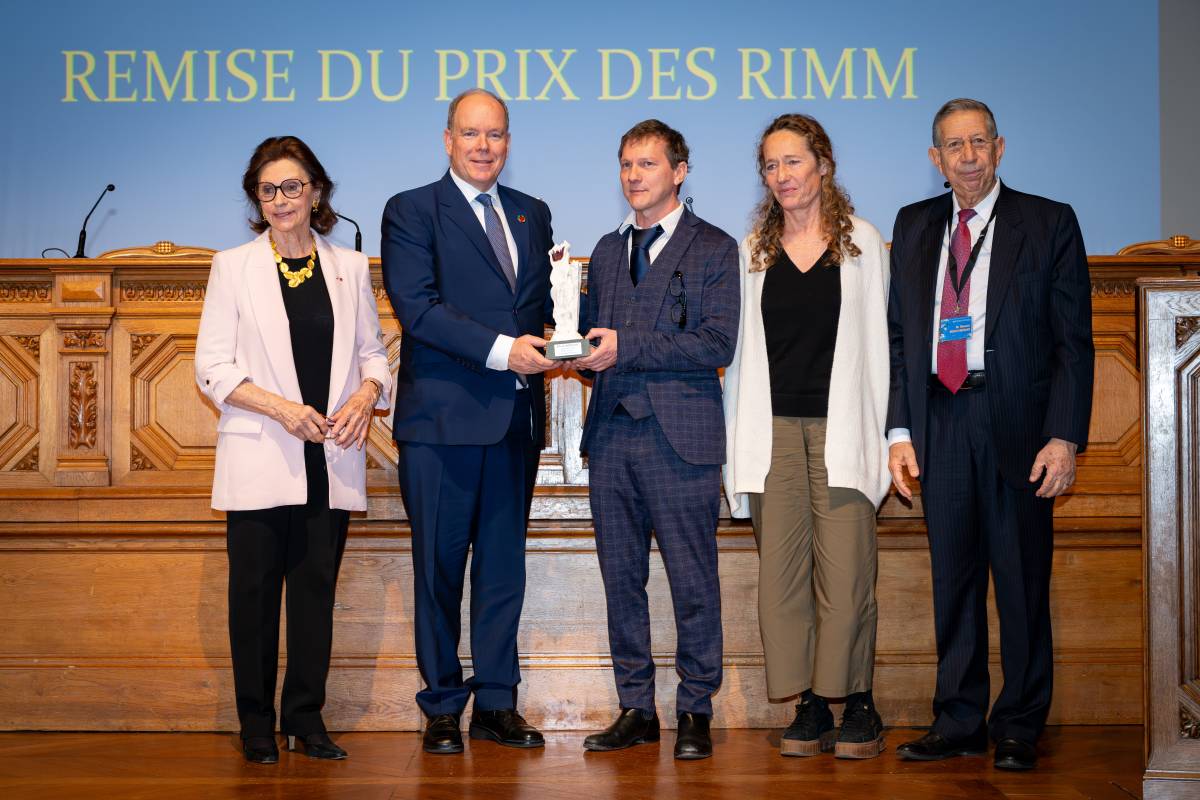
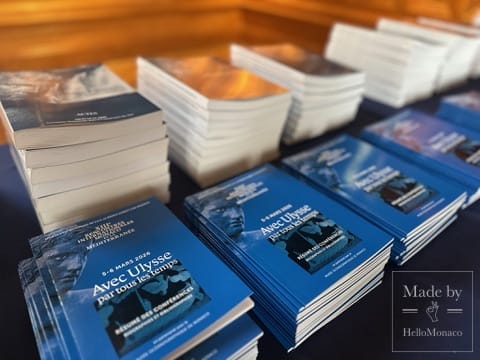


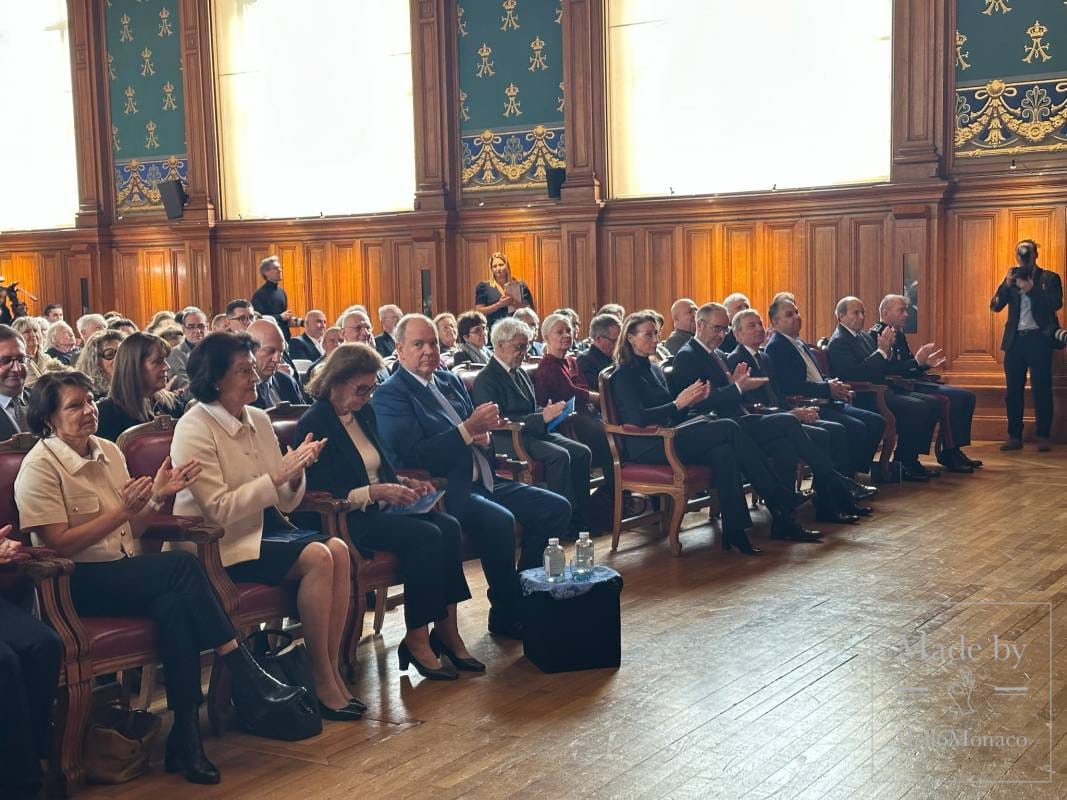
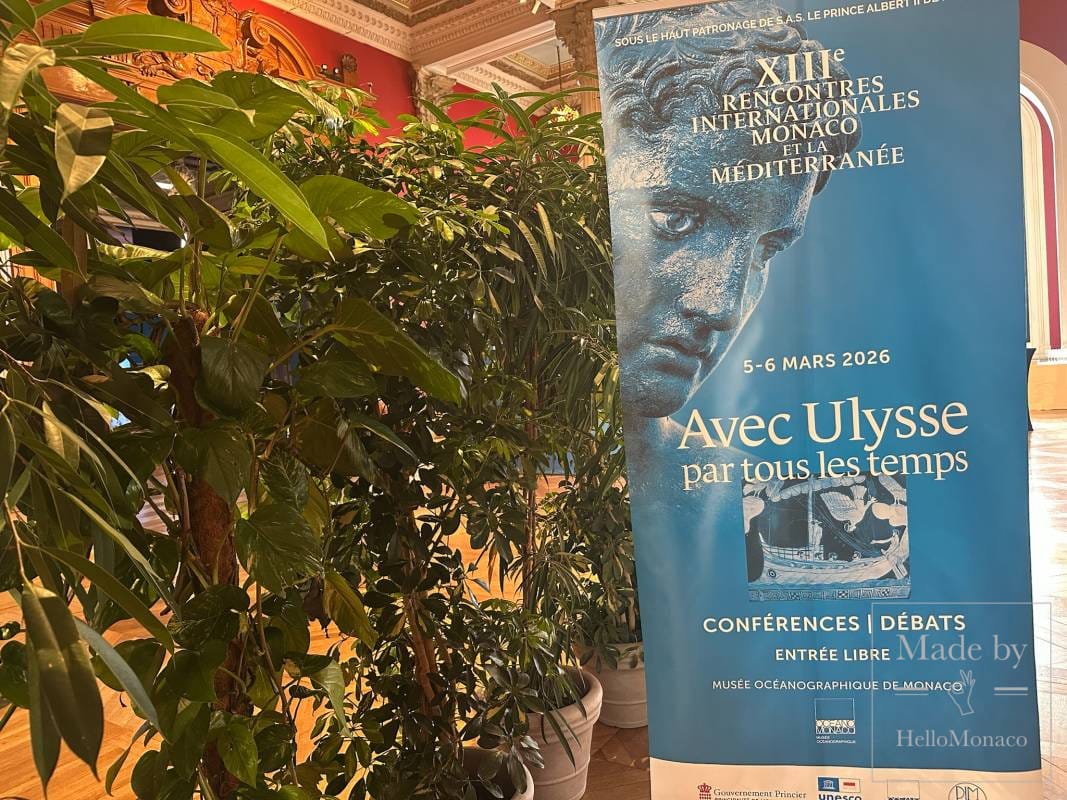
On 5 and 6 March 2026, the Oceanographic Museum of Monaco welcomed scholars, historians, philosophers and artists from across Europe and the Mediterranean for the 13th edition of the Rencontres Internationales Monaco et la Méditerranée (RIMM). Organized by the Association Monégasque pour la Connaissance des Arts (AMCA) under the High Patronage of H.S.H. Prince Albert II of Monaco, the biennial event once again positioned the Principality as a meeting point for intellectual exchange around Mediterranean culture and heritage.
This year’s theme, “With Ulysses Through All Times”, offered an ambitious exploration of one of the most enduring figures of Mediterranean imagination. Over two days of conferences and round tables, specialists examined how the Homeric hero continues to shape literature, art, philosophy and contemporary thought.
A Colloquium at the Crossroads of Mediterranean Cultures
Created in 2001, the Rencontres Internationales Monaco et la Méditerranée bring together international experts every two years to reflect on the past, present and future of the Mediterranean world.
In a Mediterranean still marked by mobility, crossings and cultural exchanges, the myth resonates strongly with contemporary questions of migration, identity and resilience.
The Opening: Prince Albert II Highlights the Relevance of Myth
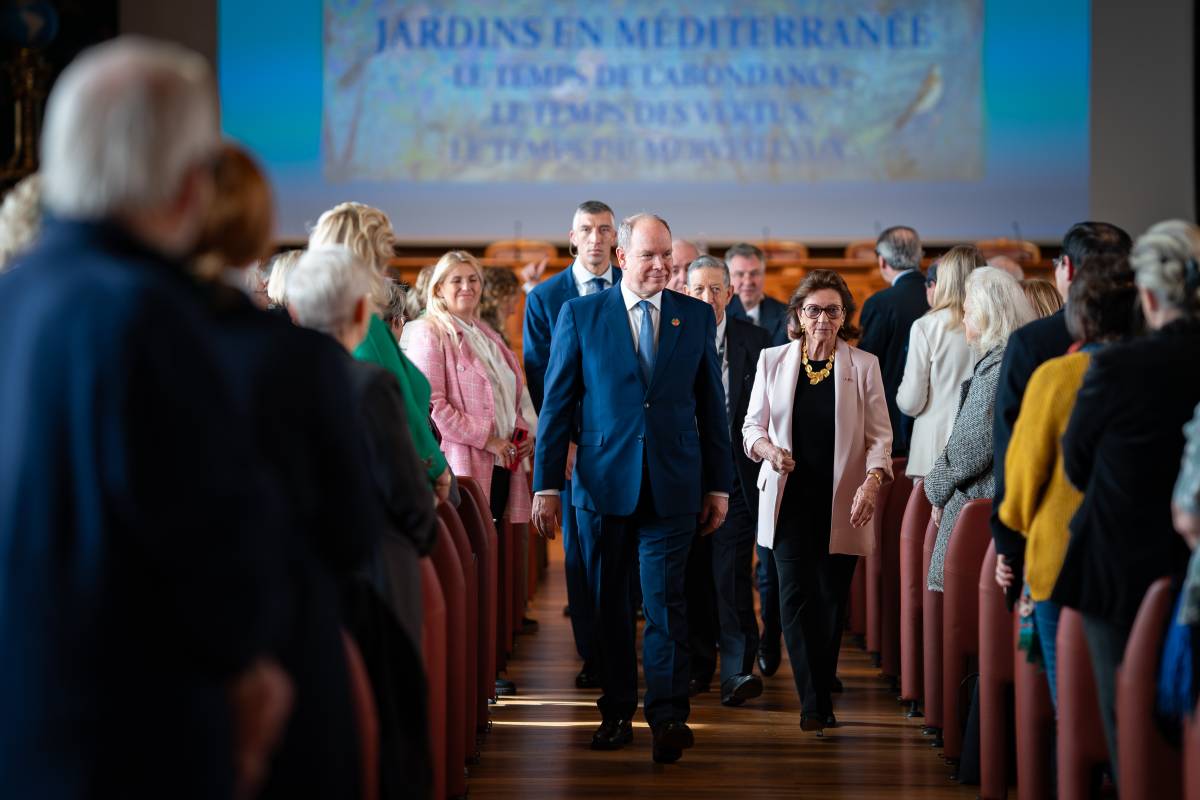
The conference opened with welcoming remarks by President Elisabeth Bréaud, Robert Calcagno, Director General of the Oceanographic Institute, and Mounir Bouchenaki, Honorary President of RIMM and former UNESCO Assistant Director-General for Culture. The colloquium was then officially inaugurated by H.S.H. Prince Albert II of Monaco, whose presence underscored the importance of the event within Monaco’s cultural landscape.
In his address, the Sovereign expressed his pleasure in once again opening the Rencontres and warmly thanked Élisabeth Bréaud, founder and director of RIMM, for her dedication to the event’s continued success. He highlighted the way this year’s theme connects classical mythology with contemporary reflection.
Prince Albert II also emphasized a particularly significant cultural discovery linked to Monaco’s own heritage: the restoration of the painted decorations of the Prince’s Palace. These works have revealed that the central ceiling scene in the throne room represents the Nekuia of Ulysses, the moment in the Odyssey when the hero consults the spirit of the seer Tiresias in the underworld to learn the fate of his journey.
The Prince noted that several other episodes from the Odyssey appear in the surrounding lunettes of the ceiling, demonstrating how Renaissance artists integrated the Homeric epic into princely iconography. He also announced that the newly rediscovered fresco cycle will soon be the subject of a dedicated conference titled “Images of a Renaissance Sovereignty.”
Beyond historical scholarship, Prince Albert II stressed the continuing relevance of Ulysses today. The hero’s voyage, he observed, echoes humanity’s own search for meaning and resilience in the face of contemporary challenges, including the need to preserve the environment and build a more sustainable future.
Marc Chagall and his famous mosaic “Le Message d’Ulysse”
At the 13th RIMM 2026, HelloMonaco spoke with Anne Dopffer, General Curator of Heritage — Director of the National Museums of the 20th Century in the Alpes‑Maritimes, about Marc Chagall and his famous mosaic “Le Message d’Ulysse.” Chagall moved to the south of France in 1949 and later made his home in Saint‑Paul‑de‑Vence. The mosaic was commissioned for Nice’s Faculty of Law, created in 1968 and inaugurated in 1969; it measures roughly 2.7 × 11 m and was made with glass, stone and gold leaf.
HM: What is the mosaic’s current condition, and what conservation work has been done?
Anne Dopffer: The mosaic is in very good shape. It was created in 1968, inaugurated in 1969. It has been restored twice. The last restoration took place in 2023, so the colours are absolutely amazing. It’s also the only mosaic by Chagall which has gold — not only stones, not only glass for the bright colours, but also gold. It’s really remarkable. The first time I saw it I thought, these are really psychedelic colours. It’s the end of the 60s, and Chagall was so free in the way he used colours.
HM: Are there special environmental or maintenance needs to preserve it in its current location?
Anne Dopffer: It needs regular checks, but the Faculty of Law really has a deep love for this work and does a very good job in preserving it. Ongoing monitoring and routine conservation are the priorities.
HM: Is the mosaic freely accessible to the public?
Anne Dopffer: Yes — you can enter the Faculty of Law (part of Université Côte d’Azur) and see the mosaic on the first floor.
HM: Have interpretations of the mosaic’s meaning changed over time?
Anne Dopffer: People respond differently over time. We worked with students: they wrote texts and recorded them about what message the mosaic conveys. Their interpretations of the different episodes were very moving, brilliant and touching. It shows how this antique text, through the eyes of Chagall, still speaks to people. The students today are able to understand the universal messages and make them their own.
HM: What is your favourite detail or aspect of “Le Message d’Ulysse”?
Anne Dopffer: One of my favourites is Ulysses and Calypso — he stays with her seven years, she even offers him immortality, but he longs for home and for Penelope and refuses. Chagall paints it as an island that is also a bed: she lies there like a goddess, he sits on the edge, turning away. It’s the end of love, full of nostalgia.
HM: Why is this mosaic important for the Alpes‑Maritimes and for Chagall studies?
Anne Dopffer: It’s an exceptional local work by a major 20th‑century artist — by its size, its palette and the rare use of gold it enriches our Alpes‑Maritimes heritage and adds to research on Chagall.
From Homer to Contemporary Thought
The program brought together prominent scholars and thinkers from across disciplines. Among the keynote speakers was Michel Zink, member of the Académie française and professor emeritus at the Collège de France, whose lecture explored the paradox of “Ulysses the homebody”: a hero of travel who ultimately longs only to return home.
Another presentation, by art historian Sophie Kovalevsky, examined the recently restored fresco cycle in the throne room of the Prince’s Palace, placing it within the context of Renaissance court culture and symbolic representations of power.
Philosopher Barbara Cassin, also of the Académie française and recipient of the CNRS Gold Medal, offered a reflection on the identity of Ulysses as a hero shaped by language, rhetoric and multiplicity. Through such perspectives, the colloquium demonstrated how myth remains a living intellectual framework.
Three Round Tables, Many Perspectives
The discussions unfolded through three thematic round tables. “Renewed Wake: Critical Views on the Odyssean Legacy” explored the philosophical and historical interpretations of the myth, including its reception in the ancient Mediterranean world.
“Sovereign Traces: Reappropriations of the Myth” examined how artists and writers have reimagined Ulysses, from literary reinterpretations to visual works such as Marc Chagall’s mosaic The Message of Ulysses in Nice.
“Uncertain Paths: From Heroic Epic to Human Fragility” addressed the historical realities behind the epic voyage, ancient navigation routes and the modern imagination of Mediterranean travel.
The conference concluded with reflections on Ulysses in cinema, highlighting how filmmakers continue to reinterpret the myth for contemporary audiences.
A Living Mediterranean Heritage
The XIIIth RIMM closed with a screening of Mario Camerini’s 1953 film Ulysses at Monaco’s Théâtre des Variétés, illustrating how the epic continues to inspire modern storytelling.
As Prince Albert II mentioned to the participants, the journey of Ulysses remains a powerful metaphor: a reminder that exploration, ingenuity and courage are as necessary today as they were in Homer’s time.