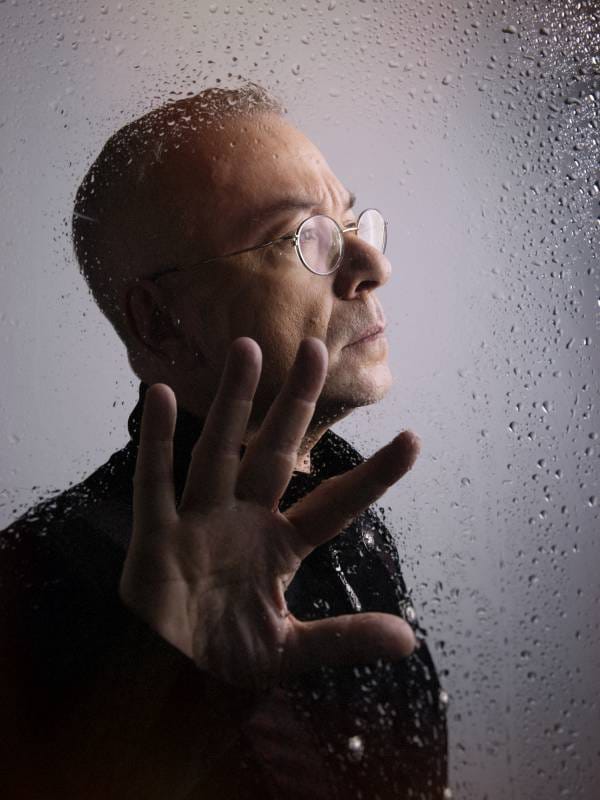


An extraordinary journey through a particular universe. He was the one to have greatly contributed to its opening up to the public. Thanks to a number of albums, often recorded four-handed (130 in total), Olivier Vernet has truly brought the organ to Monaco, the French Riviera and around the world. Taking it out of the church and its purely religious repertoire, he has dusted off this fabulous instrument, often associated with religious life.
A 20-year keeper of the great organ of the Monaco Cathedral, artistic director of the organ festival, with its 20th edition just celebrated in the Principality, teacher at the Prince Rainier III Academy and the National Conservatory of Nice (CNRR), Olivier Vernet has students of all ages and from all walks of life. An integral part of the Principality’s heritage, this impressive instrument is still truly captivating in its power and range of infinite possibilities. Olivier Vernet is now kindly sharing his vision.
Hello Monaco: Why did you choose the organ?
Olivier Vernet: It was pure chance. Back when I was young, I had a somewhat lymphatic, limp temperament. To remedy that, my parents enrolled me in a fencing club, where I ended up being selected for national competition. I was then thirteen or fourteen. On that occasion we left Vichy, my hometown, to visit the capital. That fencing competition started on Saturday morning, and an hour later… I was eliminated.
This disappointment did not stop us from visiting Paris. Before taking the train home, on Sunday night we went to see a concert at Notre-Dame. I was used to visiting churches, but this cathedral made a particular impression on me. It smelled of incense and old stones. And the great organ truly transported me! It was a revelation. On the way back, I told my parents I was leaving my piano class at the Conservatory for the organ.
HM: So back then you already loved the piano… Did you ever think you’d become an organist?
Olivier: There were no organ classes at the Vichy Conservatory at first. I waited for two years, and a class opened. I was delighted. I certainly liked the piano — with a little practice, my results were quite satisfactory. I must have been gifted… Unlike all the kids of my age, I also loved music theory. I had a good ear. The piano turned out good practice for the organ indeed.
HM: When we watch you play, the choreography of your hands and feet is fascinating, but your posture is impeccable. Isn’t that incredibly difficult to maintain?
Olivier: To see an organist play is indeed impressive. But you know, it’s not much more difficult than playing the piano with the left and right hands, using the damper pedal. Using a certain technique, it’s not as complicated as it seems. But you do have to practice every day. The brain has it all recorded! Four-handed performance, of course, requires even more skill — four keyboards but very little space.
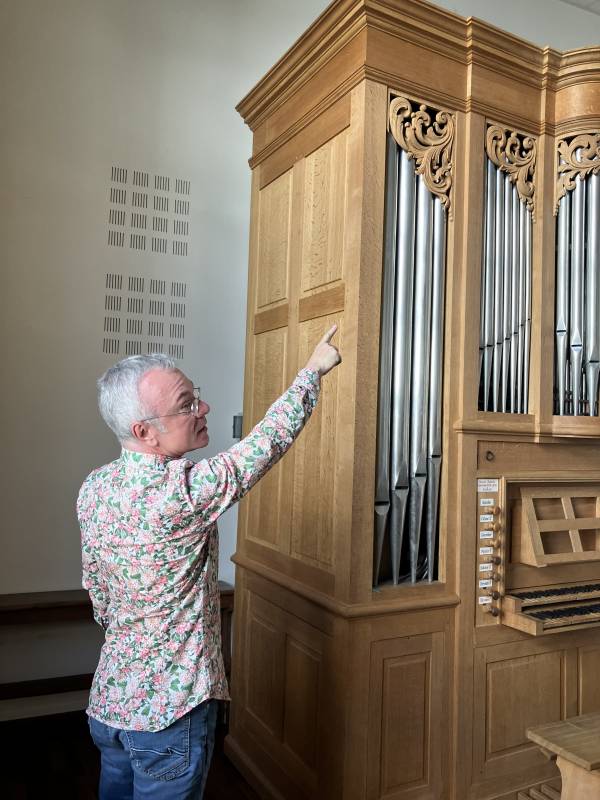
HM: Why a four-handed performance?
Olivier: To present a different repertoire. These are orchestral transcriptions. Four-handed organ performance provides additional expressive resources. The organ helps us isolate one instrument from another, putting certain things into perspective, making the best of the church acoustics and interpreting nuances for an audience that is placed quite a distance away.
HM: For an average person, doesn’t the organ seem a little outdated?
Olivier: The problem with the general public, is that the organ is often associated with the church. There are fewer and fewer religious people around. Still, the only way to really hear the organ is going to a church service… Organ concerts outside of religious context are, of course, organized, particularly in Monaco and the French Riviera. The collective unconscious, however, is still associating it with some dusty hymns, and that’s a little scary. More and more musicians are therefore trying to prepare a varied and attractive repertoire dissociating the organ from this kind of perception.
HM: But you still need to go to church to actually hear the organ…
Olivier: The organ is indeed closely associated with the church acoustics. It needs reverberation, echo, walls to amplify the sound. Only very large and unique concert halls like the Lyon and the Radio France auditorium, or the Paris Philharmonic Hall, actually own an organ… Certain other countries, however, particularly in Asia, keep their instruments in concert halls as they are not religiously related. Portable models, small modules can also be transported to train station halls or outdoors…
HM: Isn’t there a certain popularity among young people and therefore a future for the organ?
Olivier: We have 24 students at the Nice Conservatory, most of them not religious. They come for the love of the instrument as such. In Monaco, I have five students — two little 7-year-olds, two older teenagers and a 65-year-old lady who is passionate about it. She bought an electronic organ to practice at home. So there is no age limit…
The organ certainly remains a niche instrument, like the harp or the harpsichord. You won’t see the same enthusiasm here as for the piano, violin or the guitar…
There are also fewer job opportunities. You can’t join an orchestra. You can be a teacher, but for that you need to be a conservatory graduate and pass competitive exams… Having passed an international competition in 2006, I am lucky enough to have a salaried job in Monaco. All Principality churches own an organ, with the princely government’s ambition of maintaining this instrumental heritage in a perfect state. With the Catholic religion being official in Monaco, unlike France, Italy or elsewhere, it is indeed a priority. The organ of the Nice Cathedral, on the other hand, has sadly been in ruins for the last thirty years. Same as with Notre-Dame de Paris our only hope is patronage …
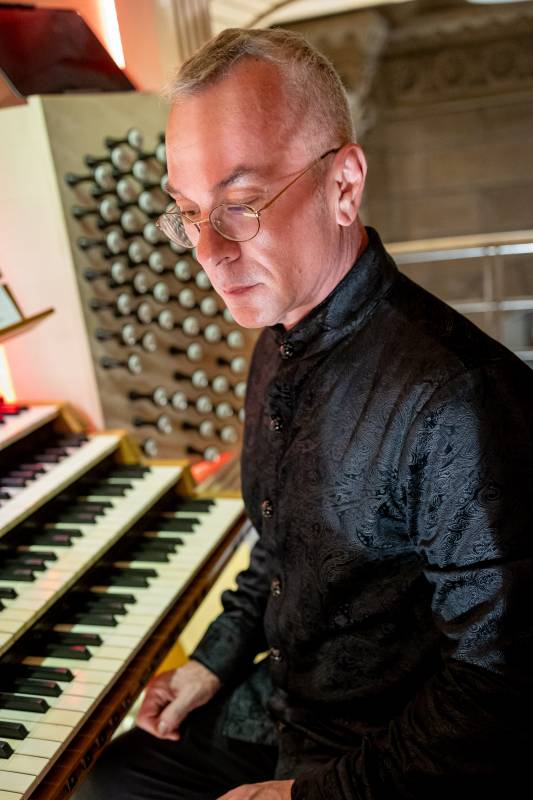
HM: So with the organ, are we more into worship or culture?
Olivier: At the Conservatory, we are purely cultural. The repertoire is certainly religiously related, but a very large number of the 19th century and onward scores do not have a religious connotation. This kind of secular music is very popular.
HM: What are your observations for the recently held 20th Monaco Organ Festival?
Olivier: It’s a major event for Monaco’s organs. Up until last year, it was held in the summer. We then realized that the weather was getting hotter, so we moved it to the fall. We also had in mind to reach out to the local population, fleeing the French Riviera during the summer. Still more so given that these concerts are free, open to the public with the purpose of popularizing culture. The festival thus introduced its audience to four very varied evenings. Exploring a philosophical angle, the opening concert accompanied Saint Thomas Aquinas’ readings. Another very original organ and violin concert was performed by two Swedish artists, playing Bach in Swedish style, with a mélange of folk rhythms… A very eclectic program indeed.
HM: Have you ever performed at a major princely ceremony?
Olivier: I performed at the very wedding of Prince Albert and Princess Charlène, alongside the Philharmonic Orchestra, the Opera Choir and some great opera singers. We played excerpts from the Mozart service, the Saint-Saëns symphony finale… I was incredibly nervous, feeling like I was taking part in a historic moment. It was all happening in the Princely Palace courtyard, not in the cathedral. I played a very large electronic organ that was very impressive. Even astonishing. The technology is now advanced enough for a synthesizer to truly create an illusion. Electronics cannot replace instruments that are true works of art. But it is complementary.
I also performed at the baptism ceremony of the princely children. They were as good as gold. It was a truly beautiful moment. These kind of major services punctuate the life of the Principality, same as the national holidays like Princely day or Saint Devote’s celebration.
HM: Do you have a dream?
Olivier: I wouldn’t say so. I’m happy with my life. Dividing my time between Nice and Monaco, I am based in Toulon for family reasons. And my job is a delight.
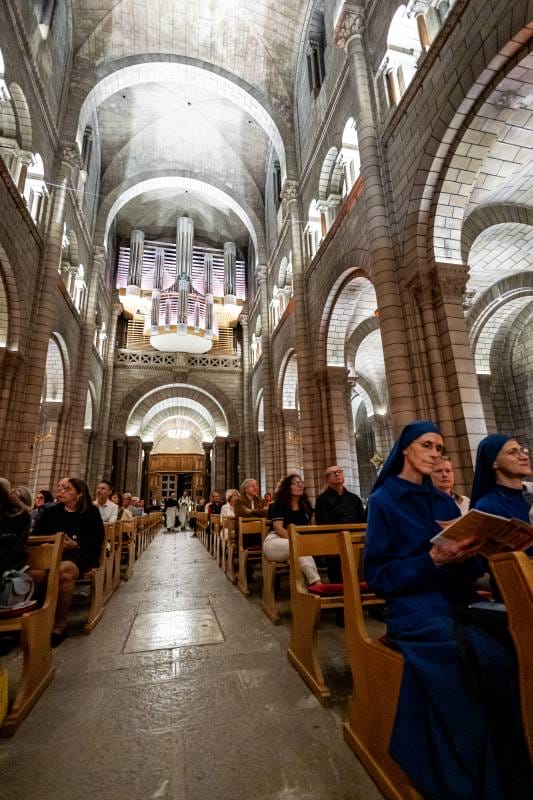
The 20th Monaco International Organ Festival: Celebrating Excellence and Eclecticism
On October 4–18, 2025, the Principality hosted the 20th Monaco International Organ Festival, with its eclectic program attracting a large and varied audience. Orchestrated by Olivier Vernet, this event has witnessed great enthusiasm for this unique instrument.
Its first evening crowned the triple Saint Thomas Aquinas’ jubilee, honouring the anniversary of his canonization, birth and death. On this occasion, Olivier Vernet performed a number of Bach’s emblematic pieces for the Cathedral organ, accompanied by Saint Thomas Aquinas’ readings. A true communion between music and thought, it was themed “One Musician, One Philosopher, Two Theologians.”
Featuring a special guest, Cameron Carpenter, a completely different atmosphere reigned at the second Cathedral concert. “A brilliant, extraordinary organist who leaves no one indifferent. A performer, composer and transcriber, he revolutionized the way we view the organ today,” had introduced him Olivier Vernet. Carpenter treated his audience to some Bach, Handel, Cesare Franck and Mussorgsky.
Another highlight was a duo performance at the Sacré-Cœur Church. Lisa Rydberg (violin) and Gunnar Idenstam (organ) offered us a unique and happy blend of Bach and Swedish folklore. New Bach interpretations were thus performed, including Brandenburg concertos.
The fourth concert at Saint-Charles church introduced us to the Pêr Vari Kervarec trio, the one to have performed in front of the Sainte-Dévote church for the princely wedding in 2011. These musicians evoked the ancestral Grimaldi sites in Brittany, an original and much appreciated highlight of the festival indeed.