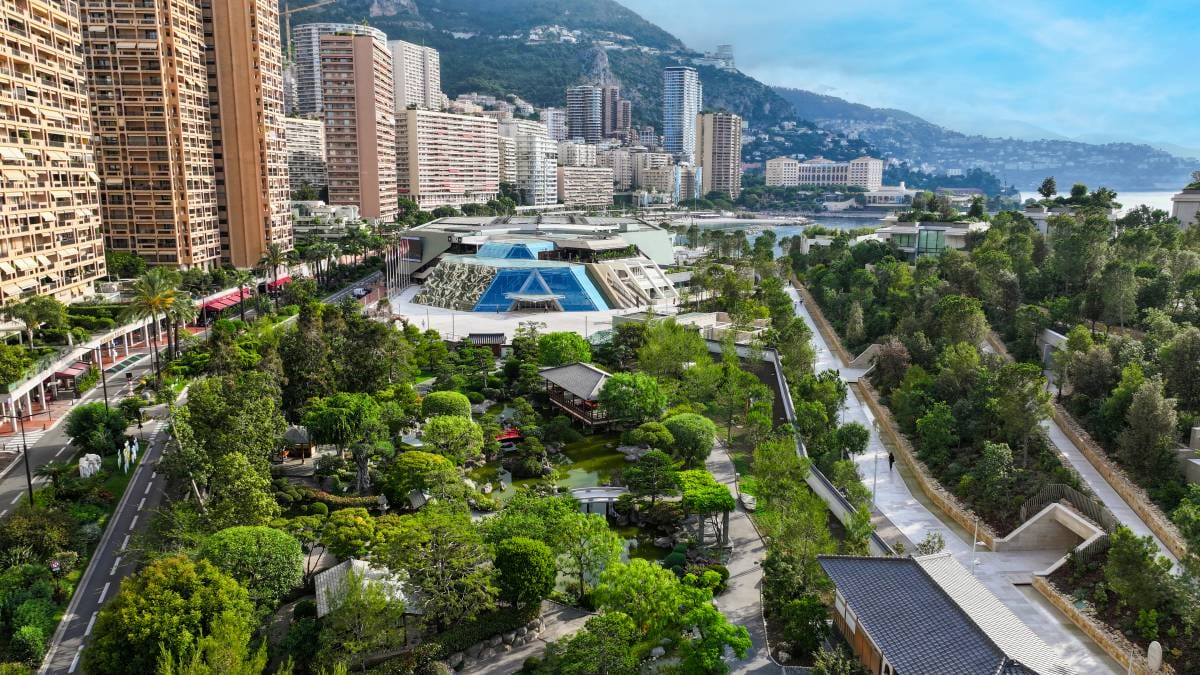


In Monaco, a car is rarely just a machine. It is a roar between narrow streets, a prince’s passion, a driver’s childhood dream, a national myth compressed into metal, rubber and noise.
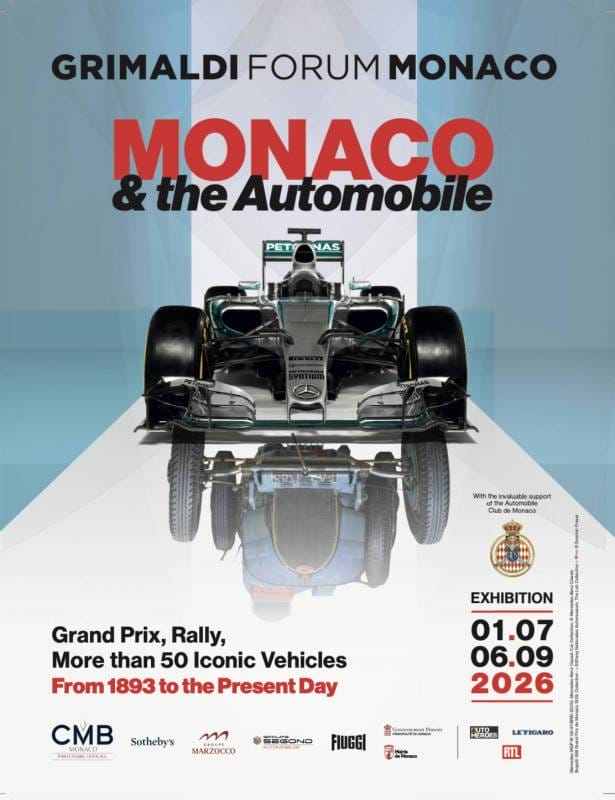
That is the spirit behind “Monaco and the Automobile, from 1893 to the Present Day,” the Grimaldi Forum’s major summer exhibition, open from 1 July to 6 September. Spread across thousands of square metres, the show gathers more than fifty remarkable vehicles, rare documents, films and archives to tell the story of a country whose roads have become a theatre.
This is not a motor show. It is Monaco’s autobiography, written in headlights.
The exhibition begins not with speed, but ceremony. The Rolls-Royce Silver Wraith that carried Prince Rainier III and Princess Grace on their wedding day in 1956 sets the tone. Before the engines scream, Monaco remembers elegance. Before the racing line, there is the royal procession.
Then history shifts into top gear.
In the Beginning
The Principality’s automobile history reaches back to 1893, when the first car arrived during the Paris-Nice race. By 1911 came the Rallye Monte-Carlo; by 1929, the first Monaco Grand Prix. From that point onward, Monaco stopped being merely a place cars visited. It became one of the places by which cars measured themselves.
The exhibition’s great strength is authenticity. These are not symbolic substitutes polished up for nostalgia. Many are the actual machines that raced, won, suffered and survived. Curators spent years tracking them down through collectors, institutions and racing archives. That detective work matters. A replica can show a shape; the real car carries the moment.
Louis Chiron appears as one of the exhibition’s central ghosts, the Monegasque hero who won both the Monte-Carlo Rally and the Monaco Grand Prix. Nearly a century later, Charles Leclerc gives the story its modern emotional release. His Ferrari SF-24, linked to his unforgettable 2024 home victory, stands not simply as a racing car but as a national exhale after a 93-year wait since Chiron.
A Future in Space?
The exhibition also refuses to stay trapped in petrol-scented nostalgia. At its close, the 1893 Panhard & Levassor Type P2D faces the Venturi Space MONA LUNA lunar rover, designed for the Moon’s South Pole. It is a daring final image: Monaco’s motoring past staring at a possible extraterrestrial future.
That may be the real message of the show. Monaco’s relationship with the automobile has never been only about going fast. It has been about spectacle, identity, invention and ambition. The car here is a social object, a technological object, a royal object, a sporting object, sometimes even an artwork.
For Everybody
For enthusiasts, there are famous names, winning machines and sacred racing memories. For everyone else, there is something broader: the story of how a tiny country turned movement into mythology.
At the Grimaldi Forum this summer, this exhibition curated by Rodolphe Rapetti, Chief Heritage Curator and art historian, features Monaco parking its past under one roof, and leaving the engine running.
Sylvie Biancheri, General Manager of the Grimaldi Forum Monaco emphasizes that the exhibition is not aimed exclusively at motorsport fans … it is not only for experts or fans of the automobile, it is for everybody. Families, children, everybody can find a topic which will be attractive to them.