


There are State Visits that create new relationships, and there is a unique one that formally recognises a relationship that has existed for centuries.
When Italian President Sergio Mattarella arrived at the Prince’s Palace on Friday 2 October, Monaco and Italy were more than seven centuries into their relationship.
The two countries share history, Mediterranean roots, families, commerce and culture. The Grimaldi dynasty came from Genoa. Italians form one of the Principality’s largest communities, thousands cross the nearby frontier to work in Monaco, and Italian businesses are deeply embedded in its economy.
Yet something unprecedented was about to happen.
Never before had a President of the Italian Republic made a State Visit to Monaco.
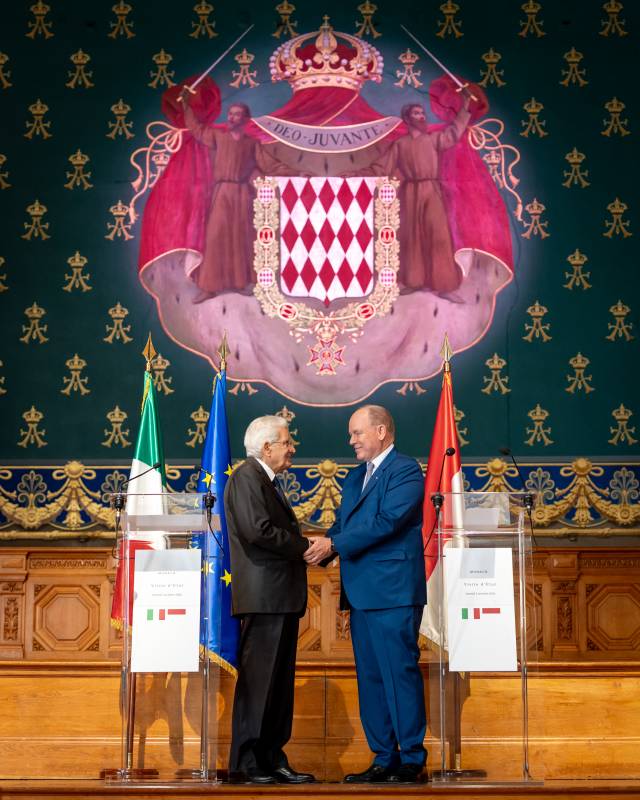
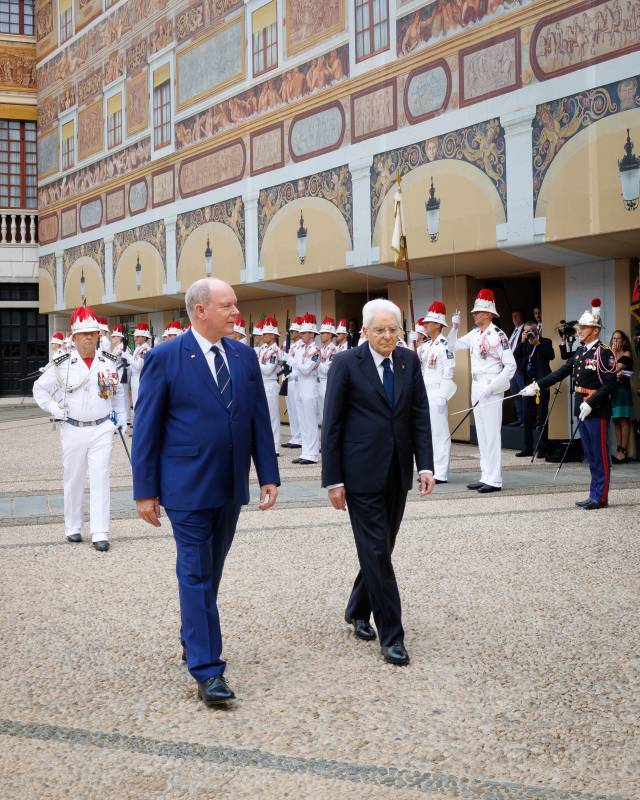
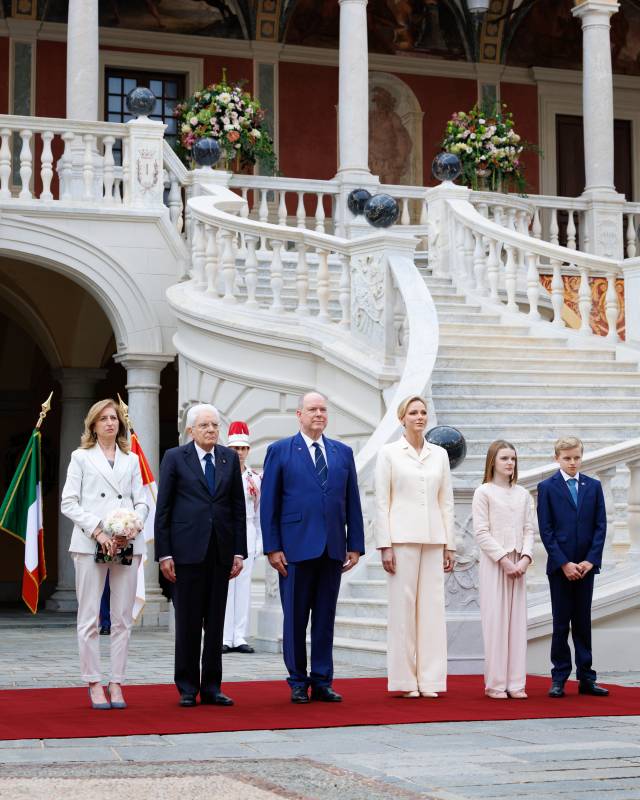
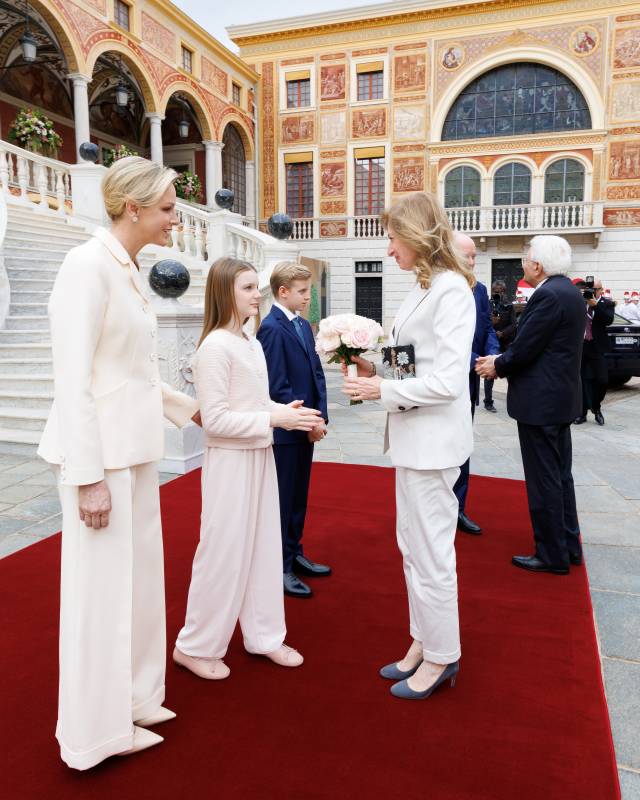
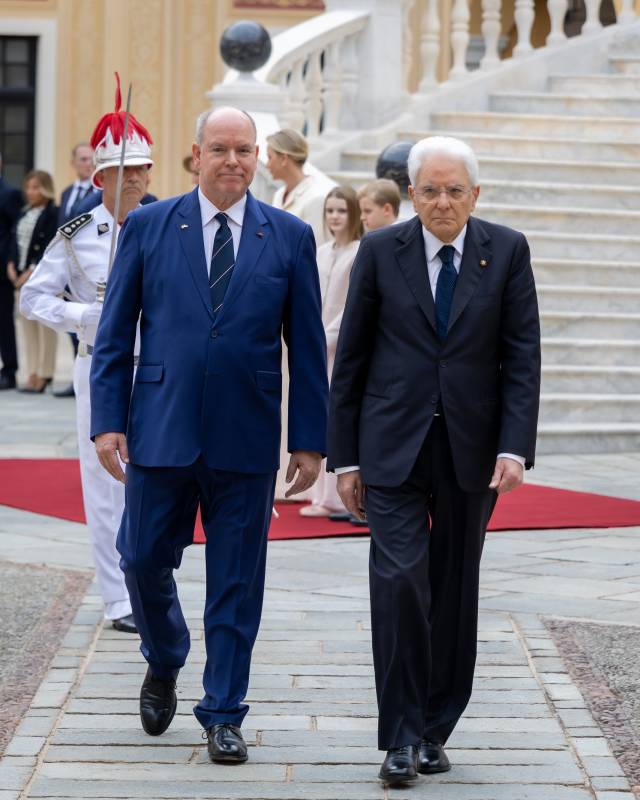
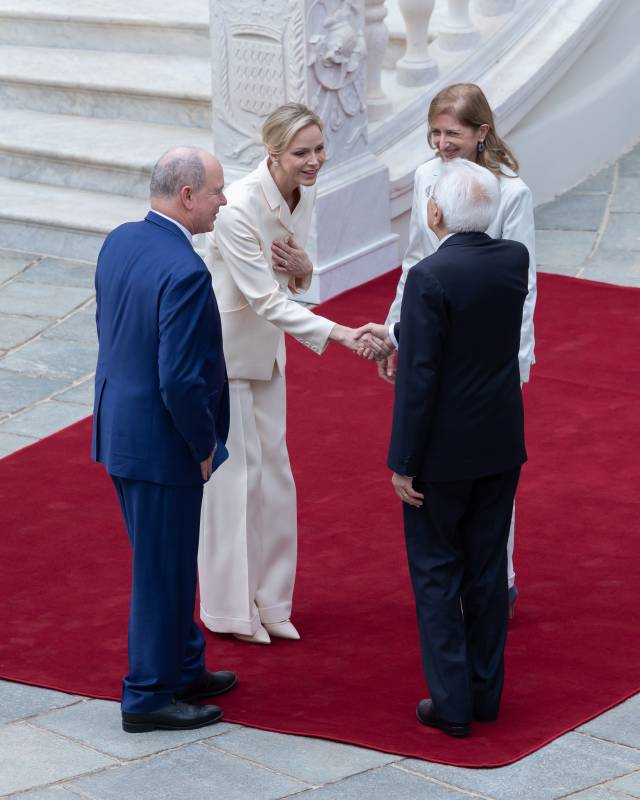
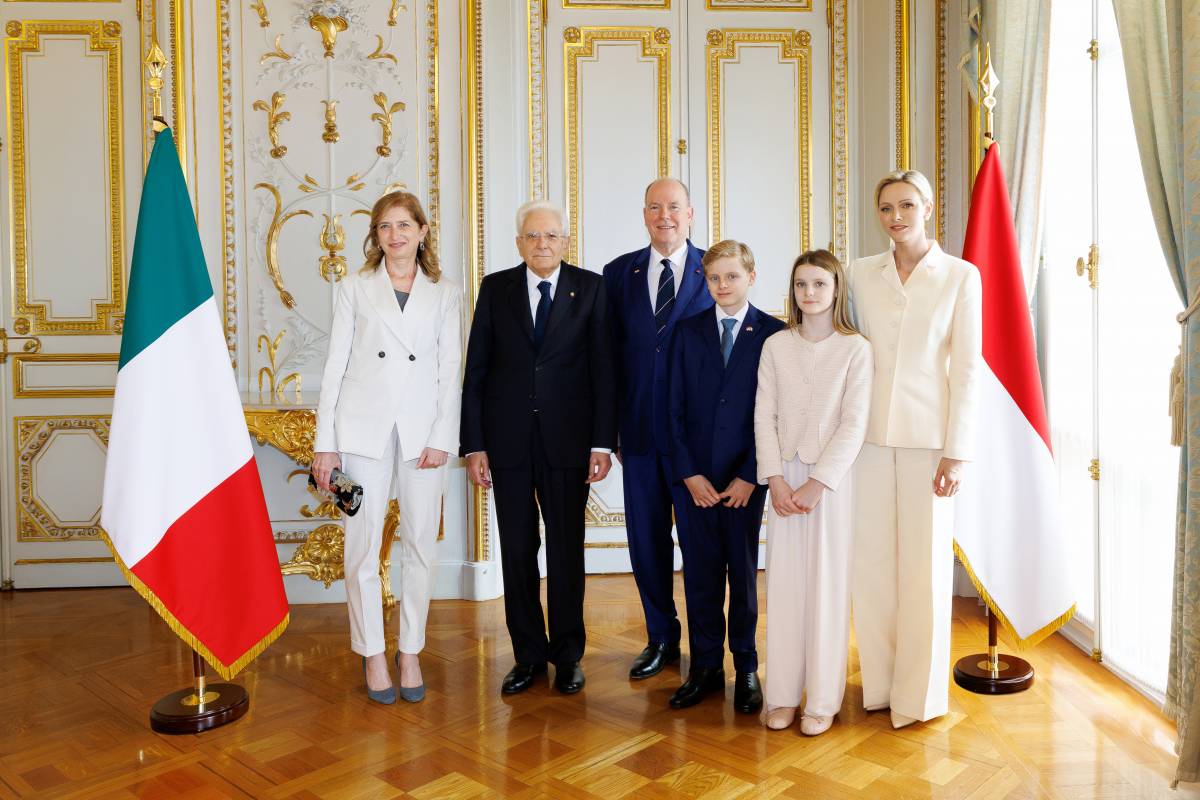
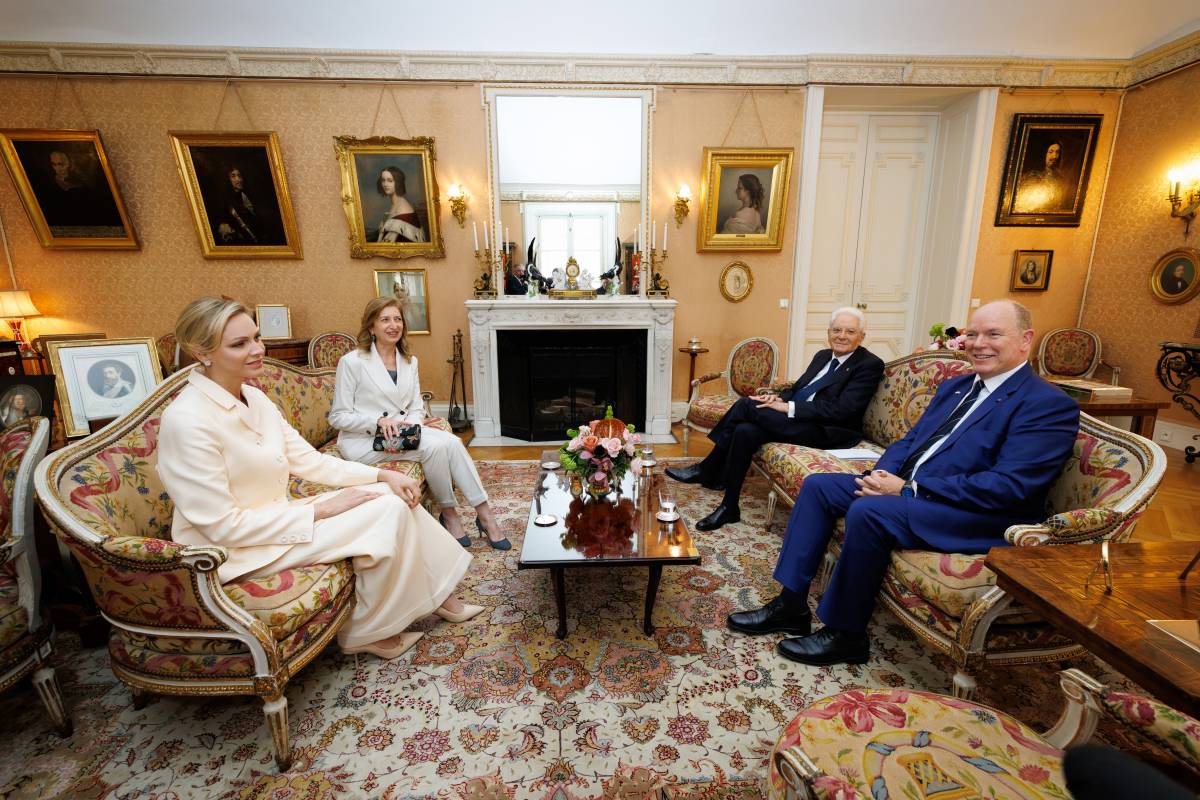
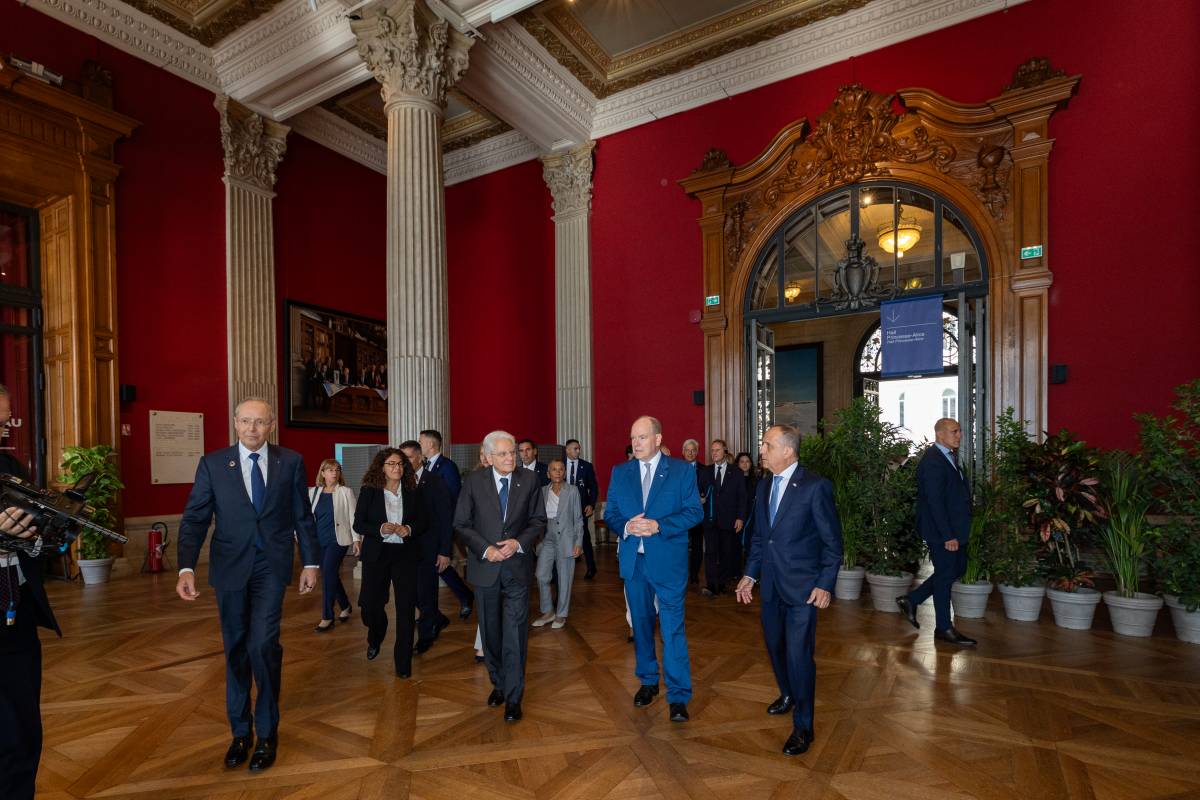
Accompanied by his daughter Laura, Mattarella entered the Cour d’Honneur to be welcomed by Prince Albert II and Princess Charlene, joined by Hereditary Prince Jacques and Princess Gabriella. It began two days combining State ceremony with the celebration of a relationship stretching back more than seven centuries.
The Night that Linked Genoa and Monaco
The story begins in the turbulent politics of medieval Italy.
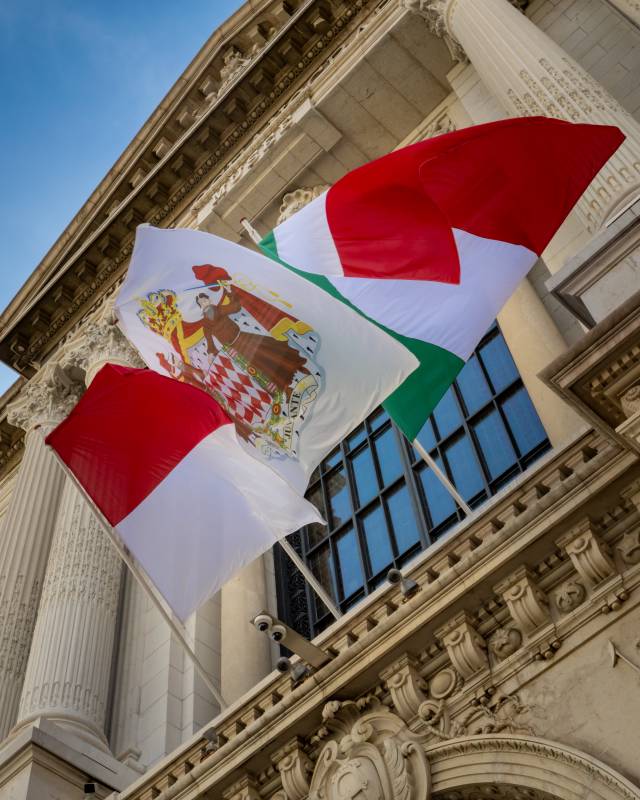
The Grimaldis were one of the great Genoese families associated with the Guelph faction during the struggles between Guelphs and Ghibellines. Their history became inseparable from Monaco on 8 January 1297, when Francesco Grimaldi seized the fortress on the Rock, the episode immortalised in Monaco’s coat of arms by two sword-bearing monks.
Mattarella returned to that moment during his State Dinner address, describing it as creating an “indissoluble” connection between Monegasque and Ligurian history.
Over the centuries, Grimaldi connections spread across Liguria, Piedmont and southern Italy. They survive today through the Historic Grimaldi Sites, a network of Italian municipalities with historical links to the dynasty, many personally visited by Prince Albert II.
Palatial Frescoes
Even the Palace in which Mattarella was received bears evidence of the Italian connection.
During the 16th century, Monaco’s medieval fortress was transformed into a Renaissance palace. Genoese painters including Nicolosio Granello and Lazzaro Calvi decorated it with frescoes, some hidden for centuries and painstakingly rediscovered and restored in recent years.
So when Mattarella spoke at the State Dinner of the Italian Renaissance influence around him, he was standing inside part of that shared history.
From Ancient Ties to Modern Diplomacy
Modern diplomatic relations began on 25 April 1875, when Henry Bentivoglio-Middleton was appointed Monaco’s chargé d’affaires to the government of the King of Italy.
A Monegasque legation opened in Rome in 1907 and was raised to embassy status in 1982. Italy elevated its Consulate General in Monaco to an embassy in 2006.
Important visits had long taken place in the other direction. Prince Rainier III met Italian President Luigi Einaudi in 1950, and in 1957 Rainier and Princess Grace made an official visit to President Giovanni Gronchi in Rome. Prince Albert II has continued that tradition, meeting Mattarella several times.
Nearly 70 years after Rainier and Grace’s visit, Mattarella finally crossed that diplomatic bridge in the opposite direction.
A Welcome with the Next Generation Present
The symbolism began immediately in the Cour d’Honneur.
Prince Albert and Princess Charlene welcomed Head of State Mattarella and his daughter, with Jacques and Gabriella present too, giving the occasion an unmistakable dynastic dimension.
Military honours and the national anthems followed before the two Heads of State reviewed the military detachments. Mattarella and Prince Albert then held a private audience, while Princess Charlene received Laura Mattarella.
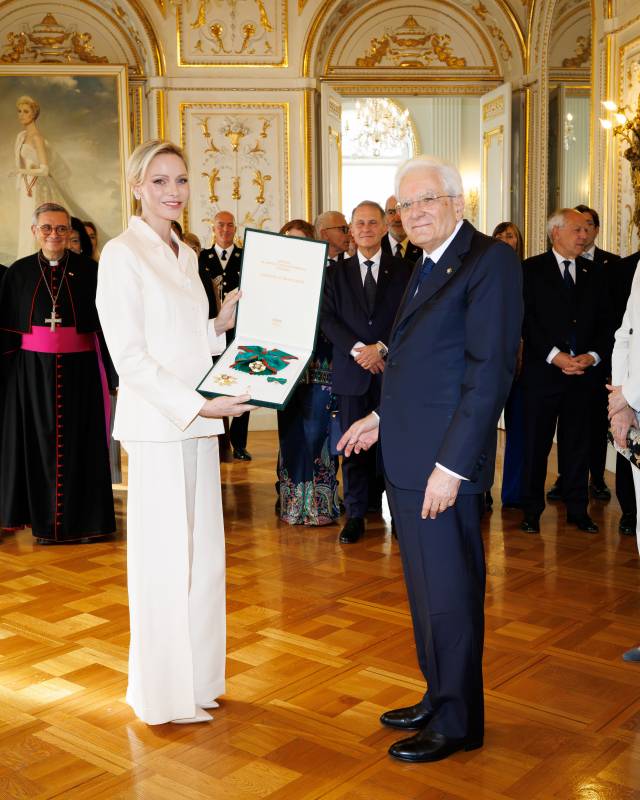
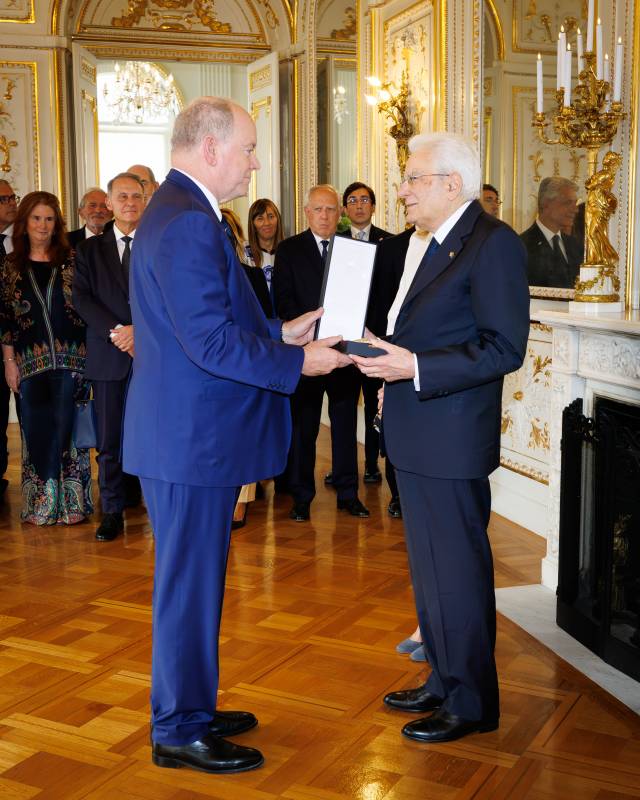
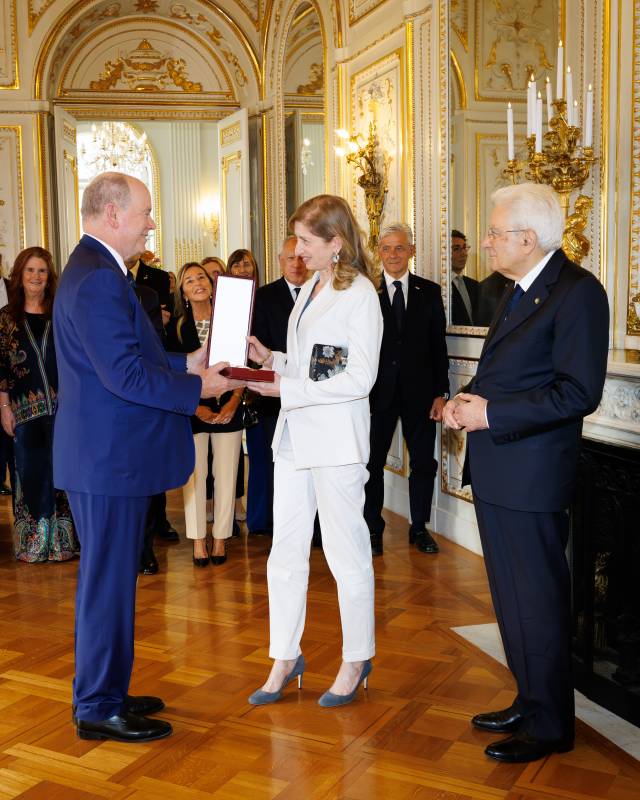
The exchange of decorations followed. Prince Albert elevated Mattarella to Grand Cross of the Order of Saint-Charles, Monaco’s highest order. Laura Mattarella received the Grand Cross of the Order of Grimaldi, while Mattarella bestowed upon Princess Charlene the Grand Cross of the Order of Merit of the Italian Republic.
Italy is Already Part of Everyday Monaco
Behind the ceremony lies a relationship experienced every day in the Principality.
Around 2,500 businesses linked to Italians operate in Monaco, particularly in luxury, fashion, maritime transport and business services, while Italian cross-border workers form the second-largest group commuting into the Principality.
In his closing statement, Prince Albert put the Italian presence at around one fifth of Monaco’s resident population, describing Italians as its second-largest foreign community. He also noted that Italy and France are the only countries with resident embassies in Monaco.
President of Italy, Mattarella acknowledged that human dimension when he met representatives of the Italian community on Saturday morning.
This was not diplomacy between distant capitals. Italy is economically, socially and culturally part of Monaco’s daily life.
Cecilia Bartoli Brings Italy to the Opera
On Friday evening, culture took centre stage.
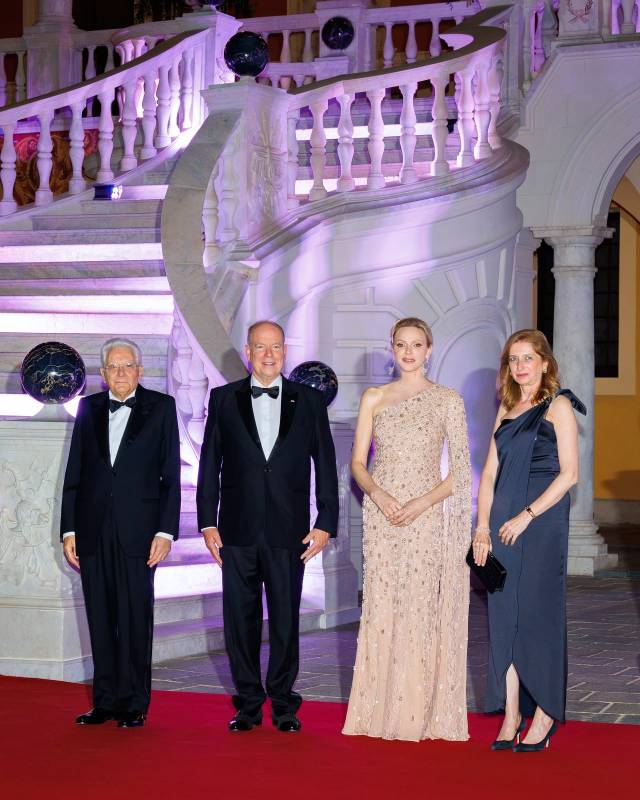
President Mattarella and his daughter joined Prince Albert and Princess Charlene at the Opéra de Monte-Carlo for a performance by Cecilia Bartoli, the celebrated Italian mezzo-soprano and director of the Opera.
President Mattarella noted with pride that Bartoli is the first woman to lead the institution. He also recalled the cultural cooperation surrounding the Barocco Globale exhibition in Rome, to which Monaco had lent an important work.
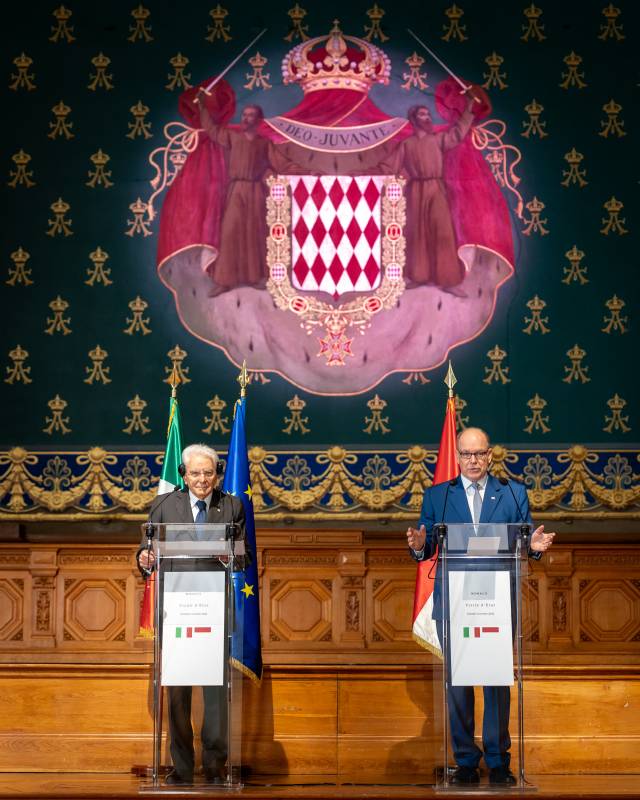
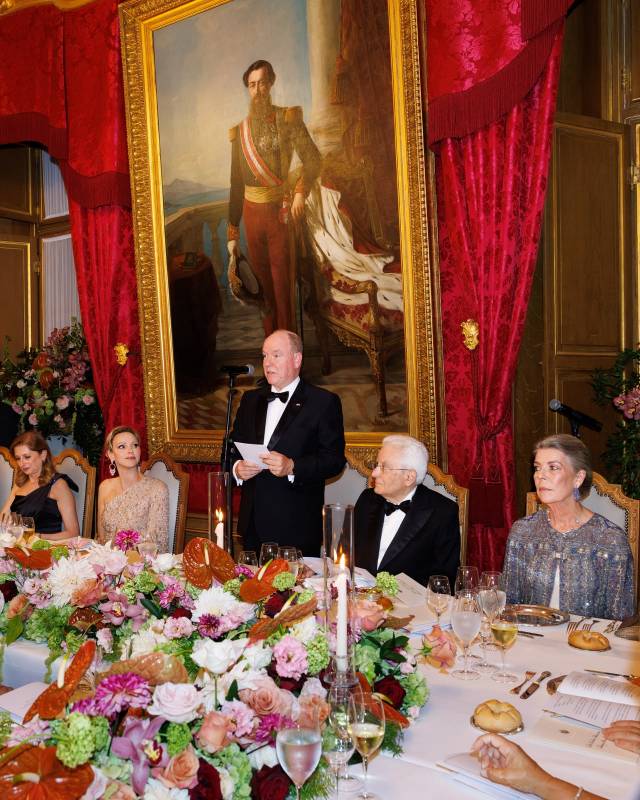
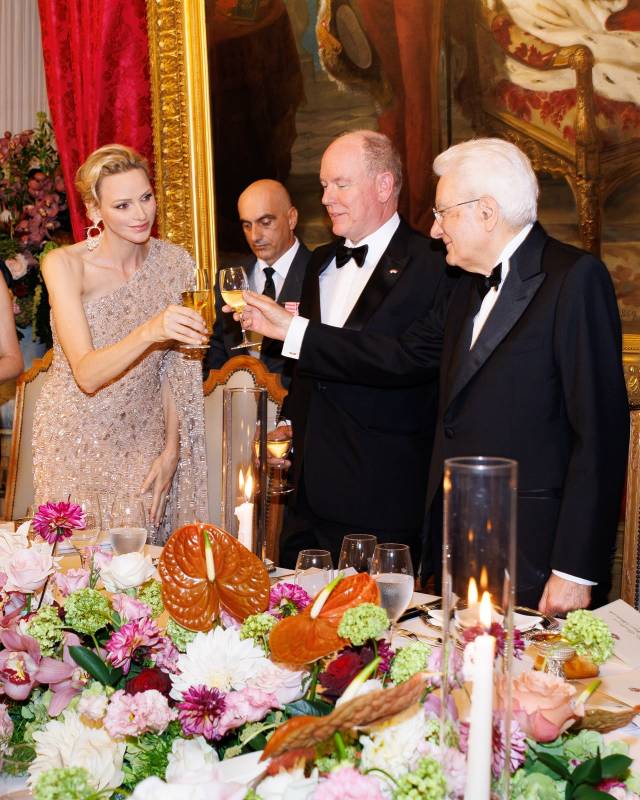
The evening continued with a State Dinner in the Throne Room of the Prince’s Palace, where both Heads of State looked beyond history to the challenges of the present.
Prince Albert spoke of shared commitments to dialogue, law, multilateral cooperation and environmental protection.
President Mattarella turned to a Mediterranean facing conflict, migration and instability, expressing the hope that the Mare Nostrum might again become a source of civilisation, peace and cooperation.
In an elegant Monegasque touch, he concluded by invoking Louis Notari, author of La légende de Sainte Dévote, and his hope that the flags of the world might one day speak the language of peace.
Fifty Years of Protecting the Same Sea
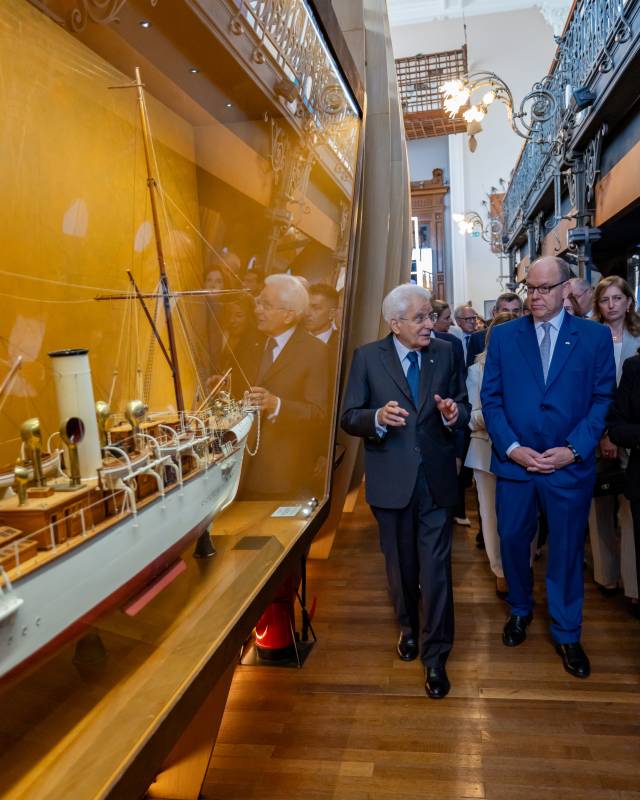
The final act of the State Visit took place overlooking the Mediterranean at the Oceanographic Museum.
On Saturday 3 October, Prince Albert welcomed President Mattarella and his daughter to the institution created by his great-great-grandfather Prince Albert I, the pioneering explorer and oceanographer.
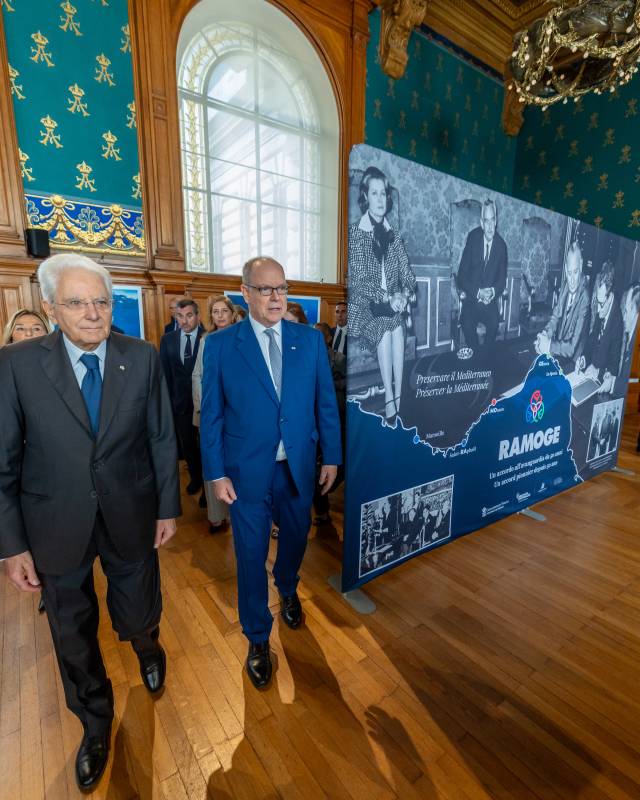
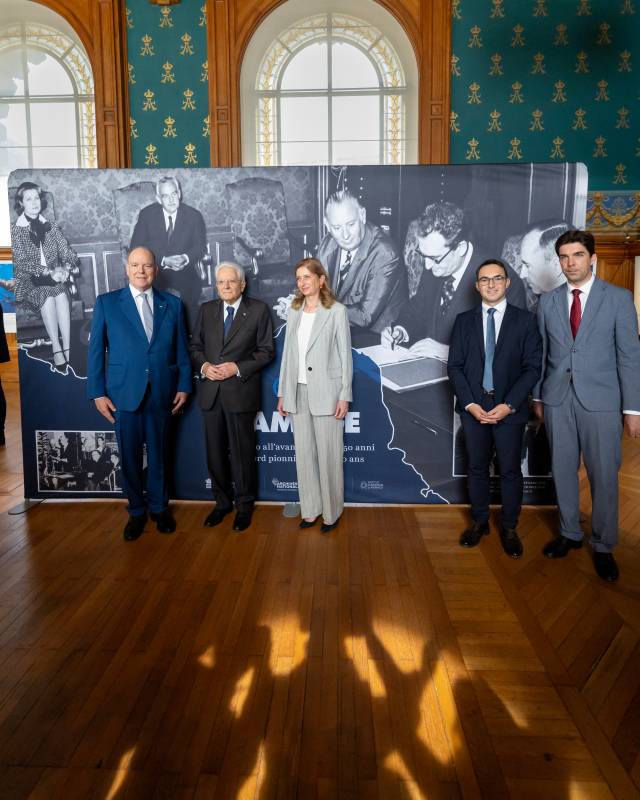
The setting highlighted RAMOGE, the environmental agreement linking Monaco, France and Italy, which celebrates its 50th anniversary in 2026. Signed in 1976 following an initiative by Prince Rainier III, it established a framework for cooperation against marine pollution and for protection of the Mediterranean.
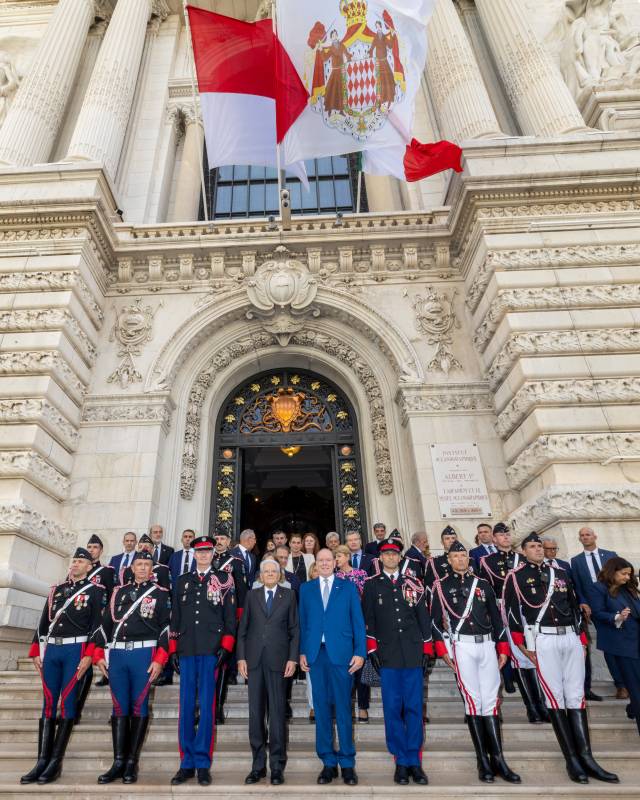
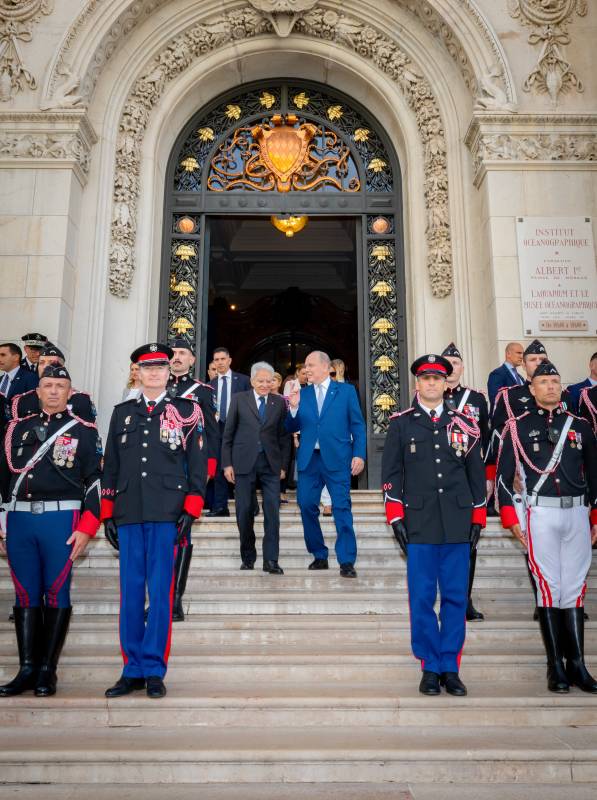
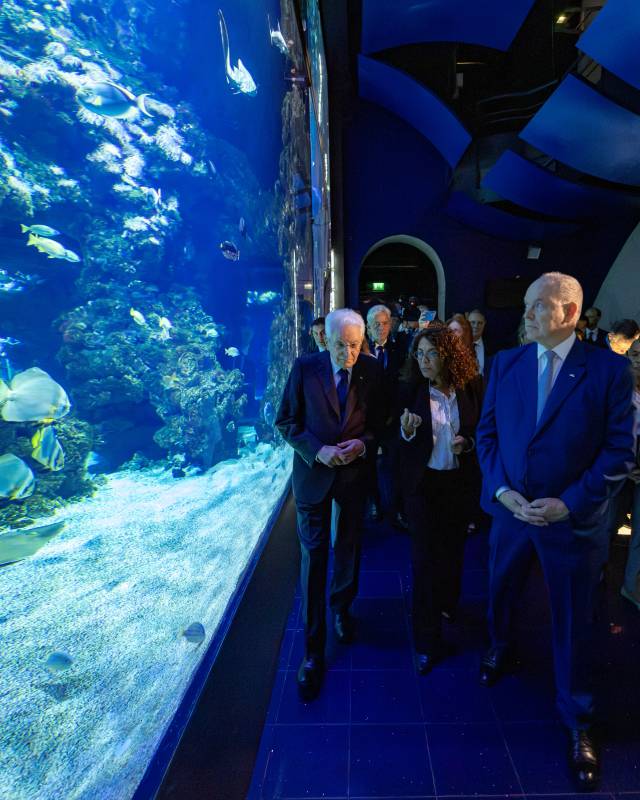
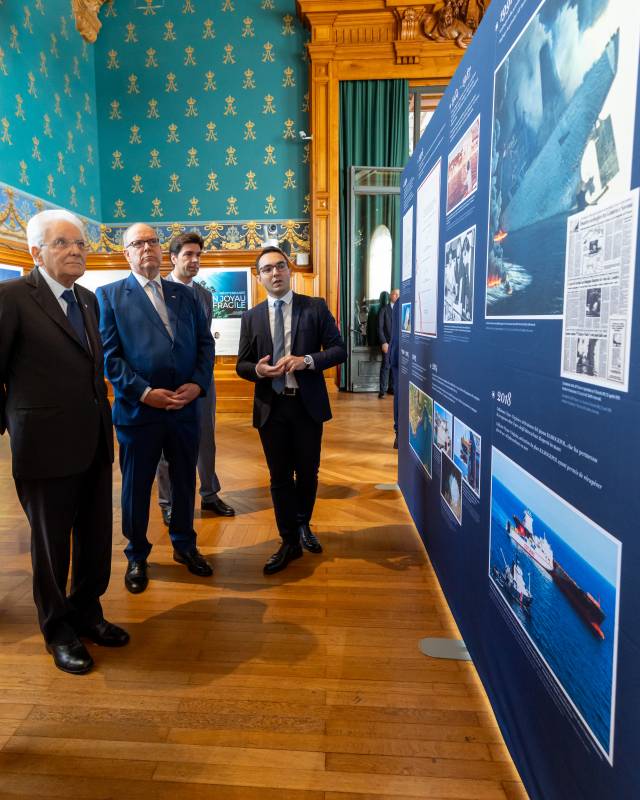
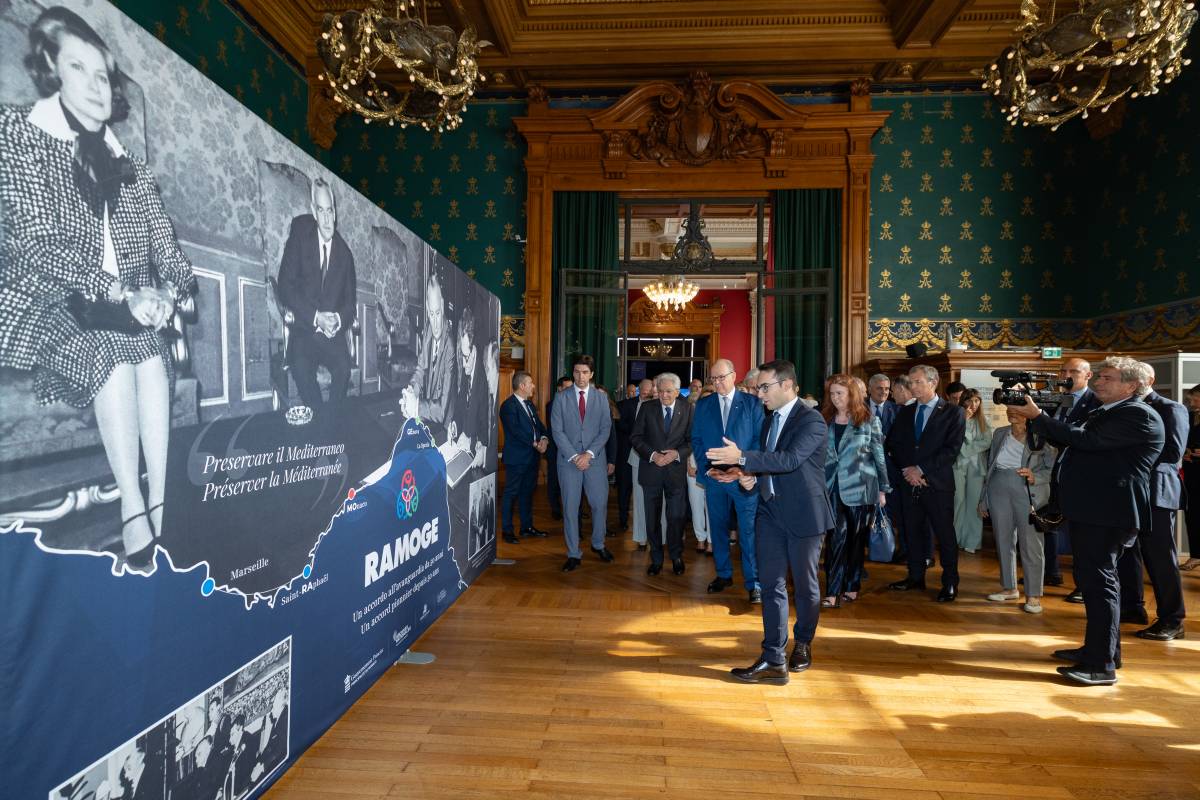
At the Museum, Mattarella again stressed the two countries’ shared commitment to multilateralism, peace, freedom, human rights and the rule of law. He hoped the Mediterranean might once more become a “sea of civilisation and unity” rather than one marked by grave humanitarian crises.
Prince Albert described the relationship more personally: ultimately, he said, it was one of friendship, faithful and unwavering.
From Ceremony to Substance
The closing statements also revealed how practical the modern relationship has become.
President Mattarella spoke of growing economic links and integration between Italian and Monegasque businesses, as well as strengthened cooperation against organised economic and financial crime, including a memorandum signed in April 2026 with Italy’s Guardia di Finanza.
Prince Albert pointed to work still under way: modernising the 1989 air-services agreement, exploring access for Ligurian residents to medical care in Monaco, and strengthening cooperation through the Italian-Monegasque Administrative Cooperation Commission.
Teleworking, social security, transport, investment and cross-border cooperation are also part of the relationship.
These subjects may lack the glamour of uniforms, decorations and a State Dinner, but they show why the relationship matters.
Much More Than a First
By the time President Mattarella left Monaco, a diplomatic first had taken place. But perhaps the most revealing aspect of the two days was how little the relationship depended on the novelty of that fact.
The story began with Genoa, Francesco Grimaldi and the Rock. It continued through Renaissance artists, diplomatic relations established in 1875, Prince Rainier and Princess Grace’s visit to Italy, and generations of Italians who made Monaco their home or workplace.
Now another chapter has been added.
At the Palace there were military honours, Grand Crosses, opera and a State Dinner. At the Oceanographic Museum, two Heads of State looked out over the Mediterranean and considered how their countries could protect it, and how cooperation between nations can endure in an increasingly fractured world.
President Mattarella’s visit was a historic first. But above all, it showed that after more than seven centuries of shared history, the relationship between Monaco and Italy remains as alive, relevant and forward-looking as ever.