
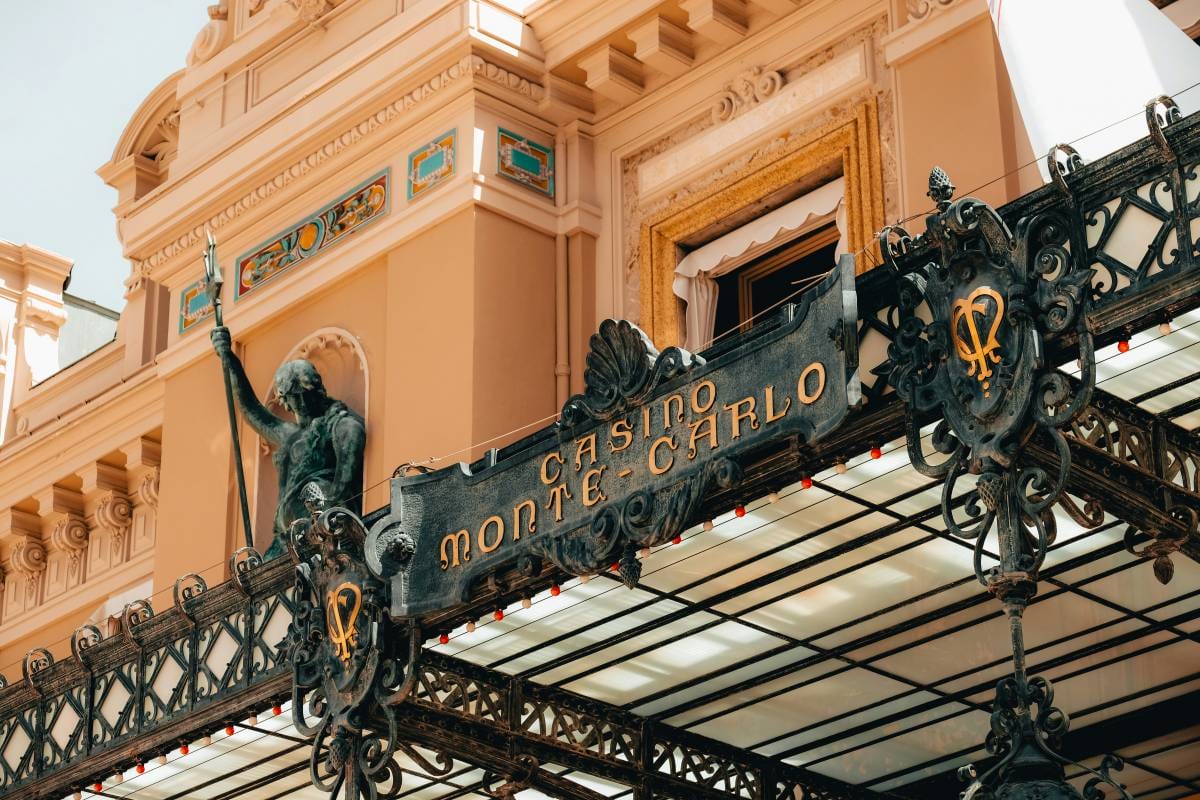


There is a particular kind of quiet that settles over the Casino de Monte-Carlo in the hour before the gaming rooms open. The Belle Époque ceilings catch the last of the afternoon light, the marble floors are still, and the staff move with a calibrated efficiency that has barely changed since François Blanc took over the casino in the 1860s. Step inside at eight in the evening and that quiet is gone, replaced by something the principality has engineered better than almost anywhere else on earth: the sensation that the next decision you make might be the most consequential one of your year.
Most visitors absorb that sensation and spend it on a roulette wheel. A growing number are doing something more deliberate with it.
The Casino Reinvents Itself, Again
The Casino de Monte-Carlo has never been content to coast on reputation. In April 2026 it reopened the Café Rotonde with a full redesign, folding in Monopoly-themed atrium décor that drew equal amounts of admiration and raised eyebrows. Then, in early July 2026, Zitro installed its FANTASY and CONCEPT video slot cabinets on the floor, contemporary hardware in a room that once hosted Sarah Bernhardt.
The combination signals something deliberate. The Société des Bains de Mer, which operates the casino, is not chasing mass-market footfall. It is reaching for a specific visitor: affluent, experience-driven, and increasingly interested in the line between luck and mastery. Slot cabinets and Monopoly decor might sound contradictory to that goal, but they serve the same function the casino has always served. They seduce you through the door. What you do once you are inside is your own business.
And what a rising cohort of regulars is choosing to do, more and more, is sit down at a card table and take it seriously.
Glamour Has Always Been a Gateway Drug
Monaco’s casino culture was never purely about gambling. Luxury Today’s history of how gambling built Monte Carlo makes clear that François Blanc’s masterstroke was designing the whole principality around aspiration. The casino as theatre, the odds almost beside the point. Players came to be seen taking risk, which is a very different psychological transaction from wanting to win money.
That theatrical quality persists. But somewhere in the last five years, a cohort of visitors has started separating the glamour from the guesswork. They want the setting, the Salle Médecin’s chandeliers, the particular weight of the Casino’s clay composite chips, but they do not want to leave their winnings to variance. Poker is the obvious destination. It is the only game on the floor where your decisions, over time, actually change the outcome.
Where Serious Players Go to Sharpen Their Edge
Glamour without strategy is a short-lived proposition the moment you sit across from a table regular who has been reading board textures since 2019. The aesthetic thrill of Monte Carlo will carry you through maybe one orbit of the table before the gaps in your game start to cost real money.
That is the inflection point where the new generation of Monte Carlo players diverge from the old tourist model. They arrive with preparation. They have put in time with structured, strategy-focused study, the kind that treats card games the way a coach treats a sport, with drills, concepts, and a frank accounting of what they are doing wrong.
The shift matters because it changes who walks into that Salle Médecin. Not the wide-eyed visitor dropping €200 on a whim, but someone who has already spent time understanding pot odds, positional play, and the mathematics of a continuation bet. Monaco provides the stage. The preparation happens long before the plane lands.
The Same Instinct, Far From the Riviera
Most people who catch the Monte Carlo bug will never play a hand inside the Salle Médecin. The pilgrimage is expensive and rare. But the mindset it rewards, study first and gamble second, travels perfectly well, and it shows up most clearly in how a certain kind of player now approaches the game online.
California is a good example. The state hasn’t legalized online casino play the way New Jersey or Pennsylvania have, yet a substantial number of Californians play through mobile browsers on offshore and internationally licensed sites, and the serious ones prepare exactly the way a Monte Carlo regular does: hand ranges, position, continuation-bet math, all of it drilled before any money is at stake. Figuring out which of those platforms is actually worth the time is its own research problem, and Pokerology maps that California landscape for them, weighing licensing, platform quality, and what to look for rather than just listing names.
It is the same principle Monaco has always sold, just relocated to a phone screen. The venue changes. The homework does not.
Daniel Negreanu and the Visibility of Skill
No single moment in 2026 has done more to push poker back into the aspirational conversation than Daniel Negreanu’s eighth World Series of Poker bracelet, won on July 2nd. The win, which came with a $2,257,718 prize, was covered well beyond poker media. It landed in lifestyle publications, in sports feeds, in the kinds of outlets that HelloMonaco readers scroll through on a Wednesday afternoon.
Negreanu is a useful figure here not because of the money but because of the framing. He has spent two decades arguing, publicly and in granular detail, that poker is a discipline closer to chess than to roulette. His eighth bracelet, accumulated over more than twenty years of professional play, is about as clean a proof of that argument as the game can produce.
For the Monte Carlo visitor who has been half-curious about the card tables, intimidated, perhaps, by the regulars, that kind of visibility is a real permission slip. Skill compounds. The game rewards study. That is a very different message than the one the slot floor sends.
The Science Behind the Cards
The aspiration is backed by research that the serious-player community has been citing for years. A peer-reviewed study published in PubMed Central found that multi-component card game training produced measurable improvements in executive control functions in adult participants. The same cognitive toolkit, essentially, that good poker demands: working memory, task-switching, inhibitory control.
This is why the new generation of Monte Carlo card players does not think of their interest as a vice dressed up in a dinner jacket. They think of it the way a chess player thinks of the game. The Casino de Monte-Carlo just happens to be an extraordinarily well-designed venue in which to practice.
What the Principality Actually Sells
Monaco has always understood that it is not really selling gambling. It is selling a feeling of consequence. The Grand Prix sells the same thing, the idea that in this particular square kilometre, decisions made at speed, under pressure, with full awareness of the stakes, carry more weight than they do anywhere else. Kimi Antonelli’s win here in June 2026 was about reflexes and strategy in equal measure; the circuit punishes the gap between preparation and instinct in exactly the way a poker table does.
The Casino de Monte-Carlo’s latest reinventions, from the Café Rotonde to the Zitro cabinets, are best read as set dressing for a deeper cultural shift. The principality is drawing a more strategy-minded visitor than it did a decade ago. The new Café Rotonde gives them somewhere elegant to debrief after a session. The Zitro hardware keeps the casual floor humming. And the card rooms, quieter, less photographed, more serious, are filling up with people who did their homework before they arrived.
That homework, increasingly, is the kind of structured study that turns an interested visitor into someone the table regulars have to think about. Monte Carlo provides the motivation. The serious players find the method themselves. And they tend to start looking well before the chips are in play.