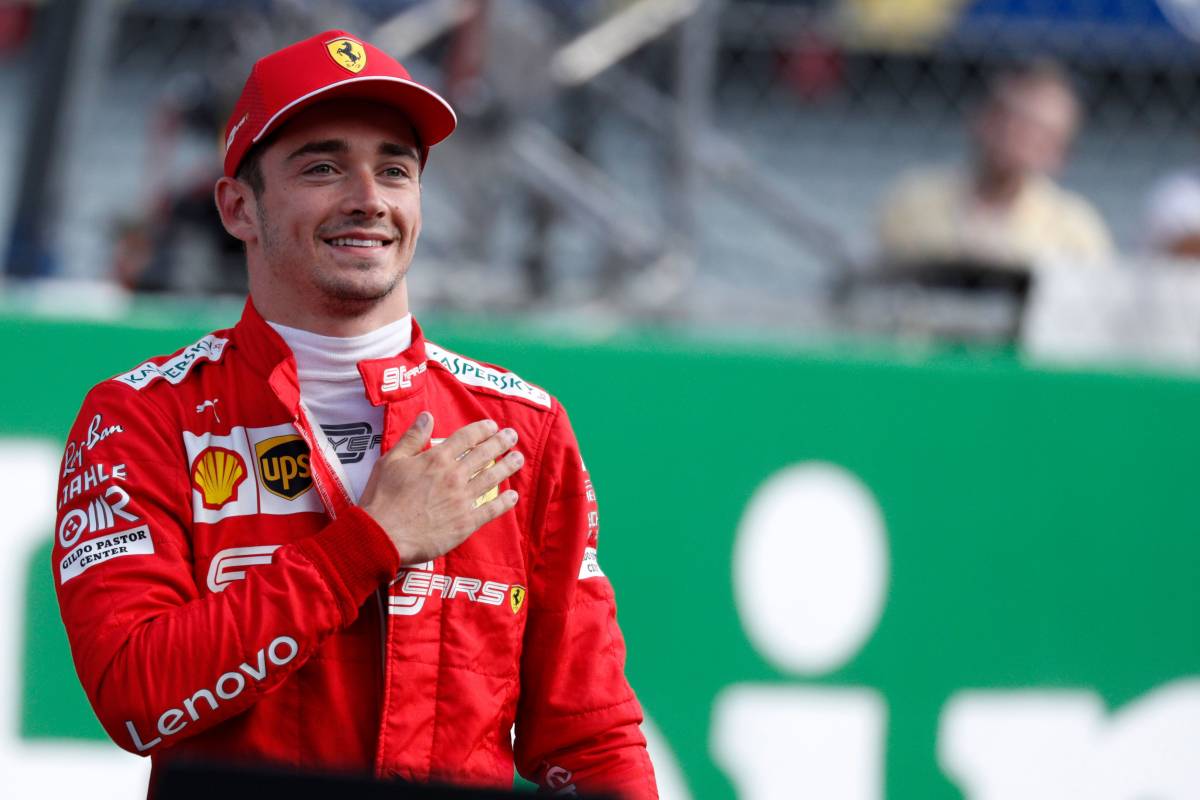


Miami Grand Prix 2026, Formula 1TM delivered a race that blurred the line between spectacle and strategy. Our story is not only about the winner, but about the ambition, resilience and near-miss brilliance of Charles Leclerc.
A Race Defined by a New Leader
At the front, it was Kimi Antonelli who once again commanded the narrative. The young Mercedes driver converted pole into victory, his third consecutive win, extending a remarkable early-season run and underlining a shift in Formula 1’s competitive order.
The podium was completed by Lando Norris in second and Oscar Piastri in third, a McLaren double that spoke of consistency and execution rather than outright dominance.
Yet behind that podium, the race’s most compelling storyline unfolded.
Leclerc’s Moment at the Front
For a fleeting but significant phase, Leclerc led.
As the lights went out, the Monegasque seized the opportunity with instinctive precision. A compromised start from rivals, most notably a spin for Max Verstappen, opened the door, and Leclerc surged into the lead on the opening lap.
It was a reminder of what he does best: converting instinct into position..
But Miami, as ever, rewards more than the opening act.
Ferrari’s Fight: Promise Without Reward
Despite that early control, Ferrari could not translate pace into a podium.
As the race evolved, strategy, tyre degradation and the relentless rhythm of Mercedes and McLaren began to dictate the order. Leclerc found himself drawn into a fierce late-race battle involving Verstappen and George Russell.
He ultimately crossed the line in sixth place, having run as high as fourth in the closing stages before a small but costly error on the final lap allowed Max Verstappen and George Russell to slip past.
For Ferrari, it was a weekend of contradictions: Front-running pace at the start, But insufficient control over the race distance
This is a car capable of leading, even if not yet of finishing the job.
Hamilton: Presence, Pressure, and Transition
For Hamilton, still adapting to life in red, Miami was another chapter in a longer transition.
While not central to the podium fight, his presence within Ferrari’s evolving structure remains critical. Alongside Leclerc, he forms a pairing that blends experience with instinct.
Lewis Hamilton, is still finding his rhythm in Ferrari red and brought the second car home in seventh. It was a more measured race, but one that ensured both Ferraris remained firmly inside the points.
The Decisive Phases: How the Podium Was Built
The podium battle hinged on three decisive elements.
Leclerc’s launch and Verstappen’s spin reshaped the early order, briefly handing Ferrari control of the race. However, Mercedes executed cleanly, allowing Antonelli to recover from an imperfect start and reassert control through race pace and tyre management.
Antonelli is the youngest championship leader in the sport. His three consecutive wins from pole position is historic. He is the first to ever to win his first three career races from the lead spot.
He lost the lead early to Ferrari’s Charles Leclerc and also to Norris, but he regained during a pit stop exchange when his Mercedes’ crew proved itself by far quickest.
McLaren’s Norris and Piastri capitalised on stability rather than risk, positioning themselves to inherit podium places as Ferrari and Red Bull became entangled in battles behind.
Monaco’s Perspective
For Monaco, the significance lies not in sixth place, but in the laps led.
Leclerc showed, once again, that he can dictate the rhythm of a Grand PrixTM when conditions align. The challenge now is extending that control beyond the opening phase.
Leading early is not enough. Winning requires orchestration across every lap, every stint, every decision.
Conclusion: A Race That Revealed the Balance of Power
The Miami Grand Prix clarified the hierarchy. Mercedes is decisive, rising, and now setting the pace. McLaren is consistent and opportunistic. Ferrari are fast, but still searching for race-long authority
And within that landscape, Leclerc remains central, a driver capable of igniting a race, still chasing the machinery to sustain it.
Monaco’s man is not fading into the midfield narrative. He is still, emphatically, part of the fight.