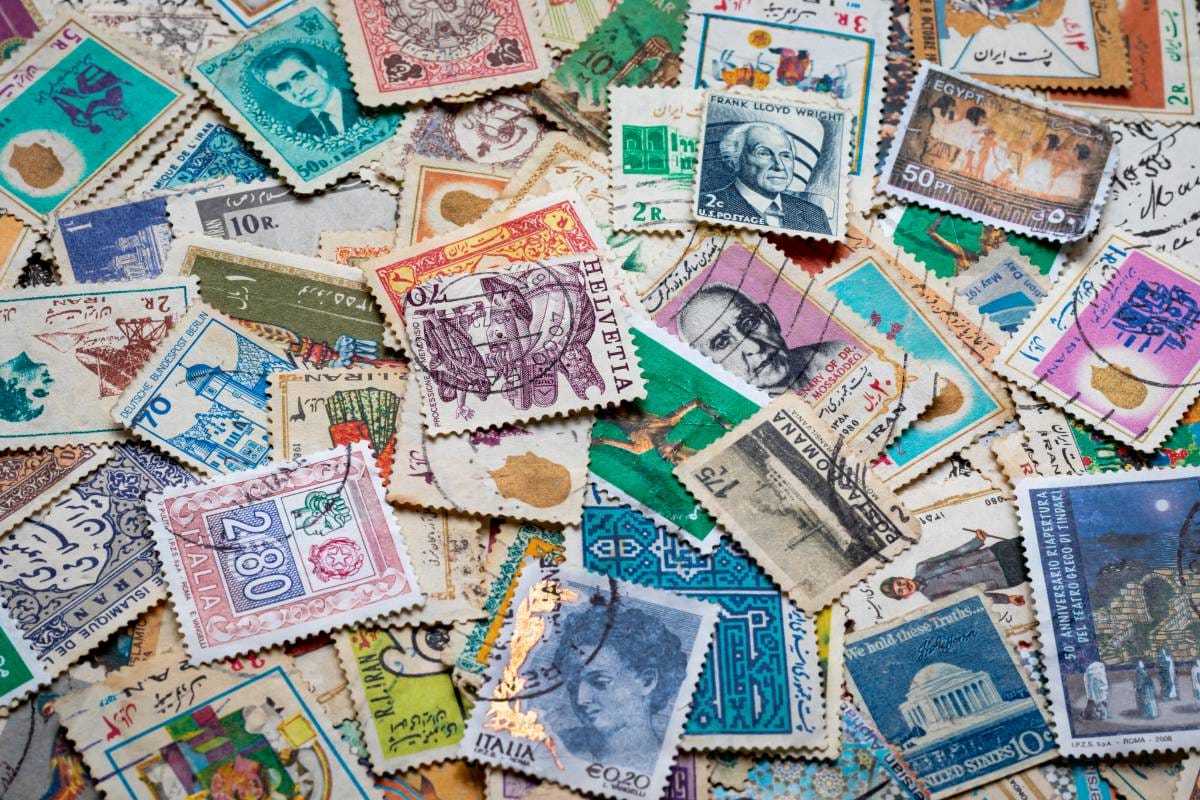


In Monaco, a postage stamp is rarely just a postage stamp.
It can become a fragment of diplomacy, a miniature work of art, a political statement, or a reminder that this tiny Principality often thinks in surprisingly large dimensions.
At the end of June, Monaco’s Office des Timbres will release two commemorative stamps that together tell a much bigger story: one celebrates the 50th anniversary of the RAMOGE Agreement, the other marks 20 years of the Prince Albert II of Monaco Foundation.
The result is unusually coherent: two stamps, two generations of Monaco’s environmental identity, and one shared message about protecting the sea.
The RAMOGE stamp may be the more historically significant of the two.
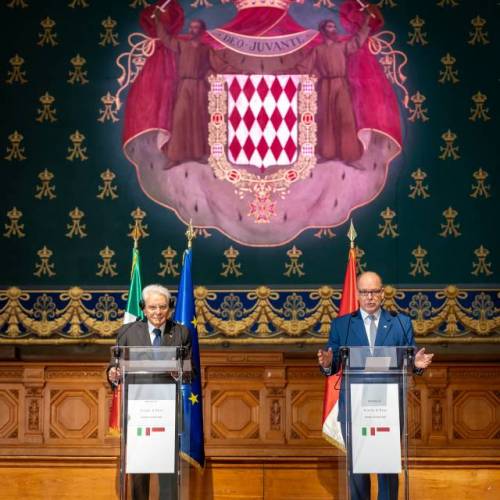
Signed on 10 May 1976 in the Throne Room of the Prince’s Palace, the RAMOGE Agreement united Monaco, France and Italy in an unprecedented regional cooperation effort to protect Mediterranean waters from pollution and ecological degradation. Its name itself comes from the geographical points that originally defined the protected zone: Saint-Raphaël, Monaco and Genoa.
The agreement eventually expanded from Marseille to La Spezia, creating one of the Mediterranean’s earliest coordinated marine protection frameworks.
The commemorative stamp, designed by Thierry Mordant and issued with a face value of €1.52, reflects that layered maritime vision. According to Monaco’s Stamp Office, the artwork portrays “a living, monitored and protected Mediterranean, between the surface and the deep sea.”
And RAMOGE is not merely symbolic history.
Its most defining operational moment came after the catastrophic explosion of the oil tanker Haven off Genoa in 1991, still considered the Mediterranean’s worst oil spill disaster. That catastrophe led to the creation of the anti-pollution response system known as Ramogepol in 1993. The effectiveness of that coordinated emergency framework became particularly visible in 2018 after the collision of two vessels off Cap Corse, when roughly 90% of spilled hydrocarbons were successfully recovered.
Prince Albert II of Monaco Foundation
If the RAMOGE stamp represents Monaco’s environmental foundations, the second stamp represents its international expansion.
Created in 2006 by Prince Albert II shortly after his accession, the Foundation has steadily transformed Monaco into an influential environmental diplomacy hub. Ocean governance, polar preservation, biodiversity protection, freshwater ecosystems, climate initiatives and sustainable finance now all sit within its sphere of activity.
The symbolism behind the anniversary is especially powerful because Prince Albert II remains the only serving head of state to have reached both the North Pole and the South Pole, expeditions that helped shape the environmental philosophy underpinning the Foundation itself.
Today, the Foundation operates internationally across the Mediterranean Basin, polar regions and developing countries, supporting hundreds of projects worldwide while helping position Monaco as a convening centre for environmental science, ocean policy and sustainable finance.
What makes these two stamps particularly interesting is that they quietly trace Monaco’s ecological evolution across half a century.
The first reflects a time when marine pollution was still often treated as a localised coastal problem. The second belongs to an era where climate, biodiversity and planetary health are discussed as interconnected global systems.
And yet both emerge from the same Monegasque instinct: the belief that a small state can still exert disproportionate influence through persistence, science, diplomacy and visibility.
Perhaps that is why stamps remain strangely powerful objects in Monaco.
They are tiny enough to fit inside an envelope, but often large enough to contain an entire national philosophy.


Related Articles