


Two hundred and ten years ago, on 20 November 1815, the Second Parisian Peace Treaty was signed between France and the anti-French coalition allies (Austria, Great Britain, Prussia, Russia). An end was thus put to the Napoleonic Wars having claimed at least three million lives. Based on this treaty, Monaco was restored as an independent state. 1792 to 1814 was thus the only period in this tiny state’s history when it was not independent. The global Napoleonic conflict, engulfing almost the entire continental Europe, was but an aftermath of the Revolutionary Wars (1792–1802) sparked by the Great French Revolution. But let’s see in what way it had affected Monaco in particular.
Prince Honoré III
In 1789, when the Great French Revolution broke out, the country was governed by Prince Honoré III, son of Louise Hippolyte and Jacques Matignon. This Grimaldi who became sovereign at the tender age of 13, was understandably not very involved in Principality politics. The actual ruler was his regent, Chevalier Grimaldi, the illegitimate son of his grandfather Antoine I. After the death of the regent in 1784, Prince Honoré III had to take over the country he had never actually lived in.
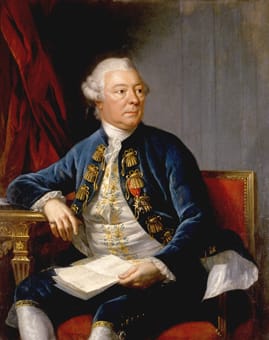
At the time of the Revolution, Honoré III’s support was totally on the side of King Louis XVI. He was but a rare visitor to the Principality, dividing his time between Versailles and his Matignon palace. Monaco was in fact ruled by a constitutional monarchy supporter, Brigadier General Jean-Michel de Millo.
Following the 1789 revolution, the Monaco Prince lost all his special rights, with his French lands confiscated. Once the French king was overthrown and the Republic of France proclaimed, Monaco was also swept by the spirit of rebellion. There were more and more talks about overthrowing the princely power and becoming part of France.
Fort Hercule
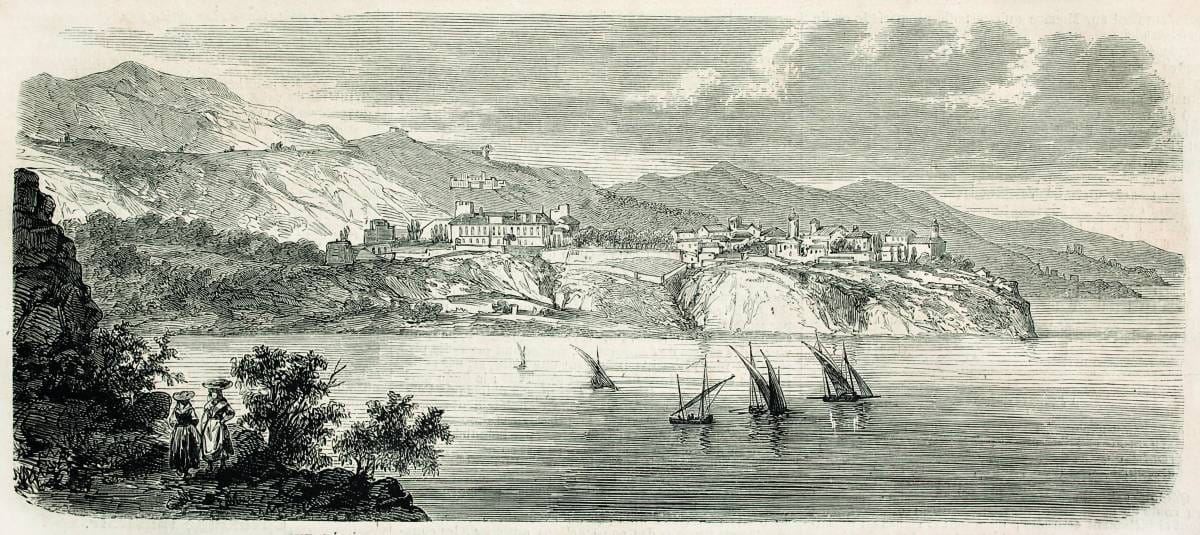
On 29 September 1792, the French Southern Army under the command of General Jacques d’Anselme invaded the County of Nice with the view of capturing strategic Villefranche-sur-Mer and controlling the Kingdom of Piedmont-Sardinia border, a harbour of the fleeing aristocracy. The fate of the Principality, to be decided by the People’s Assembly, was thus particularly acute. At that time, it counted three municipalities (Monaco, Roquebrune and Menton), with a total population of some 8,000 citizens. Legally, the Principality was by no means an enemy to France. Since the signing of the Treaty of Péronne in 1641 it had been under the French protectorate. In 1756 it even made a decree promising the Monaco throne to a French king in case the Grimaldis did not have an heir.
On January 13, 1793, the People’s Assembly on the Rock overthrew the Grimaldis. Monaco, Roquebrune-Cap-Martin and Menton were then to be “reunited” with France. On February 15 the Assembly made it official, making the Principality a sub-prefecture of the newly established French Republic, under the name of Fort Hercule, … that is until 1814.
But what of Prince Honoré III? On January 21, 1793, King Louis XVI was executed. The life of the Prince of Monaco was spared. Captured in July, however, he was sentenced to life imprisonment. In 1795, Prince Honoré III died of a heart attack.
A coup attempt
On the night of June 3, 1793, the sentries at the Monaco gates were attacked and beaten with stones. Supported by Austrians brought to Monaco by an English frigate, a group of rebellious bearded Monegasques (the “barbets”) took over the rock.
The rebels chopped down the Tree of Liberty installed by the French revolutionaries on the Palace Square, burning the French tricolor flag, taking hold of gunpowder barrels and overturning the bronze cannons protecting the Palace. The Palace territory was thus officially under siege. That September, the Fort Hercule municipal leaders pleaded its citizens not to leave the Rock for their own safety.
The May siege of 1800
In April 1794, Napoleon Bonaparte, then deputy of General Masséna, took over the Roya Valley, headquarters of the general, Taon de Reval. The counter-revolutionary positions were thus compromised. On 15 May 1796, the Treaty of Paris proclaimed the French annexation of the Duchy of Savoy and the County of Nice (including Monaco).
The Austro-Sardinian troops, however, refused to admit defeat, while the control of Fort Hercule remained unclear for another three weeks, from 11 to 31 May 1800. According to circular letters sent by the sub-prefect Teremene to the mayor of Monaco in February 1801, the rebellious “barbets” are still operating in the area. Joining forces with the neighbouring municipalities, the mayor is advised to patrol the territory 24 hours a day, 7 days a week for the safety and security of his own citizens. These measures intend to put an end to the “barbets” presence in the Monaco neighbourhood. In September 1800, eight rebels are arrested and executed at Rocafort, with the French regaining control.
A long-awaited independence
On 6 April 1814, the French Emperor Napoleon I gives up his claims to the Principality’s throne. On May 30, the eldest son of Prince Honoré III, Honoré IV, is declared Monaco’s ruler. The 56-year-old sovereign cannot perform his duties, however, due to a poor health undermined by long imprisonment. On June 14 his younger brother Joseph is thus appointed Regent.
In the spring of 1815, eldest son of Prince Honoré IV, Honoré Gabriel Grimaldi, is setting out from Paris to Monaco. On March 1, during his journey he meets the former French emperor who had fled the island of Elba to take over the country once again. Fate unfolds in rather a different way for the two of them. On March 3, Joseph Grimaldi names his nephew Honoré Gabriel Grimaldi as Regent to rule the country until 1841.
As to Napoleon, he loses the battle of Waterloo in June 1815, giving up his claims to the throne and fleeing France. The emperor then only had six more years to live. The treaty of Paris signed in 1815 puts an end to the Napoleonic Wars, proclaiming the sovereignty of Monaco.
The Great French Revolution and Monaco
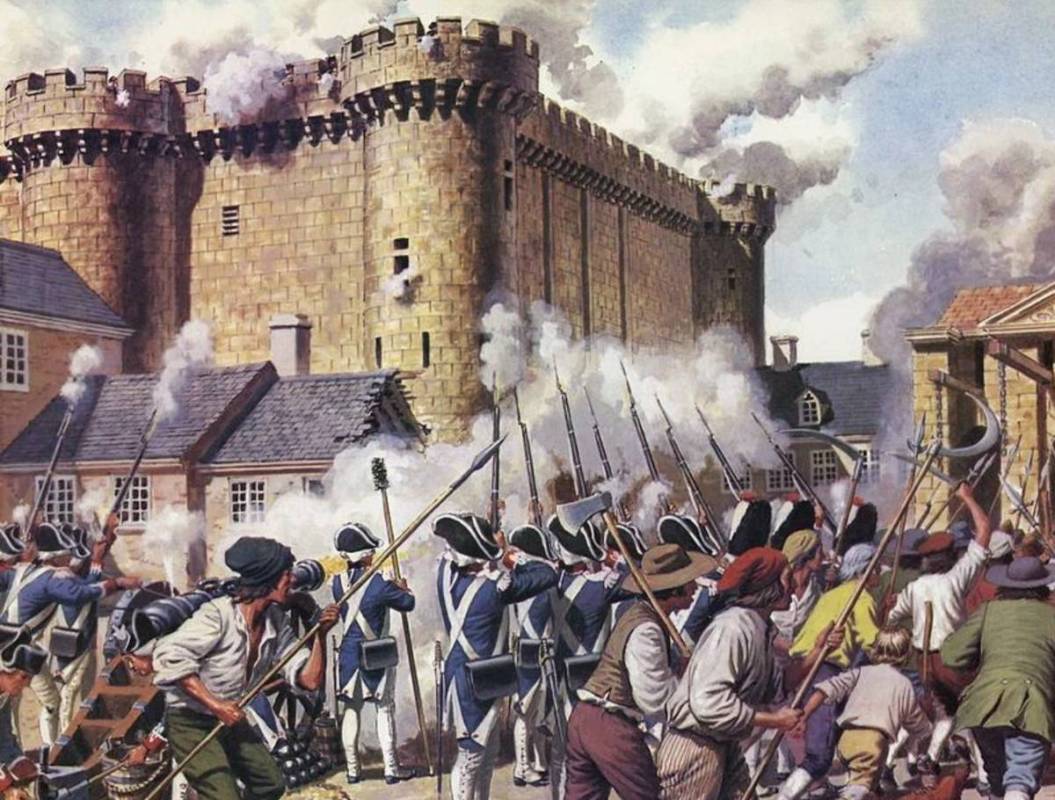
July 14, 1789: Siege of the Bastille in Paris
August 4: Abolition of the aristocracy’s privileges
August 26: Declaration of Human Rights
June 20, 1791: A failed escape of the French royal family
September 13: Constitutional monarchy proclaimed in France
April 20, 1792: France declares war on Austria
September 21: Abolition of the royal power, the French Republic proclaimed
September 28: Siege of the County of Nice
September 29: Siege of Monaco by the revolutionaries, Honoré III dethroned
February 15, 1793: Monaco annexed to France
September 21, 1793: Execution of Louis XVI
July 28, 1794: Execution of Robespierre, end of the revolutionary terror
March 21, 1795: Death of Prince Honoré III
November 9, 1799: 18 Brumaire coup d’état: Napoleon Bonaparte’s coming to power, end of the Great French Revolution.