

Can one imagine the contemporary history of Monaco without France? For more than 160 years, the destiny of the Principality and its neighbour has been bound by a unique pact, forged in mutual respect, cooperation and closeness. Each President of France has left his mark on this two-voice story — through high-level diplomatic negotiations as well as more intimate moments at the Princely Palace.
Félix Faure: Ceremony, Honours, and Symbols of a Diplomatic Alliance
In 1896, Félix Faure became the first president of the French Republic who arrived in the Principality. For several centuries, before Monaco gained full independence, the rulers of the French State typically did not appear in Monaco.
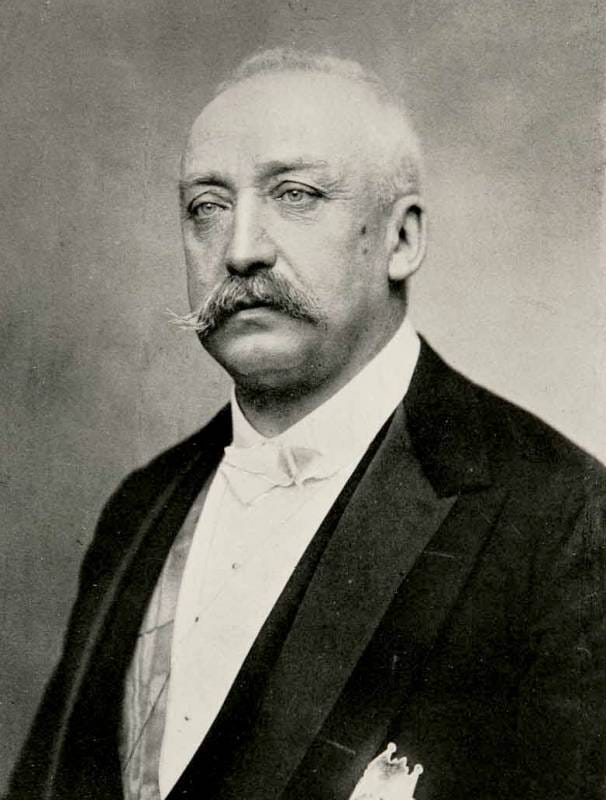
Prince Albert I organizes a magnificent reception for his French “ally” and patron Félix Faure. The President of France will be solemnly received by the head of the government of Monaco, who will formally award the President of France with the Grand Cross of the Order of Saint Charles. At that time protocol demanded that the visit of the President of France be preceded by the visit of the Prince of Monaco to the Prefecture of the region, where the head of the French State would leave his motorcade, after which he would be escorted by 250 cavalrymen and 250 squires to the Prince’s palace. The curious fact is that only 50 cavalrymen were able to take part in the parade in the Prince’s court. After all, this was the maximum weight which the arches of the reservoirs of water could withhold, as they were located right under the ceremony.
On the occasion of the official visit, the future Prince Louis II of Monaco, who at that time was a young lieutenant, received the military title “La Croix de Chevalier de la Legion d’Honneur” from the visiting President of the French Republic. The triumphal celebratory march took place on the streets of the princedom and in the courtyard of the Palace. It is important to note that all the streets of the Principality were safeguarded by firefighters and police, as ten thousand people went on the streets of the city in order to greet Felix Faure in Monaco.
Despite the fact that this visit was official, Albert I managed to deepen personal relations with the President; important in that with social conflict on the rise in Europe and with the political scandal in France over the Dreyfus affair, it needed rulers of wisdom who could muster support for the necessary reforms. Indeed, reforms were undertaken in the Third French Republic from 1894 to 1906. At this time, the Prince stood up in defense of the accused Captain Dreyfus. In the Elysée Palace, on a diplomatic visit to Paris, Albert I tried to persuade Félix Faure in the innocence of Dreyfus, giving him special documents. In 1899, Albert I became one of the few who managed to see and discuss the ongoing issues with Faure a few hours before his death.
Armand Fallières: Coffee in the Gardens and a Partial Visit to the Oceanographic Museum
In 1909 Armand Fallières, President of France from 1906 to 1913, arrives in Monaco accompanied by Prime Minister Georges Clemenceau and General Marie-Georges Picquart, who was the main participant in the tumultuous ordeal of the Dreyfus case. Fallières’s visit was illustrated in the weekly “L’Assiette au Beurre” in the form of a caricature. It is an interesting fact, that Armand Fallières was himself involved in the cultural life of Nice, where he laid the first stone during the reconstruction of the Great Lyceum in 1909. After lunch, the Prince and the President posed for a photo taken by aide-de-camp Henry Bourée in the Palace gardens, before heading to the Oceanographic Museum of Monaco for a partial visit.
Also, it is noticeable that a curious thread runs through all these presidential visits to Monaco; they have one unchanging tradition, visiting the Oceanographic Museum, the “second palace” as it were of the prince-sailor Albert I. It is a unique “palace”, one that is entirely devoted to science.
Paul Deschanel: Meeting with Monaco’s Royalty
In the spring of 1920 Paul Deschanel, president of France for a relatively short period (from February to September 1920), comes to the Principality. This happens about a month and a half before the famous incident with the train to Montargis, when the 65-year-old President, distracted by his own thoughts, falls out of the window, but survived. After the incident, Deschanel reached the railway station, where he was confused with being a drunkard. This slightly “insane” ruler of the State, with his eccentric and sometimes outrageous behavior, became the principal subject of conversation of eloquent story-tellers in France. Despite this, in the short time of his reign, he became the only state leader who opposed the death penalty.
Returning to the visit, it is important to mention that this happened in the last years of the reign of Albert I. The President was received with all honours in Monaco, and he was personally presented to Princess Charlotte Grimaldi, the daughter of Prince Louis.
René Coty: Style, Cars, and Diplomacy
In January 1957, René Coty, the President of the French Republic, arrives on an official visit to Monaco for a private dinner with the princely couple. It is a curious fact that it was Coty who became the originator of the tradition of the appearance of French presidents in cars produced in France. So, in 1954, René Coty was the first French President to arrive at his inauguration ceremony in a Citroën.
Charles de Gaulle: Between Protocol and Diplomacy
In 1960, President Charles de Gaulle confirmed he would make an official visit to Monaco. Ten days before, Prince Rainier III appointed a new adviser, a diplomat of American origin. General de Gaulle was known for his hidden “anti-Americanism”. It is not surprising, therefore, that the president did not come to the Principality in the most exalted mood. It is possible that this visit, on the contrary to being a diplomatic success, served to heat up the Franco-Monegasque crisis in 1962. As per tradition though, Charles de Gaulle did pay a visit to the Oceanographic Museum. During General de Gaulle’s official visit in 1960, the issue of marine environmental protection and the potential disposal of nuclear waste in the Mediterranean was notably discussed during a meeting with Commander Cousteau. But the President of the Republic did not ingratiate himself with the inhabitants of the dwarf state as his sombre mood was evident and cast a cloud over what could otherwise have been an occasion of mutual celebration.
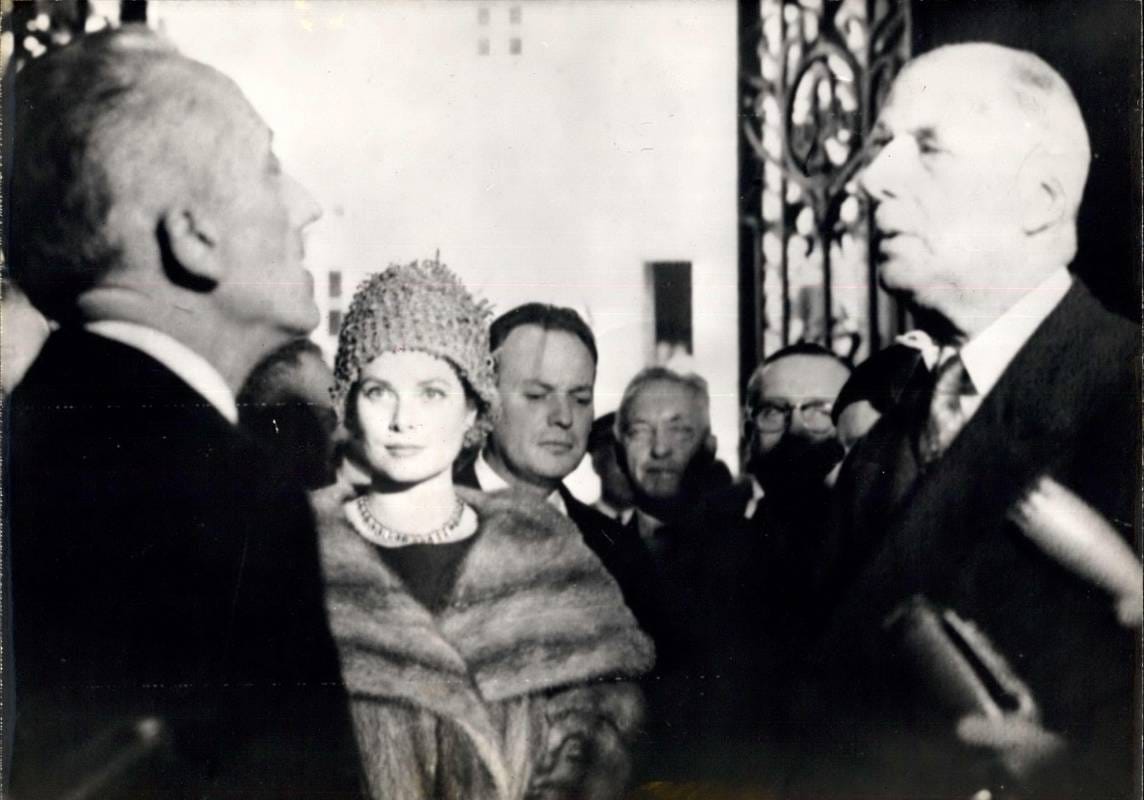
After the visit of Charles de Gaulle in 1960, there was a lull in the visits of the leaders of the French Republic and the cooling of diplomatic relations between the countries. Thus, Mitterrand’s visit signaled a peaceful resumption of bilateral relations and an act of mutual respect between two neighbouring states.
François Mitterrand: The Friendly President
François Mitterrand stayed in Monaco for 2 days (19–20 January) in 1984. Mitterrand held
the highest state post from 1981 to 1995. Among the agreements concluded during the visit, the main issue concerned the permission of Tele Monte-Carlo to increase its broadcasting range by installing a radio transmitter near Marseille. Among the most significant outcomes of the visit was an agreement on redefining the boundaries of Monaco’s territorial waters. Given the Principality’s unique geographical configuration, Monaco had hitherto not fully enjoyed the rights granted by international conventions for its maritime zone. With France’s agreement, a larger area was recognized, allowing Monaco to extend its maritime reach without compromising French interests.
Moreover, the head of the French state stayed in the Prince’s Palace during his visit. Not without a reason; a close relationship with the princely family began in 1956, during one of the most high-profile events of the 50’s, the wedding of Prince Rainier III and the icon of all time, Grace Kelly. Then, Francois Mitterrand, who was Minister of Justice of the Cabinet of Guy Mollet, a French politician and statesman, was elected as the official representative of France for the ceremony. More than 40 diplomats were present at the celebration.
Jacques Chirac: A State Visit Marked by Friendship and Cooperation
In July 1997, Jacques Chirac, President of the French Republic, made an official visit to Monaco, marking a significant moment in Franco-Monegasque relations. Welcomed with full honours by Prince Rainier III, the visit was both a diplomatic symbol and a testament to the friendship between two states united by history, proximity, and trust.
Upon his arrival on the Rock aboard a Puma helicopter from Nice, Jacques Chirac was received by Prince Rainier III, accompanied by Prince Albert and Princess Caroline of Monaco. The ceremonial welcome, befitting the occasion, included military honours rendered by a detachment of the Carabiniers in the Palace’s Cour d’Honneur.
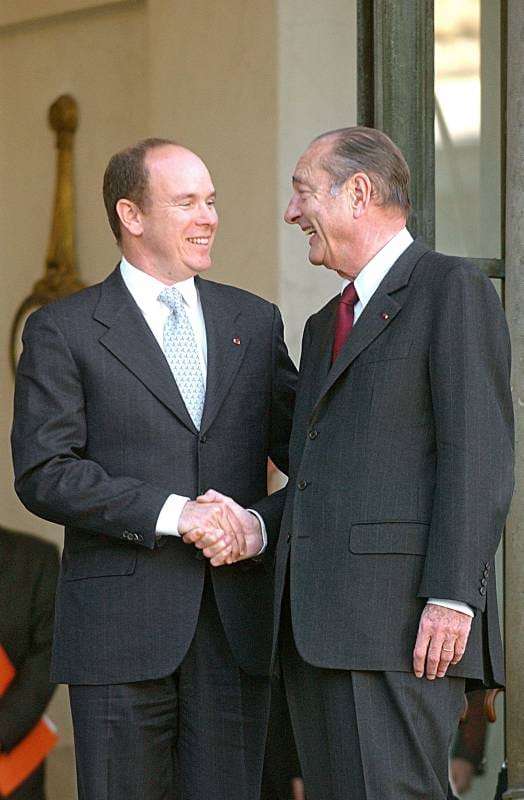
During an official lunch at the Prince’s Palace, in the presence of Prince Albert and Princess Caroline, Jacques Chirac emphasized the “cordial understanding and friendship” between France and the Principality. In response, Prince Rainier III expressed his wish for Monaco to join the Eurozone alongside France, reflecting a desire for economic harmonization and deeper integration.
Following a series of meetings, Jacques Chirac was awarded the Grand Cross of the Order of Saint-Charles, one of Monaco’s highest distinctions. In a reciprocal gesture of friendship, Princess Caroline was appointed Grand Officer of the Legion of Honour, while Prince Albert was promoted to Grand Cross of the National Order of Merit. Prince Rainier III also presented the French President with a scale model of the new harbour breakwater and the underground train station — two emblematic projects representing Monaco’s modernization at the end of the 20th century.
The visit concluded with a stop in Fontvieille to tour the Theramex pharmaceutical laboratories, symbolizing the economic and scientific dynamism of the Principality.
Nicolas Sarkozy: Strengthening the Friendship Between France and Monaco
Eleven years later, in 2008, the 23rd President of the French Republic (2007–2012) Nicolas Sarkozy appeared in Monaco on his first official visit. Albert II cordially hosted the president. It’s important to remark, that the heads of both states positioned themselves as protectors of the environment. That is why, during the visit they proposed to turn the Mediterranean into the “cleanest sea in the world” and work to protect the North Pole.
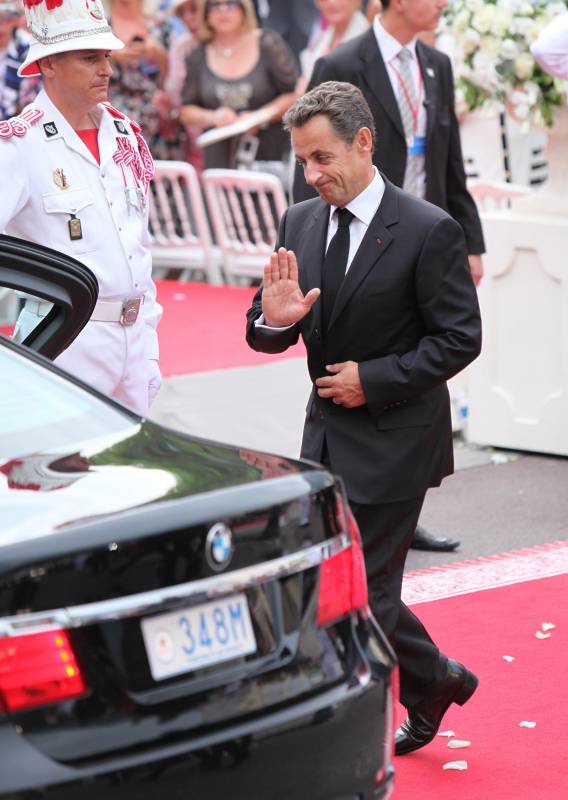
One of the highlights of Nicolas Sarkozy’s visit was the emphasis on the Union for the Mediterranean project, an initiative promoted by the French President to enhance cooperation among Mediterranean countries. He outlined his vision for this union, underlining the importance of regional solidarity and a shared commitment to peace and development.
François Hollande: Shaping the Future
On November 14, 2013, François Hollande, President of the French Republic, made an official visit to Monaco. The visit began with a private meeting between the two heads of state, followed by an official lunch at the Prince’s Palace. These discussions addressed a range of shared interests, including scientific research, environmental protection, and fiscal transparency.
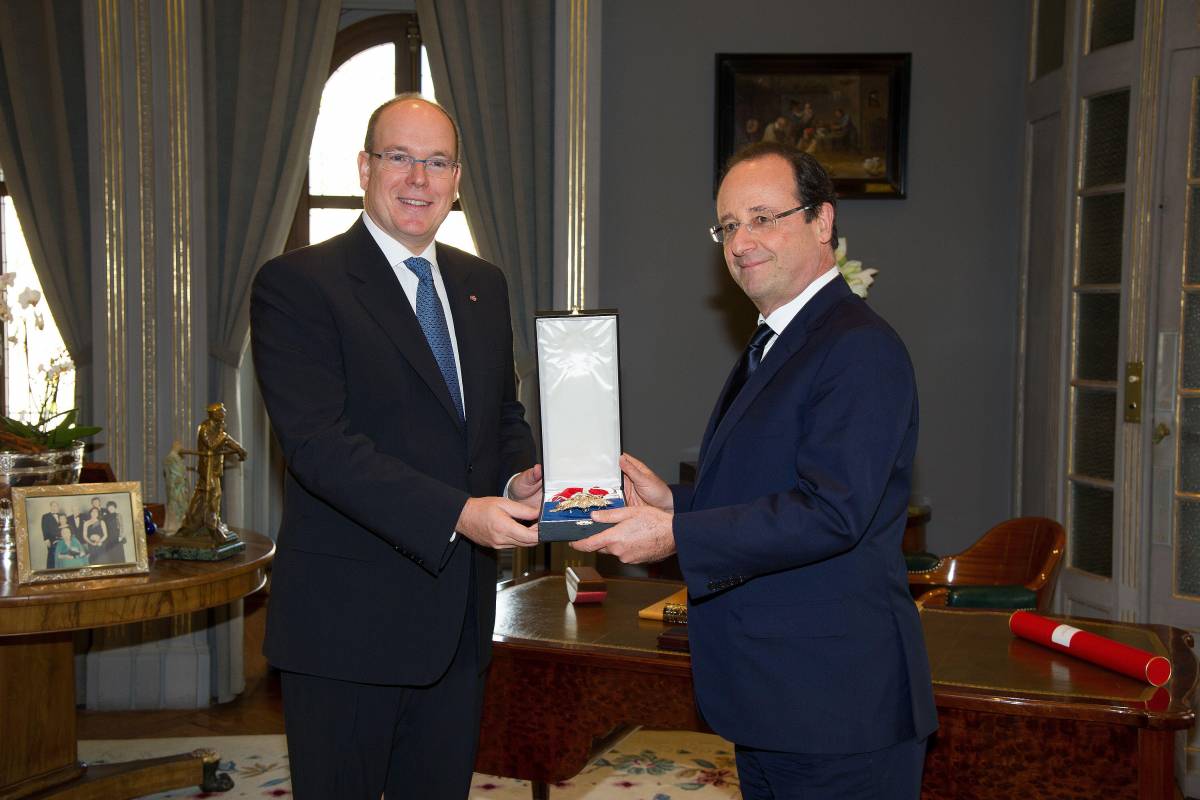
At the Oceanographic Museum, François Hollande and Prince Albert II presided over the signing of five partnership agreements in the fields of scientific research and environmental protection. These agreements aimed to strengthen collaboration between the two countries and promote joint initiatives for environmental preservation.
Another significant aspect of the visit was the announcement of initiatives to support employment, particularly through remote work. These measures are intended to create new professional opportunities for French residents in Monaco while addressing contemporary economic challenges.
Emmanuel Macron: The Contemporary Alliance with Prince Albert II
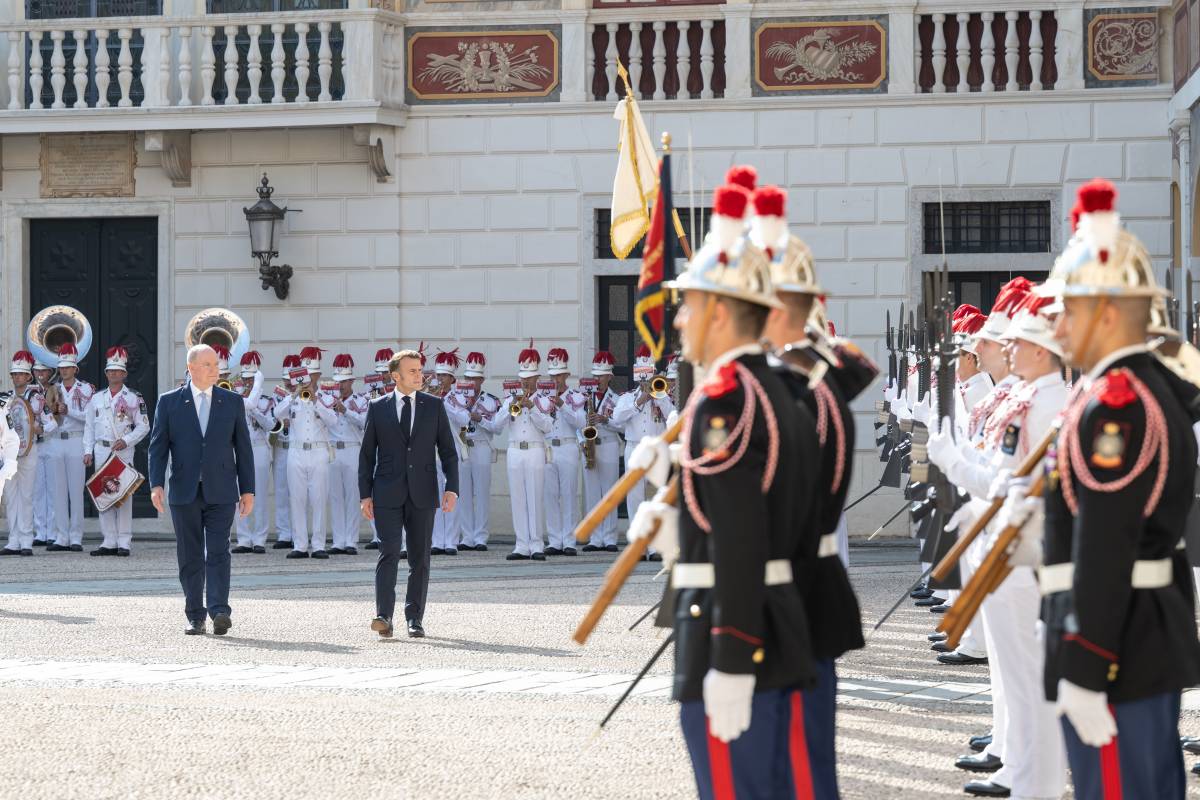
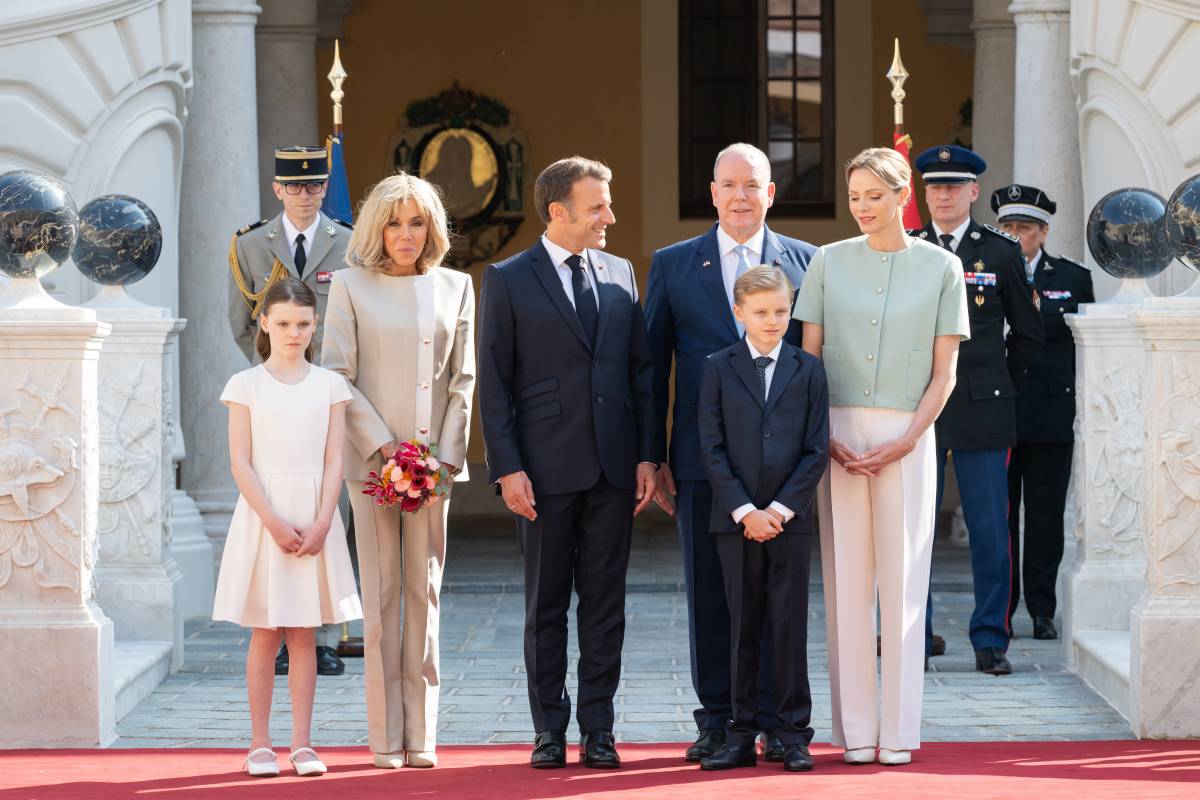
In June 2025, President Emmanuel Macron and Madame Brigitte Macron made a state visit to the Principality of Monaco at the invitation of the Princely couple. They were welcomed by Prince Albert II, Princess Charlène and their children on June 7 on the Palace’s courtyard. Princess Gabriella presented Brigitte Macron with a bouquet of flowers before the national anthems were performed. A review of the troops then included the Prince’s carabinieri and Monaco’s firefighters. Afterwards, the Sovereign received President Macron in a private audience while Princess Charlène gave Brigitte Macron a tour of the Palace gardens.
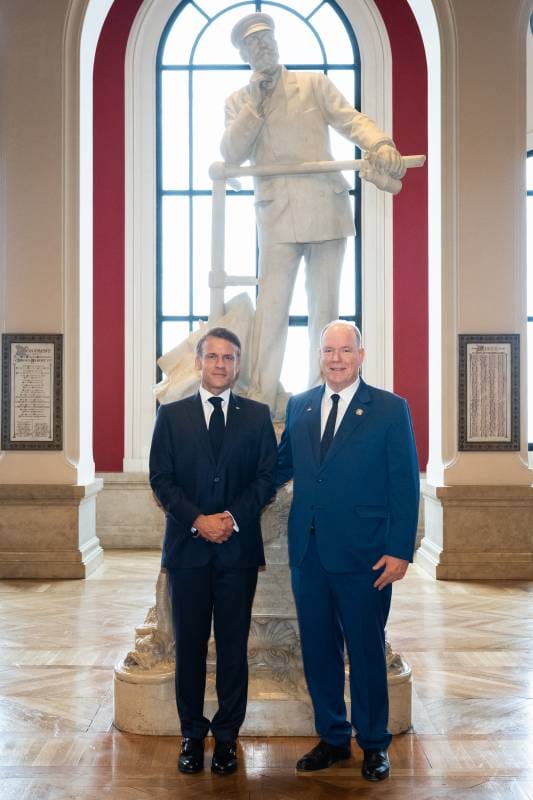
The Prince presented the President with the Grand Cross of the Order of Saint Charles, while Princess Charlène received the Grand Cross of the Legion of Honour. Prince Albert II already holds this distinction.
Shortly after leaving the Prince’s Palace and before returning for the state dinner organized in their honour, Emmanuel and Brigitte Macron walked through Monaco. First, they made a brief stop at the Hôtel Hermitage. Hand in hand, they greeted locals and strolled through the luxury boutiques of One Monte-Carlo. The couple then paused for a moment to exchange a few words with the Director of Monaco’s Public Security, Eric Arella, whose teams escorted the presidential couple and their bodyguards. Brigitte and Emmanuel Macron then wandered through the Jardins des Boulingrins, passing excited tourists as they crossed Casino Square and the Promenade des Champions before returning to the Hôtel Hermitage.
The Blue Economy and Finance Forum (BEFF) took place at the Grimaldi Forum on June 7 and 8, 2025, opening in the presence of Prince Albert II and closing with French President Emmanuel Macron. An official luncheon during the closing ceremony brought together the two leaders, several heads of state, government officials, and representatives of royal families to discuss sustainable ocean initiatives. Coinciding with World Ocean Day and ahead of the third UN Ocean Conference in Nice, Prince Albert II and President Macron issued a historic joint declaration reaffirming their countries’ commitment to ocean protection. Adopted on June 8, 2025, the Franco-Monegasque Declaration highlights the ocean’s role in climate regulation, biodiversity, and sustainable development. France and Monaco pledged to advance marine science, support international agreements like the BBNJ treaty, promote precautionary deep-sea mining, and champion sustainable blue finance and maritime decarbonization, calling for urgent global action against plastic pollution, illegal fishing, and climate-driven ocean changes.