


In 2025, HSH Prince Albert II of Monaco and HRH Princess Caroline of Hanover visited the Ardennes twice, first in April and then in December, reaffirming the deep historical and emotional ties between the Principality and this region of northern France. These visits were not simply ceremonial engagements. Together, they formed a powerful narrative of continuity, remembrance, and dynastic identity, reconnecting Monaco’s reigning family with ancestral lands linked to the Duchy of Rethel and the Mazarin heritage. They also cast renewed light on the role of two remarkable women whose lives profoundly shaped the destiny of the Principality.
Charleville-Mézières, La Cassine, Lametz: Rediscovering Roots
Despite the period of mourning following the death of Pope Francis, Prince Albert chose to honour this long-planned engagement, demonstrating both his deep commitment to history and the enduring legacy of the House of Grimaldi, although he shortened the final day to travel to Rome. The visit, held at the invitation of Mr. Noël Bourgeois, President of the Departmental Council, reflected the enduring ties between the Monegasque Princely family and this storied region of northern France.
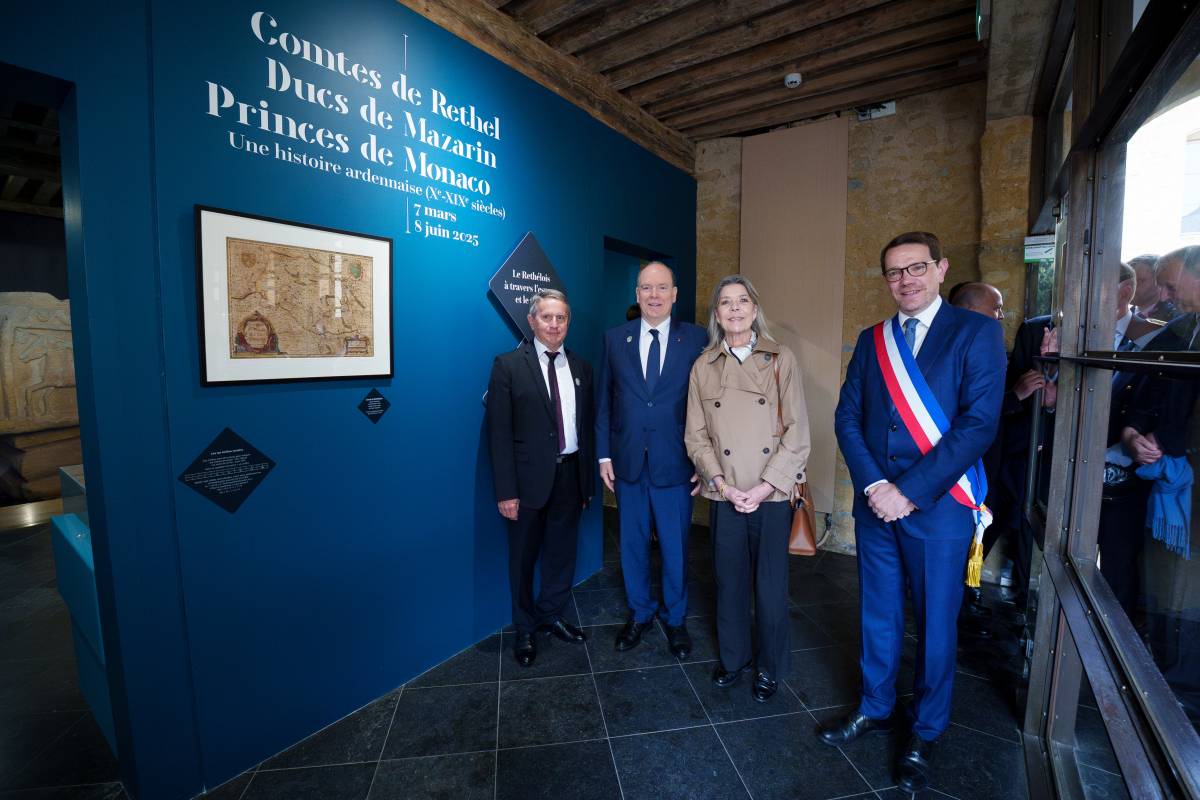
On April 24, the journey began in Charleville-Mézières, where the Royals were welcomed by local dignitaries at the Musée de l’Ardenne. There, they were immersed in the beautifully curated exhibition “Counts of Rethel, Dukes of Mazarin, Princes of Monaco: An Ardennes History (10th–19th Centuries),” a dazzling display of eight centuries of intertwined European nobility including two history-making noble women in particular. Prince Albert, visibly moved, listened attentively as curator Léo Davy recounted the lineage that linked the Duchy of Rethel to the Grimaldis through the 1777 marriage of Louise d’Aumont-Mazarin to the future Prince Honoré IV.
The visit continued with a tour of the Rimbaud Museum, a nod to the region’s poetic legacy, and a Republican Welcome at the Hôtel du Département — an official yet heartfelt ceremony in honour of Monaco’s continued friendship with the French Republic.
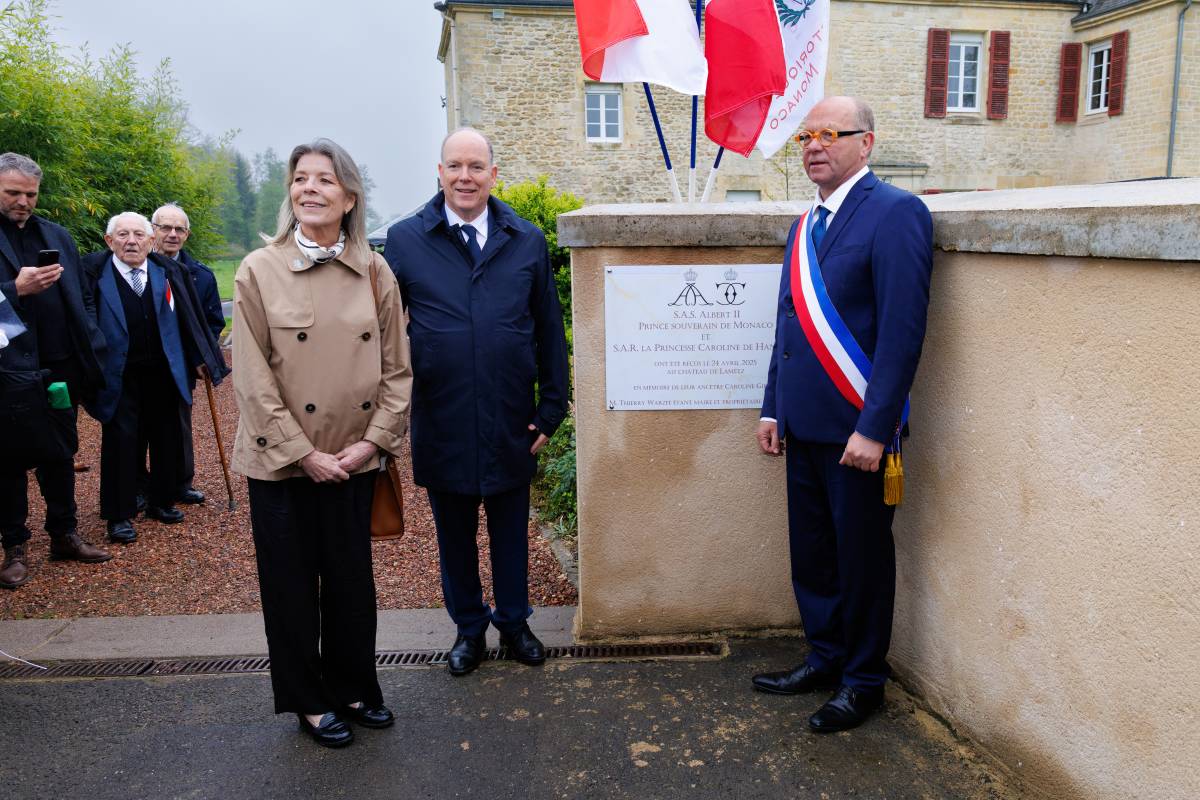
In the afternoon, the scene shifted to the quaint village of La Cassine in Vendresse, where a plaque honouring the visit and a sign was unveiled marking the village’s inclusion in the “Grimaldi Historic Sites of Monaco.” The ruins of the Château des Ducs de Rethel, once grand and now melancholically beautiful, served as a powerful reminder of the enduring passage of time and memory. The former Cordeliers Convent provided the backdrop for a commemorative plaque unveiling — a quiet moment that spoke volumes. These gestures are part of Prince Albert’s broader mission to preserve and connect historical locations across Europe that hold meaning to his family — a kind of noble archaeology of identity and shared past.

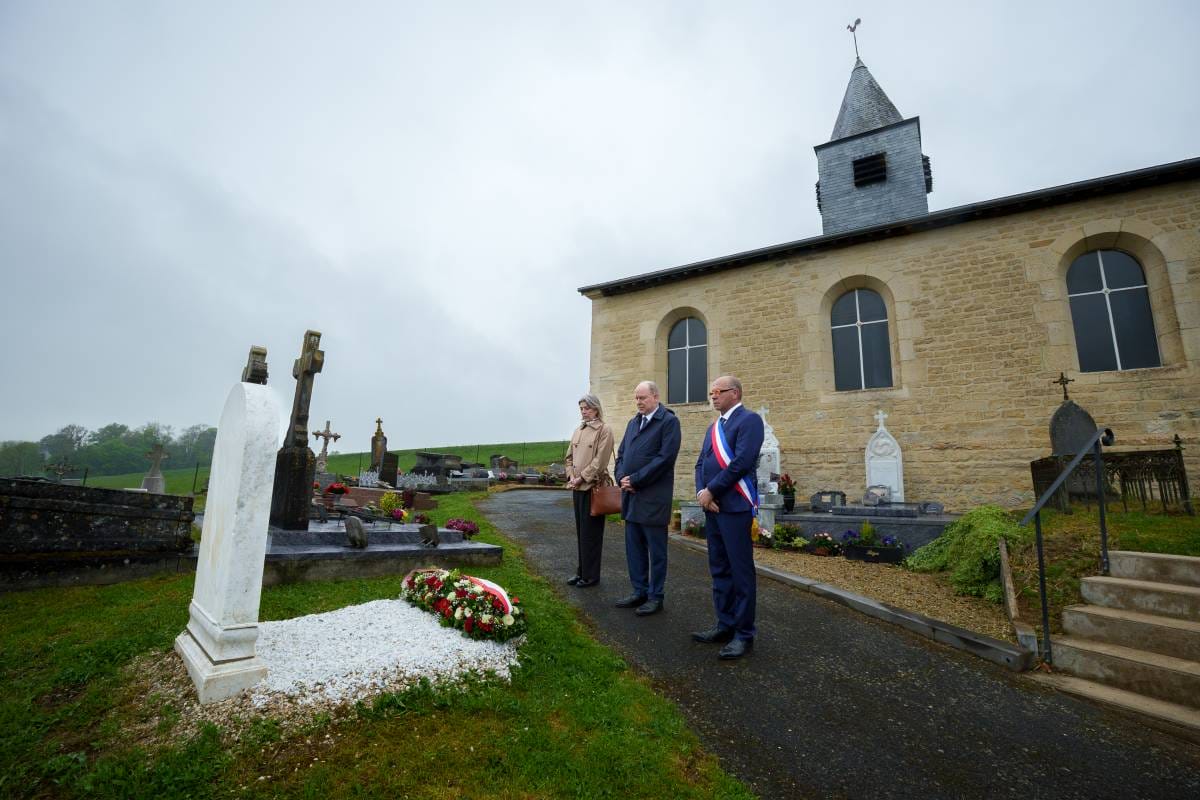
As the day drew to a close, the couple visited Lametz, a small commune with a mighty legacy. It was here that Caroline Gibert, wife of Prince Florestan I, spent part of her youth. In the town cemetery, the Prince and Princess paid their respects before the graves of Marie-Françoise Henriette le Gras de Vaubercy (1766–1845) and Antoine Rouyer de Lametz (1762–1836), the mother and stepfather of Princess Caroline. The visit concluded at the Château de Lametz, once a cherished family retreat. A new plaque honouring the visit and a “Grimaldi Historic Site” sign now mark the site — a quiet tribute to personal history, loss, and continuity.
Rethel: Music, Flags, and Pride
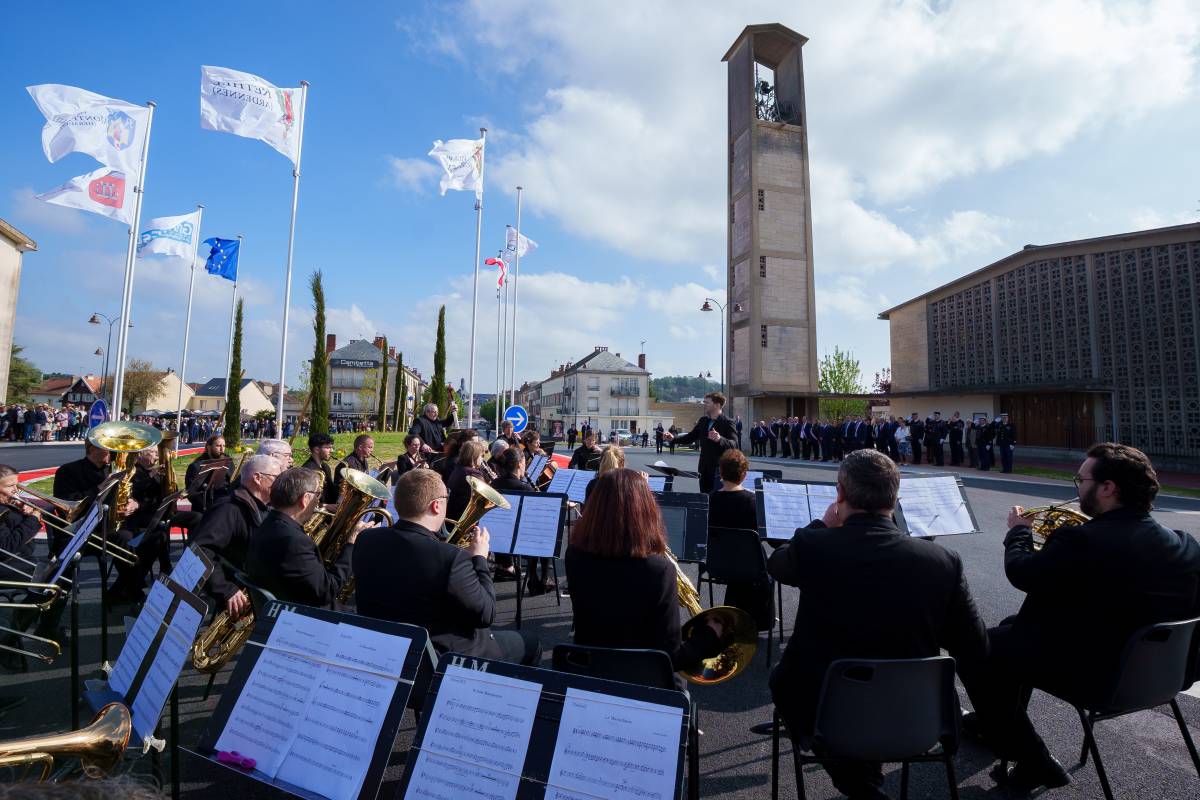
On April 25, Rethel rolled out a warm and ceremonious welcome. A Monegasque flag fluttered beside the French tricolor at the roundabout on Place des Minimes, while the municipal band performed both national anthems. The symbolic unveiling of another plaque honouring the visit took place at the site of the former Château Mazarin — once the administrative heart of the duchy.
Originating from a medieval county under the successive administration of several great dynasties (Burgundy, Albret, Foix, Cleves, Gonzaga of Mantua), the Duchy of Rethel, which covered a significant portion of the present-day Ardennes department, was renamed the Duchy of Mazarin in 1663 for the benefit of the cardinal’s nephew. It passed to the Grimaldis through the marriage, in 1777, of Louise d’Aumont-Mazarin to the future Prince Honoré IV.
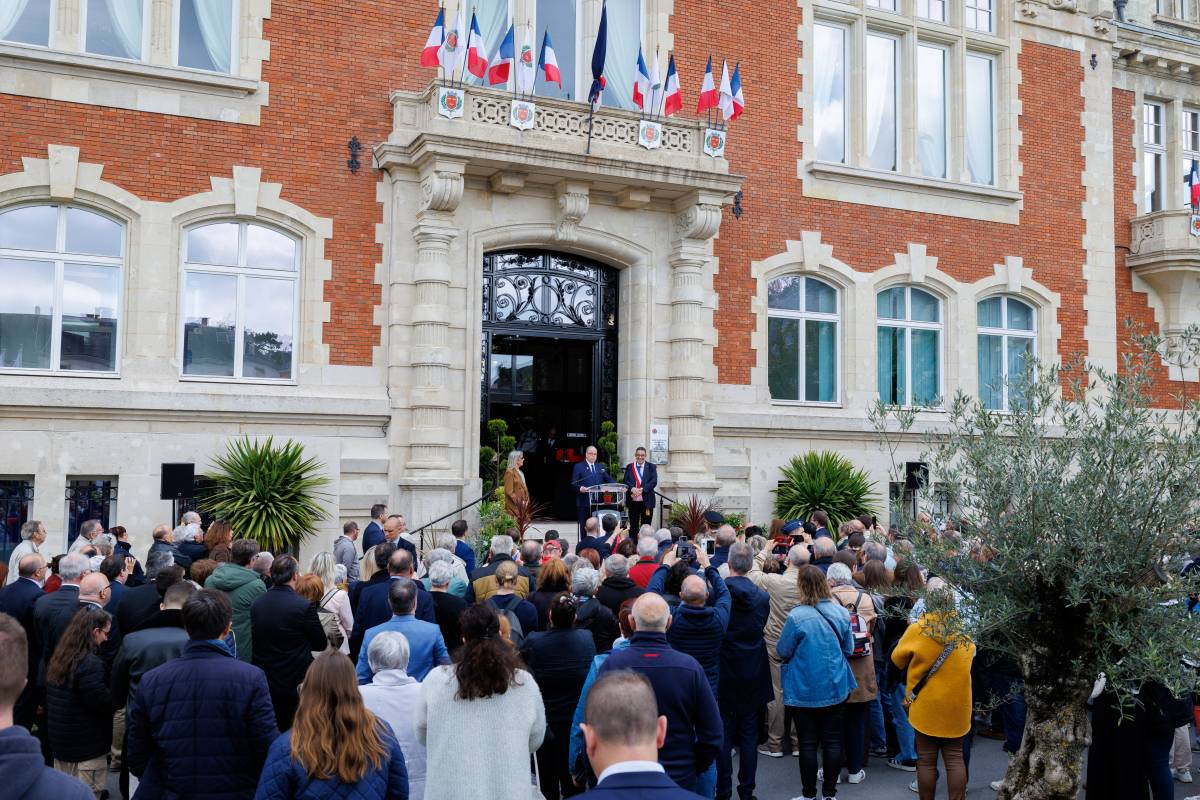
In front of the town hall, Prince Albert delivered an earnest speech celebrating the shared history of Monaco and the Ardennes. His words struck a balance between pride and humility, anchoring the past in the present and reaffirming the family’s bonds to this land.
Arnicourt, Château-Porcien: Shared Moments of Living Heritage
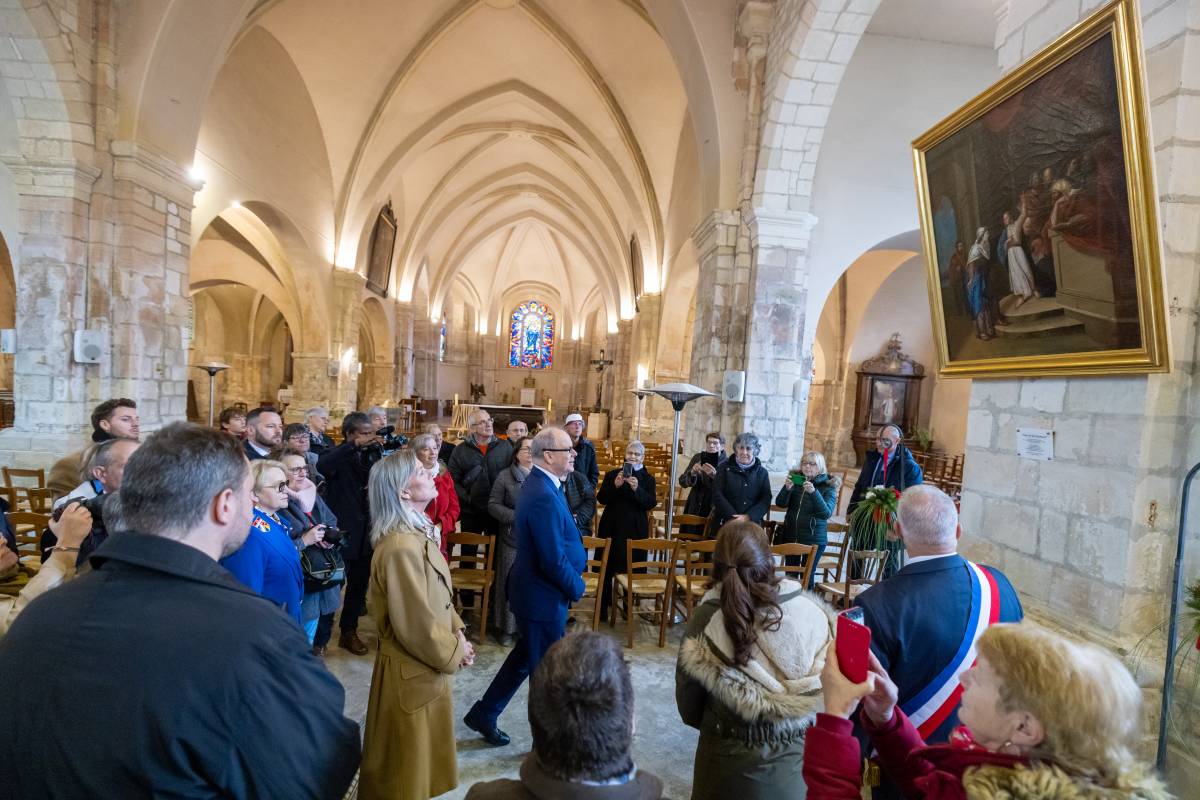
On December 13, 2025, Prince Albert II, accompanied by his sister Princess Caroline of Hanover, returned to the Ardennes, fulfilling a promise made seven months earlier when circumstances had forced a shortened spring visit. In Arnicourt, one of the communes most closely linked to the Grimaldi family, the visit began with the official unveiling of new signage confirming the village’s inclusion in the network of Grimaldi Historic Sites of Monaco. Welcomed by local authorities, including the Prefect of the Ardennes and the President of the Departmental Council, the Prince and Princess were met by residents who gathered in large numbers. The exchanges, warm, informal, and often emotional, highlighted how deeply this rural community identifies with its place in Monaco’s dynastic history, transforming a formal ceremony into a shared moment of living heritage.

The visit continued in Château-Porcien, another former Grimaldi stronghold, where a second commemorative plaque was unveiled, reinforcing the historic continuity between the Principality and the Ardennes. A particularly symbolic moment followed at the Church of Saint-Thibault, with the inauguration of a restored painting made possible through the Prince’s patronage. Once badly deteriorated, the artwork has now been returned to public view, a tangible expression of Monaco’s long-standing commitment to cultural preservation beyond its borders. Throughout the day, Prince Albert II emphasised the importance of passing history on to younger generations, noting that an understanding of one’s roots is essential in shaping the future. As the visit concluded with further exchanges with residents and officials, the sense of shared heritage was unmistakable: more than a thousand kilometres from Monaco, the Ardennes felt closer than ever to the Principality.
Legacy in Motion
These Princely visits weren’t about grandiose statements or royal spectacle. Instead, they were about history that breathes — about names carved into stone, alliances forged centuries ago, and the way heritage quietly shapes identity.
By retracing the steps of his ancestors, Prince Albert II offered a poignant reminder: the past is not simply remembered — it is re-lived, honoured, and woven into the very fabric of the future. And for those lucky enough to witness it in the Ardennes, it was a royal journey not only of state, but of soul.
TWO AMAZING WOMEN WHO SHAPED THE DESTINY OF THE PRINCIPALITY
Louise d’Aumont, Duchess of Mazarin (1759–1826)
Louise d’Aumont was a significant figure in Monaco’s history, primarily through her relationships with members of the Grimaldi family. The Duchy of Rethel in the Ardennes is linked to the Grimaldis through the 1777 marriage of Louise to the future Prince Honoré IV. Together they had two sons: Honoré (born 1778), Prince of Monaco from 1819 until 1841, and Florestan (born 1785), Prince of Monaco from 1841 until 1856. Thus, Louise d’Aumont was the mother of two reigning Princes of Monaco.
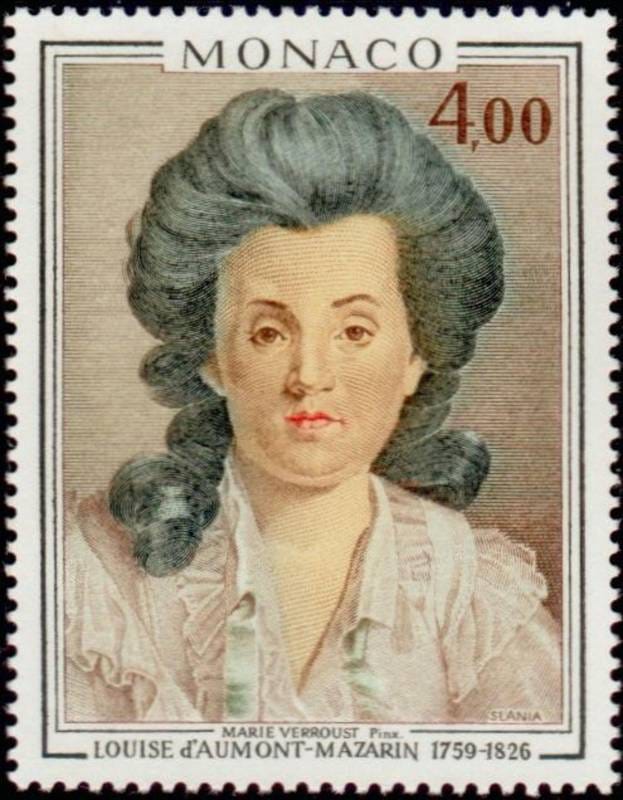
Louise d’Aumont was the great-great-granddaughter of Hortense Mancini, Duchess of Mazarin, Duchess of Mayenne, Duchess of Meilleraye, the mistress of King Charles II of England, and one of the two heirs of her uncle Cardinal Jules Mazarin, the First Minister of King Louis XIV of France. Louise was the heir of Hortense Mancini’s titles and the Mazarin family wealth.
Louise’s relationship with her elder son, Honoré V, was strained over his fathering of an illegitimate child in 1814. This disapproval led her to threaten disinheritance, and ultimately, she left her entire fortune to Florestan instead. Florestan was closer to his mother, especially after being raised by her following her divorce from Honoré IV in 1793. Florestan remained loyal to his mother, and she rewarded this loyalty by leaving him her estate.
Louise d’Aumont passed away in Paris in 1826. Initially buried at Père Lachaise Cemetery, her remains were transferred to the Cathedral of Monaco in 1885, alongside her son Florestan’s, by order of her grandson, Prince Charles III.In 1814 Louise’s illegitimate daughter, Amélie d’Aumont, married Louis Pierre Musnier de Mauroy. At this wedding held at the Château de Lametz Florestan met Caroline Gibert de Lametz, the half-sister of the groom. And thus to our second great lady Caroline who later directly played a significant role in Monaco’s prosperity.
Caroline Gibert de Lametz, Princess of Monaco (1793–1879)
Born on July 18, 1793, in Coulommiers, Marie-Louise Charlotte Gabrielle Gibert was the only child of Marie Françoise Henriette le Gras de Vaubercy and her second husband Charles-Thomas Gibert. After divorcing Marie-Louise’s (later known as Caroline) father, Marie-Françoise married her third husband Antoine Rouyer de Lametz, Chevalier d’Empire and Knight of the Legion of Honour. The marriage did not produce any children but Antoine Rouyer de Lametz officially adopted his wife’s daughter who chose to bear the name Caroline.
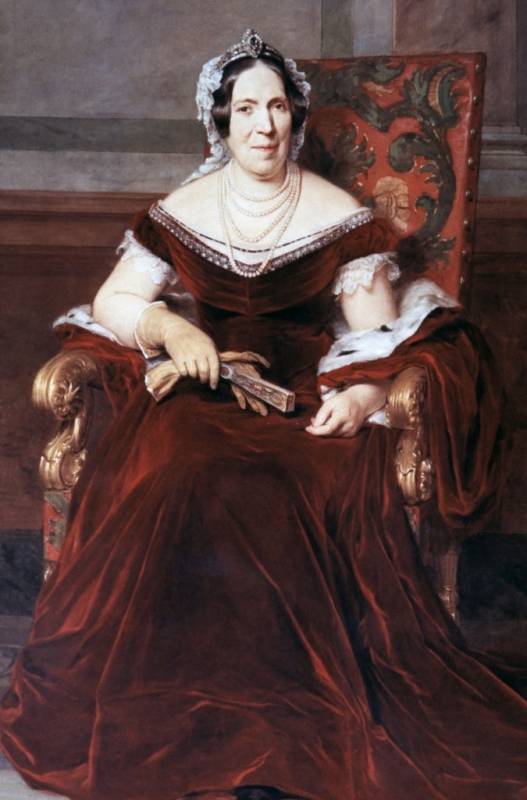
Florestan and Caroline married in 1816 and had two children: Charles, future Prince Charles III of Monaco (born 1818) and Florestine (born 1833).
After a reign of twenty-two years, Honoré V, Prince of Monaco, died on October 2, 1841, in Paris. Because he had never married, his younger brother Florestan was the heir to the throne of Monaco. Florestan was a man who had lived his entire life in France and had never set foot in the Principality and he was now to rule. Lacking political experience and unprepared for the responsibilities of leadership, Florestan’s reign of nearly fifteen years would be marked by support from a uniquely strong figure: his wife, Caroline Gibert de Lametz.
Princess Caroline, possessing a keen intellect and a natural acumen for finance and governance, stepped willingly in to help. Just as she had successfully managed the family’s personal finances, she took control of Monaco’s fragile economy and political affairs while her husband remained largely detached from matters of state.
Florestan died in Paris in 1856 at the age of 70, leaving behind a weakened principality on the brink of financial collapse. His successor, Charles III, aged 38, had been thoroughly prepared for leadership by his formidable mother. Princess Caroline remained a guiding force throughout the early decades of Charles’s reign, offering counsel and continuity during a critical transitional period for Monaco. One of the defining challenges of Charles III’s early rule was the loss of Menton and Roquebrune, towns that comprised 95% of Monaco’s territory. These towns, plagued by uprisings and straining Monaco’s military for years, were officially ceded to France in exchange for diplomatic recognition of Monaco’s sovereignty.
With the country’s territorial and financial stability in question, Princess Caroline once again played a pivotal role. Aware of the need for bold economic innovation, she helped shape the idea that would forever transform Monaco’s destiny: the establishment of a gambling casino and the development of the principality into a luxury seaside resort. The result was the creation of the Casino de Monte-Carlo in 1865 that attracted wealthy clientele from across Europe and revitalized Monaco’s economy. At the time of the casino’s opening, Monaco had a population of only about 1,000. Yet within a few short years, it saw an influx of residents and visitors from Britain and the continent, drawn by its opulence and opportunity.
The Dowager Princess continued to act as a trusted advisor to her son throughout his reign. Her support became even more crucial as Prince Charles III began to lose his sight and suffered the devastating loss of his wife, Antoinette de Mérode, to cancer in 1864.
Caroline Gibert de Lametz outlived her husband by twenty-three years, passing away in Monaco on November 25, 1879, at the age of 86. She was laid to rest in the newly constructed Cathedral of Monaco, a grand edifice commissioned by her son to replace the older Church of Saint Nicholas.