

Chagall at Work in His Museum in Nice
Until September 21, 2026
Following an exceptional donation by the Master’s granddaughters, Meret and Bella Meyer, to the National Museum of Modern Art in Paris, this summer the Chagall Museum of Nice is unveiling some new works. Initially presented by the Pompidou Centre in 2024, the collection is now available to French Riviera art lovers. This rich and varied donation reveals the different facets of Chagall’s genius. Sketches for the stage curtains and costumes for “The Firebird,” Balanchine’s ballet set to Stravinsky’s music, among them. Inspired by Russian folklore, it is opposing the light of the Firebird coming to the protagonist’s aid, with the darkness embodied by a sorcerer. The battle is eloquently illustrated by the magnificent stage curtains. Mounting his horse, Prince Ivan is riding towards the dawn whilst the Firebird is dominating the night sky, heralding the happy ending. Love triumphing over the forces of destruction could not but powerfully inspire Marc Chagall, perfectly embodying the artist’s poetic imagination.
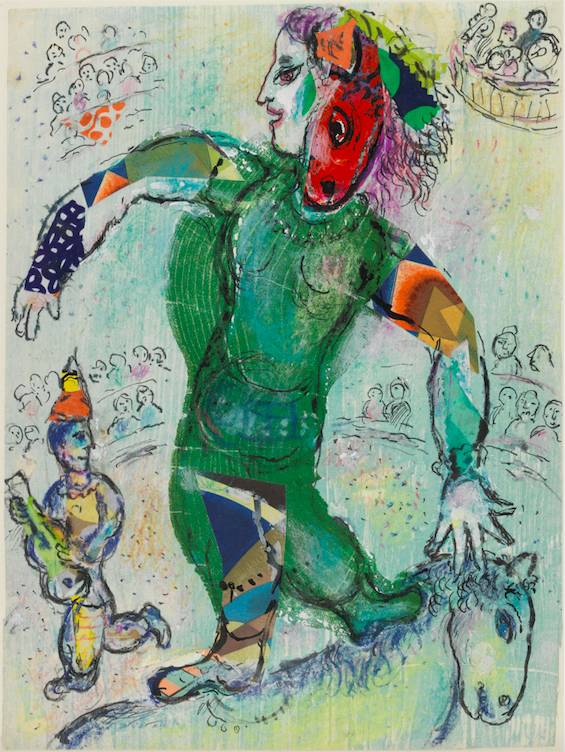
Illustrating a ceaseless creative quest that guided the artist throughout his life, collages, sculptures and ceramics are also part of this new exposition. His fascination with clay and stone goes back to the 1950s when Chagall settled in Vence. Later, between 1960 and 1970, the Master perfected his collage practice using cut paper and fabric. These were mostly studies for other monumental projects. Sketches and models created in 1964 for the Opéra Garnier ceiling also deserve a special mention. Indulging in the opera, music lovers are enchanted with his chandelier paintings to this day.
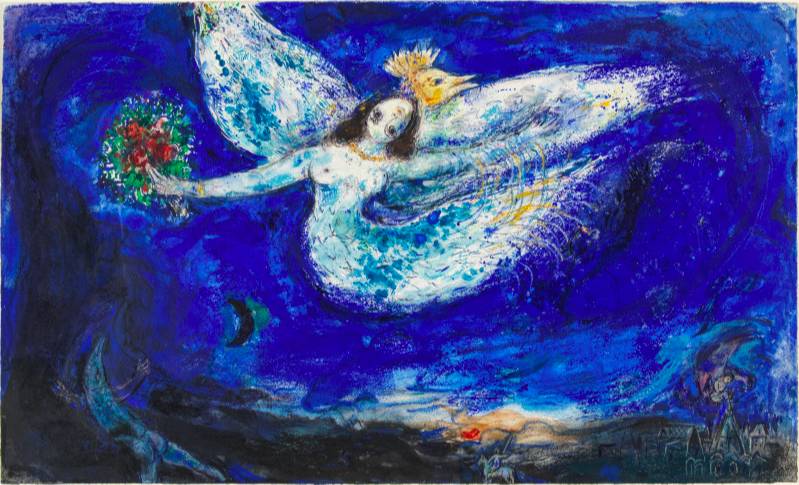
Chagall à l’œuvre. Un prêt d’exception au musée
Marc Chagall National Museum
Avenue du Dr Ménard, Nice
“The voices their works speak” at the Hartung-Bergman Foundation in Antibes
Until September 25, 2026
A unique dialogue between major works of modern art and inspiring texts by the founding voices of 20th century art criticism. What would a painting, a drawing or a print be if not seen through the gaze of another? The exhibition at the Hartung-Bergman Foundation in Antibes is conveying a voice to the works of art, guiding us through the evolution of criticism — at times laudatory, at times disparaging, often disconcerting by the innovative approach of the two artists.
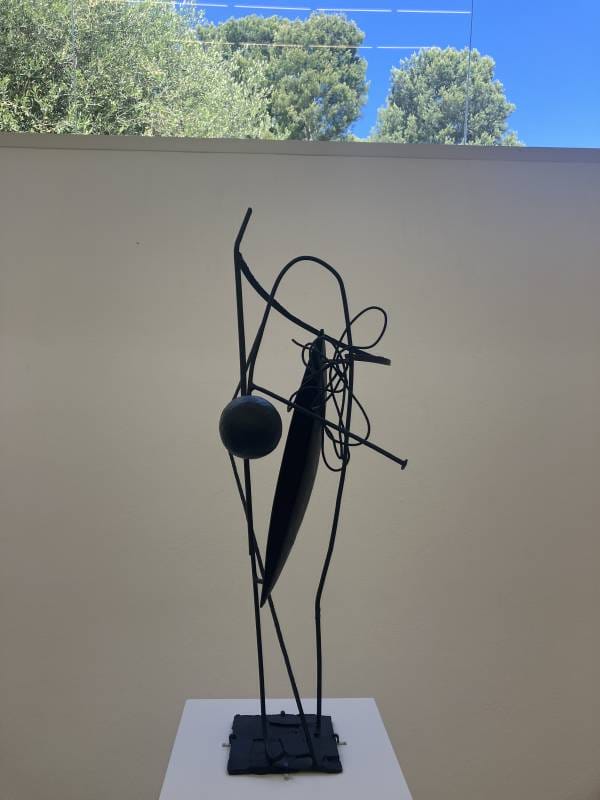
According to the Foundation’s Director and exhibition’s curator, Thomas Schlesser “Before the words even reached their full incandescence, there were years of wandering, experimentation and skepticism.”
The exhibition is thus introducing us to an intricate perspective of the “viewers”, demonstrating how deeply the two artists may be interconnected in the history of art.
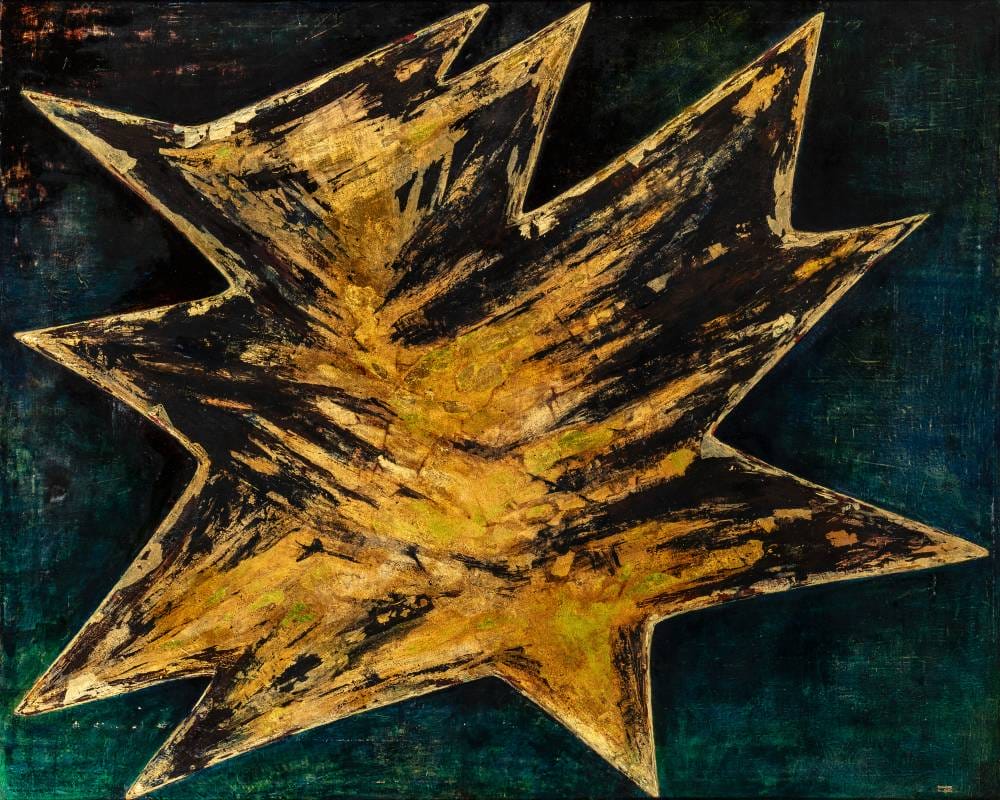
Some of Anna-Eva Bergman’s compositions, such as “The Star” or “A Piece of Mountain,” are soaring toward infinity of thought. A great critic once described them as “the light that speaks”. There is indeed something mysterious, mystical and captivating about these works. The Hartung has always celebrated “the strength of the line”, “the effervescence and illumination of matter”. Revisiting all these paintings of an unparalleled power and exploring the words that have accompanied them is thus a truly artistic and intellectual experience.
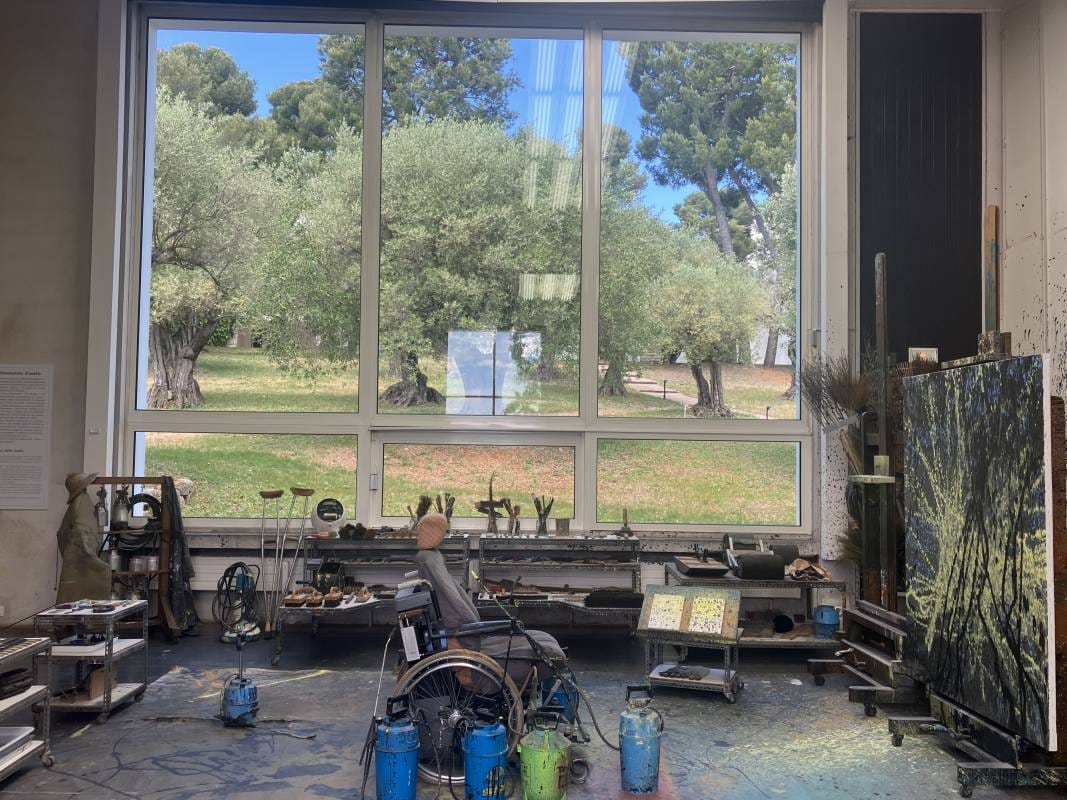
Created in 1994, the Hartung-Bergman Foundation is a live journey and testament of the two essential modern art painters: Hans Hartung and his wife, Anna-Eva Bergman. Back in the 1960s, the two artists acquired a two-hectare olive grove on the hills above Antibes to build their villa and studios. This place, where they lived and worked until the end of their lives, is therefore holding many memories. A truly magical place with a park where the centuries-old olive trees grow.
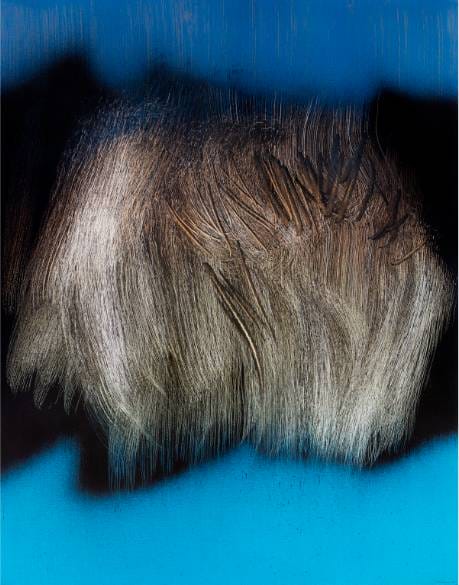
Les voix de leurs œuvres. Bergman, Hartung et la critique
Fondation Hans Hartung et Anna-Eva Bergman
173, Chemin du Valbosquet, Antibes
“Africa Pop” at the International Museum of Naïve Art in Nice
Until October 18, 2026
Fabric is there to cover us, to preserve our intimacy. But it can also act as a revealer, a poster or a manifesto. This is what the unique exhibition at the International Museum of Naïve Art in Nice is all about. With its highly original scenography, “Africa Pop” is revealing the many facets of wax prints — these brightly coloured cottons emblematic of the African continent.
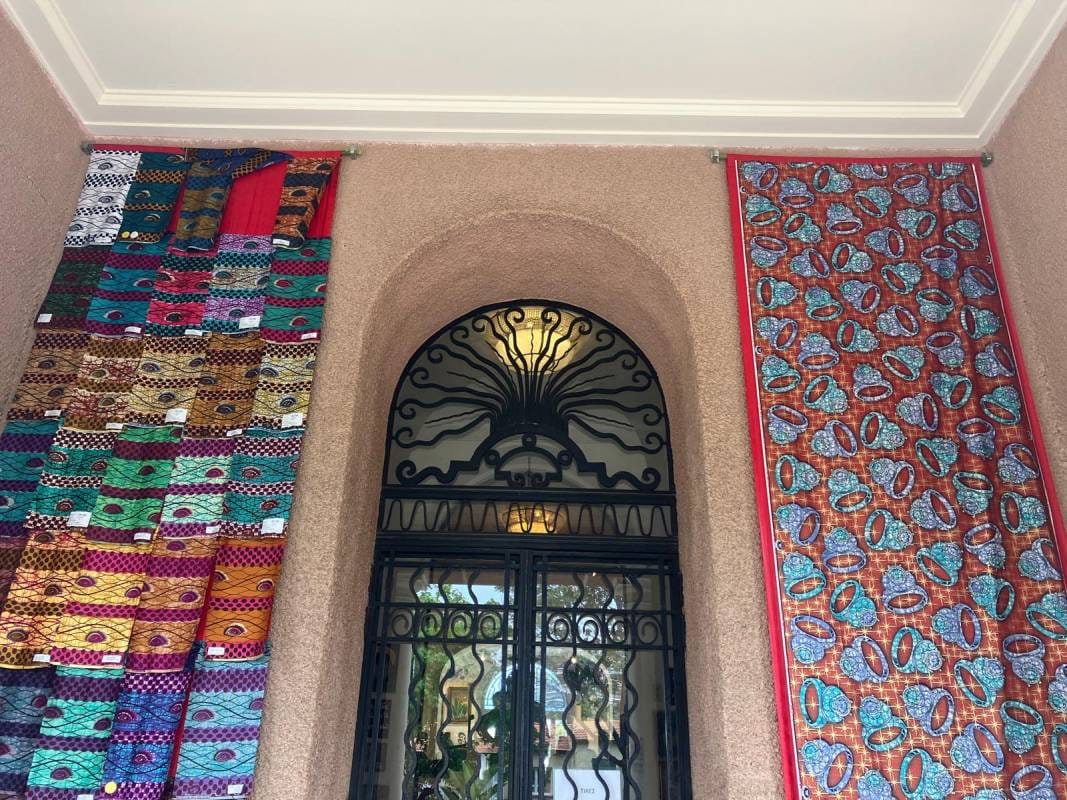
These designs are telling us stories, express emotions and quests, and in particular, those of women. Forging connections between countries and generations, lines are blurred between art and craft.
The exhibition is centred around large textile panels evoking both space exploration, sports, music, animals, elegance and seduction, eloquently expressing the modernity of the African continent, oscillating between ancestral traditions and a future, even futuristic, vision.
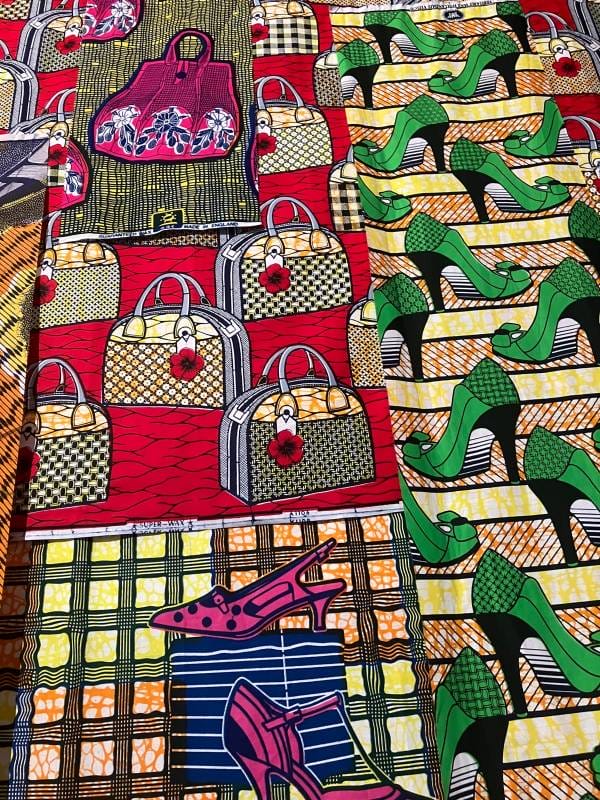
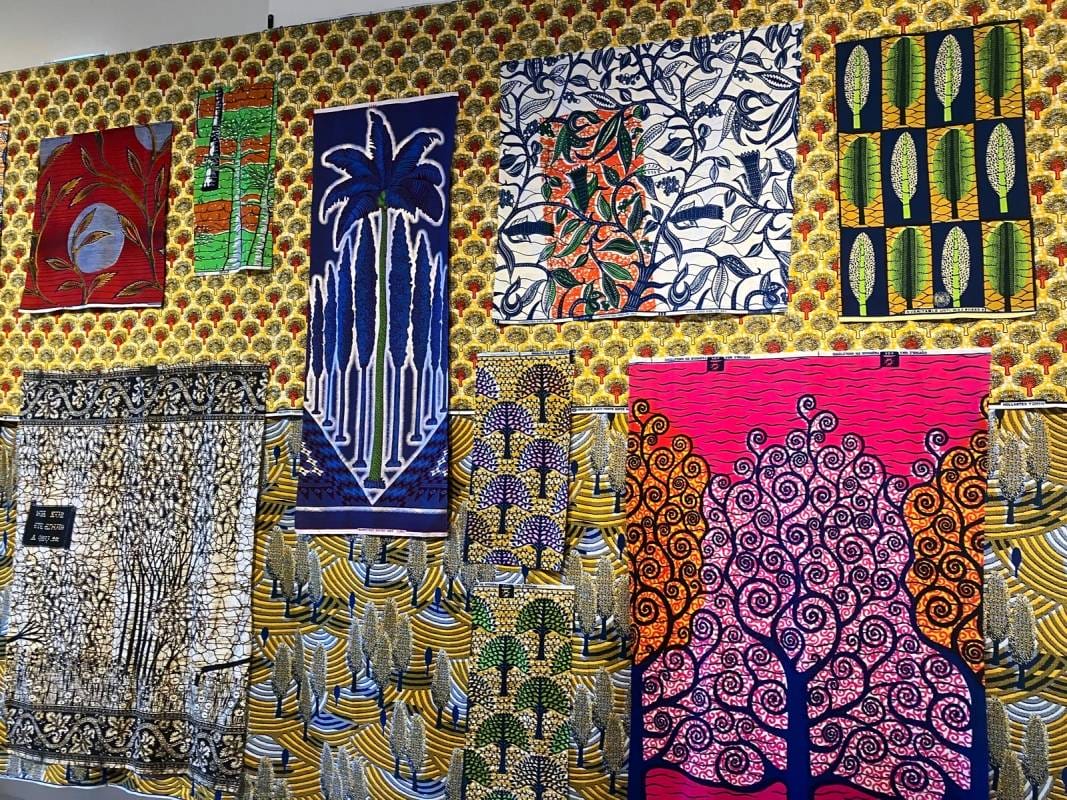
The villa’s gardens, and the rarely open to public private apartments, have also been transformed with these sculptures and images.
“Africa Pop” is inviting us to discover or rediscover this highly original museum housed in a prestigious former estate, the Château Sainte-Hélène. Founded thanks to the donation of the art critic and collector Anatole Jakovsky and his wife Renée, with the support of the city of Nice, the International Museum of Naïve Art presents over a thousand pictorial and graphic works, as well as folk art objects. An ideal setting for the “Africa Pop” exhibition, offering a fresh perspective on the countries both distant and close, through the questions they raise.
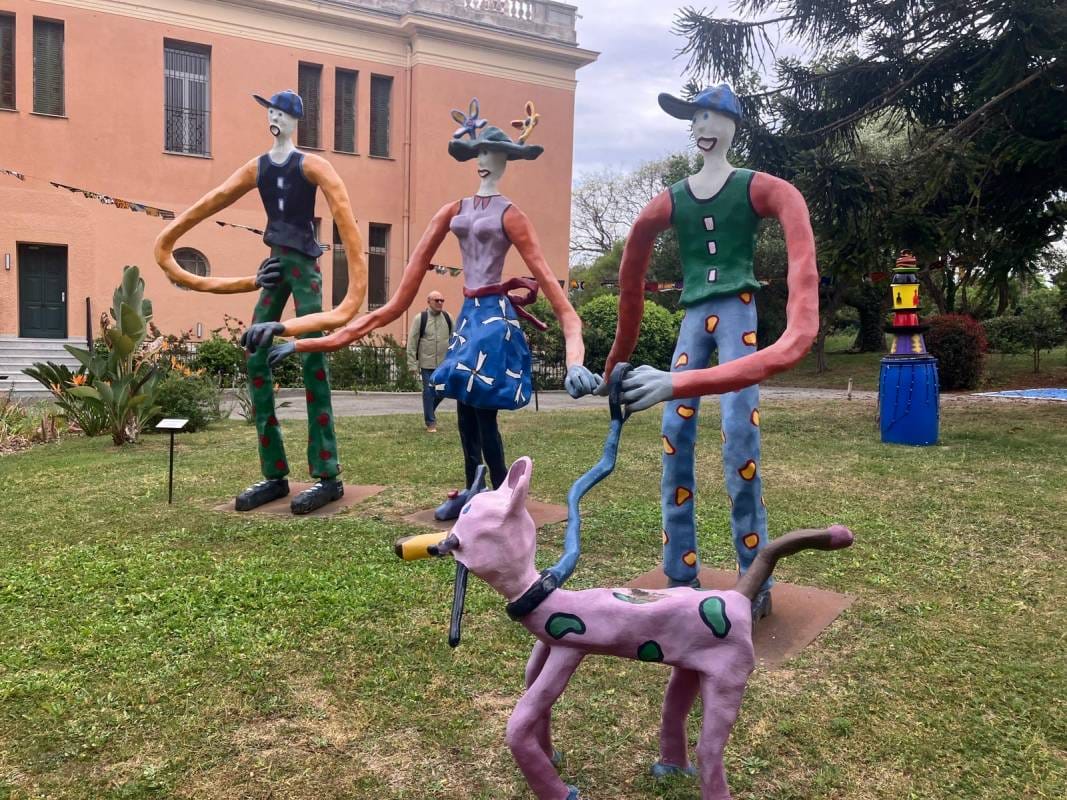
Africa Pop
International Museum of Naïve Art
20, Avenue de Fabron, Nice
Ernest Pignon-Ernest is taking over the Ziem Museum in Martigues
Until November 15, 2026
This Nice-born fantastic draftsman and artist is celebrating socially committed art.
A pioneer of urban art long before the “Street Art” invention, this summer Ernest Pignon-Ernest has been given free rein in Martigues. He is thus invited to take over the Ziem Museum for a creative dialogue with an artist who, in his own time, had made his mark with the fine precision of his line. In the heart of the 19th century, away from the well-trodden Impressionism paths, Félix Ziem had maintained a taste for sketching landscapes and people from real life. A passionate traveller, he masterfully absorbed the influences of the cities and countries he visited.
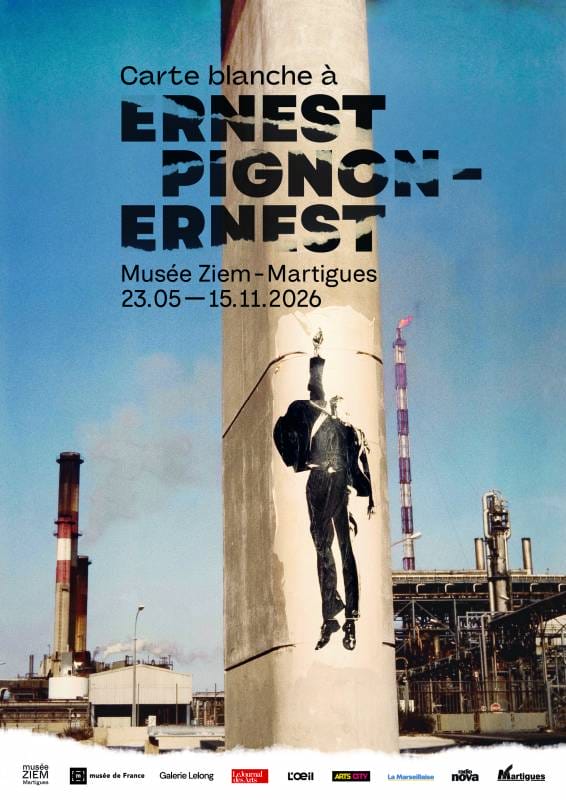
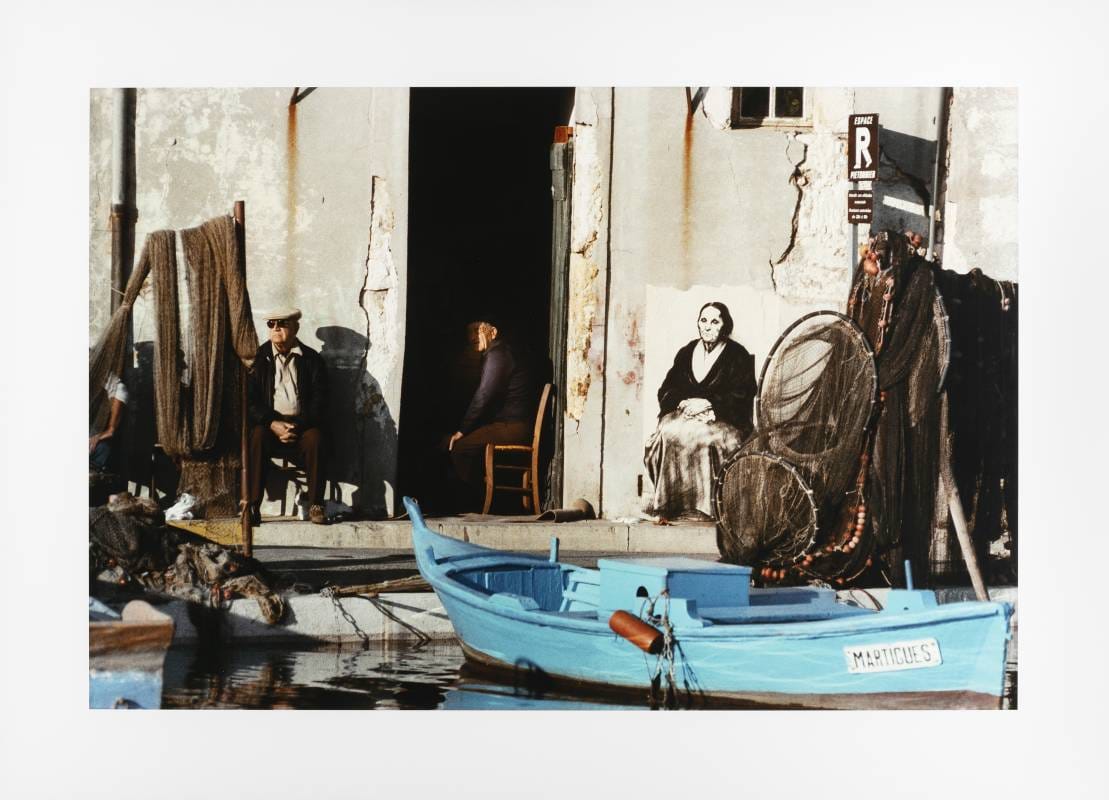
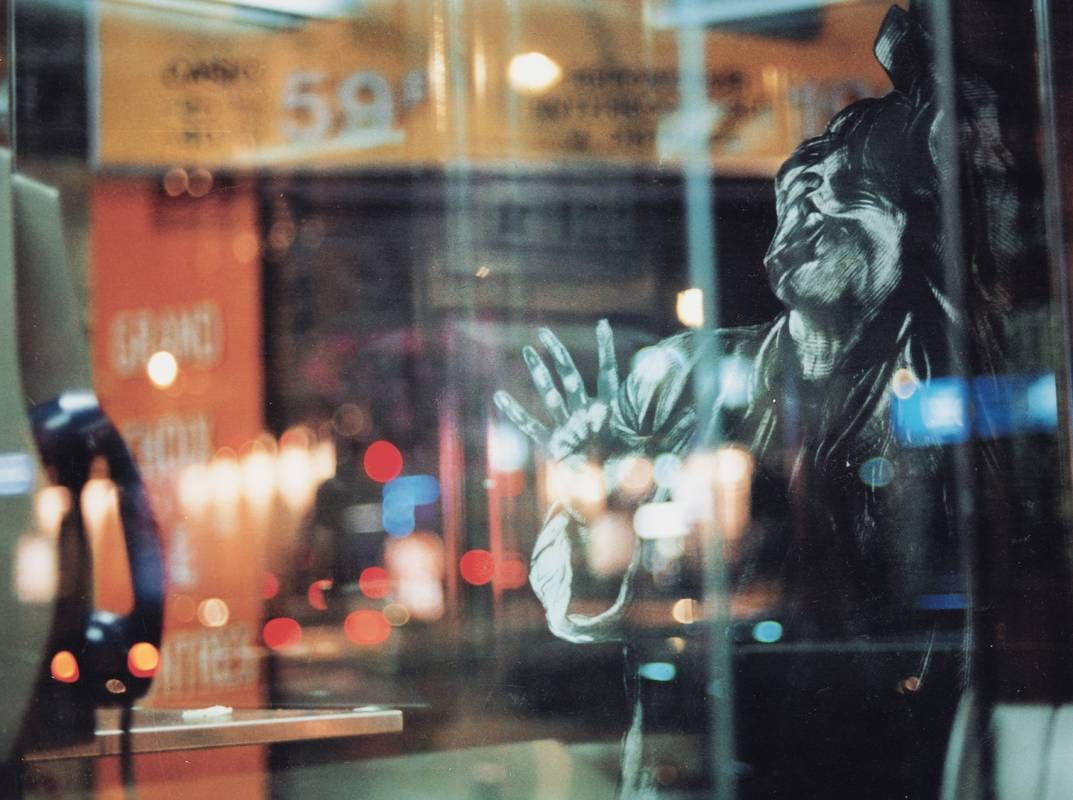
For his part, Ernest Pignon-Ernest continues to explore those particular places where humanity is enduring hardship, even suffering. This committed approach is leading him to tirelessly paste his images — striking in their visual beauty — onto walls, onto the ground and subway stairs. More eloquent than any speech, they provoke a reflection, or even compassion for the exiled, the oppressed, the victims of fate. His intervention in Nice against apartheid, during the twinning with South Africa, caused a great stir in 1974. The artist then pasted hundreds of images of a Black family penned behind barbed wire all over the city of Nice.
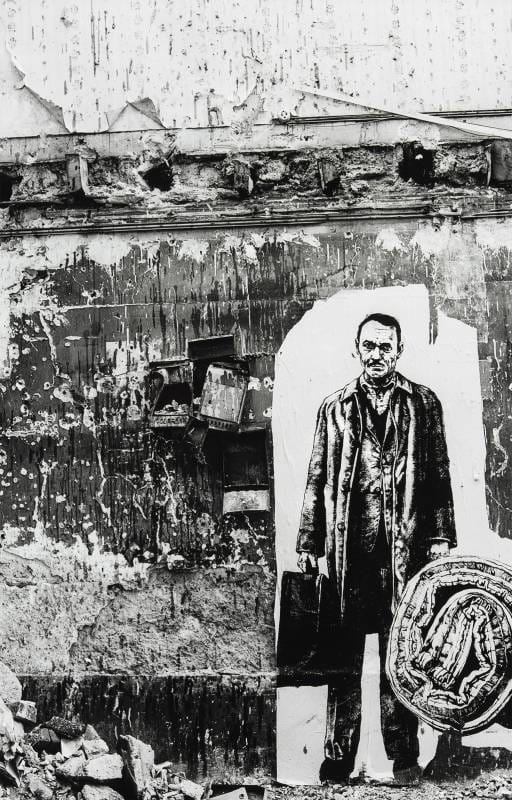
Ernest Pignon-Ernest is not willing, however, to reduce himself to simply displaying ephemeral street art. “If we speak of a work of art,” he is saying, “it is the venue that becomes one. My images are there to revive some long-buried memories. This interaction with the past is what an artwork is all about.” I approach places like a painter, like a sculptor, for their plastic qualities, but I also picture the unseen: their memory, their symbolic power. These ’densified’ places thus become works of art”. In his own way, Ernest Pignon-Ernest transforms, disrupts and disturbs, revealing street corners, squares and landscapes evoking a history — that of their own. Some of his images, like the Communards executed by a firing squad (recalling the “Bloody Week” which, in May 1871, ended the insurrection in Paris) or his vagabond Rimbaud, the moving images of the wandering poet, were reproduced in hundreds of thousands of copies, becoming true icons of the modern times.
The Martigues exhibition is thus showcasing 60 years of artistic creation across Haiti, Paris, Rome, Naples, Algiers, Soweto and elsewhere. All in all, two hundred works of a great aesthetic and symbolic power are thus questioning our history and, by extension, our present.
Carte blanche to Ernest Pignon-Ernest
Ziem Museum. 9 Boulevard du 14 Juillet, Martigues
A drawing for the Monte-Carlo Ballets 40th anniversary
Born in Nice, Ernest Pignon-Ernest also feels at home in Monaco. His collaboration with the Monte-Carlo Ballets, started over thirty years ago. From 1995 to 2006, he worked with choreographer Jean-Christophe Maillot, whose talent and respect towards dancers he greatly admired. “I feel in sync with him. It’s a joy to work together. I love the way Jean-Christophe is combining heritage and modernity. I myself am pursuing my research in this direction.” Among other works, Ernest Pignon-Ernest also produced a stage curtain and a number of sets for the Opéra Garnier (“Romeo and Juliet” and the “Lake” in collaboration with playwright Jean Rouaud). In 2017, he collaborated with JR (who recently “wrapped” the Pont Neuf in Paris) on the Grimaldi Forum stage curtain on the occasion of the Monte-Carlo Ballets seasonal opening.
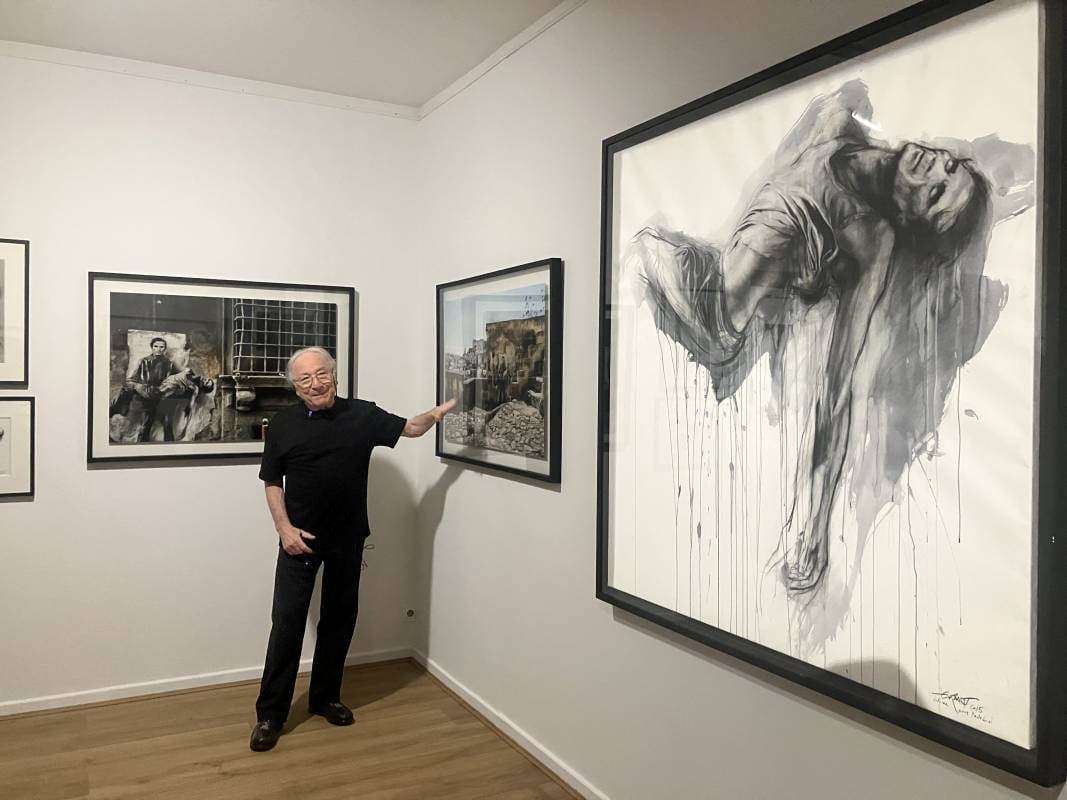
But beyond this fruitful cooperation, there is yet one other significant influence on Ernest Pignon-Ernest’s art, that of the Monte-Carlo Ballet’s prima, Bernice Coppieters. Inspired by the body of this exceptional dancer, whose muscles, contours and postures he tirelessly explored, the artist produced countless drawings. Echoing with the great Christian mystics such as Teresa of Ávila and Hildegard of Bingen, they gave rise to his “Ecstasies” — a sumptuous series exhibited at the Saint-Pons Abbey in Nice ten years ago. Bernice Coppieters’ body also inspired Ernest for yet another collection of unparalleled power — his representations of the writer Jean Genet and the filmmaker Pasolini.
His latest tribute to the Monte-Carlo Ballets, just when we met him, was finalizing a drawing for their 40th anniversary invitation. On July 4th, the lucky ones attended the gala evening to celebrate the Ballets’ 40th anniversary. This image, the invitation, was a lovely reminder of a very fruitful and friendly artistic collaboration.
The magical adventure of Victor Brauner at the Villa Paloma in Monaco
Until January 3, 2027
“Each drawing, each discovery will be an extraordinary unknown place, each painting, an adventure.” That’s how one of the most singular 20th century artists, Victor Brauner, summed it all up. His inventive spirit is currently celebrated at the New National Museum of Monaco (NMNM) with a stunning private collection. A major figure of surrealism, Victor Brauner remains an artist in his own right.
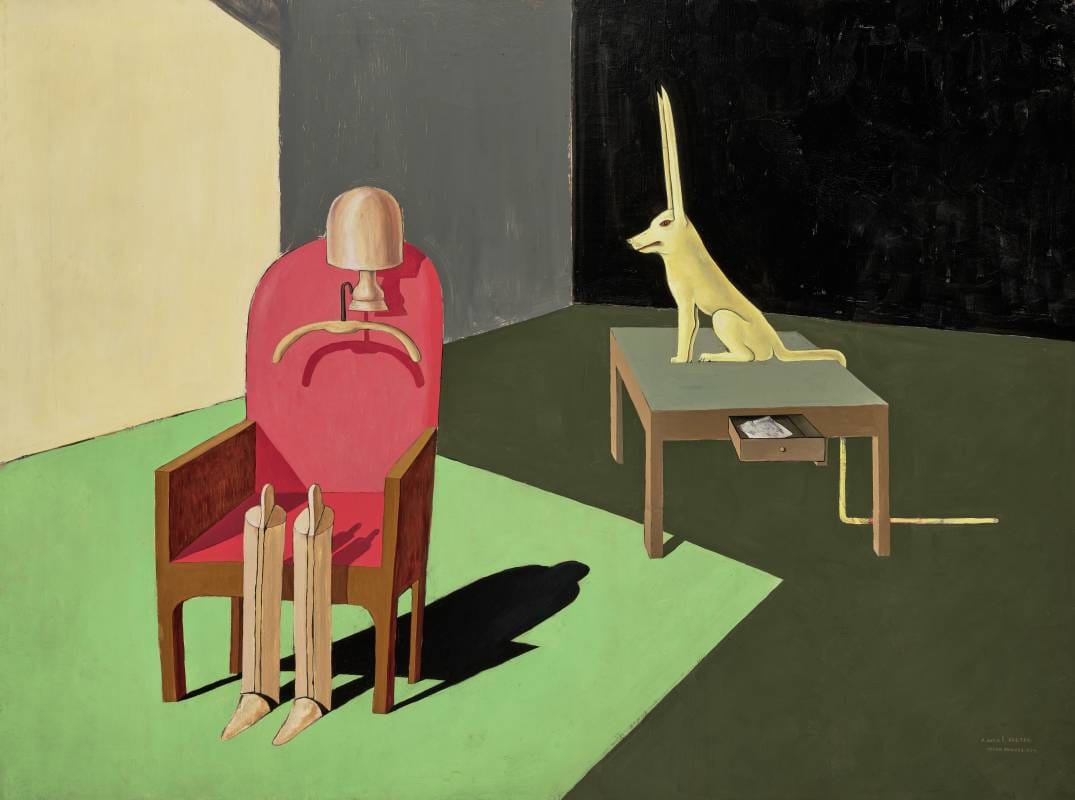
© Sacem Monaco 2026 photo François Fernandez
These days Villa Paloma is introducing us to an exceptional collection of over 160 works (paintings, sculptures and drawings) tracing the artist’s evolution from the 1920s to the 1960s. We thus come to understand just how this original, erudite art, full of invention and humour, was nourished by his Romanian origins and the avant-garde Bucharest movements of the 1920s. His encounter with André Breton and surrealism happened a few years later, followed by discovering ancient civilizations. A dozen art objects collected by the artist are thus illustrating this fascination with mythologies of elsewhere, from Oceania, Africa and Mexico.
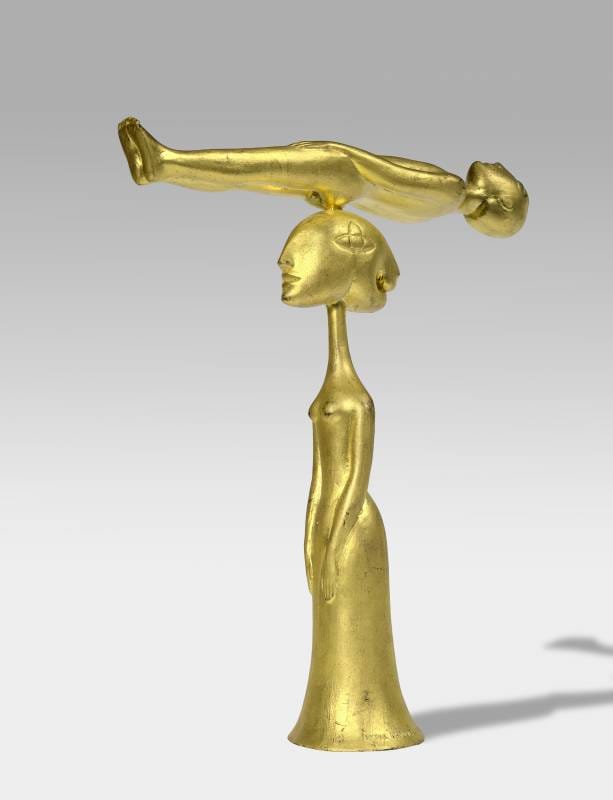
This unique exhibition is offering us a glimpse into a world often overlooked, but breathtakingly rich in terms of visual arts evolution and questions it is raising as to the creative process as such. “One of the most singular and captivating works of the 20th century,” as curator of the exhibition, Camille Morando, puts it.
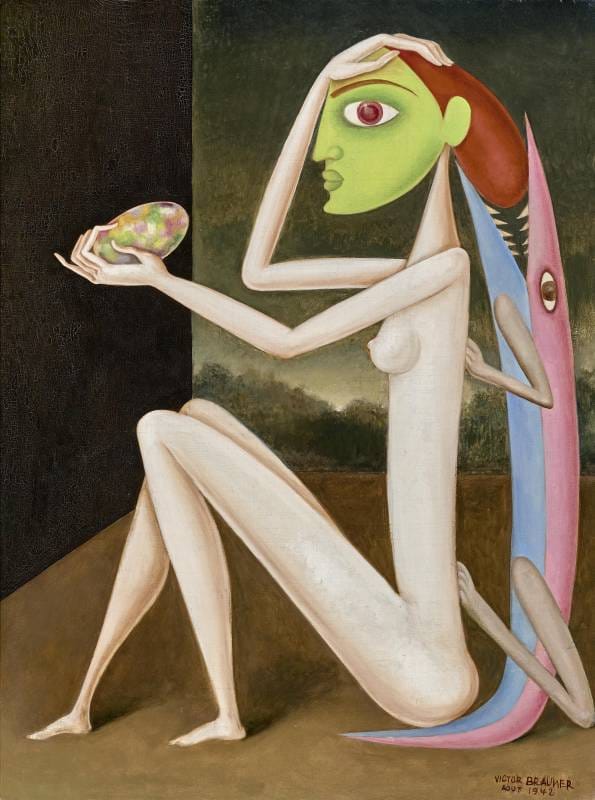
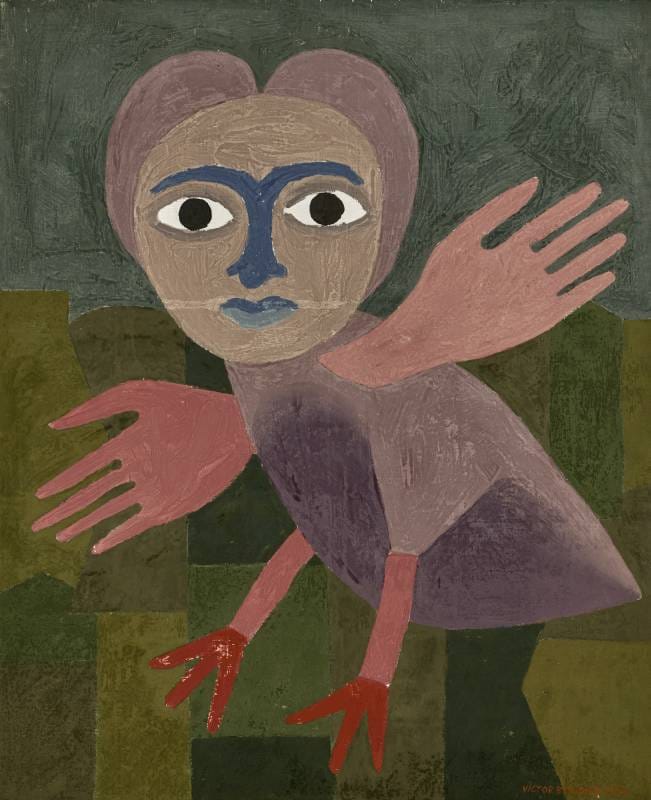
Victor Brauner, l’Aventure Magique
NMNM, Villa Paloma
56, Boulevard du Jardin Exotique, Monaco


Related Articles