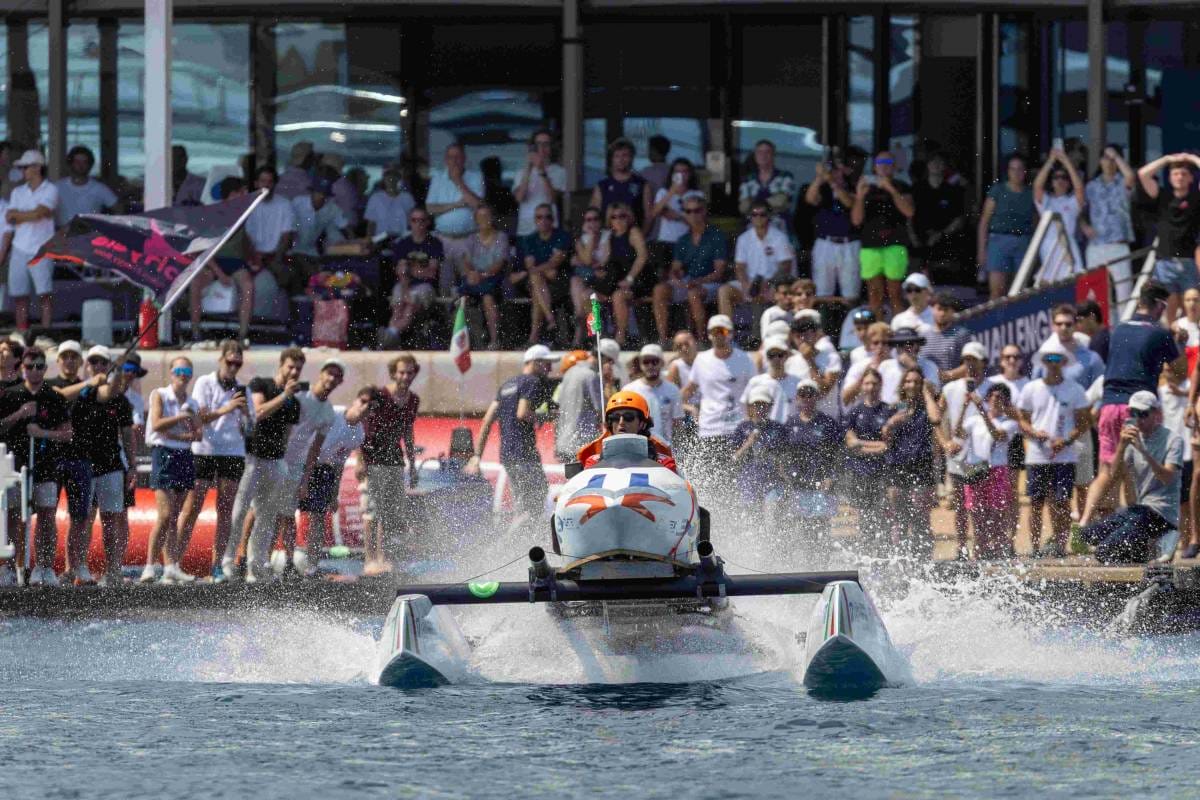


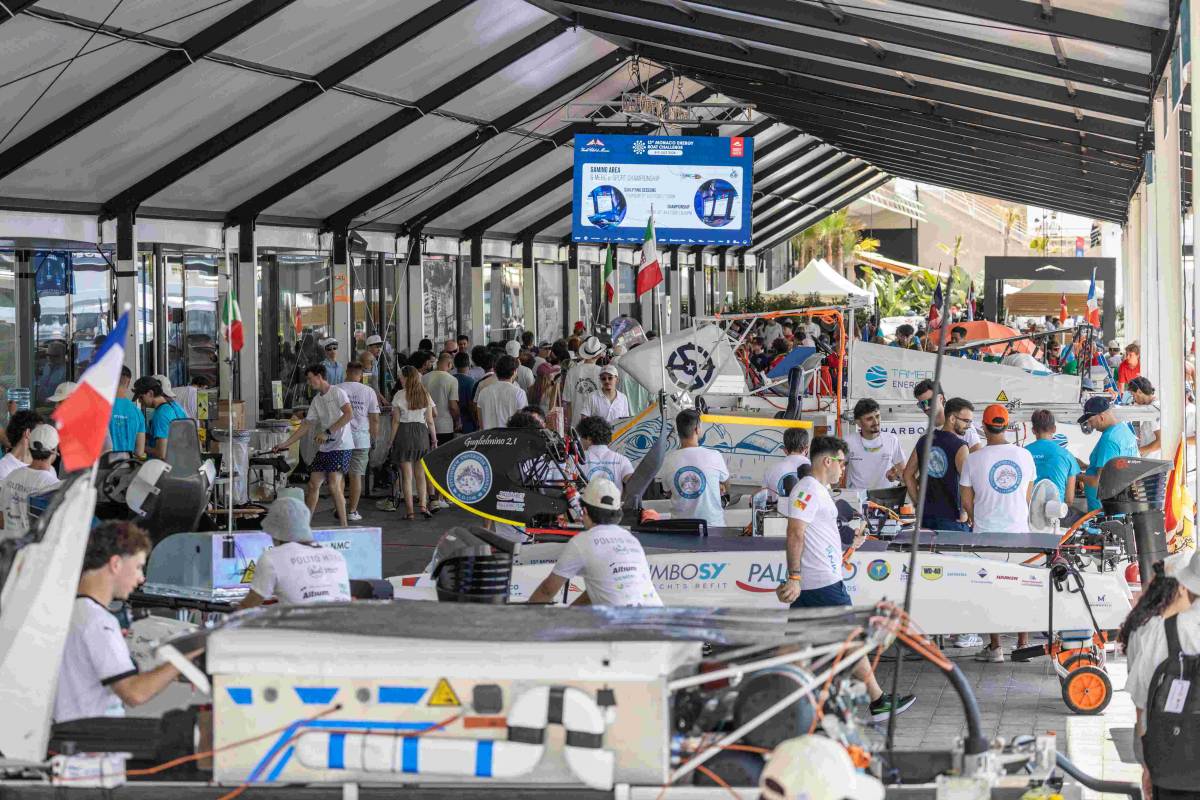
For four days, Monaco was a hive of activity with sea trials, conferences and races. Organised by Yacht Club de Monaco supported by the Prince Albert II of Monaco Foundation, UBS, BMW, SBM Offshore, Monaco City Hall, NatPower H and ESA NanoTech, the 13th Monaco Energy Boat Challenge saw 54 teams representing 21 nations, comprising over 600 students, researchers, industry professionals and shipyards including Safe Harbor, Oceanco, Ferretti Group, Azimut | Benetti Group, and Lürssen.
Beyond the competition, the event has established itself as an international laboratory where higher education, research and industry combine their expertise to shape the maritime solutions of tomorrow. The prototypes and technologies developed by the teams are tested in real navigation conditions, while industry partners support the projects throughout the year through the Corporate Mentoring Programme and connect with tomorrow’s talent at the Job Forum. They are united by a shared ambition: to accelerate the maritime sector’s energy transition.
On the final day of competition, Lionel Beffre, Monaco’s Minister of the Interior, met with the teams. He praised an event that showcases another side of Monaco, one focused on innovation, research and the environmental transition, adding: “It is with this mix of cultures and ideas that we can make collective progress”.
For Bernard d’Alessandri, YCM Director and General Secretary, the Challenge continues to demonstrate its role as a catalyst: “Projects presented here evolve, and collaborations and strategic partnerships are forged. Yet again, the Challenge demonstrates that innovations destined to transform the maritime sector often gain momentum in Monaco”.
Switzerland tops the overall standings
This year, Switzerland topped the overall ranking with Swiss Solar Boat (École Polytechnique Fédérale de Lausanne – SeaLab Class). The Swiss team excelled throughout the week, regularly making the podium in the sports events, and the E-Championship, while also winning two Tech Talk Prizes (the Design Prize and the Eco-Design Prize).
Performances confirm technologies growing maturity
On-water results reflected the significant progress made by the technologies showcased here over the last few years. The Energy Class, AI Class, SeaLab Class and Open Sea Xperience categories enable all technologies to be assessed under identical conditions, reaffirming the value of real-world experimentation as a powerful learning tool. “Instead of learning it all theoretically they get a chance to build on their knowledge by putting it into practice”, explains Robin Amacher, Operations Manager at EPFL’s Discovery Learning Lab, who works alongside the Swiss Solar Boat team.
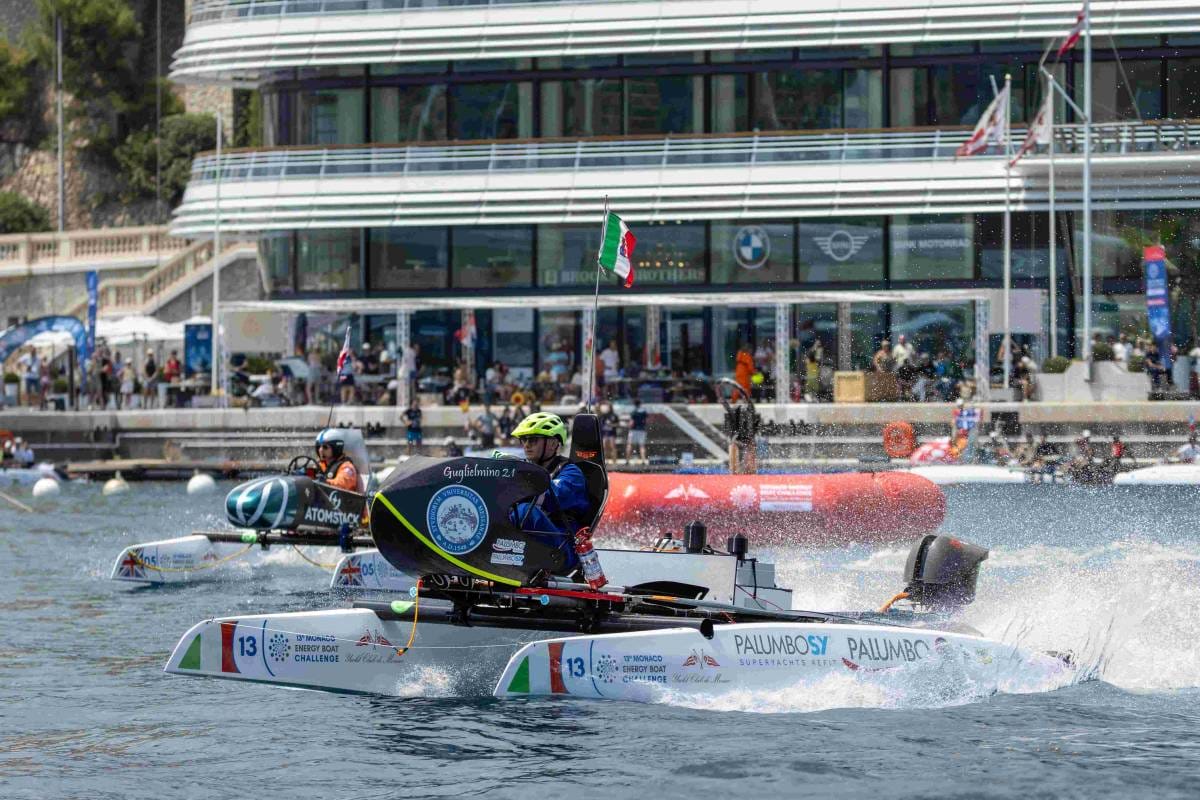
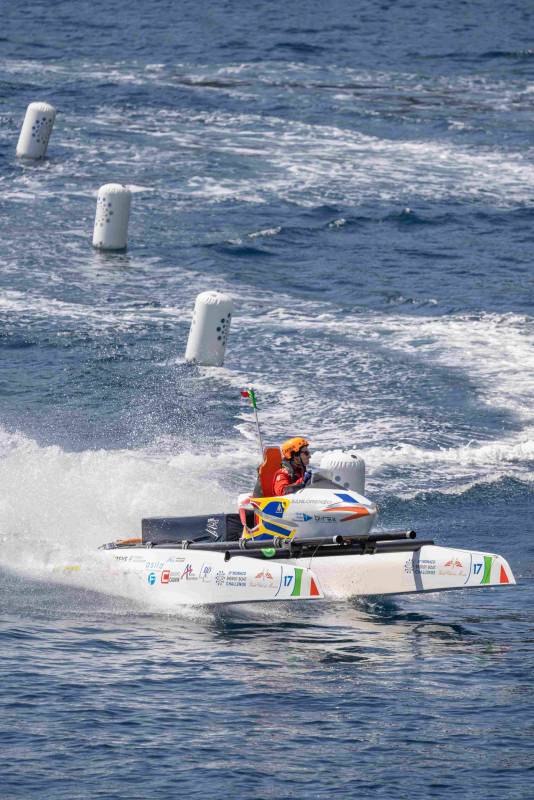
Performance gains were reflected in the results on the water. Despite a self-imposed reduction of nearly 30% in permitted power this year, average speeds increased by around 8%, highlighting a significant improvement in the boats’ overall energy efficiency. During the Championship Race, just 30 centimetres separated the top two teams at the finish line, underlining the exceptionally high level of competition. Another highlight was the new speed record set by the Frauscher x Porsche – 790 Spectre, which achieved an average speed of 51.05 knots.
Advances were also evident in the student-developed batteries, which are delivering improved performance thanks to new phase-change material (PCM) thermal management systems, , able to maintain an optimal temperature during periods of high demand.
E-methanol makes its debut
An important innovation showcased this year is e-methanol used aboard the SURGE Methanol Foiling Team Twente (University of Twente) entry. As Jérémie Lagarrigue, President of the Challenge’s International Jury, explains e-methanol is different: “It’s important to understand that e-methanol is a fuel produced using green hydrogen and captured CO2 which allows us to achieve a carbon-neutral footprint.”. On board, this fuel is converted back into hydrogen to power a fuel cell. This solution also provides a significant storage advantage, with an energy density approximately three times higher than gaseous hydrogen for the same volume.
Conferences back-up sea trials
Like the prototypes, ideas were put to the test. The Advanced Yachting Technology Conference on Thursday 9 July highlighted major transformations shaping yachting’s future. Discussions made clear that the energy transition no longer relies solely on new propulsion systems, but a holistic approach integrating energy efficiency, AI, data utilisation, cybersecurity and new design tools. Speakers stressed the expanding role of AI in optimising navigation and design, while noting that human expertise remains essential and that special attention must be paid to cybersecurity from the vessel design stage onwards.
The next day, the 7th Alternative Fuels & Sustainable Yachting Conference, organised by YCM and the Prince Albert II of Monaco Foundation, confirmed that decarbonisation of maritime transport will rely on a mix of complementary solutions, not just one technology. Hydrogen, e-methanol, wind propulsion, batteries and nuclear power were among topics discussed by industry players, researchers and classification societies. While technical solutions are advancing rapidly, their deployment will now depend on infrastructure development, evolving regulations and the investments needed to support their industrialisation.
The Challenge as a catalyst for connections
Even before the races began, the Job Forum demonstrated how the Challenge brings students and companies together. Over the course of two days, there were nearly 300 interviews, paving the way for recruitment, internships and collaborations. One of many students who came to meet recruiters, Milena Idolo, Design Unit Coordinator in the Politecnico di Milano team, sees this as an opportunity to get a head start on her career: “I’m nearing the end of my studies. It is a great opportunity to speak directly with companies, discuss our future and discover future opportunities”. However, these exchanges sometimes start much earlier with the Corporate Mentoring Programme when industry players support teams year-round to develop their projects
Announcements outside the competition
An important announcement made at the event was that of the partnership between NatPower Marine and Aqua superPower to speed up the global rollout of electric charging solutions for ports and marinas. Both companies were taking part in the Challenge, NatPower H as official hydrogen supplier, and Aqua superPower with charging stations installed on the E-Dock for electric boats. Their shared goal is to support the electrification of the maritime sector through large-scale infrastructure designed as a cohesive network.
Monaco already onto the next stage
Beyond the sporting results, the 13th edition confirms the continued evolution of the Monaco Energy Boat Challenge, now firmly established as an international platform for innovation.
From 2027, the event will enter a new phase of development with the launch of the Monaco Energy Boat Challenge World Series (29 June – 3 July), an international qualifying circuit dedicated to the Energy Class. The first qualifying event will take place on Lake Como, Italy, with the support of Volta27 and the Alessandro Volta Foundation, before moving to Darwin, Australia, for teams from the Asia-Pacific region, followed by a gradual rollout across other continents.
These qualifying events will enable new teams to join the Challenge while preserving the sporting and technological standards that define the Monaco final. Remaining true to its ambition, the Challenge will continue to foster, test and accelerate the innovations that will help shape the future of yachting.
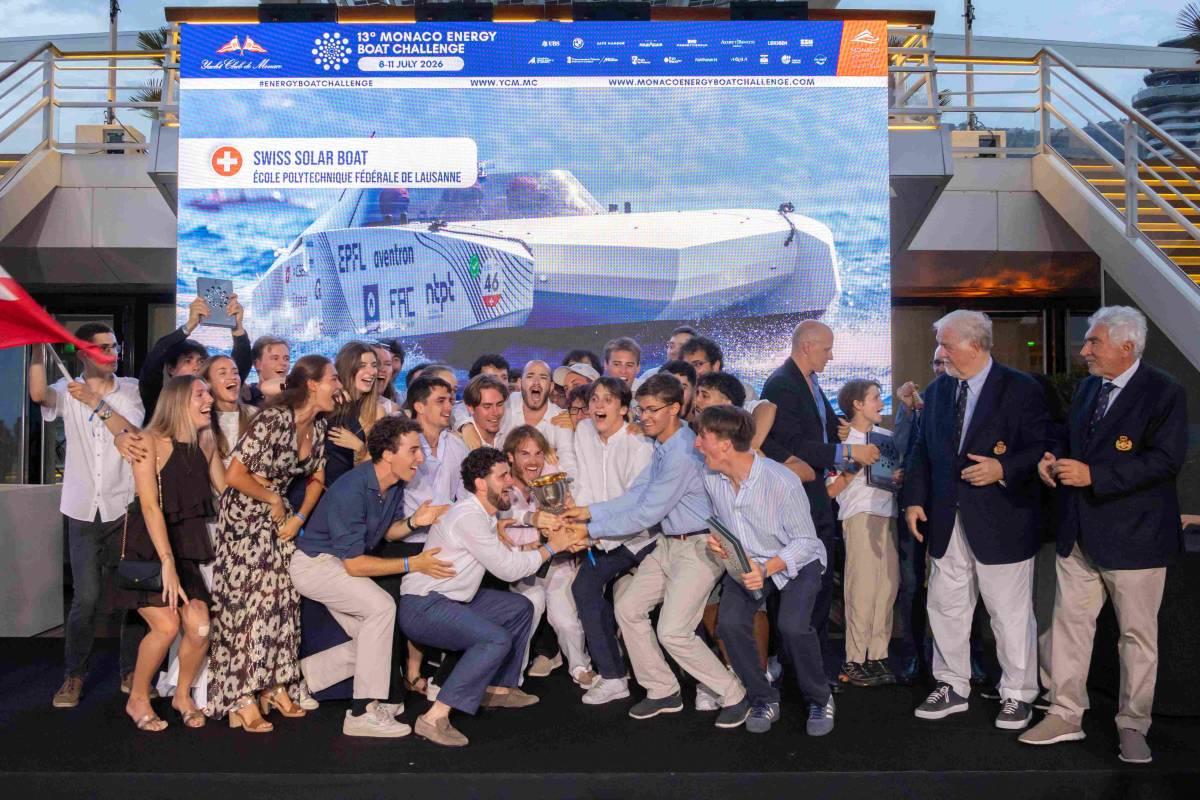
2026 Winners of the 13th Monaco Energy Boat Challenge
2026 MEBC Champion: Swiss Solar Boat (École Polytechnique Fédérale de Lausanne-Suisse)
Energy Class winner: University of Bologna Argonauts Team (Italy)
AI Class winner: Adria Autonomous Boat Team (Croatia)
SeaLab Class winner: Red Wave (Italy)
Prince Albert II of Monaco Foundation Sustainable Yachting Technology Award -> Kumaraguru College of Technology (India)
Innovation Prize -> Physis Polimi Energy (Politecnico di Milano-Italy)
Design Prize -> Swiss Solar Boat (École Polytechnique Fédérale de Lausanne-Switzerland)
Communication Prize -> Tecnico Solar Boat (Portugal)
Eco-Design Prize supported by MarineShift -> Swiss Solar Boat (École Polytechnique Fédérale de Lausanne-Switzerland)
Jury Coup de Cœur Prize -> Wia Electric Yachts (Hungary)
Rookie Prize -> Ugent Sailing (Belgium)
SeaLab record over 16 nautical miles -> Xnrg8.3 (Netherlands)
E-Sport Championship -> Tu Delft Hydro Motion Team (Netherlands)