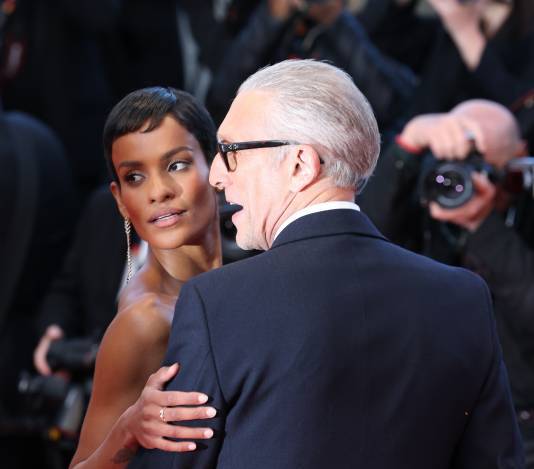


Every May the French Riviera performs its favourite trick: convincing several thousand very serious people that watching subtitled cinema and negotiating eight-figure distribution rights are, in fact, the same holiday. This year it pulled the trick off again — 22 films, one furious dress code, and a market that moved more money than the GDP of a small nation.
The numbers: 2,541 films submitted · 22 made the cut · 12,000+ market professionals · 115+ countries represented · 4,000+ films for sale.
The Festival, Such As It Is
The 79th Festival de Cannes ran from 12 to 23 May 2026, presided over by a jury under Park Chan-wook — a director whose day job is making films violent enough to need a lie-down afterwards, and whose temporary job was to sit through 22 competition titles and decide which ones deserved a length of gold-plated foliage. He had help: Demi Moore, Chloé Zhao, Ruth Negga, Stellan Skarsgård and four others sat alongside him, working through a shortlist drawn from 2,541 submissions. That’s roughly a 0.9% acceptance rate — a lower strike rate than most universities manage, and considerably harder to bribe your way into.
Proceedings opened with Pierre Salvadori’s period comedy The Electric Kiss and wrapped eleven days later with Laetitia Masson’s Ulysse, with actress Eye Haïdara keeping the evenings moving in between. Somewhere in the middle, the festival paused to hand out three Honorary Palmes — to Peter Jackson, John Travolta and Barbra Streisand — which is the industry’s polite way of applauding people so famous that giving them an actual competitive prize would just be awkward for everyone else in the room.
Who Actually Won Something
After eleven days and what one assumes was an alarming amount of coffee, the jury landed here:
- Palme d’Or — Fjord, dir. Cristian Mungiu
- Grand Prix — Minotaure, dir. Andrei Zvyagintsev
- Jury Prize — The Dreamed Adventure, dir. Valeska Grisebach
- Best Direction (tie) — La Bola Negra (Javier Calvo & Javier Ambrossi) and Fatherland (Paweł Pawlikowski)
- Best Screenplay — Notre Salut, Emmanuel Marre
- Best Actress — Virginie Efira & Tao Okamoto, Soudain (dir. Ryūsuke Hamaguchi)
- Best Actor — Valentin Campagne & Emmanuel Macchia, Coward (dir. Lukas Dhont)
- Caméra d’Or — Ben’imana, Marie Clémentine Dusabejambo
- Un Certain Regard — Everytime, Sandra Wollner
Cristian Mungiu picked up his second Palme d’Or, nineteen years after his first for 4 Months, 3 Weeks and 2 Days — proof that in this business patience is a virtue, and apparently so are fjords. Best Direction went to two films rather than one, which is the jury’s way of saying “we genuinely could not choose” rather than “we ran out of trophies.” And both acting prizes went to pairs, not individuals, because apparently in 2026 no single performance can be trusted to carry a whole award on its own.
Somewhere in Cannes there is now a written policy on precisely how voluminous a dress is allowed to be. That tells you everything about how seriously the French take a red carpet.
The Rules of Engagement
Before anyone got near the steps of the Palais, organisers reissued the dress code first drawn up in 2025: no nudity, nothing deemed excessively voluminous, and proper footwear — bare feet and flip-flops need not apply. Break it, and you simply don’t get up the stairs, no matter how many awards the film you’re promoting eventually wins. It is, in effect, a bouncer with a fashion degree, enforced with the seriousness usually reserved for airport security.
The Market: Where the Actual Money Lives
Here’s the bit the red-carpet photos never show you. While the festival plays shop window, the Marché du Film round the corner is the warehouse where the real business happens — and this year it pulled in more than 12,000 industry professionals from upwards of 115 countries, sifting a catalogue of over 4,000 films. That is more films than most people watch in a lifetime, assembled in one seaside town over twelve days, purely so people in good suits can argue about territories.
The headline sales:
| Title | Buyer | Reported price |
| The Midnight Library (Garth Davis, w/ Florence Pugh) | Paramount Pictures | ~$36M |
| The Brigands of Rattlecreek (McConaughey, Pascal, Butler, Tang Wei) | Warner Bros. (Clockwork) | ~$30M |
| Pumping Black (Mimi Cave, w/ Portman & Bailey) | Amazon MGM Studios | ~$20M |
| Club Kid (Jordan Firstman’s directorial debut) | A24, after a bidding war | ~$17M |
Small-world footnote: The Brigands of Rattlecreek, one of the market’s biggest sales, was directed by Park Chan-wook — the very man spending his fortnight in the Palais deciding whether other people’s films were any good. He wasn’t judging his own, to be clear. But you have to admire the itinerary: chair the jury by day, sell a Western to Warner Bros. by night.
The mood behind the deals was more cautious than the headline numbers suggest. Streaming platforms — Netflix, Amazon MGM and Apple TV+ among them — arrived pickier than in previous years, chasing prestige packages rather than buying in bulk. Genre remains the safest passport across borders: as Phil Hunt of Head Gear Films put it, “action, thriller, horror — those three kinds of genres specifically are working,” while straight drama and comedy struggle to travel without a commercial hook. Meanwhile the money behind the money is shifting: Saudi Arabia’s Vision 2030 fund has now committed more than $4 billion to film production with a 40% cash rebate on offer, and the UAE is dangling up to 50% — sovereign wealth stepping in where traditional pre-sales used to do all the heavy lifting. See-Saw Films underlined the point by landing $50 million in equity financing from Entourage Ventures, a sign that the old model of stitching a budget together from territory-by-territory pre-sales is quietly being rewritten.
The Verdict
Strip away the gold foliage, the footwear policing and the eye-watering invoices, and Cannes 2026 was, underneath it all, doing exactly what it has done for 79 years: pretending that art and commerce are strangers to each other, while quietly introducing them at every single party on the Croisette. A Romanian filmmaker won the top prize for the second time in two decades. A jury president sold his own Western for $30 million a few hundred metres from where he was judging everyone else’s homework. And somewhere in a beachfront hotel suite, a spreadsheet decided which drama gets to exist next year. Ridiculous, expensive, slightly absurd — and somehow, once again, it worked.
By Alex Chapsky for HelloMonaco