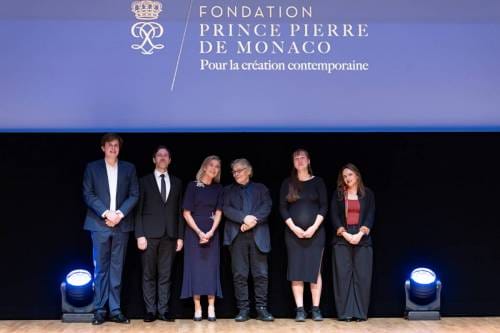





Twenty years ago, Prince Albert II established his foundation with an ambitious mission: to help protect the natural world for future generations.
Two decades later, that mission has become an international undertaking, bringing together scientists, conservationists, entrepreneurs and environmental campaigners in a shared determination to confront some of the greatest challenges facing our planet.
On Friday 16 October, nearly 400 guests gathered at the glittering Salle des Étoiles of the Sporting Monte-Carlo to celebrate the 20th anniversary of the Prince Albert II of Monaco Foundation.
But this was more than a birthday celebration.
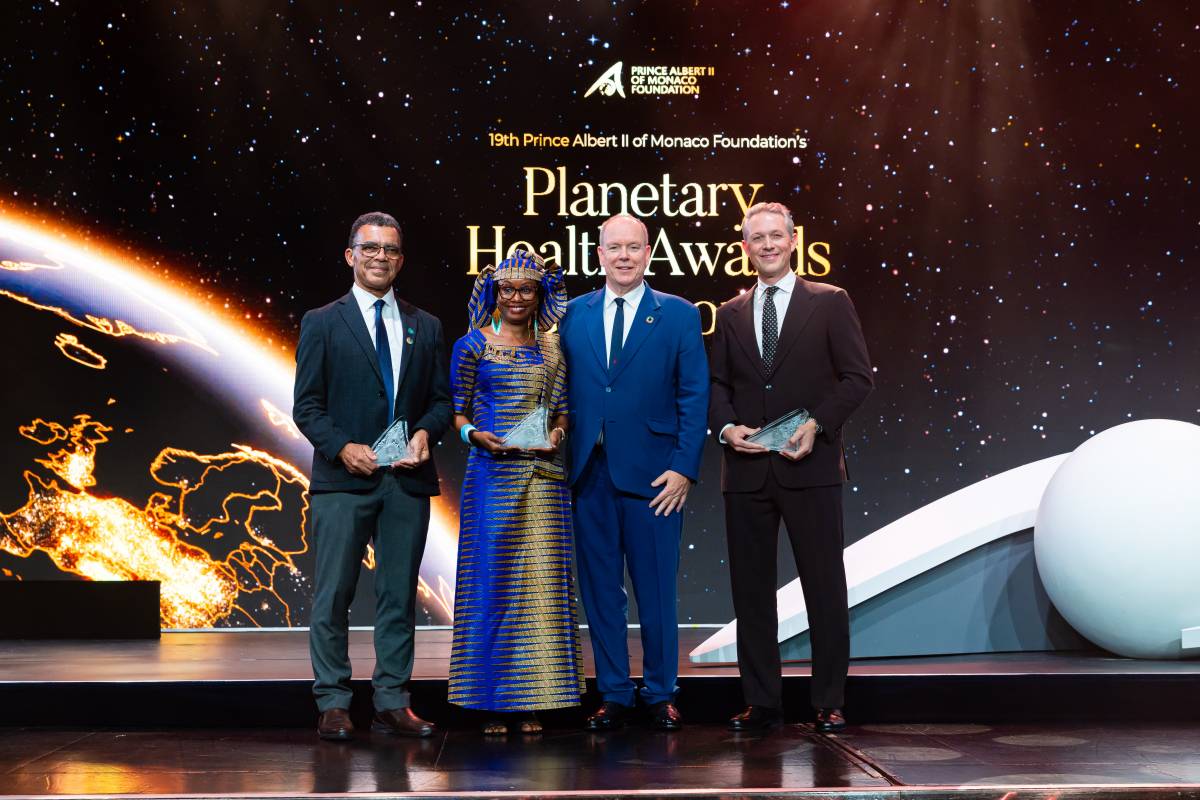
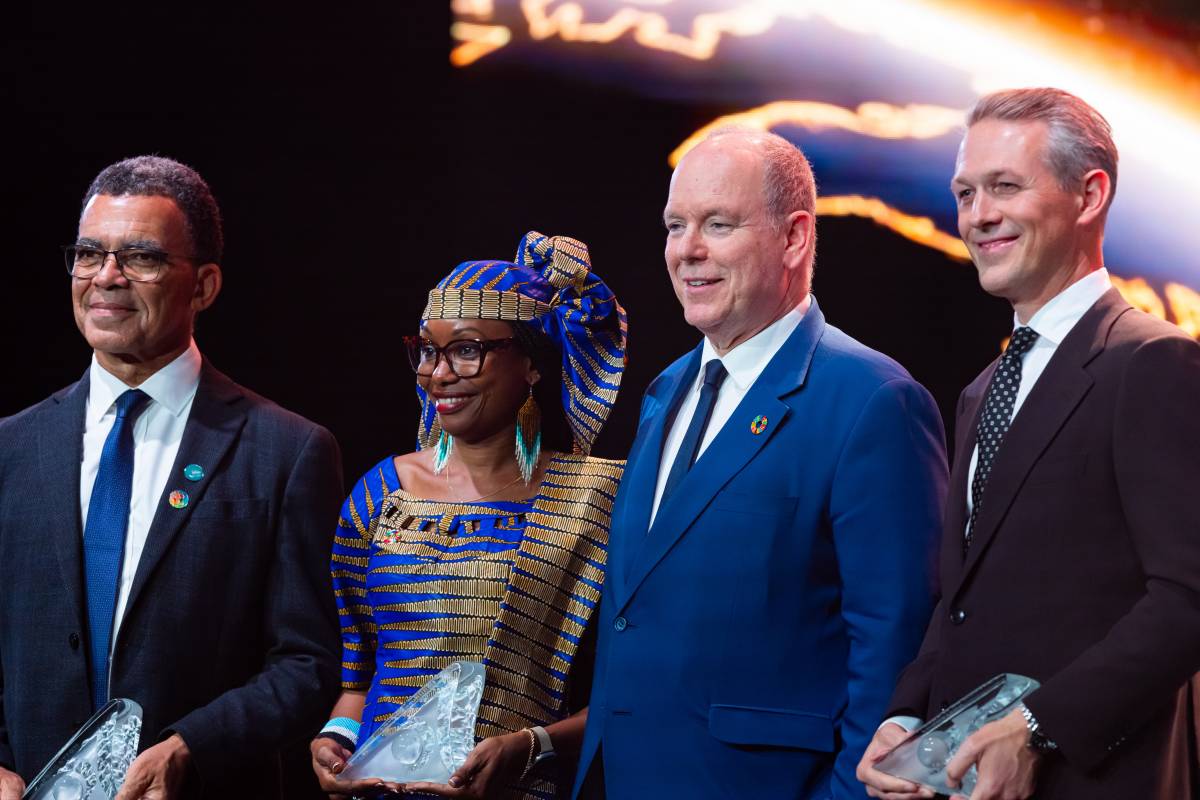
The occasion also marked the presentation of the Foundation’s 2026 Planetary Health Awards, honouring three remarkable pioneers whose work stretches from the coral reefs of East Africa to the waves of the Atlantic and the climate-threatened communities of Chad.
And the evening carried a powerful message: protecting the planet is not simply a question of preserving nature. It is also about protecting the future of humanity itself.

Prince Albert: Twenty Years of Shared Commitment
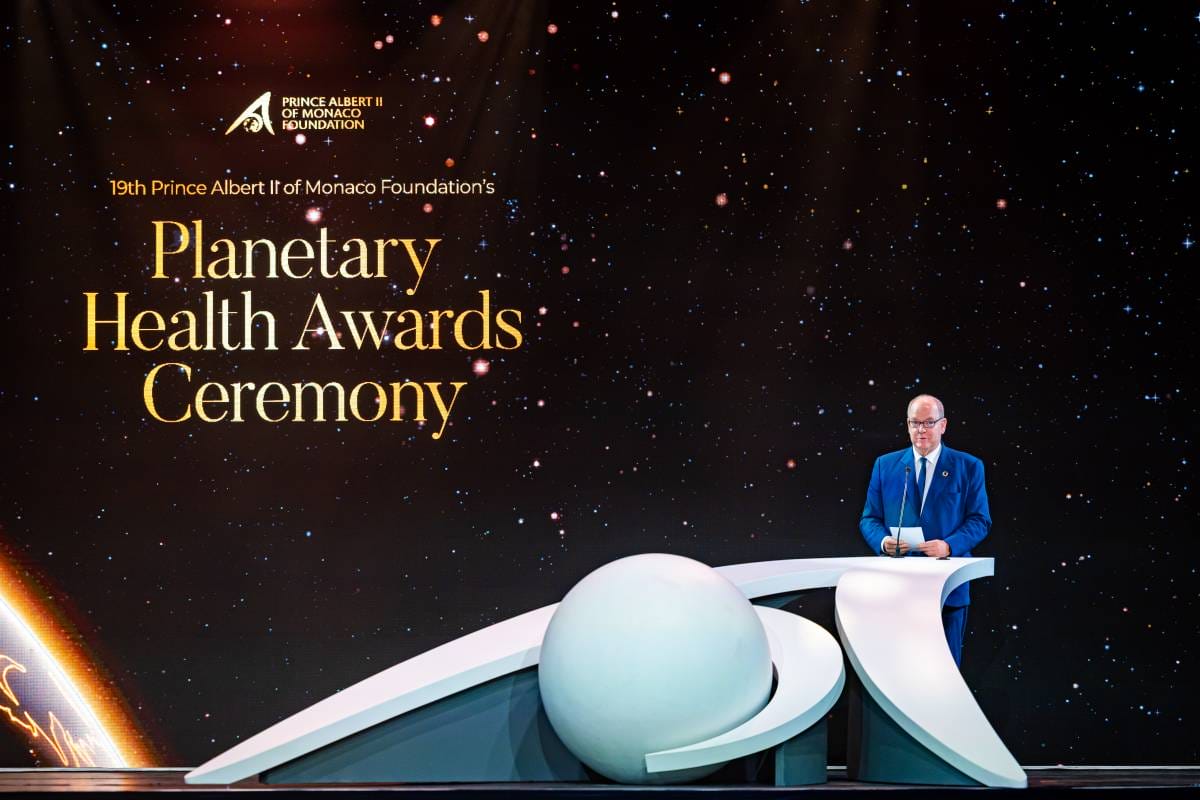
Opening the ceremony, Prince Albert reflected with emotion and pride on the Foundation’s achievements since its creation in 2006.
Drawing inspiration from the French writer and aviator Antoine de Saint-Exupéry, the Prince spoke of the bonds forged when people unite behind a cause greater than themselves.
For twenty years, he explained, the Foundation had brought together people from remarkably different backgrounds, united by common aspirations, enduring friendships and a shared sense of responsibility.
And his message was firmly focused on the future.
The Prince expressed his hope that the same spirit would continue to inspire the Foundation for another twenty years and beyond.
Since its establishment, the Foundation has concentrated on three interconnected priorities: climate change, biodiversity and water resources.
Its geographical focus has included the Mediterranean, the polar regions and the world’s least developed countries, where environmental degradation can have particularly devastating consequences.
Through scientific research, conservation programmes, practical projects and international partnerships, the Foundation has sought to turn environmental ambition into meaningful action.
Over two decades, the Foundation has undertaken more than 820 projects.
The anniversary provided an opportunity to celebrate that work while recognising that the challenges ahead remain formidable.

The Scientist Fighting to Save the World’s Coral Reefs
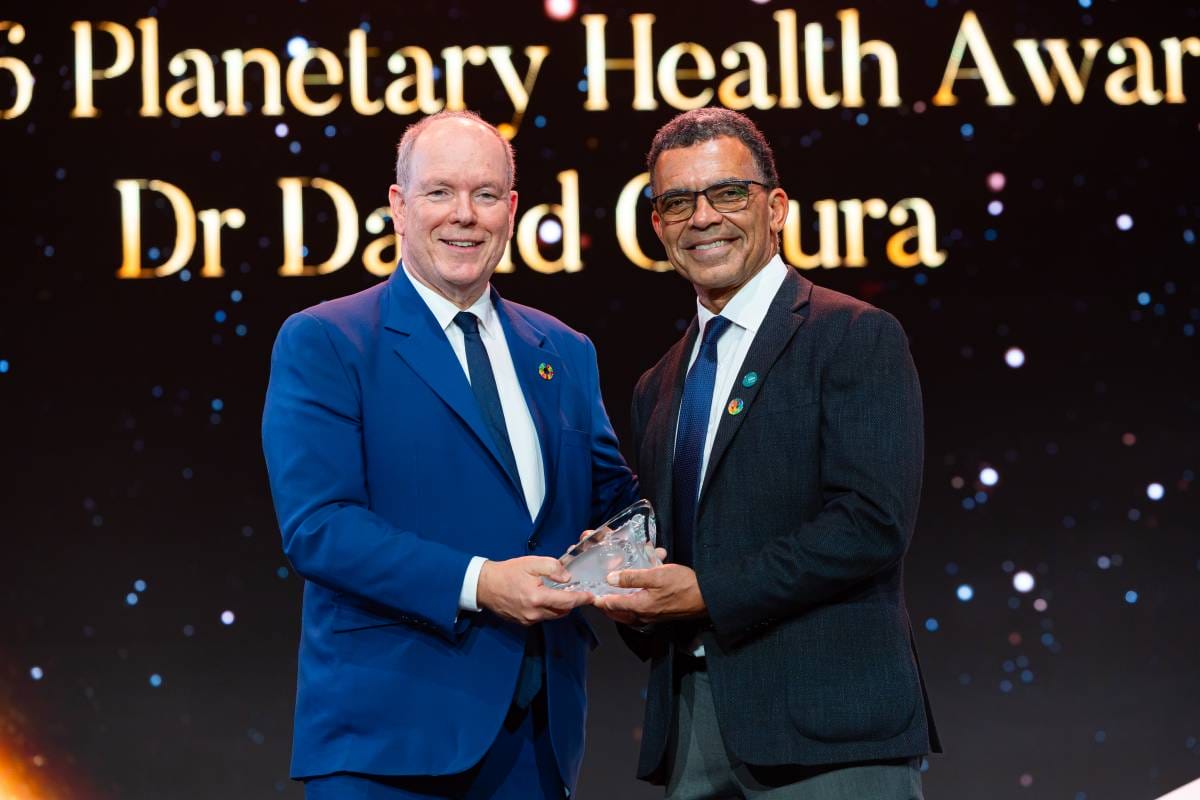
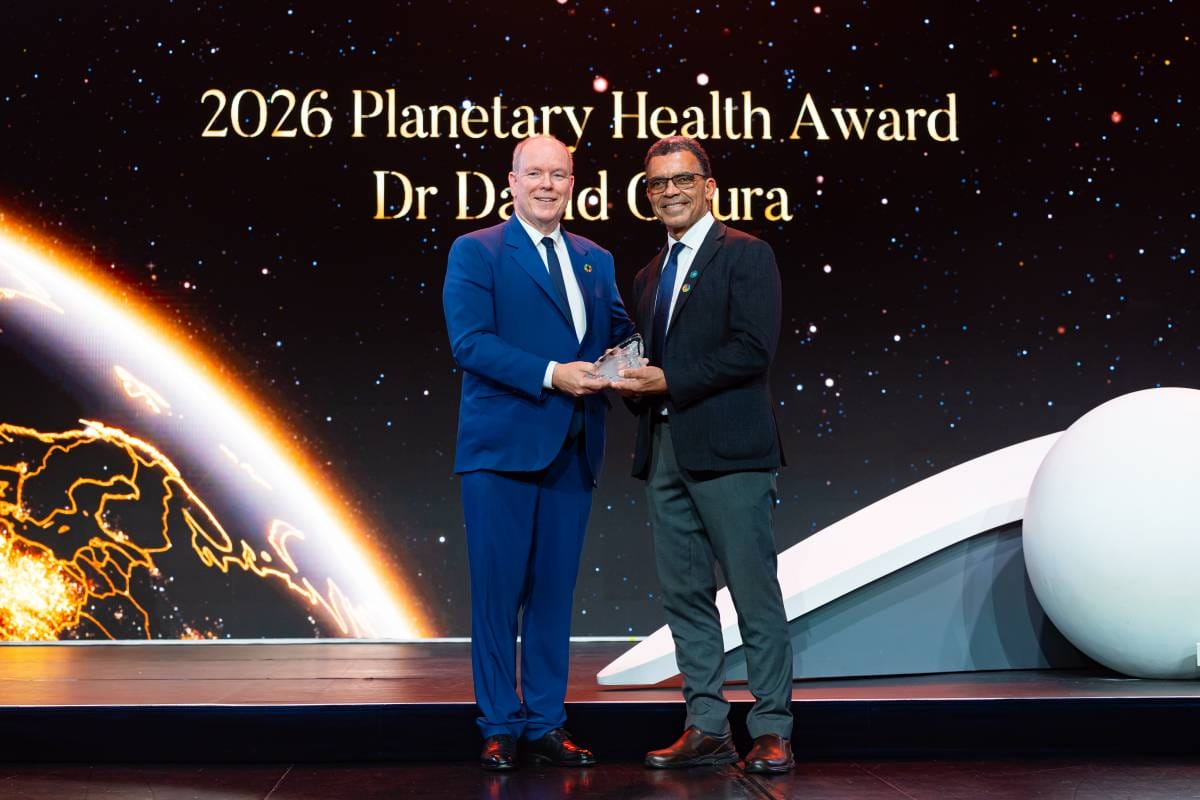
One of the evening’s three laureates was Kenyan marine ecologist Dr David Obura, honoured in the Science category.
For more than thirty years, Obura has devoted his career to understanding and protecting coral reefs, among the most extraordinary and vulnerable ecosystems on Earth.
These underwater environments support an astonishing variety of marine life. They also provide food, livelihoods and economic security for communities that depend on healthy oceans.
Yet rising ocean temperatures, climate change and environmental degradation are placing reefs under increasingly severe pressure.
As founder of CORDIO East Africa, Obura has worked to connect scientific research with practical conservation, helping communities and decision-makers understand what is happening beneath the ocean’s surface.
Since 2023, he has also chaired the Intergovernmental Science-Policy Platform on Biodiversity and Ecosystem Services (IPBES), an influential international body that helps governments understand the relationship between biodiversity and human well-being.
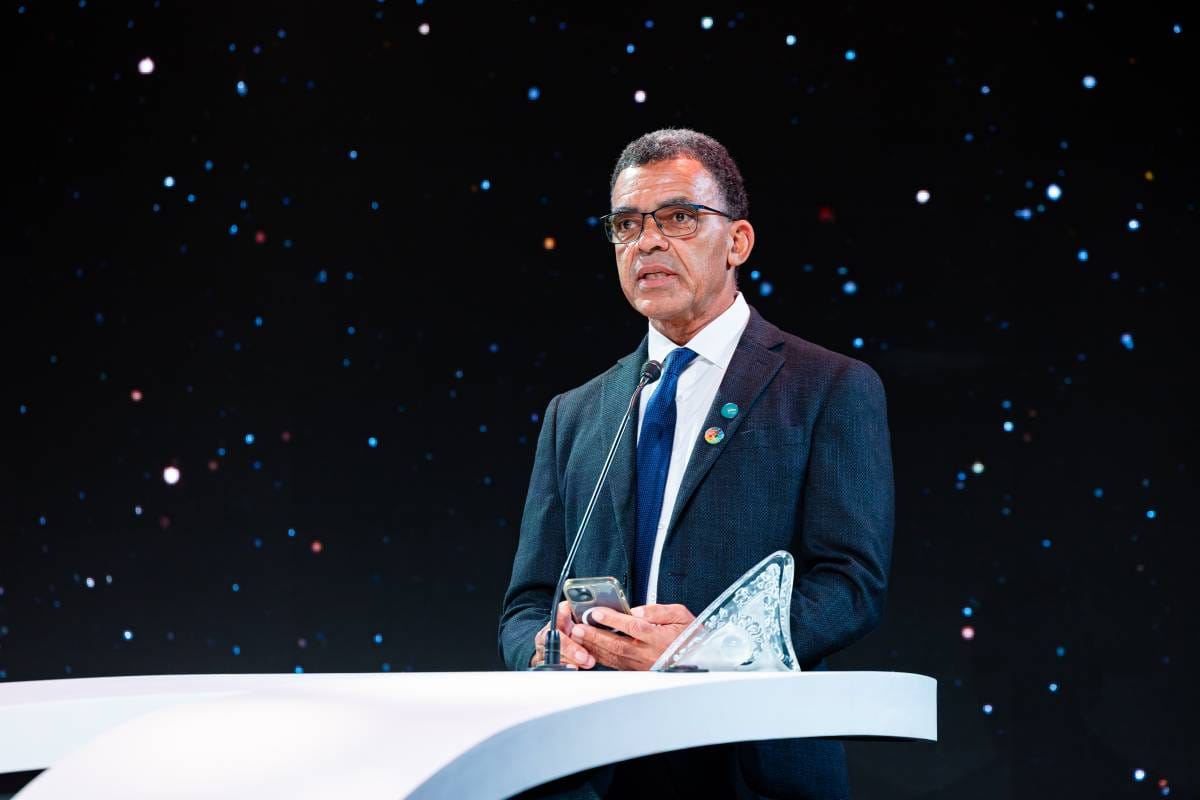
Accepting his award from Prince Albert, Obura delivered a sobering assessment of the situation facing coral reefs.
Humanity, he warned, continues to accelerate towards potentially catastrophic reef decline, even though many of the solutions are already understood.
His current work increasingly examines how economic and financial systems can be brought back into balance with the natural world.
The implication is profound: protecting coral reefs cannot be separated from changing the way humanity manages its relationship with nature.

Turning the Ocean’s Waves into Electricity
If Dr Obura’s work is about protecting the oceans, the second laureate is finding an ingenious new way to harness their power.
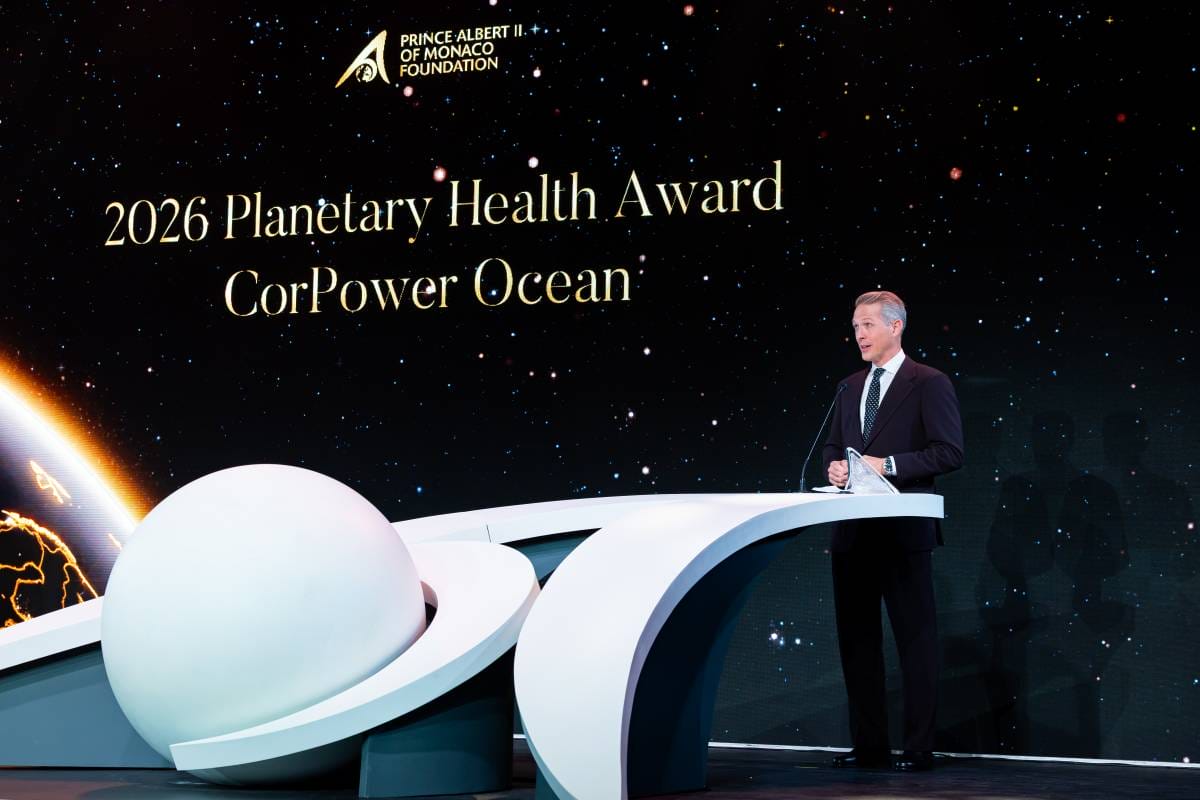
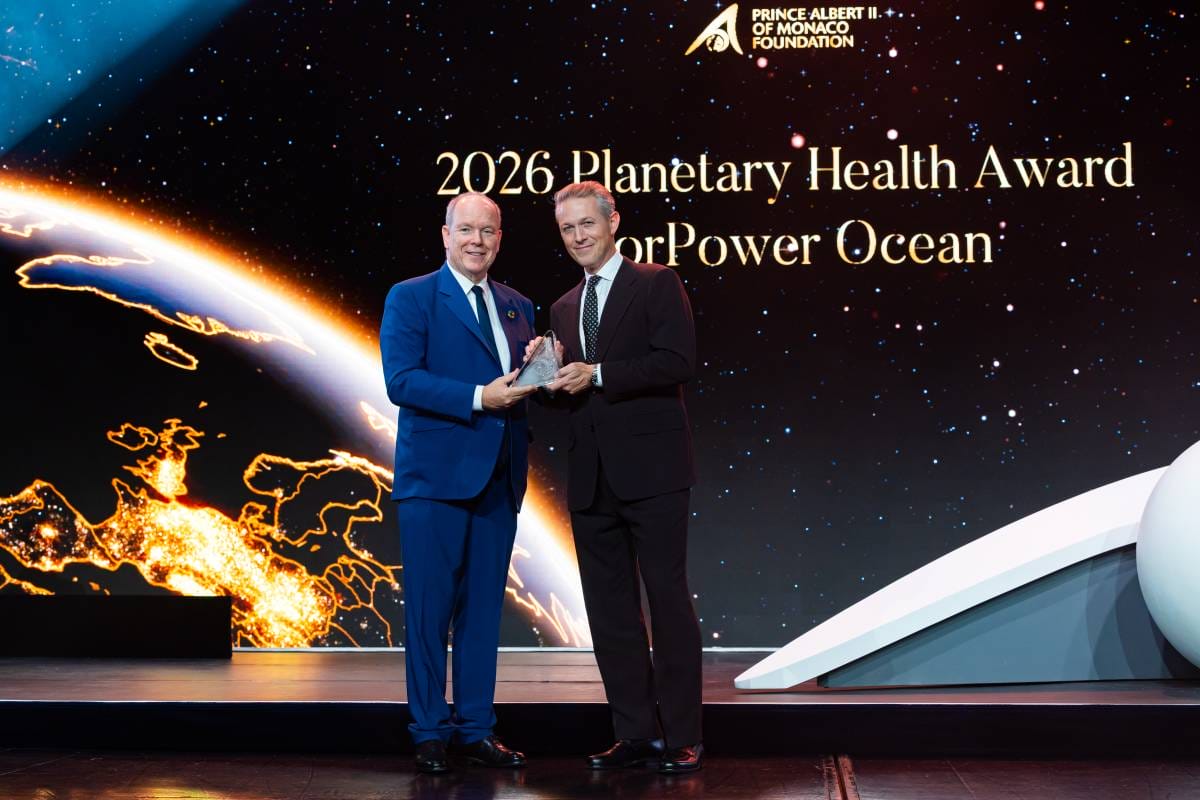
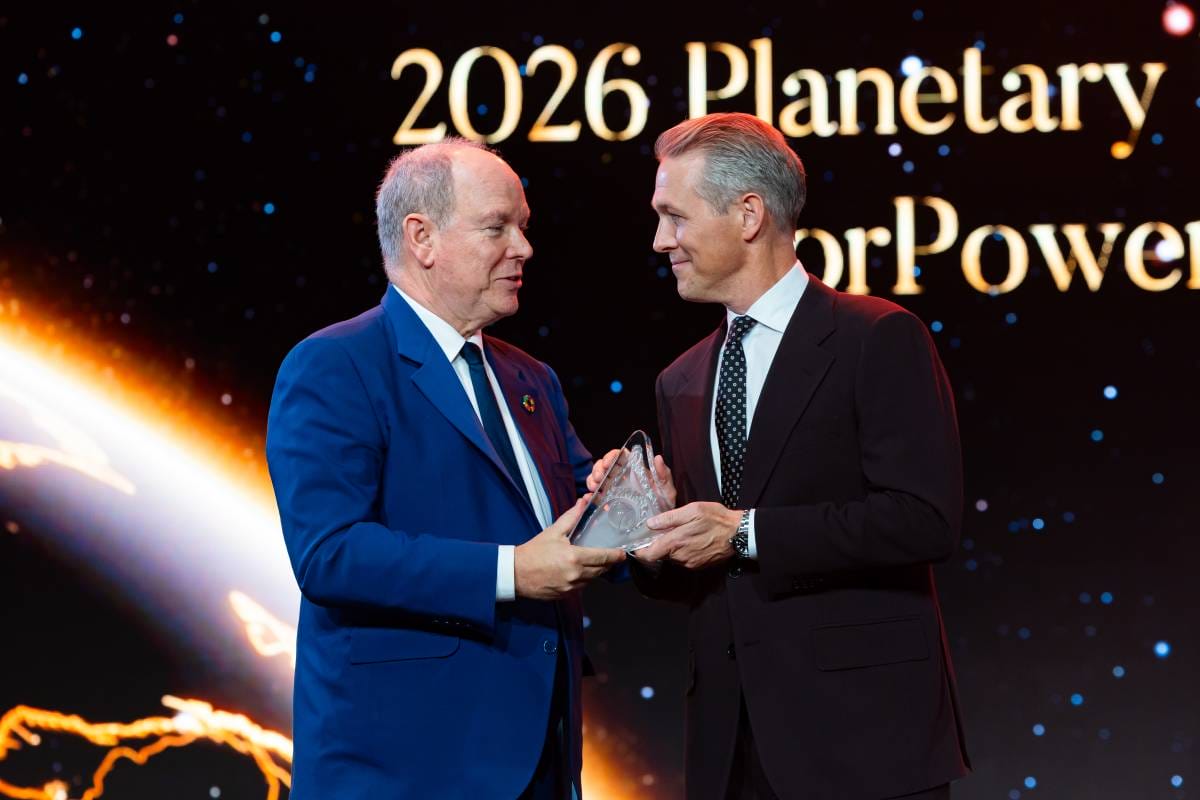
Swedish company CorPower Ocean received the Innovation and Solutions Award for developing technology capable of transforming ocean waves into renewable electricity.
Wind turbines and solar panels have become familiar features of the clean-energy revolution. Wave power, by contrast, remains a largely untapped resource.
Yet the oceans contain enormous quantities of energy, generated continuously by the movement of waves.
The challenge has always been to capture that energy efficiently while building equipment capable of surviving the sea’s immense destructive forces.
CorPower Ocean believes its technology offers a promising solution.
Its specially designed wave-energy converters use patented WaveSpring technology to capture energy while withstanding demanding ocean conditions.
The company is now pursuing an ambitious project off the Portuguese coast.
In 2025, it secured support from the European Union’s Innovation Fund for VianaWave, a proposed 15-megawatt wave-energy farm expected to comprise 45 converters.
Once operational as envisaged, the installation could generate approximately 46 gigawatt-hours of electricity annually. Typically, that might power 13.000 homes.
For Patrik Möller, the company’s CEO and co-founder, the opportunity extends beyond producing renewable electricity.
He believes wave energy could create an entirely new European industry, generating sustainable employment and providing competitive clean power from the continent’s coastlines.
And crucially, he argues, this can be achieved while respecting marine ecosystems.
It was a particularly fitting innovation to celebrate in Monaco, where Prince Albert’s environmental initiatives have long placed ocean protection at the centre of their mission.
Giving Indigenous Communities a Voice
The evening’s third award recognised a very different but equally important form of environmental leadership.
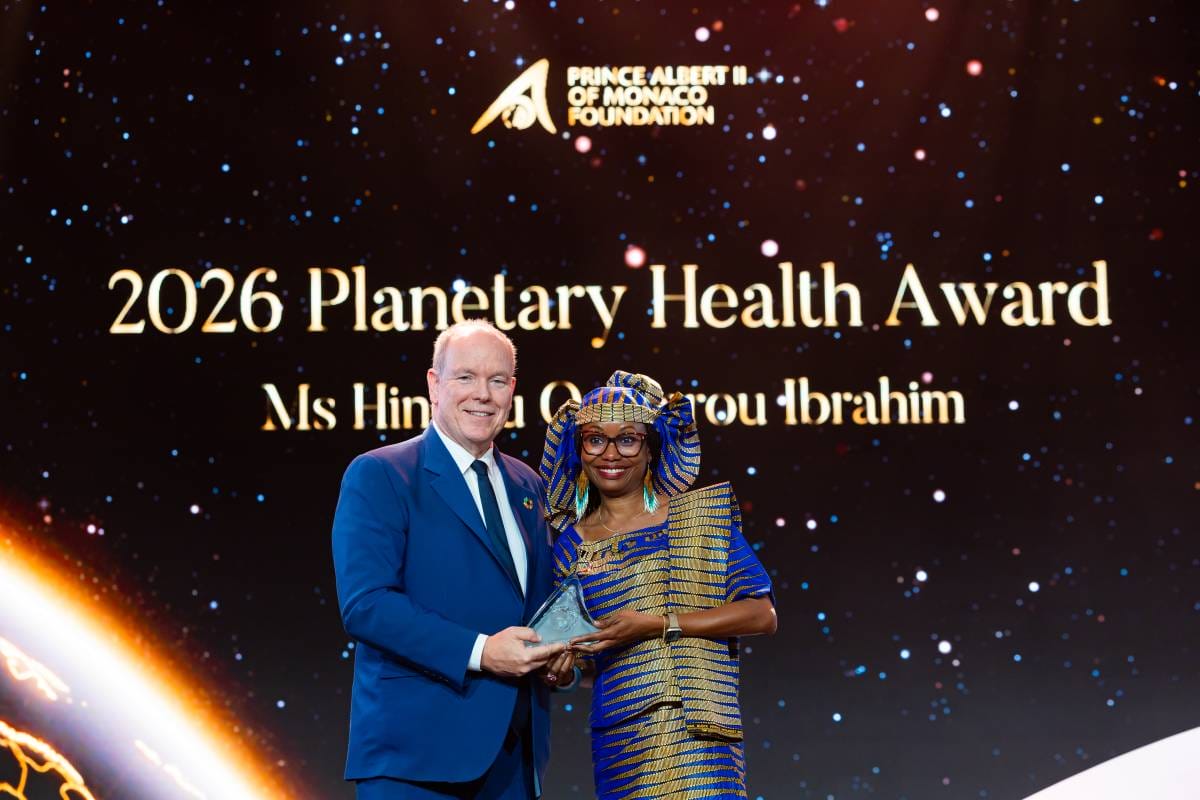
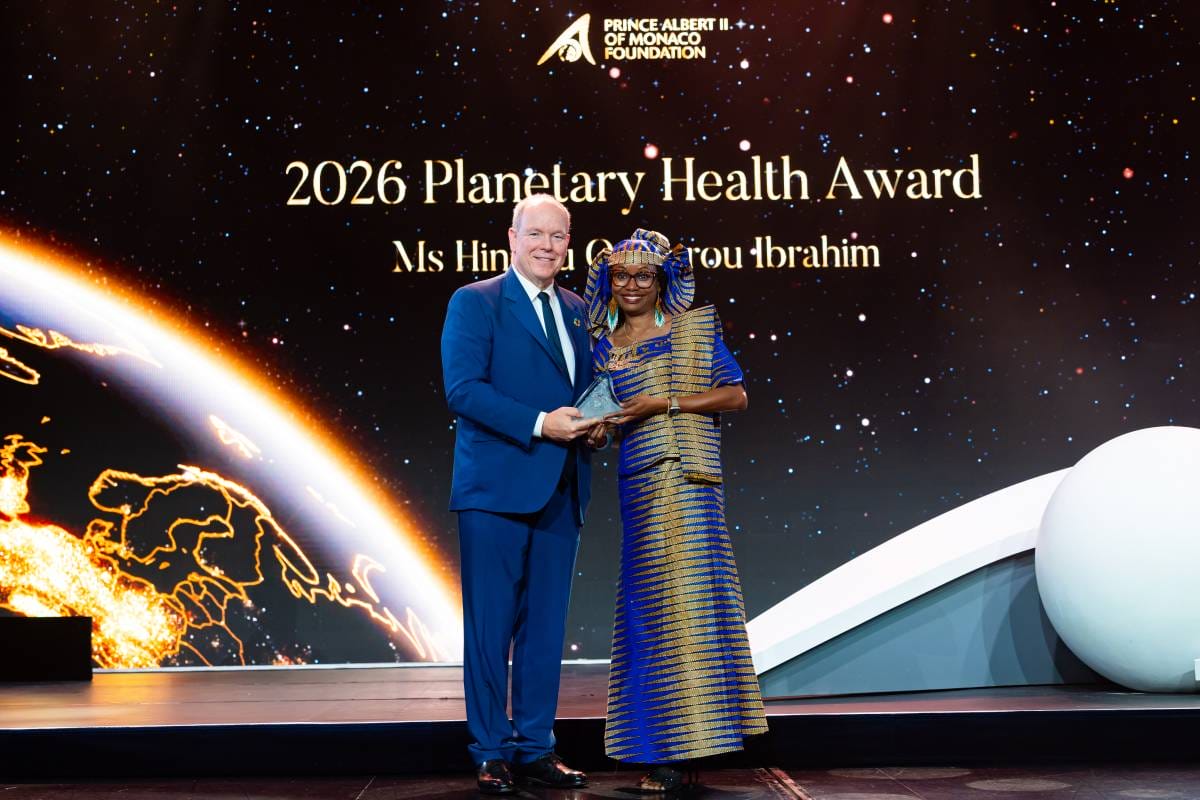
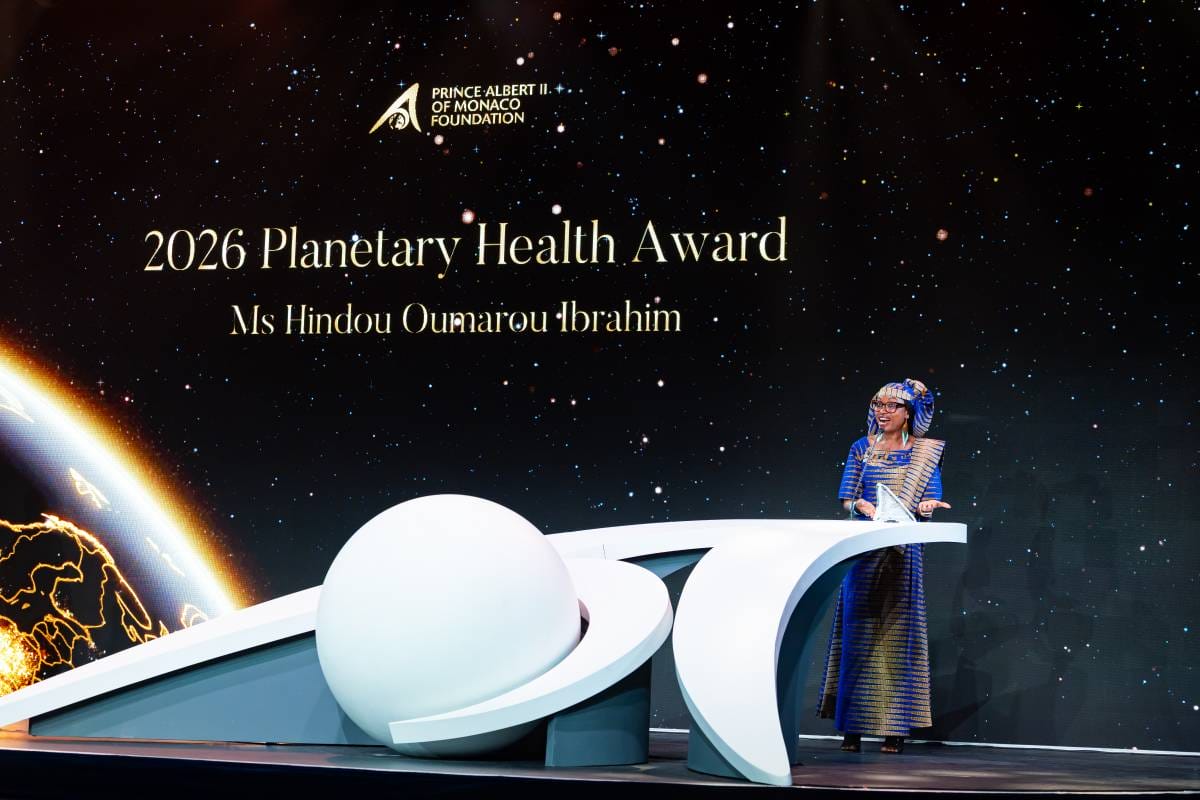
Hindou Oumarou Ibrahim, from Chad, received the Awareness Award for her tireless work defending Indigenous peoples and ensuring that their knowledge is recognised in the fight against climate change.
A member of the Mbororo pastoralist community, Ibrahim has spent more than fifteen years campaigning for communities whose lives are intimately connected with the natural environment.
In the Sahel, changing rainfall patterns, pressure on water resources and environmental degradation present enormous challenges for people whose livelihoods depend on livestock and access to grazing land.
But Ibrahim believes Indigenous communities should not simply be regarded as victims of climate change.
They also possess generations of practical knowledge about local ecosystems, weather patterns and natural resources, knowledge that can contribute directly to finding solutions.
As founder of the Association of Indigenous Women and Peoples of Chad, she has combined international advocacy with practical initiatives, including participatory mapping projects that draw on local knowledge to improve the management of natural resources.
Her work has helped bring Indigenous perspectives into international discussions about climate adaptation and environmental protection.
Accepting her award, Ibrahim described the recognition not simply as an honour, but as a responsibility to continue defending her people, their rights and the generations to come.
Her message was a reminder that environmental protection is also a question of justice, opportunity and human dignity.

Sylvia Earle: The Ocean’s Legendary Defender
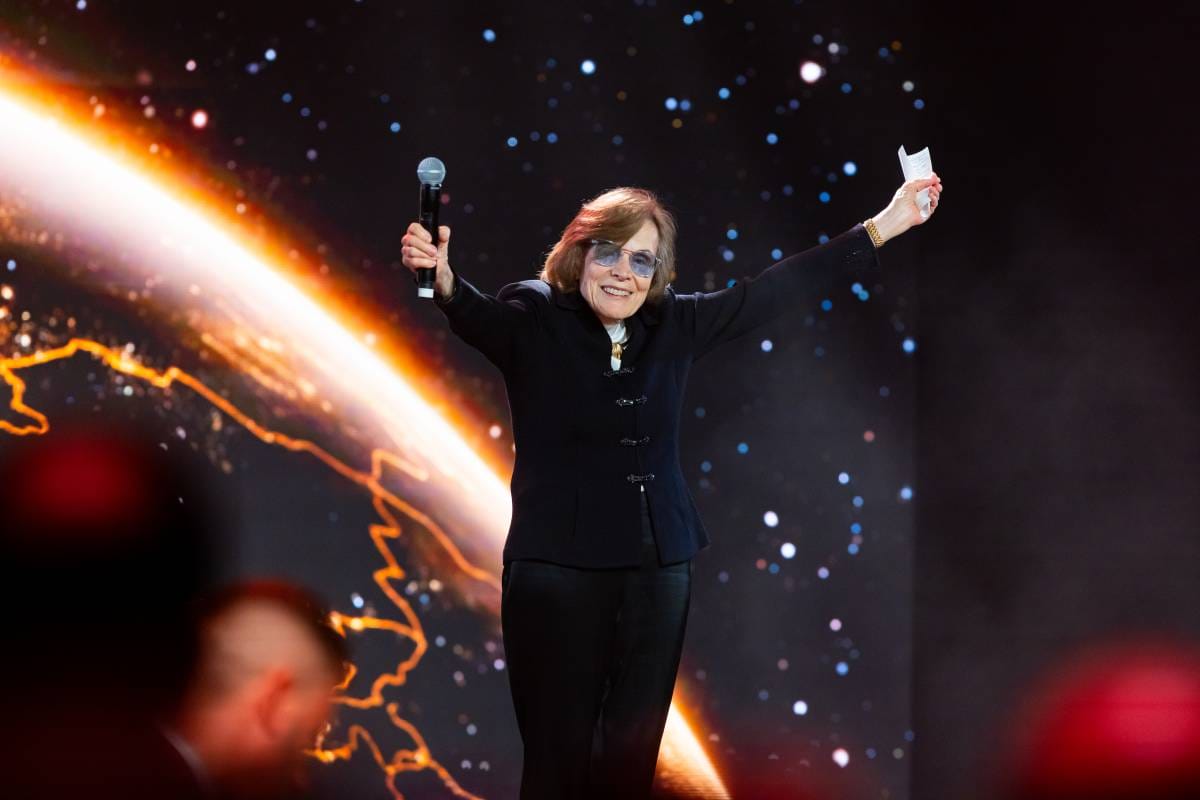
Another highlight of the anniversary celebration was an address by one of the world’s most celebrated oceanographers, Dr Sylvia Earle.
Affectionately known as Her Deepness, Earle has spent decades exploring the oceans and campaigning for their protection.
A National Geographic Explorer at Large and a longstanding friend of Prince Albert and his Foundation, she brought both scientific authority and personal passion to the occasion.
Her message was urgent.
Humanity, she warned, is approaching environmental tipping points beyond which recovery may become impossible.
But she also insisted that there is still an opportunity to change direction.
For Earle, knowledge creates understanding, understanding encourages people to care, and caring provides the foundation for hope.
Her central argument was unmistakable: the survival of humanity is inseparable from the survival of healthy oceans.
It was a particularly resonant message for a Principality whose Sovereign has made marine conservation one of his defining international commitments.

Twenty Years Down, the Future Still to Protect
Throughout the evening, tributes recognised Prince Albert’s personal leadership and the Foundation’s contribution to environmental protection over the past two decades.
Speakers highlighted its support for scientific research, endangered species, younger generations and innovative approaches to sustainability.
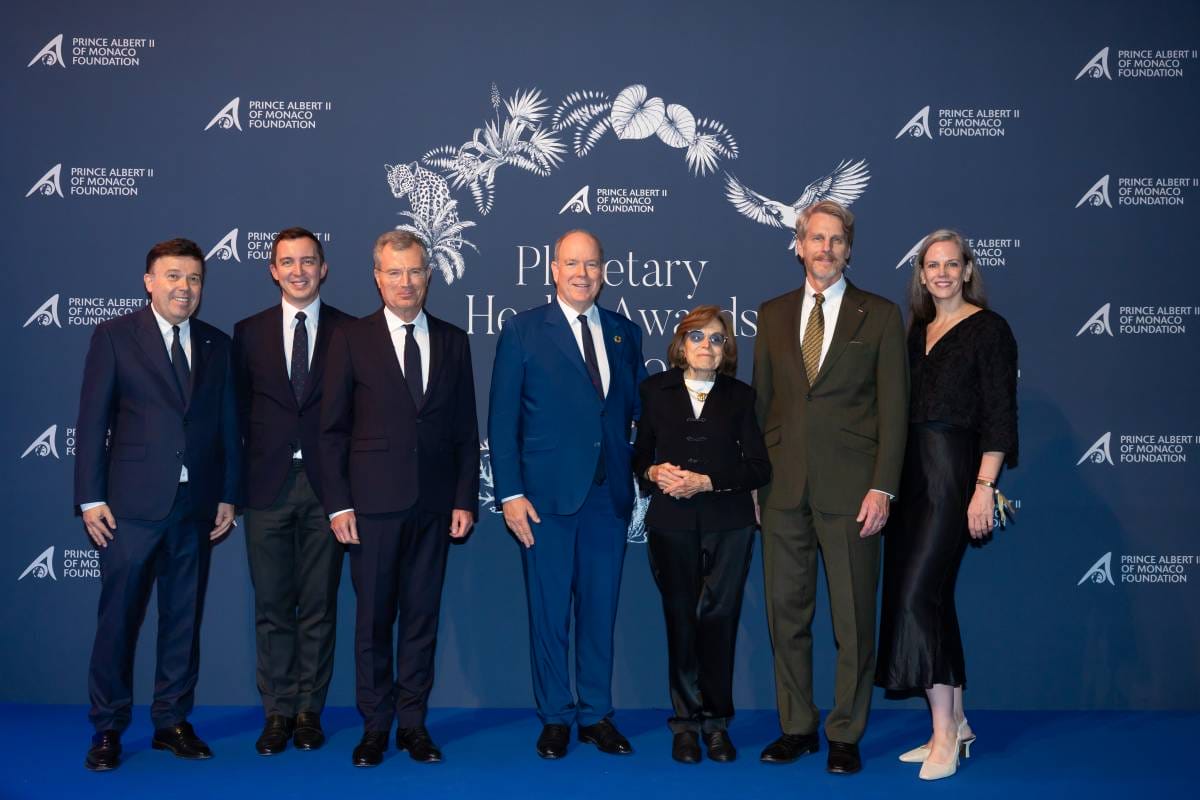
The celebration concluded with a group photograph bringing together the Prince, the Foundation’s directors, scientific advisers, international representatives and permanent staff.
It was a symbolic moment, reflecting the international network that has developed around the Foundation since 2006.
But perhaps the evening’s most important message came from the diversity of its three award winners.
A Kenyan scientist working to preserve coral reefs. A Swedish company developing a new source of renewable energy. And an Indigenous campaigner from Chad fighting to ensure that vulnerable communities are heard.
Their approaches could hardly be more different.
Yet together they illustrate the philosophy that has guided Prince Albert’s Foundation for twenty years: environmental progress depends on science, innovation and human commitment working together.
And as the Foundation enters its third decade, the challenge is no longer simply to raise awareness of the threats facing the planet.
It is to accelerate the solutions.
Twenty years of commitment have laid the foundations. The next twenty may prove even more important.