

What happens when some of the world’s wealthiest philanthropists gather in one room, representing an estimated €150 billion in wealth, to discuss how they can make the world a better place?
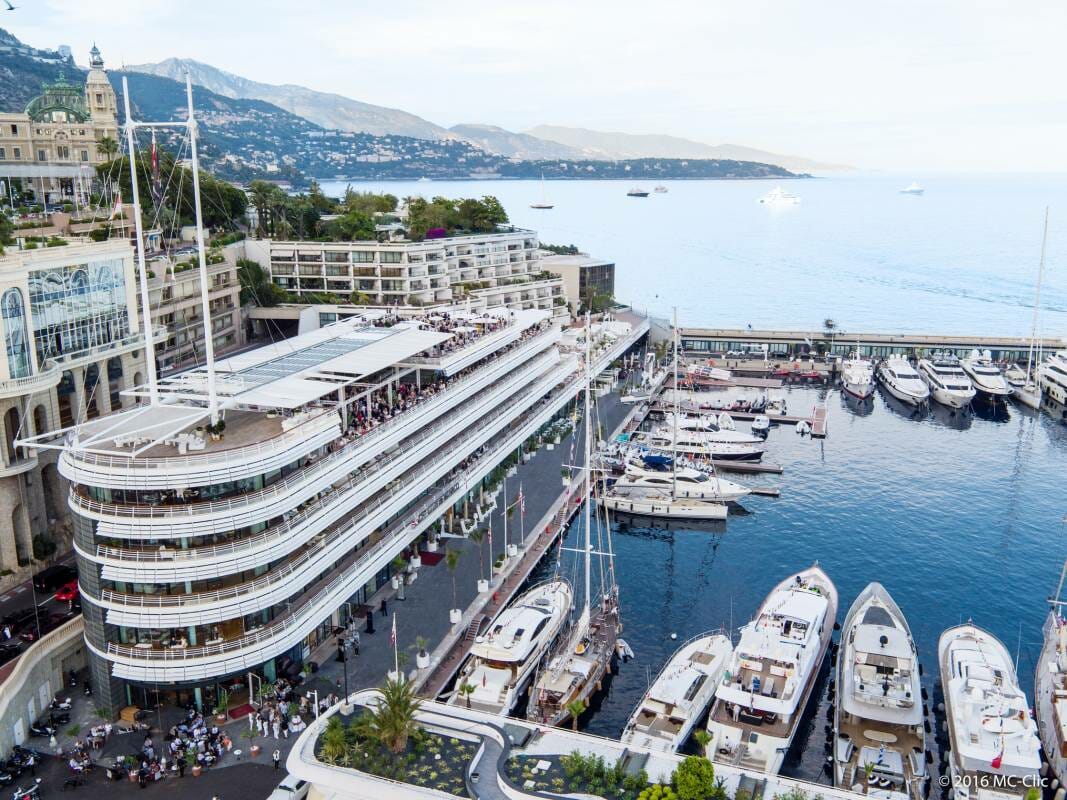
That was the intriguing proposition behind the inaugural Monaco Summit on Philanthropy, hosted by Prince Albert II and Princess Charlene on Monday 12 October at the Yacht Club de Monaco.
Around 100 leading philanthropists and decision-makers, representing more than 20 countries across five continents, came together for an ambitious gathering devoted not simply to giving money away, but to rethinking how private wealth can help address some of humanity’s greatest challenges.
And the Principality hopes this will become an annual fixture on the international philanthropic calendar.
Thinking in Generations, Not Years
Opening the Summit alongside Princess Charlene, Prince Albert offered a compelling argument for philanthropy’s growing importance in an increasingly uncertain world.
With governments facing competing priorities, strained budgets and mounting international challenges, private philanthropy possesses something that public institutions often lack: the freedom to think beyond immediate political and economic pressures.
“Where Governments often think in years, philanthropy can think in generations,” the Prince declared.
That freedom, he argued, allows philanthropists to take risks, support neglected causes and pursue solutions whose benefits may not become apparent for decades.
But it also brings responsibilities.
Prince Albert identified three particularly important challenges: expanding philanthropic resources without concentrating too much influence in a few wealthy hands, encouraging younger generations to embrace giving, and harnessing new technologies responsibly.
Artificial intelligence featured prominently in his remarks.
While acknowledging its potential to identify needs, measure results and monitor environmental change, the Prince cautioned against allowing technology to replace human judgement.
“I sincerely hope that an algorithm will never decide for us what is worth supporting,” he observed.
Princess Charlene: Philanthropy Needs a Human Heart
If Prince Albert emphasised the strategic possibilities of philanthropy, Princess Charlene brought the discussion back to the people whose lives it seeks to transform.
“For me, philanthropy begins with a willingness to care and the humility to listen,” she told delegates.
Her message was that successful philanthropy cannot be measured simply by the amount of money distributed.
Trust, personal relationships and understanding the communities being helped are equally important.
Above all, she insisted that those receiving assistance must have a meaningful voice in decisions affecting their lives.
It was a perspective reflecting the practical philosophy of her own Foundation, which has supported 808 projects in 45 countries, reaching more than 2.82 million beneficiaries, predominantly children, through swimming education, drowning prevention and sport.
From Family Fortunes to Artificial Intelligence
The Summit brought together three generations of philanthropic leaders, including foundation founders, family philanthropists, representatives of royal-linked institutions and younger successors preparing to assume responsibility for substantial charitable resources.
Discussions ranged from philanthropy’s relationship with governments and national economies to the use of long-term forecasting, the development of stronger societies and the practical implications of artificial intelligence.
One particularly significant theme was the transfer of wealth between generations.
As major family fortunes pass to younger heirs, the question is no longer simply who inherits the money, but who decides how it should be used.
The Summit’s Next Generation Circle gave younger philanthropists an opportunity to express their own ambitions and priorities.
The broader objective was to encourage cooperation across countries, institutions and generations rather than allow philanthropic organisations to operate in isolation.
A Prestigious Award Goes to Dubai
A highlight of the gathering was the presentation of the Prince’s Prize for Innovative Philanthropy to the Mohammed bin Rashid Al Maktoum Global Initiatives (MBRGI).
The Dubai-based organisation, established under the leadership of Sheikh Mohammed bin Rashid Al Maktoum, Vice President and Prime Minister of the United Arab Emirates and Ruler of Dubai, brings together humanitarian and development programmes spanning healthcare, education, innovation and community empowerment.
Prince Albert presented the award to Ibrahim Al Balooshi, the organisation’s Director of Sustainability and Partnerships, recognising its commitment to innovative and sustainable solutions to global challenges.
Monaco’s Growing Role in Global Philanthropy
The new Summit builds on a philanthropic tradition that has become an important part of Monaco’s international identity.
The Prince Albert II of Monaco Foundation, celebrating its 20th anniversary in 2026, has supported more than 850 projects focused on climate change, biodiversity and water resources.
Princess Charlene’s Foundation, established in 2012, has meanwhile developed an international presence through its work protecting children and promoting the benefits of sport.
Co-organised by the two Princely Foundations with the support of the Tocqueville Foundation, the Summit represents an attempt to bring these different traditions together on a much larger international stage.
Its origins also stretch back further than might be imagined. Prince Albert revealed that the project had evolved over 15 years from an earlier philanthropy round table developed with Jean-Guillaume de Tocqueville.
The ambition now is to establish Monaco as a regular meeting place where the world’s leading philanthropists can exchange ideas, challenge conventional approaches and develop new partnerships.
Whether the Summit ultimately produces transformative initiatives will depend on what happens after the delegates return home.
But its underlying message was unmistakable: great wealth brings extraordinary opportunities to do good, and perhaps an equally extraordinary responsibility to use those opportunities wisely.


Related Articles