

Hello Monaco: Could you share a short biography about yourself, your journey, and the main objectives and philosophy behind your single family office?
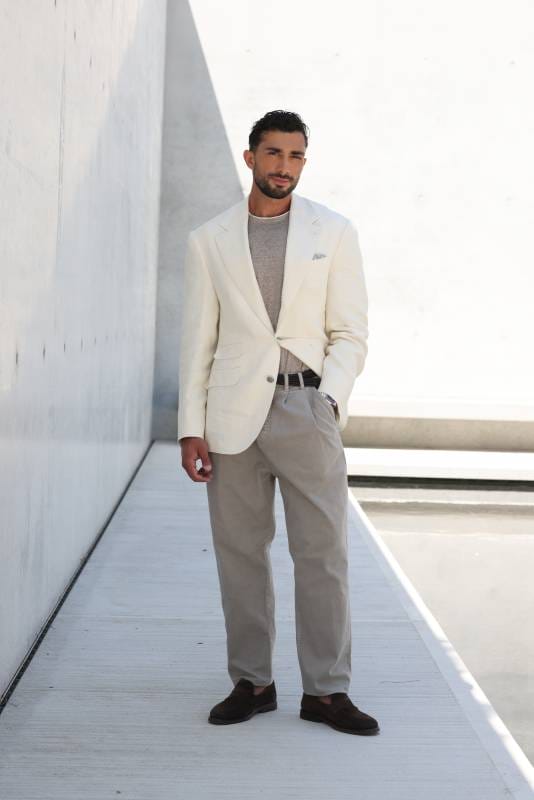
Luca: I was born and raised in Switzerland in a Sicilian family, and that mix probably shaped me more than anything else. The Swiss side instilled a respect for structure and long-term thinking, while the Italian side leaned more into relationships, taste, and the idea that work and life aren’t really separate.
At the beginning of my professional journey, I trained as a portfolio manager, overseeing an eight-figure book built around my own trading strategy. It gave me an early look at how serious capital is actually managed: quietly, patiently, and with a strong emphasis on protecting capital first. That approach has stayed with me. From there, I spent several years building independently, focusing on disciplined decision-making and trying to stay clear on what actually drives results versus just staying busy.
Today, I lead LegaC Capital AG, a single-family office I established in Zug to manage my family’s capital. The focus is primarily on liquid markets, both traditional and digital, alongside real estate and selective private equity positions. We don’t raise outside capital, which allows us to stay patient and aligned with a long-term view.
Outside of that, my wife and I run a private foundation supporting a number of causes that matter to us. And I try, as much as possible, to maintain a life that isn’t entirely defined by markets.
HM: How would you describe yourself beyond business and finance?
Luca: Outside of the office, I approach my conditioning in a similar way to how I approach capital: with discipline, patience, and a strong focus on the inputs. The gym, running, recovery, sleep, nutrition, and mental discipline are all part of that. They are not things I treat as optional.
In order to maximize effectiveness, I work with a small group of advisors, including physicians, biomedical specialists, and performance coaches. Their role is to help me stay at a high level, both cognitively and physically. In my experience, clear thinking comes from being in the right state, and that requires consistency.
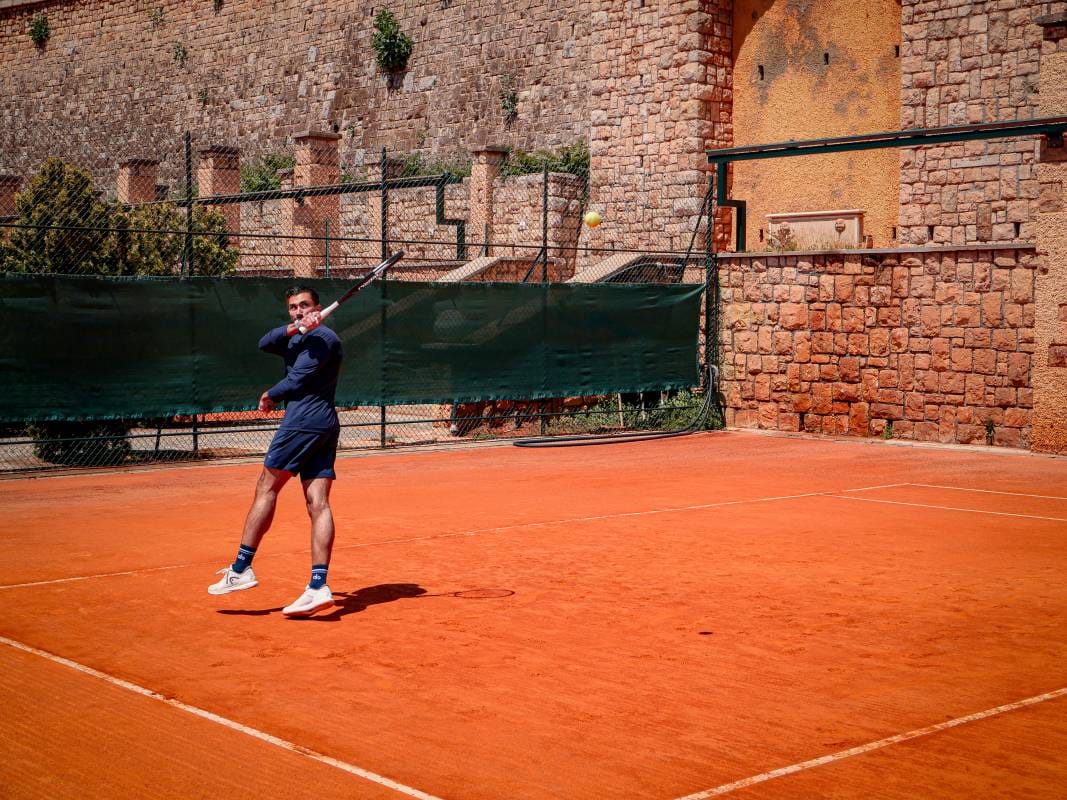
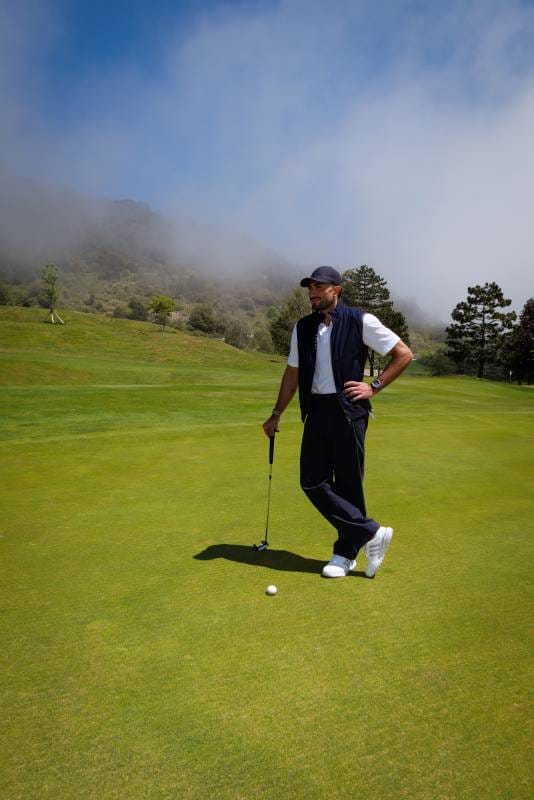
I see the body and mind as connected. Outside of the structure, I’m someone who needs to move. Tennis, cycling, golf, and time on the water or in nature are all important. They provide a counterbalance to the pace and intensity of the markets.
That mindset shows up more broadly as well. I value restraint over constant visibility, longevity over novelty, and the idea that performance and refinement can exist together. I don’t see an active life and an intentional life as being in conflict. If anything, they reinforce each other. It’s the way I try to live.
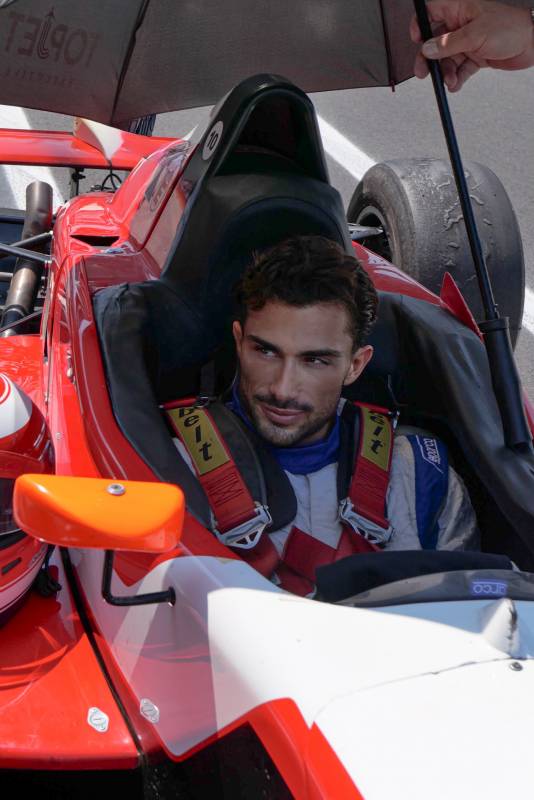
In my free time, I also race on track. I have a weakness for Ferraris, which I’m happy to admit. On a circuit, everything else tends to fall away. It’s probably my most Italian trait.
HM: Was there a defining moment early in life that shaped your ambition and entrepreneurial mindset?
Luca: There wasn’t really a single defining moment. It was more a general tendency early on to figure things out for myself and not rely too heavily on what everyone else was doing. Growing up between Swiss structure and Italian instinct probably played a role in that. I found myself drawn to people who trusted their own judgment and were comfortable going their own way. That sense of independence stayed with me. It wasn’t tied to a specific goal at the time, but it ended up shaping many of the decisions I made later on.
HM: Tell us about the very beginning of your entrepreneurial journey. What was your first real business success?
Luca: My first real lesson wasn’t strictly a financial one. I spent my early twenties in London, working at an asset management firm run by a family friend who became a mentor to me. One thing that stood out was how often the best decisions came from doing nothing. Just watching him and the people around him made me realize how difficult patience actually is, and how important it can be. If I had to point to an early win, it would be learning to wait for the right opportunities instead of chasing whatever was in front of me. That approach has stayed with me. A lot of what I’ve done since comes back to that same idea.
HM: How important is family in the way you make decisions today, and what principles define your family culture and long-term legacy?
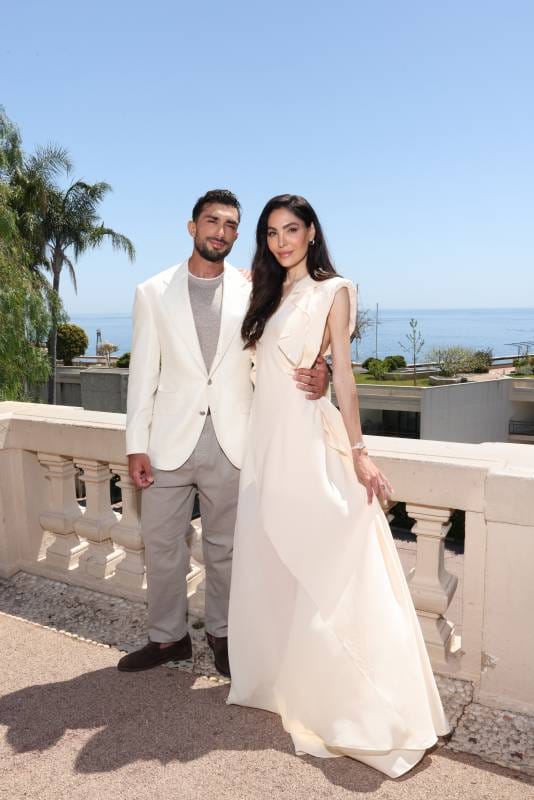
Luca: Family is at the centre of everything I do. Before anything else, I’m a husband and a father, and that shapes how I structure my time and priorities. My wife and I are raising our two young sons and her daughter in Monaco, so much of the discipline in my day revolves around that. The early mornings, setting boundaries around work, and protecting certain time — it’s all so I can be present with them in a meaningful way.
When I make decisions, I tend to think about what they build over time. Not just in terms of assets, but in terms of what my family inherits more broadly: values, habits, perspective.
The principles themselves are fairly simple — discretion, loyalty, hard work, and the belief that wealth on its own means very little without the right foundation behind it.
That philosophy is reflected in the name LegaC. It is a nod to legacy, with the understanding that it is still being written.
HM: How do you balance preserving family traditions while embracing modern investment strategies, and what lessons about wealth are most important for the next generation to understand?
Luca: I think tradition and modernity can reinforce each other. The things worth holding onto such as discipline, prudence, and thinking long term are what actually make it possible to operate in modern markets without getting pulled around by them. If there is one idea, I would want the next generation to understand, it’s that wealth is not just about what you acquire — it’s about what you can afford to lose while still remaining who you are.
HM: What was the original vision behind creating your single family office, and how would you like it to be remembered in the next 20 to 30 years?
Luca: The idea behind LegaC came from a practical need. My wealth had grown quickly, and I wanted a structure that could operate with a longer time horizon, without the pressure that comes with outside capital. The goal was to be able to stay patient, stay focused, and make decisions with a multi-decade view. Switzerland, and Zug in particular, felt like the right place for that. It offers a level of stability, legal clarity, and a long tradition of managing private capital that aligned with how I wanted to build.
Over time, I would like LegaC to be defined less by any single investment and more by how it operates. The quality of its judgement, the consistency in how decisions are made, and the responsibility behind them. If those things are in place, the results tend to follow. In that sense, reputation is something that builds steadily, often more reliably than capital itself.
HM: What makes your family office different from others in the industry, and how involved are you personally in investment decisions today?
Luca: What makes LegaC different is that it is a true single family office. We are not raising outside capital, running fund cycles, or building around a fee structure. That independence shapes how we think about opportunities, risk, and time horizon.
We tend to focus on situations where complexity or dislocation creates opportunity, which usually requires patience and the ability to think long-term. That is much easier to do with permanent capital. I’m supported by a strong group of advisors across investment, legal, tax, banking, and family governance. But in this kind of structure, responsibility does not really shift. The final decisions, and the accountability that comes with them, stay with me.
HM: Which sectors, innovations, or global trends excite you the most right now?
Luca: The first is the return of active management as a genuine source of edge in liquid markets, across both traditional macro and digital assets. The era of cheap capital and passive allocation has shifted, and with rate divergence, geopolitical fragmentation, and cross-asset dispersion, the conditions for active capital to outperform have returned. We backed that view with structure and a nine-figure initial deployment of our own capital at inception, via a Swiss-regulated actively managed certificate that is cleared, and custodied entirely within Swiss financial infrastructure. The strategy itself is multi-asset and dynamic, combining market-neutral positioning, directional conviction, and a macro overlay across traditional and digital markets, with drawdown discipline as the organizing principle.
The second is premium real estate, where the geographies attracting patient capital are evolving. In Europe, that includes Italy, the United Kingdom, and Switzerland, alongside the UAE, which has quietly become one of the more significant destinations for global capital and talent. These are markets I know personally, not just through capital deployed, but through living and operating in them.
The third lies in private markets. The convergence of longevity medicine and metabolic health is, in my view, one of the defining shifts of this decade, driven by the institutionalization of preventive care and the rapid adoption of GLP-1 therapeutics. The platforms emerging at the intersection of clinical-grade care and consumer health are likely to reshape how affluent individuals engage with their health over the next twenty years. It is also an area I follow closely beyond the investment lens.
I tend to be cautious around consensus. The most interesting opportunities are often the ones that still feel slightly uncomfortable to articulate at dinner.
HM: What habits, disciplines, or personal mindset have helped you build and maintain success over the years?
Luca: There are three habits I come back to. The first is the discipline to do nothing. Most days, the best decision is no decision at all. The second is intellectual honesty – being willing to admit when you are wrong quickly, rather than letting it play out slowly at a higher cost. The third is rhythm. I tend to wake early, work out, and catch up on current events before speaking to anyone. Then, my afternoons are typically focused on analysis and operational oversight. I take my health seriously because I’ve found that how you feel physically has a direct impact on how clearly you think. Over time, consistency in the small things is what allows you to succeed in the larger ones.
HM: Outside of business, what are your greatest passions, and how do you disconnect from the intensity of finance and investments?
Luca: A great deal of my life happens away from screens. Training and running are things I try to stay consistent with daily. Beyond that, sport plays a big part of how I spend time outside of work. Tennis, cycling, golf, time on the water, and racing in the Ferrari Challenge championship all keep me energized. I generally feel at my best when I’m moving, and overall wellness is something I prioritize. In my experience, the quality of your decisions is closely tied to how well you treat your body.
Aside from sports, another passion of mine is fine watches, and I consider myself an avid collector.
Above all, I feel most fulfilled when I’m helping others through our charitable foundation, and it’s easily one of the most rewarding things I do. I live a blessed life, and it’s a privilege to be in a position where I can use my resources to make a positive impact both locally and globally. Balance is key in life; I believe that what you give is what you receive.
HM: Your journey includes both Switzerland and now Monaco. What attracted you to each place, and why did you ultimately choose to establish yourself in Monaco?
Luca: Switzerland gave me everything an investor could ask for at the start of his career. Institutional seriousness, regulatory clarity, and a culture that respects privacy as a value rather than a marketing line. For those reasons, LegaC will always be headquartered in Zug.
Monaco offered something different. It’s one of the few places in Europe where entrepreneurial and investment communities are concentrated in such a small area, where you can meet interesting people just by moving through your day. The lifestyle suits me as well — the climate, the sea, and the ability to stay active. But what really drew me in was the diversity of people who think independently and value ambition.
My family’s life is here now, and ultimately that’s what made the decision to stay.
HM: What advantages do you believe Monaco offers today for family offices, investors, and entrepreneurs?
Luca: Monaco’s advantages are fairly well known. Political stability, security, fiscal clarity, and a very high quality of life. What is discussed less often, and in my view matters more, is the calibre of the community. Family offices, founders, and long-term investors are all within a few minutes of one another, and that proximity tends to create a different kind of dialogue. It’s less transactional than what you find in most places.
For a family office like ours, that environment makes a real difference. Monaco has also been a generous home to my family, and through our charitable foundation as well as other private commitments, I strive to give something back.
HM: What trends do you believe will define the next decade of investing, and are you optimistic about the future of Europe and global entrepreneurship?
Luca: I think the next decade will be shaped by three main shifts. The first is the end of frictionless globalization and the return of geography as a real factor. The second is the institutionalization of digital assets, which is moving faster than most public commentary suggests. The third is a renewed emphasis on patience as a competitive advantage. After fifteen years of cheap capital rewarding speed, the cycle ahead is likely to favour those who are willing to wait.
I remain optimistic about Europe, although selectively. European entrepreneurship is stronger than its reputation suggests. The continent just tends to take longer to recognize and celebrate its own success, which in some ways is part of its character.
HM: When people speak about Luca Cartillone many years from now, what do you hope they will say?
Luca: I would hope people speak less about me and more about what I was able to build. For my family, for the people our foundation has supported, and for those who worked alongside me. The financial side tends to follow over time.
What I would want to be remembered for is the character behind it: that I treated people well, kept my word, and stayed consistent in who I was, both in private and in public. For me, discipline is what allows you to build something, and purpose is what gives it meaning. I would hope both are reflected in what I leave behind.