

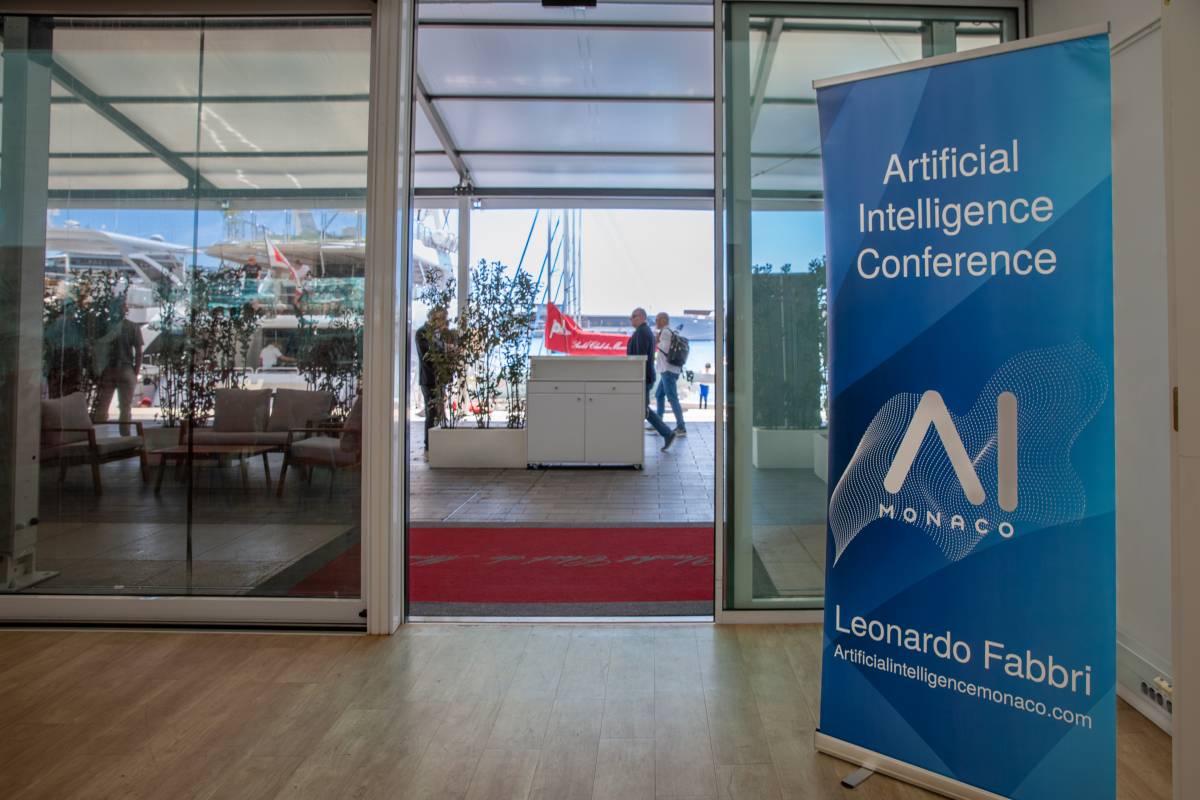
At the Yacht Club de Monaco, conversations about artificial intelligence extended far beyond algorithms and automation. During the Artificial Intelligence Conference held on May 2, 2026, global experts, investors, technologists, academics, and entrepreneurs gathered in the Principality to discuss one of the defining questions of our era: how will AI reshape economies, professions, and human society itself?
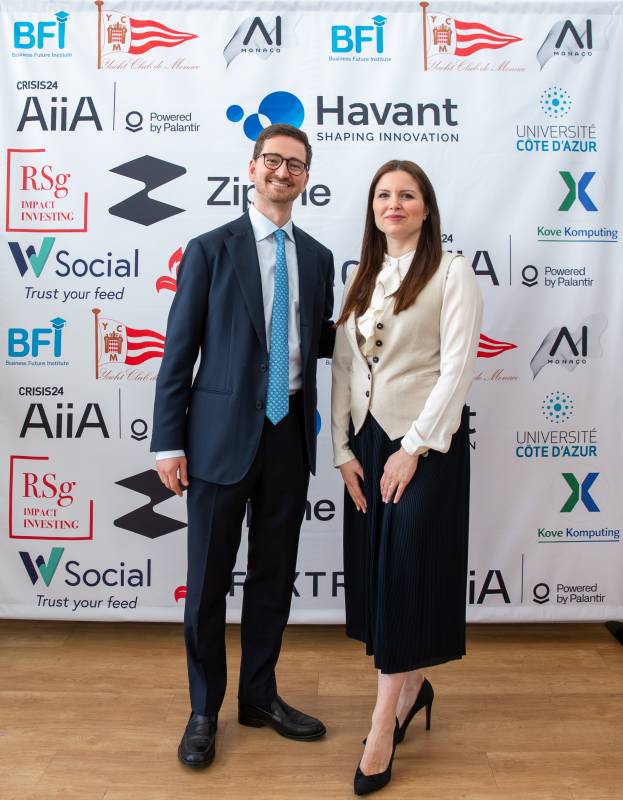
Organised by the Business Future Institute and AI Monaco, led respectively by Silvia Andriotto Melia and Leonardo Fabbri, the conference brought together speakers from major international innovation hubs including Silicon Valley, Seattle, London, Paris, Milan, and Monaco.
The afternoon programme explored AI’s growing impact across finance, healthcare, robotics, logistics, digital infrastructure, media, and strategic investment, creating what organisers described as a cross-disciplinary platform for serious dialogue on the future of technology.
Fear, adaptation, education
Speaking exclusively with HelloMonaco following the conference, the organisers expanded on themes that resonated throughout the day: fear, adaptation, education, and the growing need for responsible implementation of artificial intelligence.
“Our ambition is to make Monaco a serious platform for high-level conversations on artificial intelligence, where investors, institutions, entrepreneurs and technologists can exchange directly on the forces reshaping the economy,” said Leonardo Fabbri.
Yet beyond the economic transformation, the discussion repeatedly returned to a more human concern: whether AI will ultimately replace workers or empower them.
“One of the main reasons why I founded the Business Future Institute is exactly to fight this fear,” explained Silvia Andriotto Melia during HelloMonaco’s interview. “Artificial intelligence is now among us more than ever, and humans fear being replaced. But the future belongs to humans plus AI.”
Melia compared today’s AI revolution to previous technological disruptions such as electricity, calculators, and ATM machines, innovations that transformed labour markets without eliminating the human need for meaningful work.
“I don’t want to think of a world where AI does everything on our behalf,” she said. “Humans find meaning in work. The question is how well we integrate AI into our lives.”
That balance between technological acceleration and human adaptation formed one of the conference’s central themes.
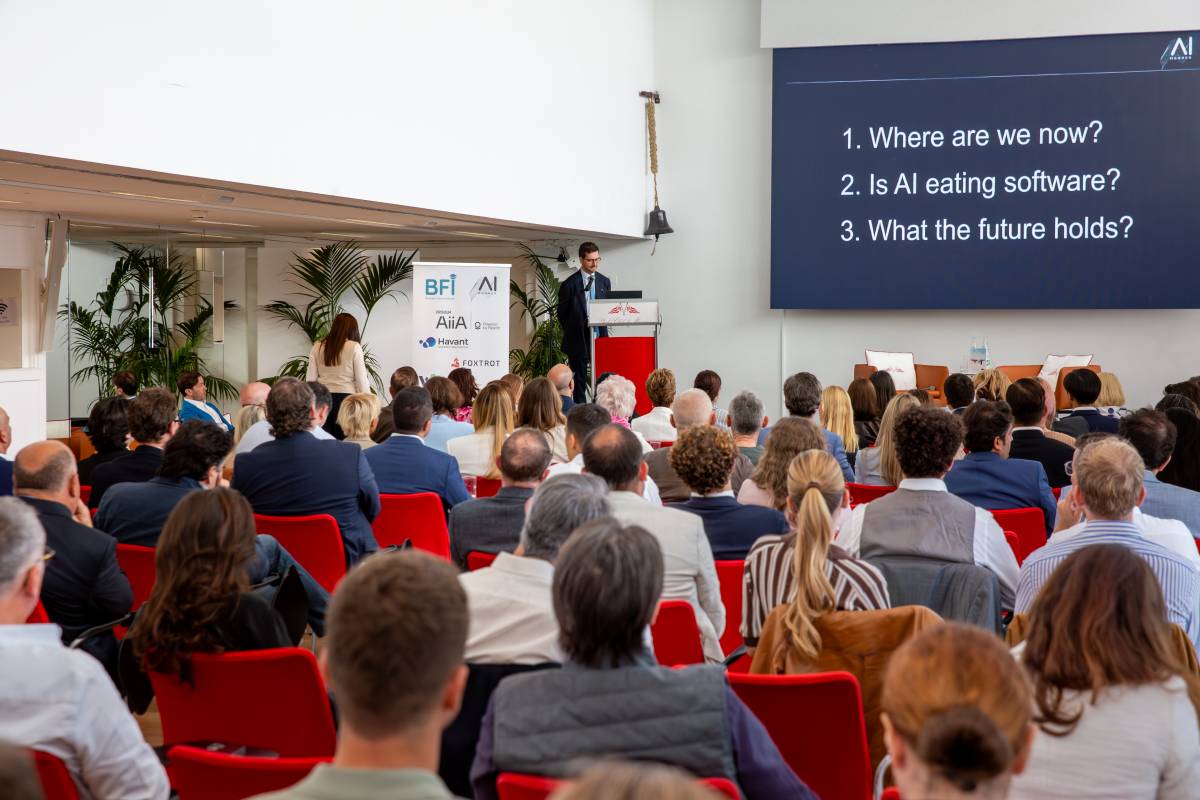
During the event, Pietro Lanza discussed the growing importance of trust infrastructure in digital ecosystems and explained how secure digital systems are becoming essential to Europe’s technological future.
Representatives from Palantir and Foxtrot focused on the operational realities of implementing AI inside organisations, examining how businesses can effectively integrate advanced platforms such as Foundry into real-world decision-making processes.
Investment and infrastructure also occupied a central role in the discussions. William Jakeman outlined the strategic importance of digital infrastructure investments, particularly data centres, fibre networks, and telecommunications systems that increasingly support the AI-driven economy.
Meanwhile, Anna Zeiter presented an alternative vision for social media in Europe, advocating for digital ecosystems designed to counter misinformation and encourage higher-quality journalism.
Innovation in healthcare emerged as another major focus. Stéphanie Lopez presented developments in AI-assisted early lung cancer detection through chest CT analysis, a project developed in collaboration with CHU de Nice and Therapixel.
The conference also explored how robotics and autonomous systems are transforming logistics and supply chains. Anatolii Pasichnyk detailed how drone delivery systems are already changing access to critical goods in multiple regions worldwide.
For Monaco itself, however, the event carried an additional significance. The Principality increasingly positions itself not merely as a financial centre, but as a place where global technological, financial, and regulatory conversations intersect.
“AI is such a powerful tool… “
During HelloMonaco’s interview, Leonardo Fabbri behind the Business Future Institute and AI Monaco, explained that much of his own work focuses on translating highly technical AI research into practical knowledge for investors, family offices, and business leaders operating in Monaco’s international environment.
“We live in a time where there are many high-quality educational resources available,” he noted. “But people still need guidance to understand specific sectors and technologies.”
Melia also stressed the growing importance of regulation, particularly in Europe.
“AI is such a powerful tool that we need to move carefully somewhere in the middle,” she said. “Europe is doing a very good job trying to regulate how to use AI responsibly.”
The Business Future Institute currently offers tailored educational programmes designed to help businesses adapt to AI integration, particularly in sectors such as law, finance, and wealth management. According to Melia, most programmes are customised to the needs of each organisation and often combine regulatory guidance with practical implementation strategies.
As discussions concluded at the Yacht Club de Monaco, the atmosphere reflected both excitement and caution, a recognition that artificial intelligence may become one of the most profound transformations modern society has experienced.
But if one message emerged clearly from the conference and HelloMonaco’s conversations with its organisers, it was this: the future of AI will not depend solely on technology itself, but on how humanity chooses to guide it.