

For years, Roland-Garros represented unfinished business for Monaco’s rising tennis star.
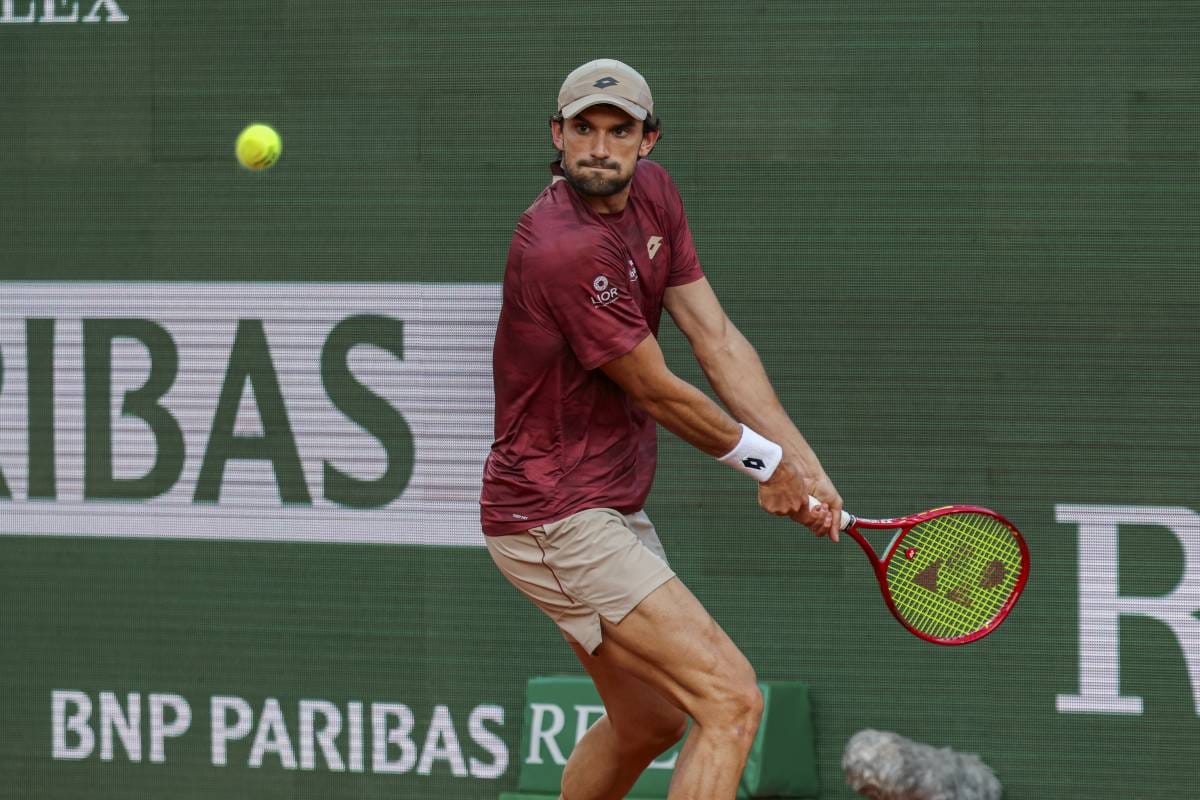
The clay of Paris had offered glimpses of promise, moments of frustration, and the occasional reminder that Grand Slam tennis rarely follows a straight path. But this week, Valentin Vacherot finally achieved something he had never managed before: a main-draw victory at Roland-Garros.
And yet, just as the tournament seemed ready to offer him a deeper run, fate intervened.
The 27 year-old Monegasque arrived in Paris carrying the weight of growing expectations. No longer an outsider, Vacherot entered the tournament as the No.16 seed and one of the most closely watched players outside the sport’s established elite. His remarkable rise over the past year, highlighted by his stunning Masters 1000 triumph in Shanghai and a breakthrough into the world’s Top 20 with a career high ranking of # 16, had transformed him into one of Monaco’s leading sporting figures.
His opening-round opponent, French qualifier Thomas Faurel, looked on paper like a manageable draw. Reality proved more complicated.
Playing on the intimate and often volatile Court 14, Vacherot found himself facing not only an inspired opponent but also a crowd overwhelmingly determined to push the French underdog toward an upset.
For two sets, however, the Monegasque looked every bit the established star.
His serve was untouchable. Fifteen aces flew past Faurel as Vacherot dominated behind his first delivery, winning more than 80 percent of those points. The first two sets disappeared quickly, 6-3, 6-4, and it appeared the match was heading toward a routine conclusion.
Instead, the atmosphere shifted.
Faurel began swinging more freely, the crowd grew louder, and Vacherot suddenly found himself dragged into a far more physical and emotional contest. The Frenchman captured the third set 6-3, forcing the favourite into uncomfortable territory.
There were further concerns.
After the match, Vacherot admitted that his left foot was far from perfect physically. Yet even as the momentum threatened to slip away, he demonstrated the quality increasingly separating him from the chasing pack.
The fourth set headed into a tense tie-break. Under pressure, Vacherot saved a set point before producing some of his most composed tennis of the afternoon, eventually sealing victory 6-3, 6-4, 3-6, 7-6 after nearly three hours on court.
First Main-Draw Victory at Roland Garros
The win carried significance beyond simply reaching the second round.
It was his first ever main-draw victory at Roland-Garros after previous disappointments in Paris, including a first-round exit in 2024 and a failed qualifying campaign in 2025. For a player whose career has accelerated so dramatically over the past twelve months, it represented another symbolic milestone.
There was also a distinctly Monaco dimension to the story.
Vacherot has become part of a remarkable generation of Monegasque tennis talent. Alongside doubles specialist and Grand Slam champion Hugo Nys, he continues to push Monaco’s presence deeper into the sport’s biggest tournaments. His close tennis bond with cousin Arthur Rinderknech, sealed by their extraordinary Shanghai final, has also become one of the more popular family stories on tour.
The Fairy Tale Vanishes
But Paris would not allow the fairy tale to continue.
Scheduled to face Chilean clay-court specialist Alejandro Tabilo in the second round, Vacherot was ultimately forced to withdraw from the tournament because of the foot injury that had already troubled him during his opening match. Tabilo advanced by walkover before a ball was struck.
Alongside his singles campaign, Vacherot had also been due to compete in the doubles draw with his cousin Arthur Rinderknech. The pair faced a daunting opening-round assignment against seventh seeds Marcelo Arévalo and Mate Pavić, one of the strongest doubles teams in the world. However, Vacherot’s withdrawal from the tournament because of his foot injury also forced the pair out of the doubles competition before they could take the court. Fellow Monegasque Hugo Nys remains in the doubles draw alongside Édouard Roger-Vasselin, with the pair seeded tenth and advancing to the third round.
The withdrawals were a cruel ending for a player who had finally broken through one of the last remaining barriers in his career.
Yet the broader picture remains overwhelmingly positive.
Even in disappointment, Roland-Garros 2026 confirmed how far Vacherot has travelled. He arrived in Paris not as a hopeful qualifier but as a seeded contender. He left having secured his first singles victory on the sport’s most demanding clay-court stage and having further established himself among the game’s emerging names.
For Monaco tennis supporters, there is every reason to believe this was not the end of a Roland-Garros story.
It may simply have been the beginning.