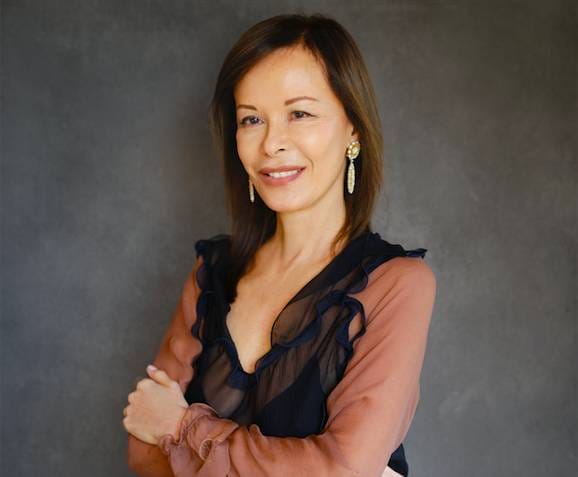


For her place of residency and for her headquarters of the company managing a portfolio of the most prestigious galleries on the planet, she has chosen the Principality. Paris, London, New York, Shanghai, Brussels, Gstaad, Monaco to name great cities…
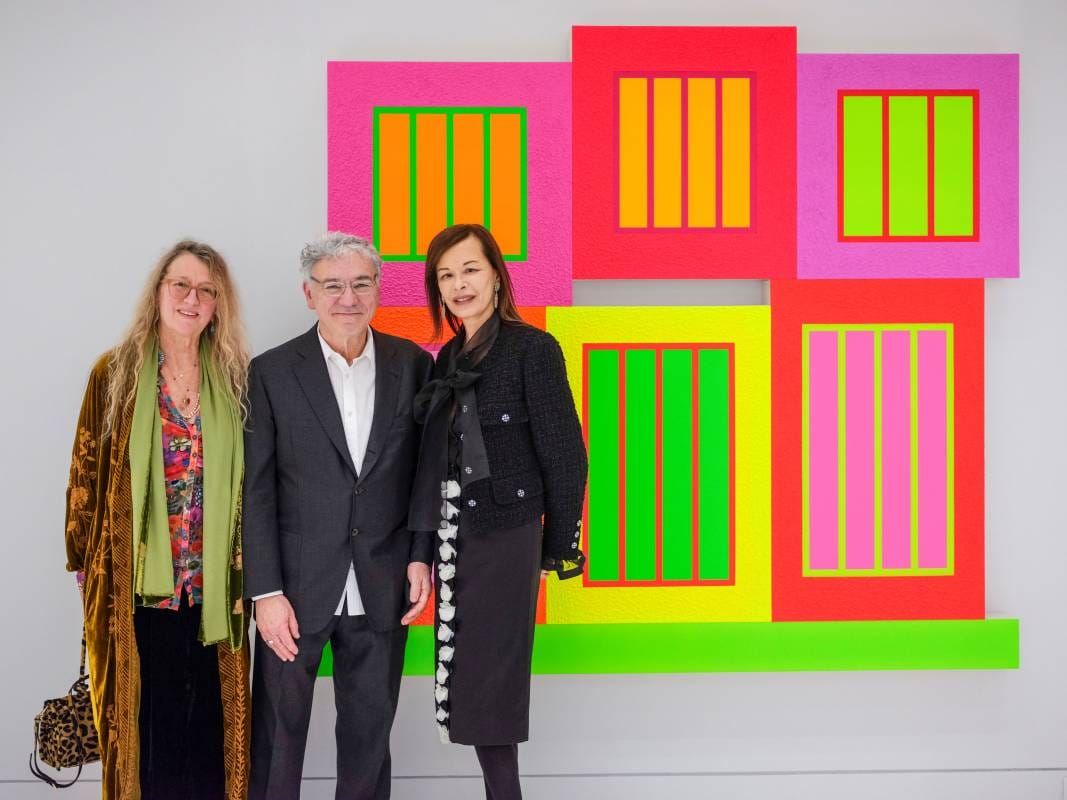
Daughter of a renowned couturier, a cultured man, art lover and visionary, Georges Rech, this passionate woman, open to all sorts of artistic movements, is driven by a constant search for unique talents. Almine Rech thus represents around sixty artists of all generations, some twenty women among them.
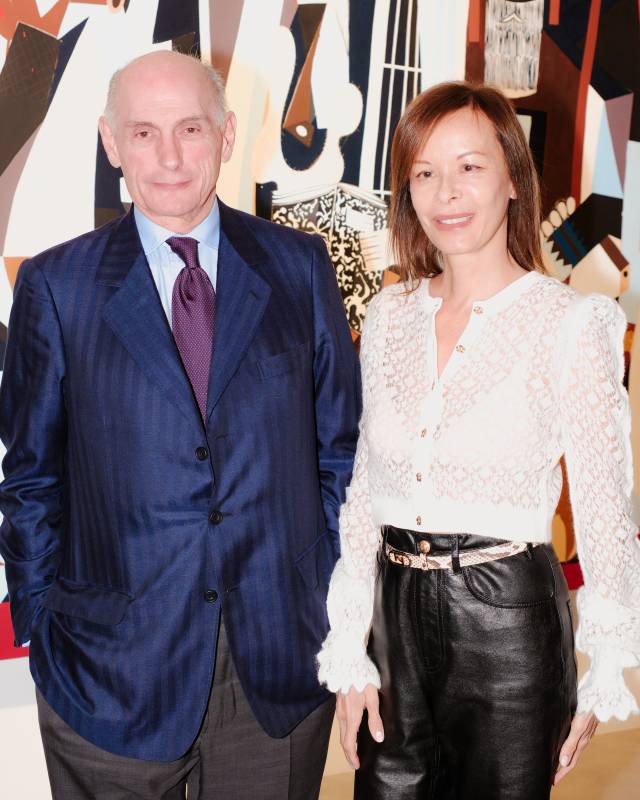
Wife of Bernard Ruiz-Picasso, grandson of the great Master, together they have created a foundation researching the art of Pablo Picasso. Executing a loan policy for a number of exhibitions worldwide, the two specialists of the master of Cubism are thus enjoying exceptional working arrangements. Having chosen the immaculate Avenue de la Costa for her premises, in the very heart of Monte-Carlo, Almine Rech is now introducing the world to some of her favourite artists.
Hello Monaco: When did you first become interested in art?
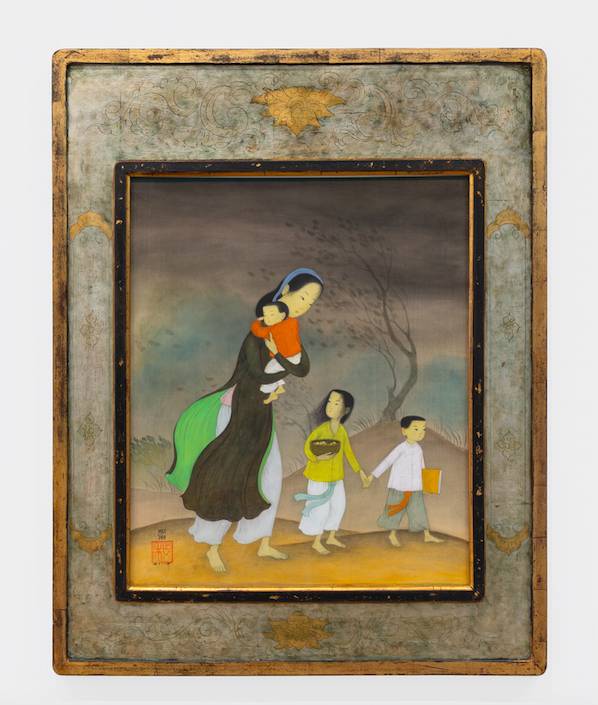
Almine Rech: Very early! One of the inventors of ready-to-wear clothing, my father worked with textiles. But his soul was that of an aesthete and a collector. On weekends, he would always take me to museums. On my mother’s side, my great-uncle was a leading figure in Vietnamese art. I used to visit him when I was little (he lived in Paris). That’s how I took to painting myself…
HM: Do you still paint?
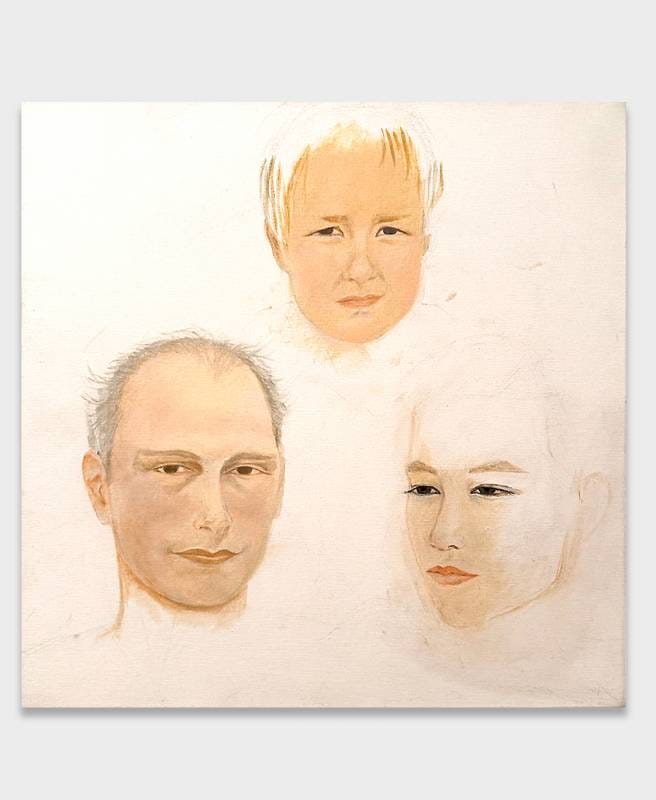
AR: I don’t, I stopped at the age of 25. Following in my father’s footsteps, he was a Sunday painter, I mainly painted family portraits… After attending art classes, I carried on with studying literature with a focus on the film industry. Back then, I was already fascinated by the visual arts. Then came the Louvre School (Ecole de Louvre).
HM: Do you remember your very first artistic revelation?
AR: I remember my emotion at the Louvre Museum. Very young, I discovered Leonardo da Vinci’s Saint John the Baptist, the one also featuring the Virgin and Saint Anne. It was a revelation indeed. I still love old art…
HM: When did you decide to open your own gallery?
AR: I started my career working alongside an expert for the Drouot auction house. We were then doing appraisals in people’s homes. Modern and post-impressionist paintings, in particular. I learned a great deal from him… In the 1990s, I opened my first gallery in Paris, in the Marais area. At the time, I was only exhibiting living artists. But my choices were already quite eclectic. I never wanted a generational gallery or one exclusively devoted to one artistic movement.
HM: How do you choose your artists today?
AR: Same as in any profession… With a certain experience, you can easily eliminate something that is not of very high quality. A bit like antique dealers… I do some scouting, which is very exciting. I visit studios, preferably those undergoing a transformation. I could then quickly tell if it’s a case of a profound and authentic artist or not, brushing aside anything that is not top quality in terms of its execution.
Then comes talent, which is sometimes innate. Yes, it does exist! There are self-taught artists who never stop working, eventually becoming great masters. Someone who has learned a lot and is very talented, sooner or later, would give up apprenticeship. To become what he is. Picasso once said, “I used to paint like Raphael, but it took me a lifetime to learn to draw like a child…” Too rigidly molded by art schools, their students, sadly, will never stand out. You can’t conform and become a great artist at the same time. In that case, you are just an academic.
Some schools in Europe have tried eliminating painting in favour of a conceptual credo. Introducing new materials into art is certainly very interesting. I’m thinking of Joseph Kosuth, whom I’ve always championed, he was the first to use neon.
You know, when the first collages were made by Picasso or Braque in the early 20th century with scraps of newspaper or wallpaper, they were barely appreciated. Artists are researchers. Great artists, like the great scientists of an era, are the ones who change the world. They see things in advance; they see the future. For me, the history of art is history as such. If we didn’t have the prehistoric caves with their paintings, Greece and Egypt, we would barely have anything to learn. Works of art are more important than dates, wars or peace treaties.
HM: You mentioned Picasso… It’s a bit of a love story of a lifetime. You also happen to be wife of his grandson…
AR: Back when I was a child, a biennial was held in Paris. My father took me for a visit. I was then struck by a Picasso depicting the Korean War. I didn’t like it at all, it frightened me! But I was very impressed. Many years later, I saw the “Massacre in Korea” masterpiece again at the Picasso Museum in Paris.
My husband and I created the Foundation in 2002 — an invaluable tool for researching Picasso’s work. We commission specialists to work on certain paintings and exhibitions, and publish the catalogues.
My husband is the son of Paul, born of Picasso and Olga’s marriage. The Master was only married once. Part of our collection is exhibited at Picasso Museum Malaga, founded by Bernard and his mother. This museum is a private and public institution. A significant donation was made and it was for the region of Andalusia to provide the building and transform it into a museum, guaranteeing all the necessary conditions for the preservation of the artworks. In addition, we regularly lend our paintings.
HM: Do you have any anecdotes to share about Picasso?
AR: My husband was 14 when Picasso died. But he was very close to his grandfather who adored children. Picasso even did a number of pencil portraits of Bernard. There’s a very funny story. Bernard would often visit his grandfather in Cannes. One day, just before the start of the school year, he showed Picasso his schoolbag that contained a small slate and a box of white chalk. He was six years old. The Master who couldn’t help creating whenever he saw a new surface, immediately drew a pigeon in chalk and signed it. But much to my future husband’s dismay, he used a fixing spray. Bernard tried to erase it, but in vain which sent the child into a real tantrum. He was beside himself because Picasso had ruined his slate!
HM: Do you think we could possibly picture art today without Picasso?
AR: In the art world, there are certain artists you can’t remove. Otherwise there would be a void, a great void, an abyss actually. Picasso is obviously one of them. But today, a few other names can be mentioned as well. For me, it is Jeff Koons (whether you like him or not). Many others could be removed, and nothing would be missing. As to him, echoing his personal history, he created sculptures that speak to children. Koons created a special foundation for children. He was separated from his own son for a very long time…
HM: Do you think the market reflects the actual artist’s value?
AR: Yes and no… I can say that after a 30-year career, if an artist is expensive, it is for a reason. People have a perspective. The market and the public are the ones that give genuine recognition. Time legitimizes things. A decade may justify a surge of interest or suggest a brilliant future, but there is always room for surprises… A decade doesn’t allow knowing if the artist will remain creative and become historic.
They all dream of entering the Louvre. But they may be acquired by major museums and then disappear. The public and collectors’ perspective is time.
HM: Are you favourable to a mixing of genres, exhibiting contemporary art in historical locations?
AR: I find it interesting. Jeff Koons at Versailles, for example, was a real success. An occasional high-quality contemporary exhibition in a historical setting may attract a new, often younger audience.
HM: Are you worried artificial intelligence may get in the way of the artists’ creative drive?
AR: When photography was invented, it simply provided another medium. A natural human desire to leave a handwritten mark remains intact. 20 years after conceptual art, Basquiat and Kenny Scharf wanted to give art to the public for free, creating graffiti on the walls and in the subway.
Look at ceramics. Only 15 or 20 years ago, it was considered a secondary technique, like crafts. Nowadays, a desire to recognize the value of the human hand is such that things have changed. All the great visual artists work with ceramics, and it is considered art. There is a revival that some wouldn’t have imagined in the 1980s… Wanting to deny the manual aspect, what a strange idea! Some schools in the 1970s, however, were part of this movement. They actually declared painting dead!
HM: Do you have any hobbies outside of the visual arts?
AR: I love reading, biographies, for example, that of Stefan Zweig. I also enjoy great classical literature: Balzac, Flaubert, Tolstoy, Dostoevsky… You have to read such authors several times because you never tire of masterpieces. It’s like Picasso’s “Les Demoiselles d’Avignon”! Every time I go to New York, I go see this painting at MoMA. And every time, I feel the same emotion.