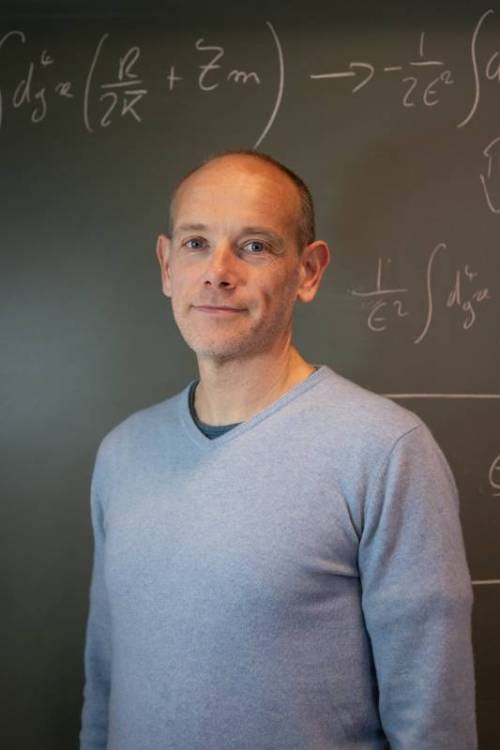
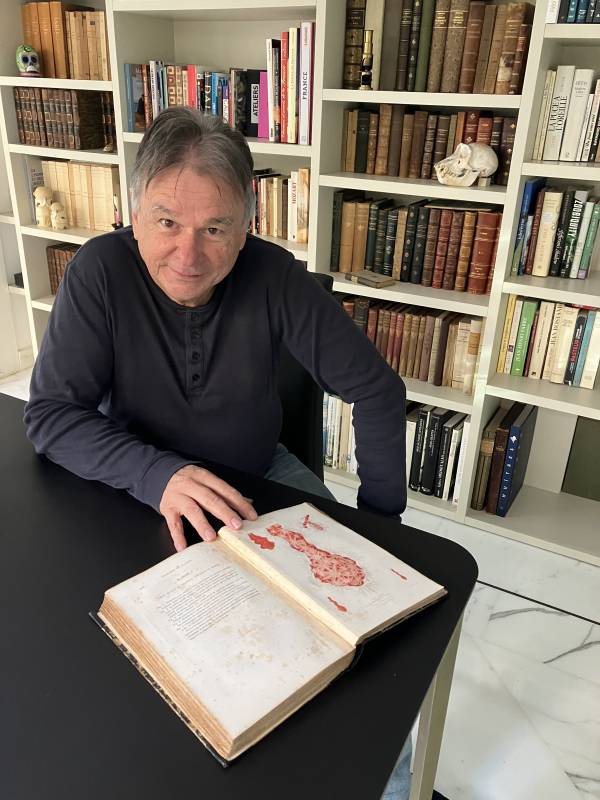


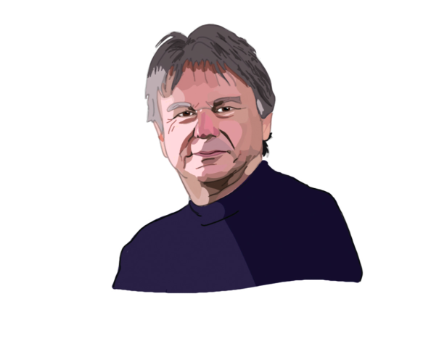
Mozart, Dali, Charlie Chaplin, Fernandel and Bourvil are rubbing shoulders on his bookshelves with the research on the oceans, Antarctica or a rare treatise on corals dated 1864 and signed by Henri de Lacaze-Duthiers*. Today we are invited to the home of Denis Allemand in the Terrasses du Port, Fontvieille. He is a highly eclectic and cultured researcher, lover of 1960s cinema and “vernacular architecture” also known as traditional hinterland architecture.
Denis Allemand is a native of the Principality. His grandfather first came from the Var region to work as a steward for the Princely Palace during the reign of Prince Louis II, later succeeded by his son. As for Denis Allemand, he is a Monegasque national, with a reputation for being an ardent researcher specializing in comparative marine flora and fauna physiology.
Author of countless scientific publications, for over 20 years he’s been presiding over the Monaco Scientific Centre, tirelessly studying red coral with its very specific properties. This is a peculiar and mysterious species. As a result of possessing extraordinary longevity, its study may have a phenomenal impact on anti-age medicine and cosmetics.
Denis Allemand has certainly embraced Jean Rostand’s statement from “Thoughts of a Biologist”: “The researcher’s pleasure lies in lifting the skirts of nature.” Having unveiled some unsuspected wonders, his curiosity in science also extends to being president of the Institute of Human Paleontology, a scientific foundation established by Prince Albert I of Monaco in 1910.
Nowadays, Denis Allemand has dedicated himself to preserving the planet. Following in the footsteps of the Sovereign Prince, he is tirelessly advocating the protection of our oceans.
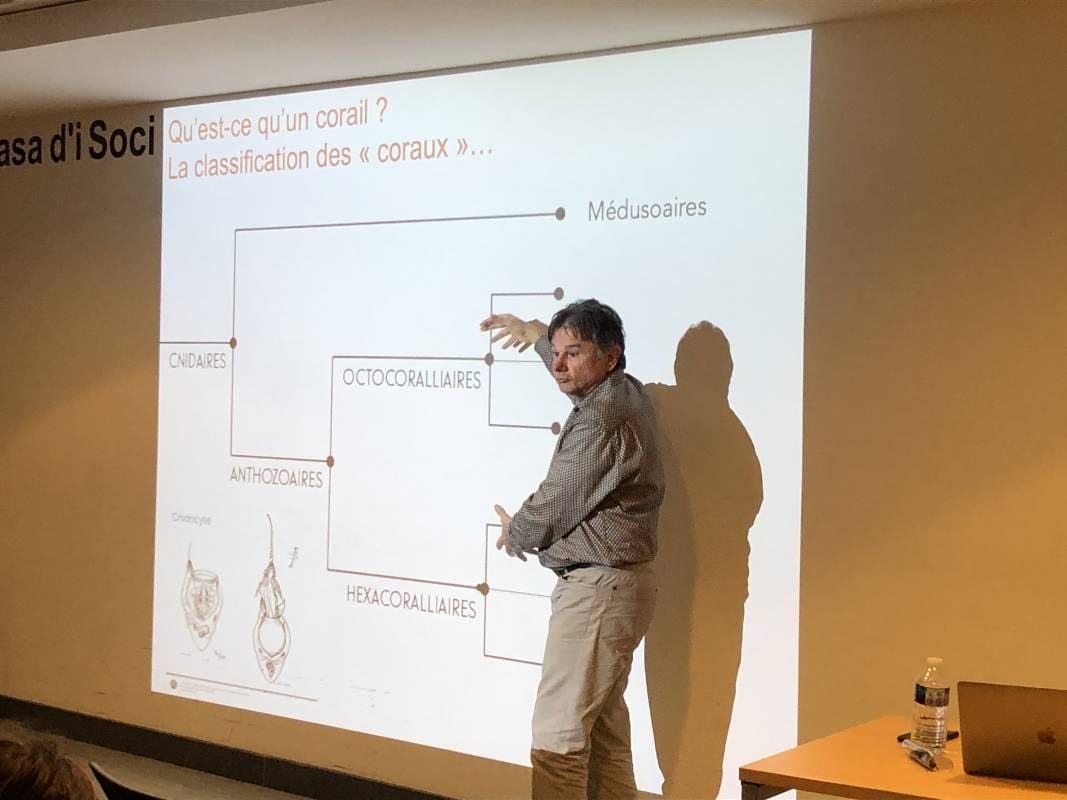
Hello Monaco: How did you become fascinated with fundamental research?
Denis Allemand: I’ve always been curious about nature, eager to understand the world around me. Back at the age of ten, I was raising my own species. In my own aquariums, I was observing fish, insects, reptiles and amphibians, and it was fascinating. Later on, in Monte-Carlo, I was fortunate enough to be taught by some passionate professors, first at Middle School (Collège de l’Annonciade), then at High School (Lycée Albert 1er). And they passed on their passion to me!
Quite naturally, after graduating from high school, I enrolled in the Faculty of Science at the University of Nice. Later on I obtained a Master’s degree and a PhD in biology with the University of Montpellier.
HM: Was your thesis dedicated to marine biology?
DA: Not at all. It was actually researching human endocrinology, reproductive problems in particular. I was studying the oocyte maturing based on a marine species, the starfish. Its mechanisms are actually similar to those of vertebrates, even though the hormone involved is different from that produced by humans. I then got passionate about sea urchin research for a better understanding of cell activation, instrumental in the field of reproduction and cancer studies.
Just a brief digression, which I believe is important. To study a scientific problem, you need to use animal species as a model. As to fertilization mechanisms, they were researched relatively recently, in the 1870s, by the scientists working in Villefranche-sur-Mer — the future marine biology laboratory. (One of them, a German embryologist, Oscar Hertwig, incidentally designed chandeliers for the Oceanographic Museum of Monaco.) Those researchers studied sea urchin fertilization with the sperm penetrating into the oocyte, thus paving the way for future in vitro fertilization…
HM: Did you know this might have practical use in terms of fighting against infertility?
DA: No, not directly. I’m a strong advocate of fundamental research. To me, searching for a practical use without understanding the fundamentals is a recipe for disaster.
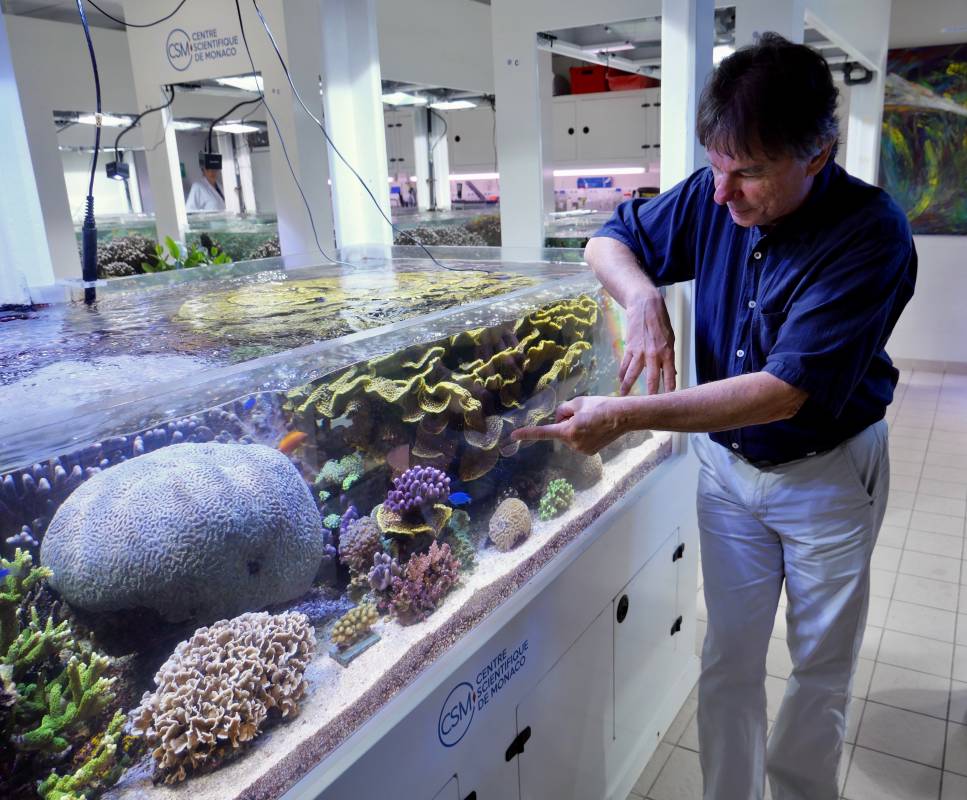
At the Monaco Scientific Centre, we’ve been studying bio-mineralization (the skeleton building process) for several years, the skeleton structuring protein, in particular. One of our researchers realized that this very unique protein was capable of protecting cells, skin cells among others. Ultimately leaving the centre, he created his “Coraliotech” start-up, working in the fields of cosmetics and pharmacology.
HM: So the greatest discoveries are made by chance…
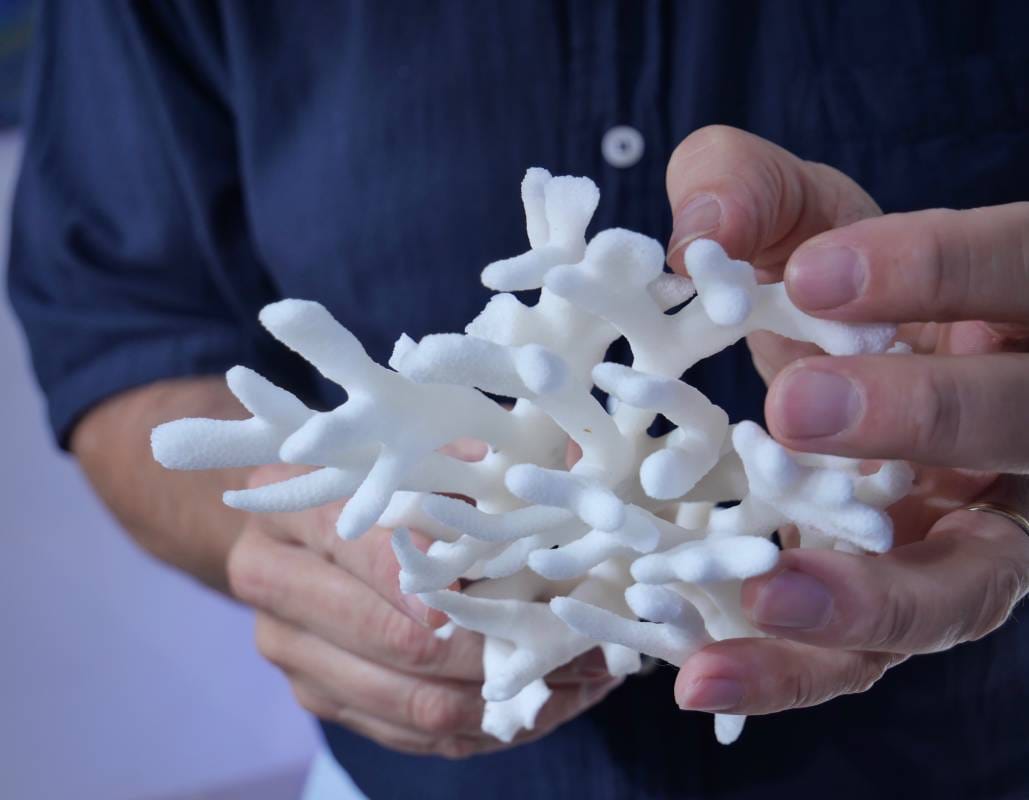
DA: Not exactly. We wanted to understand cellular functioning, to know how species are structured. We were then focusing on red coral, which contrary to popular belief, is an animal species. A very thin layer of living tissue is covering its mineral skeleton, much like a glove covers a hand. This is where the animal dwells. It does not have organs as such, but a digestive and nervous system. It is therefore a proper animal.
Coral poaching, sadly, often occurs, but its fishing is strictly regulated. The Monaco Scientific Centre plays an important role demonstrating these animals may be raised and studied in controlled laboratory conditions. Prior to that, all research had been carried out in the open seabed, in pure nature. Not a perfect scenario.
HM: Are there multiple corals in the Mediterranean?
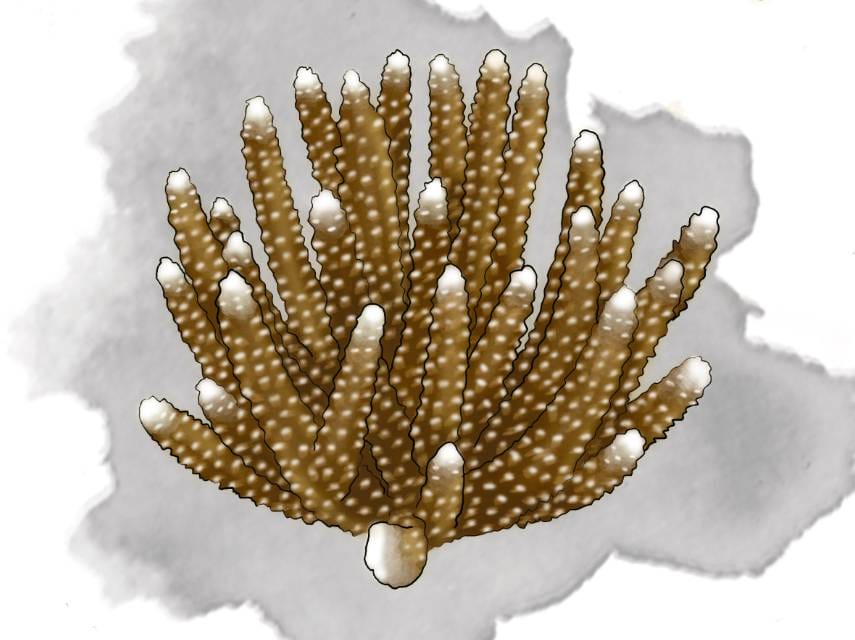
DA: The red coral only. Tropical corals, belonging to a different family grow in the Red Sea. If you look at evolution, 700 million years ago a primitive organism gave rise to two major branches of life. The first one is corals, the second, all other animals. The diversity between the two types of corals may sometimes be phenomenal.
HM: Have you studied Mediterranean coral only?
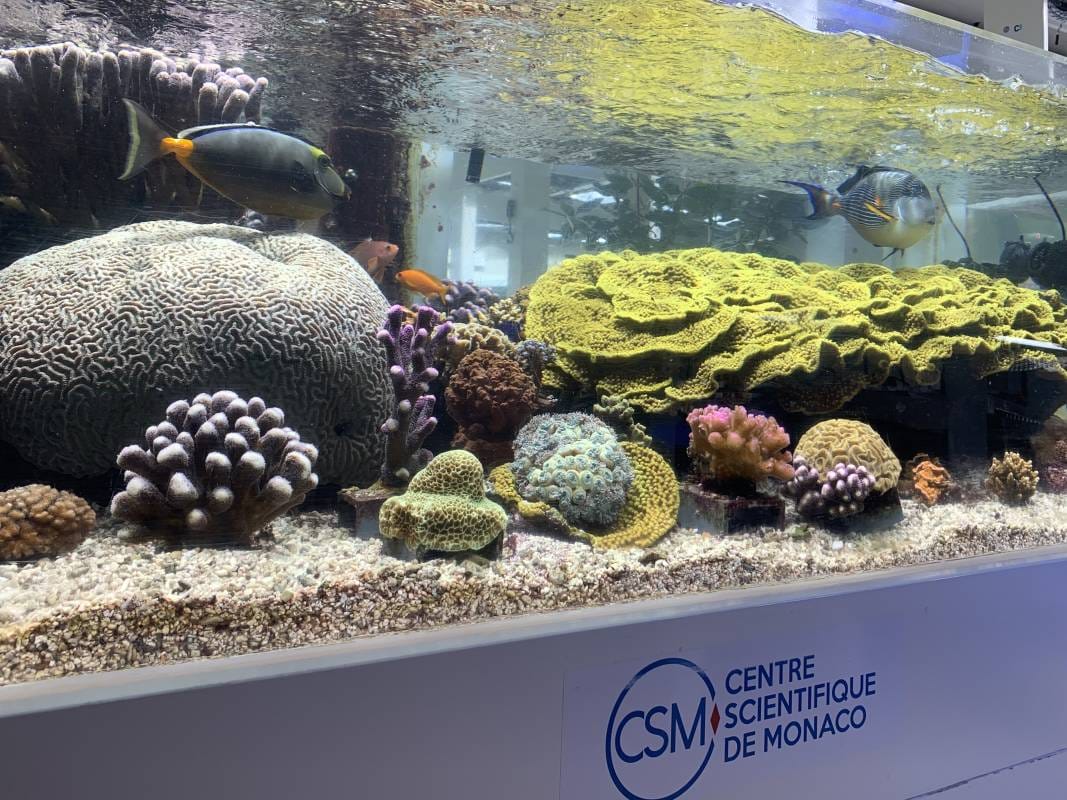
DA: No, we did study tropical corals too, which are very different. We collect them live and then raise several types of corals, giving way to experimental biology under optimal conditions. Before that, as mentioned, they had only been studied right in the seabed. Our contribution was about taking it all to the laboratory.
We benefit from a number of external funding sources, including that of Chanel, committed to the study and protection of biodiversity. This is how the corals research allowed us to create a global coral sanctuary and understand the sensitivity of these animal species to different environmental parameters. Our work has ecological implications, also allowing us to explore the relationship between the genes and the form, leading to an ultimate understanding of why coral doesn’t age. The oldest specimens are over three thousand years old now! This means that coral cells are constantly regenerating. How is that possible? We have a few leads, but we need to continue exploring it. We already have some cosmetic brands that are very interested…
HM: Questions are likely being asked as to their potential use. What are the benefits?
DA: In the environmental field, the benefits are significant. Our work has allowed us to create some protection programs, including this global coral conservation laboratory. We’ve been able to understand the sensitivity of these animals to environmental factors, such as global warming… In biology, more in general, we’ve managed to understand how the coral skeleton forms and how time seems to have no effect on it. A 2,000-year-old coral has the same physiology as a 5-year-old coral, meaning it ages under optimal conditions. And that’s what all other organisms are striving for!
HM: What causes these cells to regenerate incessantly? Is it the marine environment?
DA: We’re continuing to explore the mechanisms. Having laid several foundations for understanding, we need to keep investigating. It is already known that corals live at the surface of the seas. How can they survive? These are very specific animal species living with symbiotic algae, the latter being their tissues. Corals also live in tropical environments and are not affected by the sun. Mycosporines transferred by the algae protect them even further.
The algae are also responsible for photosynthesis. Generating a phenomenal amount of oxygen, they also produce dangerous free radicals that coral is somehow able to resist. Based on that, we can try to discover molecules providing this particular protection. A field of a primary interest to certain cosmetic companies…
HM: Your job is truly about passion…
DA: Absolutely, and any researcher must never forget his childlike wonder. Life is magnificent, astonishing… To be marvelled by everything. No need to go to the other end of the world for that. Created in 1976, the Larvotto Marine Reserve was one of the first in an urban setting, and you can see some truly beautiful things here!
HM: Speaking of Larvotto, didn’t the construction of the Mareterra district have certain unfortunate consequences for the marine environment?
DA: During its construction, I was part of a committee tasked with assisting the government in relations with the developer. This new district is surrounded by two reserves: Larvotto to the east and Spélugues to the west, where the corals grow. The Prince was adamant in the constraints imposed. The developer thus transferred the seagrass and fan mussels, which sadly subsequently suffered from an epizootic disease destroying 80 % of the population.
We also held discussions with the Mareterra builders to have them roughen the concrete surface to ease the species’ attachment. This was the very first time such significant constraints had been applied to underwater construction.
HM: What are your thoughts on ocean pollution?
DA: Significant progress has been made here… Water quality is satisfying. Lead pollution has decreased considerably. The major problem today, however, stems from microplastics, source of endocrine disruptors, among other things.
Our laboratory has published a report highlighting this problem, making a major impact in the circles concerned. Scientists are providing the tools for political decision-makers, but ultimately, it is up to them to use them. But the latter are often subject to development-related economic constraints… The Prince of Monaco is not concerned about being re-elected, he is one of the very few heads of state in this position. He therefore has a free hand enforcing certain regulations, and he is being listened to very carefully. Because what he says, he says for real.
HM: Are you worried? Isn’t the awareness getting increasingly acute?
DA: Yes and no… We are witnessing that many people are making a great effort. But at the same time, there is weariness, us being drowned in information… Of course, if you’re prepared to wait millions of years for biodiversity to recover, no problem. It will come back stronger than ever. But it is humanity that will suffer. We will have nothing left and will not be able to survive. Those who claim to be climate change deniers, who think we still have time, do not take humans into account!
HM: What solution would you recommend?
DA: It’s always the same. We need to reduce greenhouse gas emissions. But it’s very complicated. Sharing the same atmosphere, we don’t all react in the same way. More and more countries are raising their awareness thanks to the conferences. So progress there is, but things are moving slowly. I’m not entirely pessimistic, I still remain confident in our environment’s capacity to resist, in the ability of living things to adapt.
But we must be vigilant, listen to science which allows us to understand the world and provides answers. In the age of fake news, this is extremely important.
HM: Do you have hobbies?
DA: I really enjoy watching 1950s and 60s movies. I’m also passionate about our region. I do a lot of mountain hiking… I’ve also compiled an inventory of vernacular architecture that does not have any architects behind it — the bories, those dry-stone huts so common in our highlands.
Walled natural caves are yet another area of my research. They’ve been used by humans as places of prayer or fortifications for many centuries. It’s absolutely fascinating!
* Henri de Lacaze-Duthiers is one of the rare authors of the 19th century whose work on the anatomy, ecology, reproduction and skeleton formation of the Mediterranean red coral is still quoted in current publications. As such, he can be considered the founder of the modern science on the precious genus Corallium corals, for the results he obtained but also for the rigour and novelty of his methods.