
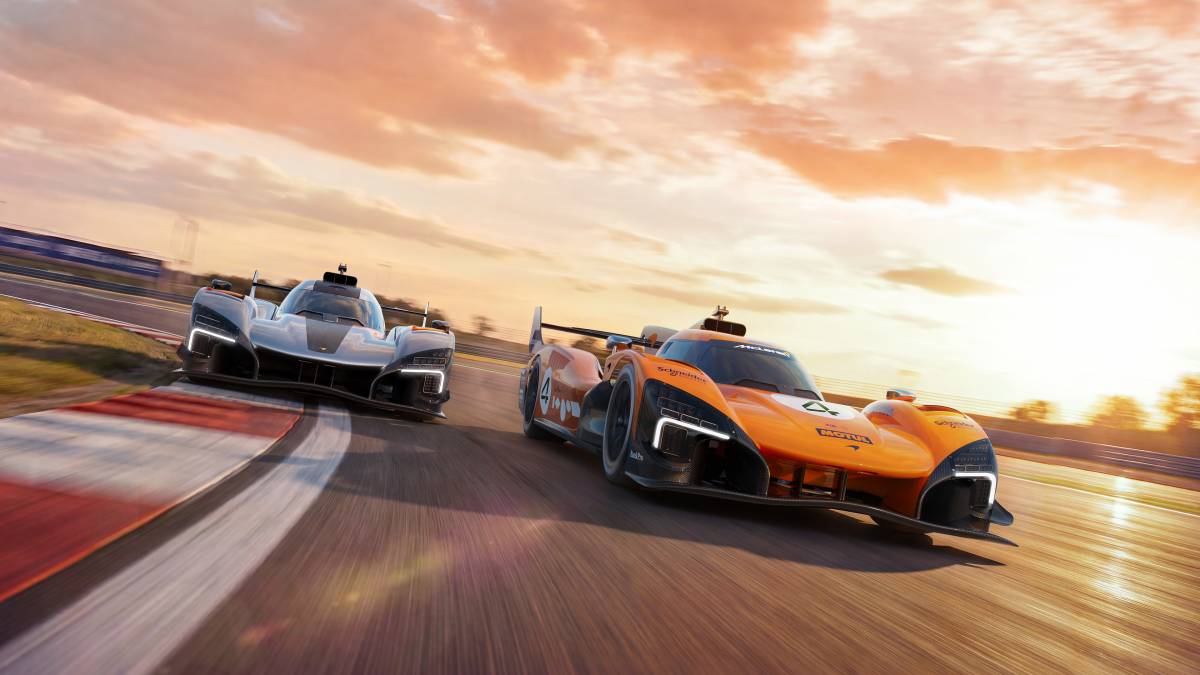


There are moments in motorsport when a new car is not merely a machine. It is a declaration, a warning and a resurrection combined.
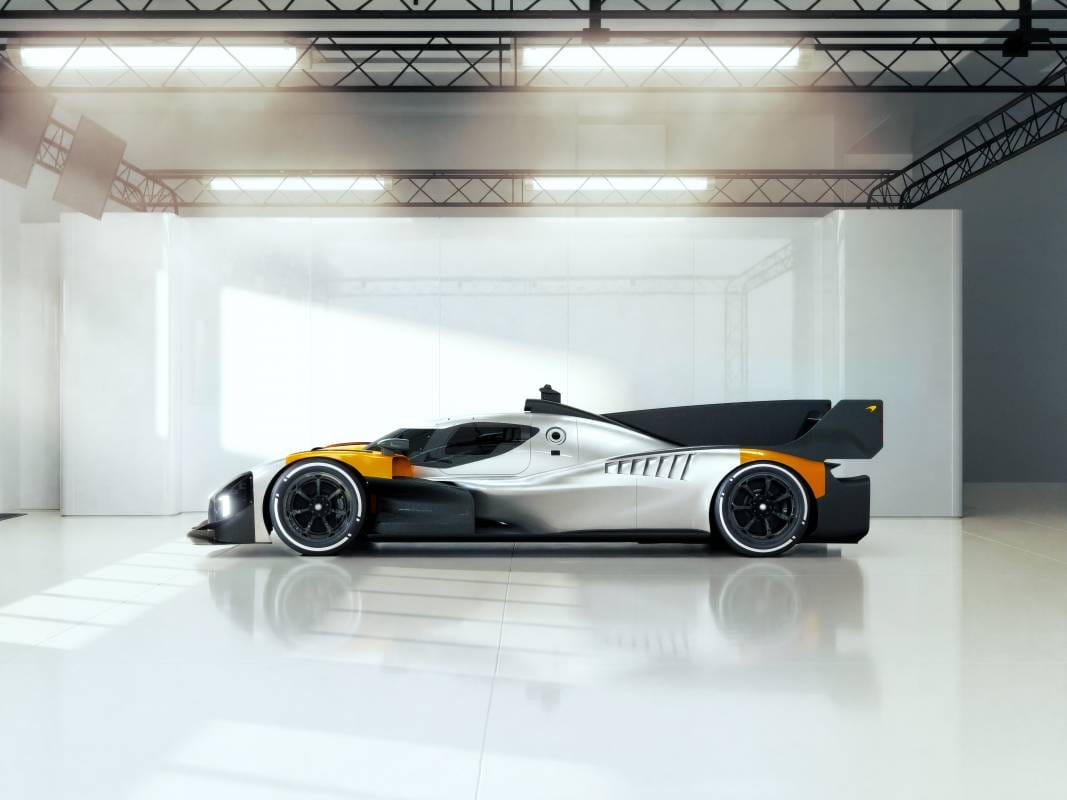
McLaren’s newly unveiled MCL-HY Hypercar feels unmistakably like all three.
After decades away from the top class of endurance racing, McLaren has officially revealed the car that will carry the famous papaya colours back to the highest level of the FIA World Endurance Championship in 2027, and back to the unforgiving theatre of the 24 Hours of Le Mans.
But this is not simply a return. It is the beginning of something far more ambitious.
McLaren is openly positioning itself for another assault on motorsport’s elusive Triple Crown: victory at the Monaco Grand Prix, the Indianapolis 500 and Le Mans itself.
Few manufacturers can even dream of such a challenge.McLaren already competes at the summit of Formula 1 and IndyCar. Now Le Mans returns to complete the triangle. And suddenly the impossible begins to look dangerously realistic.
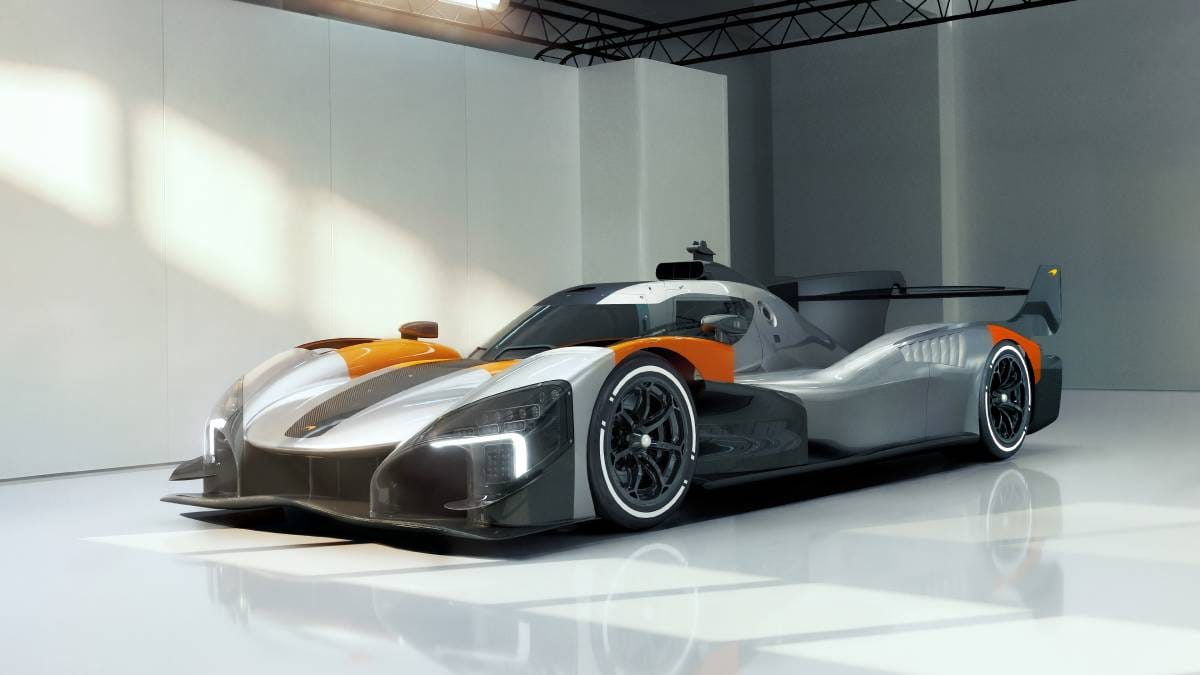
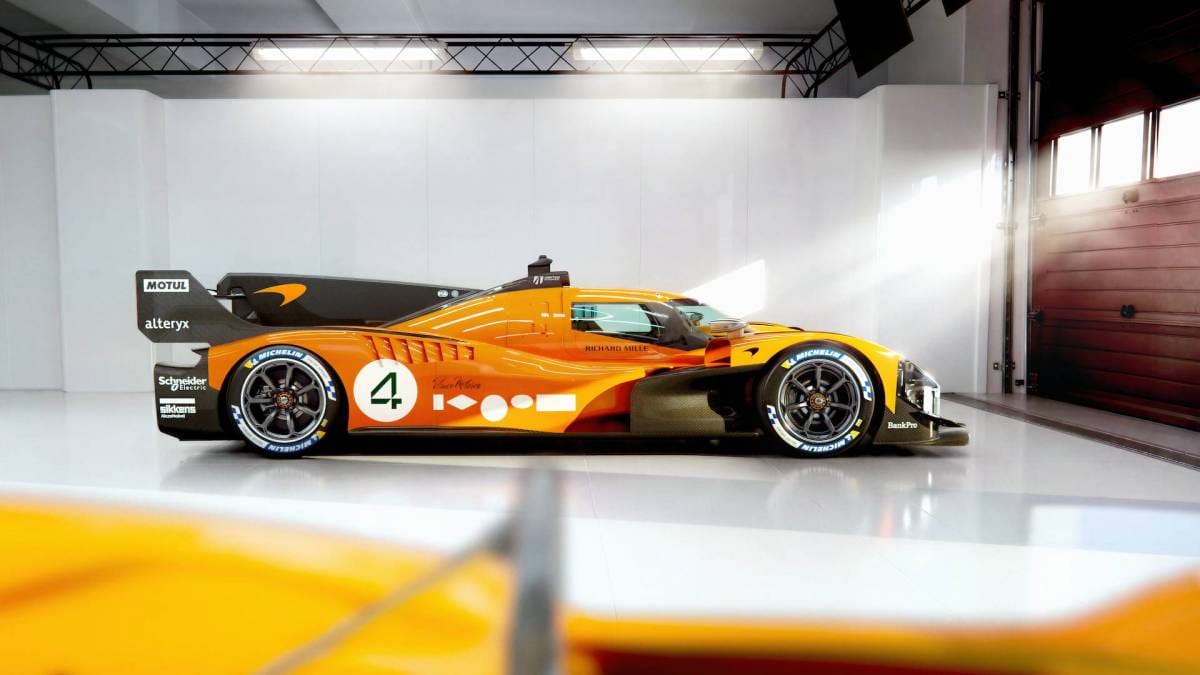
The newly revealed MCL-HY arrives wrapped in a dramatic test livery inspired by the legendary McLaren M6A, a deliberate nod to Bruce McLaren’s original sports-car ambitions from the late 1960s. The connection is deeply symbolic.
Long before modern hypercars became rolling aerospace laboratories, McLaren dominated Can-Am with brutal orange machines that rewrote ideas about speed and engineering. The company’s famous 1995 victory at Le Mans with the McLaren F1 GTR only reinforced the mythology.
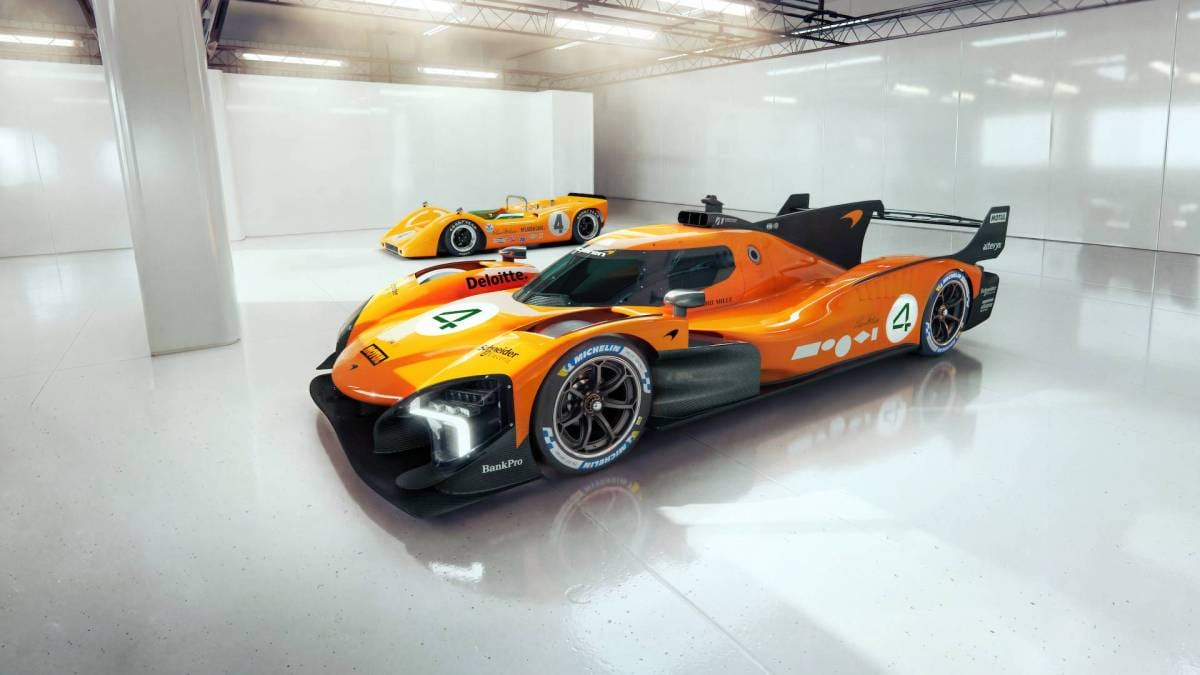
Now, thirty-two years later, McLaren is attempting to write the next chapter.
The MCL-HY combines a lightweight carbon-fibre monocoque with a twin-turbocharged V6 and hybrid MGU system producing up to 707PS.
Numbers alone, however, rarely explain endurance racing. Le Mans is not conquered through raw speed alone.
It is conquered through efficiency, reliability, strategic patience and the ability to survive a full day of mechanical violence at over 300km/h.
McLaren’s engineers therefore appear obsessed not only with outright performance, but with balance.
At just 1,030kg minimum weight, the MCL-HY has been engineered as much for endurance as for attack.
Testing begins immediately.
McLaren has assembled an intriguing development line-up, including factory driver Mikkel Jensen alongside Grégoire Saucy, Richard Verschoor and experienced endurance specialist Ben Hanley.
McLaren’s return to Le Mans
In Monaco, HelloMonaco sat down with the team behind McLaren’s new Hypercar programme. The project is already in motion, but this was a moment to bring everyone together and talk about where things stand and what comes next.
Monaco felt so right for this conversation. It’s a place closely connected to the world of motorsport, with many of its people based here or passing through. It’s also home to Mikkel Jensen, one of the first drivers signed for McLaren’s Hypercar programme, which made the setting feel even more natural.
Mikkel Jensen, James Barclay, and Neil Underwood each play a different role in McLaren’s return to endurance racing.
It’s still early, but the direction is already clear.
HM : McLaren returning to Le Mans feels historic. As one of the first drivers signed for the project, does it already feel like you’re part of something bigger than a normal racing programme?
Mikkel Jensen: It’s definitely an emotional feeling and an honour. We know how much work has already gone into the project over several years. From my side, I’ve also been involved for a long time with the engineers — simulator work, development, and preparation before we even saw the car for the first time. So yes, it already feels like something quite special.
HM: What’s the first thing you noticed about the MCL-HY compared to other Hypercars you’ve driven?
Mikkel Jensen: My first impression was really positive. We’ve only had it out once, on a relatively small track that’s not part of the championship, so it’s still early to compare properly. But the feeling on day one was very good, and as a team we had a smooth start to the testing.
HM: As a driver, what’s been the biggest challenge in developing a completely new Hypercar?
Mikkel Jensen: From a driver perspective, I’d say the challenge is actually less than on the engineering side. We’re there to give feedback — what works, what doesn’t — and then the engineers take all of that and turn it into development. There’s a lot going on in terms of software, aerodynamics, and the engine, so the complexity is really on their side at this stage.
HM: Does the MCL-HY feel more aggressive or more precise when you really start pushing it?
Mikkel Jensen: It’s still early days, so it’s hard to give a full judgement. But the first feeling was very good. It felt stable and well put together on the first run, and I’m happy with how the initial test went.
HM: McLaren returning to Le Mans feels historic. Does this project already feel bigger than a normal racing programme?
James Barclay: Yes, it’s a very exciting moment for McLaren. We have a strong history in sportscar racing, and of course an incredible Formula 1 heritage as well. Bruce McLaren originally built the team with a broad racing vision, including sports cars and Can-Am success.
This return feels timely, especially with how strong the Hypercar era is now — so many manufacturers are competing at the top level. It really is a golden era for endurance racing.
HM: What was the main vision behind McLaren returning to Le Mans?
James Barclay: It’s about reconnecting with that original DNA of McLaren in endurance racing. Bruce McLaren always had that ambition in sports cars, and the brand has history at Le Mans too. We want to bring that back into the modern era in a proper way.
HM: What is the biggest challenge in building a competitive Hypercar team today?
James Barclay: The biggest challenge is building a team from scratch while still protecting our commitments in Formula 1 and IndyCar. You can have the best tools in the world, but it’s all about people — hiring the right talent and building the right structure is absolutely key.

“Building something for customers and the future”
HM: How do you attract people to the car and present the programme?
Neil Underwood: We introduced the programme last year alongside the car. Once customers saw it, the response was very strong. It’s a track-only car, but we’ve built an experience around it.
The idea is simple: the owners come and enjoy the driving, and everything else is taken care of for them. We handle logistics, travel, car preparation, maintenance — everything. They don’t need to worry about anything outside of the driving itself.
Plus A Car For Clients To Drive!
Yet perhaps the most fascinating element of the entire announcement is not the race car itself. It is what McLaren intends to sell alongside it.
In parallel with the Le Mans programme, McLaren Automotive has unveiled the MCL-HY GTR, an ultra-exclusive track-only derivative being offered privately to select clients through something called “Project: Endurance”.
And this is where the announcement becomes uniquely McLaren.
Rather than producing a diluted road version for collectors to display under garage lighting, McLaren has created something much closer to a private racing experience.
The MCL-HY GTR is being developed simultaneously with the real race car; owners receive a lighter, more visceral machine powered purely by the 2.9-litre twin-turbocharged racing engine producing around 730PS.
McLaren says owners will not simply buy a car. They will effectively join the programme itself through Project Endurance. Clients will also participate in a two-year driving programme across major international circuits, complete with professional coaching, dedicated engineers and full pit-crew support.
LeMans and the Triple Crown
When McLaren last entered Le Mans as a constructor in 1995, it won immediately, a feat almost absurd in retrospect.
The tone of this new launch is unmistakably aggressive.
“McLaren Racing now has three race cars ready to contest the biggest motorsport series in the world,” declared Zak Brown. “This means McLaren, its partners and fans can challenge for the Triple Crown together.”
It is McLaren attempting to reconnect every strand of its racing identity, Formula 1, IndyCar and Le Mans, into one enormous global narrative.
And in an era where motorsport increasingly depends on spectacle, mythology and legacy as much as engineering, that may prove to be McLaren’s most powerful weapon of all.