
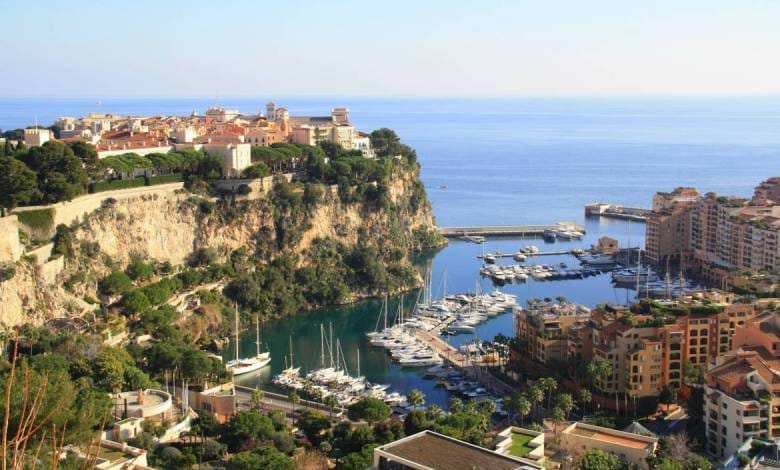


Monaco may be the world’s second-smallest country, but its passport continues to open doors on an impressively large scale.
According to one recent passport report from PassportReports.com on which the following figures are based, Monegasque citizens enjoy simplified access to 167 destinations, representing 84.3% of those examined. That total comprises 106 visa-free destinations, 51 offering visas on arrival or other simplified procedures, and 10 requiring electronic travel authorisation.
Europe remains almost borderless
Unsurprisingly, Europe is where the Monegasque passport is at its strongest. The report records complete regional coverage, with 44 of 46 European destinations accessible without a visa.
The United Kingdom requires an Electronic Travel Authorisation, or ETA, for visits of up to six months. Russia is also accessible through its electronic visa system, although this must be obtained before departure and should not be confused with a visa on arrival. Russia’s unified e-visa allows a maximum stay of 30 days.
Monaco’s privileged European mobility reflects the Principality’s unusually close relationship with France and the Schengen area. Monaco is neither a member of the European Union nor formally a signatory to the Schengen Agreement, yet France handles its immigration arrangements and thus the Principality effectively forms part of the Schengen travel zone via France’s relationship.
Easy access from the Gulf to North America
The passport also performs exceptionally well across the Gulf. Monegasque travellers can enter the United Arab Emirates without a visa, while Bahrain, Qatar, Oman, Kuwait and Saudi Arabia offer electronic visas or other simplified entry procedures.
Access across the Americas is similarly extensive. The report gives Monaco a coverage rate of 95.7% in North America, 93.8% in the Caribbean and 91.7% in South America.
Monegasque citizens can travel to the United States for tourism or business under the Visa Waiver Program, but they must obtain an ESTA before departure and may remain for no longer than 90 days. Canada uses its own eTA system, with visitors normally admitted for stays of up to six months.
Nicaragua is identified as the principal North American exception requiring a visa or e-visa, while Guyana occupies a similar position in South America.
Africa presents the greatest obstacles
The picture becomes more mixed further afield. Asia still offers an access rate of 80%, with 20 destinations completely visa-free and a further 18 available through simplified arrangements. Kazakhstan, Kyrgyzstan, Uzbekistan and Tajikistan are among the Central Asian countries permitting visa-free entry, while Turkmenistan continues to require a visa.
Africa remains the most restrictive major region for Monegasque travellers. The report records an access rate of 68.5%, with 17 destinations requiring a visa in advance. Nevertheless, 12 African destinations are visa-free and another 22 offer visas on arrival, e-visas or comparable procedures.
Oceania stands at 85.7%, while the broader Middle East records 82.4%.
A passport’s strength depends on how it is measured
Passport rankings should always be read with a degree of caution. Different indexes count destinations and electronic visas differently, while some group countries with equal scores and others separate them using additional criteria. So depending which index you consult you might see Monaco’s passport ranked anywhere from 12th in the world to 31st in PassportReports.com
The2026 Henley Passport Index puts the Principality around 12th, with access to approximately 177 destinations without obtaining a conventional visa beforehand.
A striking imbalance in reciprocity
Passport Reports also highlights the difference between possessing a Monegasque passport and entering Monaco as a foreign visitor.
Monaco ranks only 92nd out of 199 destinations for openness to foreign passports.
For such a geographically tiny state its passport strength is remarkable. A Monegasque passport provides almost unrestricted movement across Europe, very broad access throughout the Americas and the Gulf, and increasingly convenient electronic entry procedures elsewhere. Its exact position may change from one index to another, but its status as one of the world’s stronger travel documents is beyond doubt.