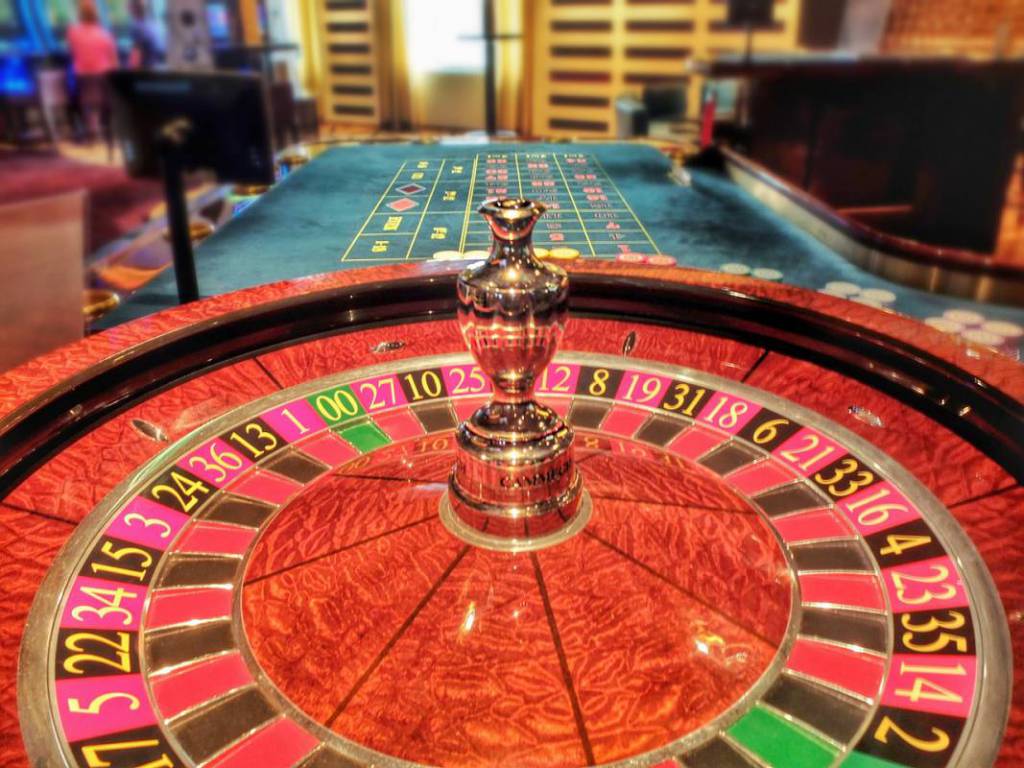


That wheel, with 37 compartments, remains familiar in today’s live casino studios. Its route from Homburg to Monaco explains how a commercial decision by two brothers became associated with the European game. Cameras now carry its results to screens, more than 160 years after Blanc began work in the Principality.
Gambling can cause financial and personal harm. For concerns about your own or someone else’s gambling, support is available on 0808 8020 133 in England and Scotland, 0808 2819 265 in Wales, and through the US National Problem Gambling Helpline on 1-800-MY-RESET. Elsewhere, contact a local specialist gambling-support service.
The Blanc Brothers Start at Homburg
François and his twin brother Louis opened their casino at Homburg, now Bad Homburg in Germany, on 23 May 1841. They began in the Brunnensälchen, moving into the Kurhaus two years later.
During the 1840s, the brothers established roulette with one zero rather than two. With otherwise identical payouts, removing the double-zero compartment reduces the house advantage, but does not eliminate it.
The brothers also spent money beyond the casino doors. Their investments included gas lighting and a railway connection with Frankfurt, improvements that helped the surrounding spa town develop alongside the gaming business.
For François, Homburg provided experience in bringing visitors to a place and supplying the services they needed once they arrived. He would take that approach south, along with single-zero roulette, when Monaco offered him his next undertaking.
A New Home on the Plateau des Spélugues
Blanc arrived in spring 1863, during Prince Charles III’s development of a new quarter in Monaco. The casino opened on the Plateau des Spélugues that spring, and single-zero roulette became one of its defining games.
Buildings followed around it. The Hôtel de Paris opened in 1864; the Café Divan, later the Café de Paris, opened in 1868. Accommodation, food and meeting places gave the growing district the services needed to receive visitors.
Getting those visitors to Monaco was equally important. Historian Mark Braude, who examined the casino archives, identifies the connection to the French railway network as vital to Monte Carlo’s development. The US Department of State’s historical account also links Monaco’s growing tourism in the late 1860s to railway construction.
The work echoed Blanc’s earlier experience at Homburg. Casino operations depended on transport and the businesses around them. In Monaco, these developed together, giving the roulette format an audience drawn from beyond the Principality and helping establish the district’s international reputation.
Monte Carlo Becomes Associated with the European Wheel
On 1 June 1866, the district received the name Monte Carlo. Railway development improved access during the late 1860s, and tourism increased as the casino attracted visitors.
Monte Carlo became an international showcase for single-zero roulette, helping establish the format as the European standard. The association endured as the district grew, linking its name with a wheel that had first been established at Homburg.
Ralph Nevill recorded the equipment in his 1909 book Light Come, Light Go. His description gives 37 compartments: 18 red, 18 black and zero. He also noted zero’s position between 32 and 15.
Alongside the numbers, Nevill described the daily attention paid to the wheels. Staff checked them with a spirit level before play, and an employee verified their adjustment.
These details give a practical view of the tables. The wheel required careful preparation, and its operation depended on the people responsible for maintaining it. That work would remain relevant when roulette moved into filmed studios.
From the Casino Room to the Studio
A modern rules document hosted by the Nevada Gaming Control Board describes one implementation of live roulette: a live dealer operates a physical single-zero wheel with 37 compartments under European roulette rules. The document describes that game, rather than a universal requirement for all live roulette.
Its wheel matches the basic configuration Nevill described. In this format, cameras transmit the physical game to screens, while digital interfaces present betting options and results. Other live roulette variants can use different wheel configurations or payout rules.
Modern oversight covers the equipment and the people operating it. The Gambling Commission regulates online gambling offered to consumers in Great Britain. Its standards for live-dealer studios require fair, independently auditable operations, with guidance on equipment integrity, training, surveillance, access controls and records.
The single zero remains a visible connection to Blanc’s nineteenth-century business. From Homburg to Monaco and into live studios, the same basic wheel has served successive generations of the European game.
Gambling can cause financial and personal harm. For concerns about your own or someone else’s gambling, support is available on 0808 8020 133 in England and Scotland, 0808 2819 265 in Wales, and through the US National Problem Gambling Helpline on 1-800-MY-RESET. Elsewhere, contact a local specialist gambling-support service.