



Le Bellet, a vineyard in the city
Renowned worldwide, fine, delicate and unique, these days they are gracing Michelin-starred tables and even princely weddings. Showing to what extent this AOC (Appellation d’Origine Contrôlée) has earned its reputation over time, the wedding of Prince Albert and Princess Charlène was indeed celebrated with no other but the Bellet wine. Harvested in the municipality of Nice, Bellet is also the only urban AOC labelled vineyard based entirely within the city limits.
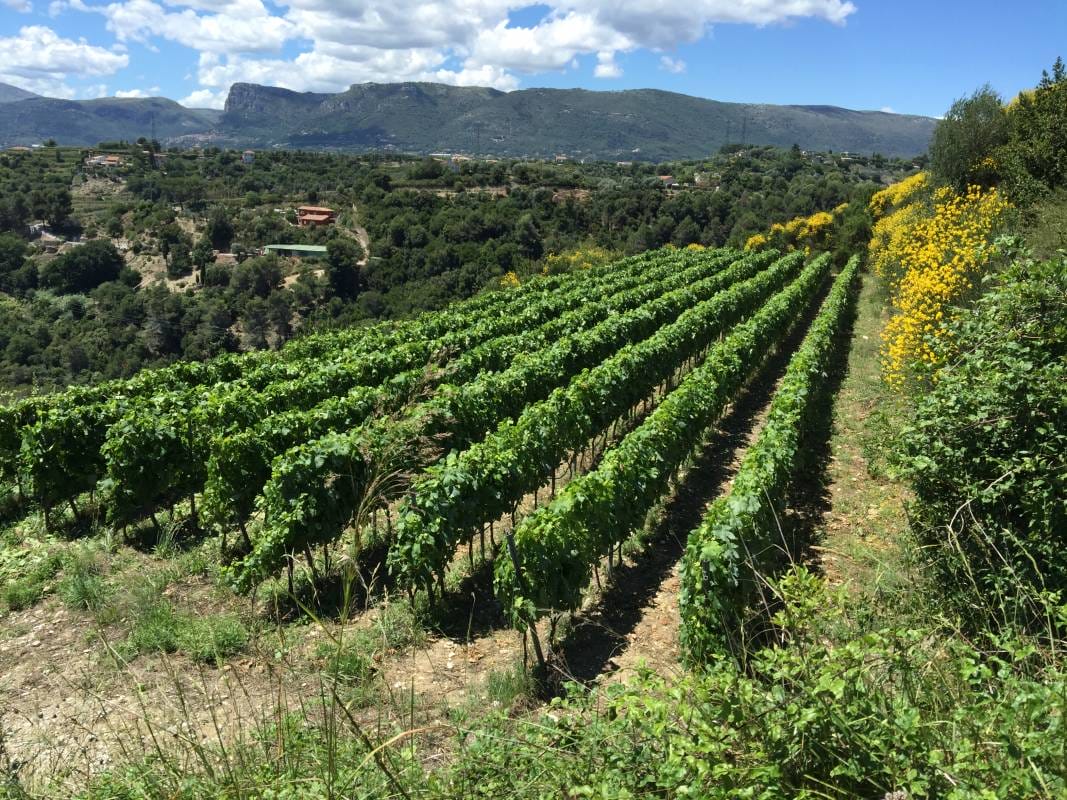
Planted on terraces overlooking the Var River left bank, northwest of Nice city centre, these vines are enjoying an altitude of between 200 and 400 metres, with an extremely favourable climate. Bellet thus comes from a very particular terroir, with its soil often described as a pudding (mixture of gravel, sand and pebbles) rich in limestone and stony elements, encouraging drainage and mineral content.
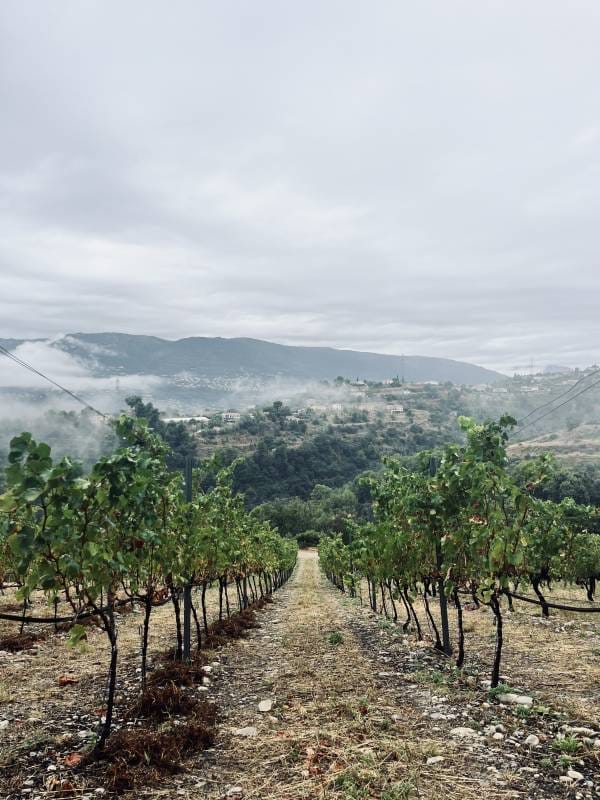
This alluvial soil is also making the best of the sea and the Alps neighbourhood. With the winds blowing from the Mediterranean towards the Mercantour reserve and reversing daily around 10 a.m, the sun is ever-present here.
These three assets have allowed these wines, produced in small quantities, to acquire a certain prestige. 650 hectares are dedicated to this AOC label, but only 60 hectares are actually planted with vines here. Residential houses have been built on these lands, some of which were left fallow. In total, the production is therefore limited to 120,000 bottles per year.
These rare, organic wines are now shining brightly among the greatest. All in all, Bellet wines are produced by two privately owned châteaux (Château de Crémat, associated with Domaine de Toasc, and Château de Bellet) and independent winemakers sharing the Clos St Vincent, Saint-Jean, Via Julia Augusta, Collet de Bovis, Vinceline and La Source estates.
A newcomer demonstrating a strong appeal for this terroir, has now attracted the most discerning connoisseurs. This year the Bellet wine family has indeed expanded with a new addition. Having fallen in love with these Nice vineyards, the winemaking couple, Gérald Lafont and Julie Rouffignac, released their first vintage in the Bellet appellation. “Clos des Œillets” (Vineyard of Carnations) is a nod to this land’s history where flowers once grew. This mineral white wine “turned towards the Méditerranée” has delighted the newcomers, already owning another estate in Châteauneuf-du-Pape. “My mother is from Nice, and I wanted to do something on this beautiful terroir. As soon as I was able to purchase two hectares, I jumped at the occasion.” Gérald Lafont is now cultivating about a hectare at the Arbousset estate, which he entirely replanted.
Two grape varieties specific to Bellet only: Braquet and Folle Noire
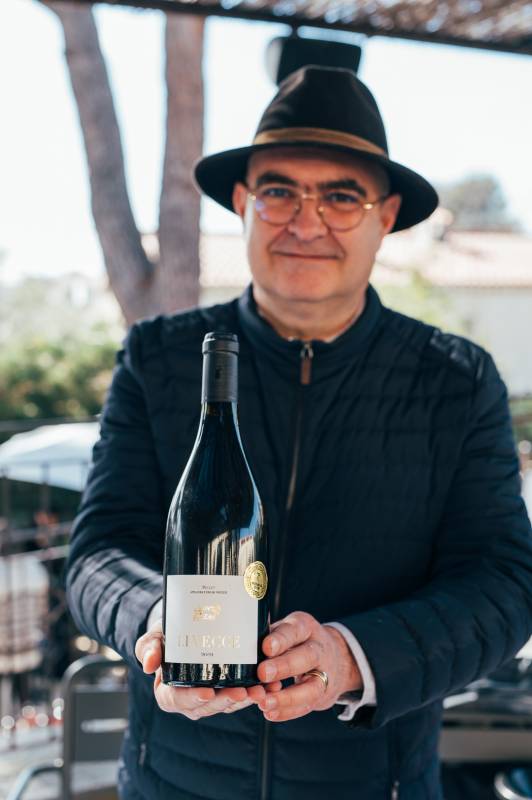
Unsurprisingly, Bellet wines stand out for their beautiful bouquet and mineral content. This distinctive character is due to two grape varieties specific to the hills of Nice only. “Braquet produces a rosé characterized by floral notes, particularly rose and violet. Folle Noire gives a red with accents of ripe berries and Morello cherries.” New president of the Bellet appellation defense and management association, owner of the Saint-Jean estate, Jean-Patrick Pacioselli is delighted with its uniqueness. Folle Noire is an old Provençal grape variety producing aromatic, age-worthy wines.
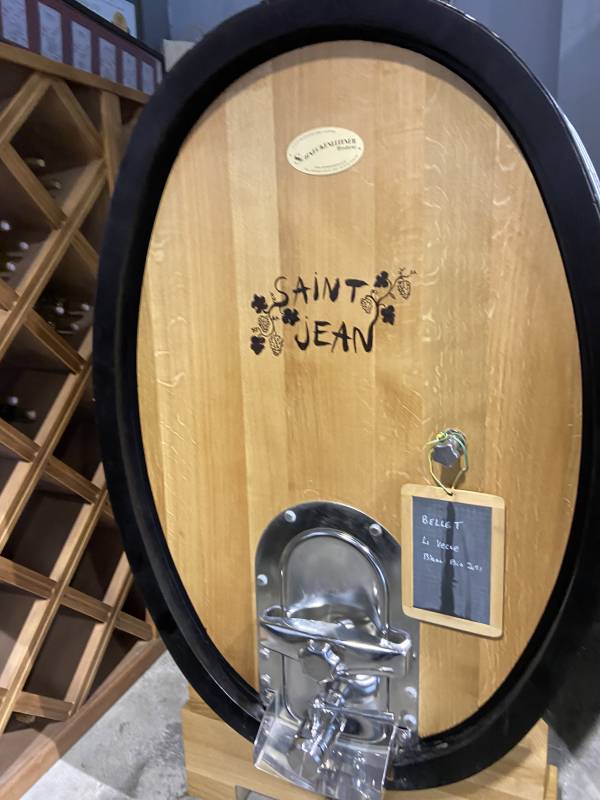
As to the whites, Rolle particularly stands out. This is a Mediterranean grape variety famous in Italy as Vermentino. Aged the Burgundian way, in large wooden barrels (foudres), this white is becoming a truly gastronomic wine. “It is a good pairing to foie gras, white meats, cheeses or truffle dishes,” explains the president of the Bellet wines association, with one of his goals adding “Vin de Nice” to its many distinctions. The future of this important project, however, lies in the goodwill of the French National Institute of Origin and Quality (INAO).
Another long-standing estate is Collet de Bovis, in the Spizzo family. Gianni Spizzo is not a winemaker like any other. A university professor, specialist in Italian literature, theatre director and a part-time psychoanalyst, he landed into winemaking a bit by chance. Together with his wife Michèle, they are now producing some 10,000 bottles of Collet de Bovis, in all three colours. Gianni greatly praises the subtle body of these wines. Not highly “alcooleux” as such, due to global warming they can develop up to 15% alcohol content.
“Thanks to a unique grape variety, the Braquet, this rosé truly stands out from the Côtes de Provence wines, with a preservation capacity of up to a few years. Aged in barrels for twelve months, local red wines acquire up to 10 years of longevity. Thanks to aging and a second fermentation, the barreled white wines also lose in acidity and gain nicely in fullness.”
Regularly recognized at various trade shows and fairs, the Bellet winegrowers are rightly proud of their products. These days, however, they are facing yet another challenge, that of forest pigeon invasion. Normally forest bound, over the past three or four years these birds have proliferated well beyond its limits. Irresistibly attracted to the perfectly ripe, sweet grapes, last year they entirely ransacked one of Spizzo family plots. Yet another recognition of the local grapes’ excellence, but the one that the winegrowers would happily do without!
LOCAL WINEMAKING ESTATES:
SAS Château de Bellet, 482 chemin de Saquier
Via Julia Augusta, Saint-Roman-de-Bellet
Domaine de Vinceline, Famille Dauby, 305 bis chemin de Saquier
Domaine de la source, 303 chemin de Saquier
Le Clos Saint-Vincent, Collet des Fourniers, 516 chemin de Crémat
Domaine Saint-Jean, 34 chemin de la Pouncia
Château de Crémat, 442 chemin de Crémat
Domaine de Toasc, 213 chemin de Crémat
Collet de Bovis, Le Fogolar, 370 chemin de Crémat
Domaine Arbousset, chemin de Saquier
Le Clos Montmartre: Paris in a Bottle
The Butte-Montmartre is certainly the cosiest, most visited and scenic place in the French capital. Countless films have been shot in this magical spot, with its steep streets reminiscent of Parisian countryside. Its taverns are still evoking the silhouettes of Modigliani and Picasso, whilst its olden day shops are selling fabric by the metre…
Montmartre is thus an incredible blend of modernity and tradition. Talking about the latter, held in October, the grape harvest festival is demonstrating Montmartre’s unwavering commitment to its folklore. A traditional tasting of the latest vintage here is preceded by vibrant parades of colourful characters representing various wineries and the “Free Commune of Montmartre”! The wine is then auctioned, with the profits donated to the Butte-Montmartre management association, supporting its social causes. The history of “free commune” goes back to between the two world wars. Created by Montmartre artists, it was meant to maintain a typical village, festive atmosphere in this neighbourhood.
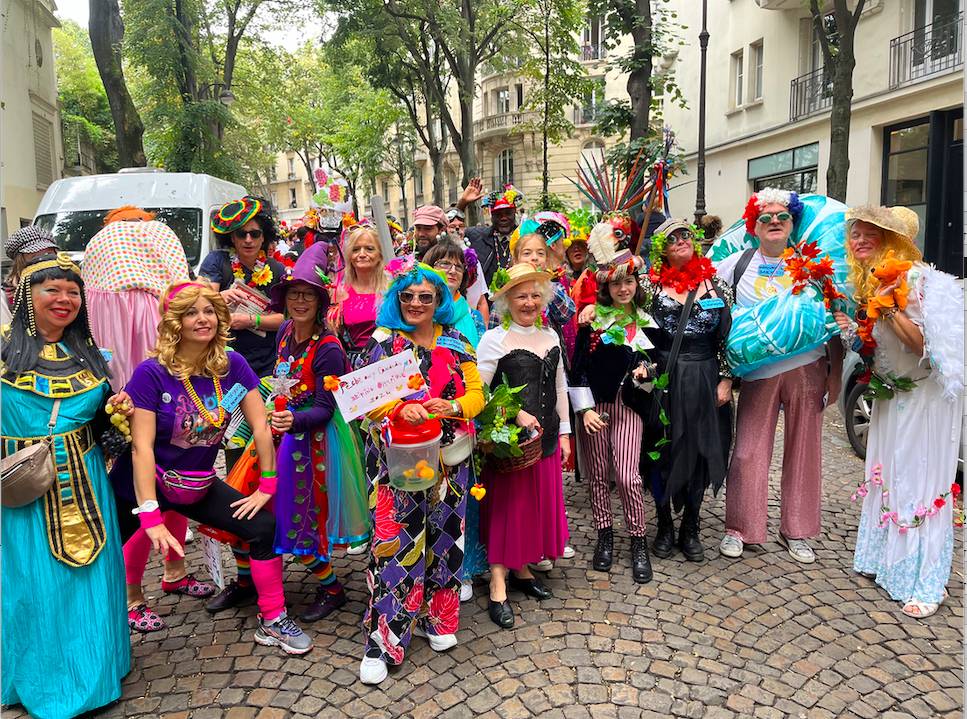
Hard to imagine, but Montmartre is actually a proper wine-growing territory. It certainly doesn’t have much in common with the prestigious Burgundy or Bordeaux terroirs, but since 1933 it owns an official Le Clos Montmartre appellation. And it has quite an ancestral history indeed… Montmartre wine is believed to have been drunk as early as the times of the Gallo-Roman Empire. The first written record of the Butte goes back to year 1000. Over the centuries, however, these small vineyards were threatened quite a few times. Once destroyed by devastating storms, in later years Montmartre was in danger from insatiable real estate developers. In the 1930s, the vineyard’s future was thus compromised by a vacant lot being slated for a major real estate project. The residents rallied against it, however, replanting the vines to preserve the landscape and revive their winemaking traditions.
Nowadays, the city’s gardeners lovingly tend to this unique heritage. Some 1,760 vines of different varieties thus grow in the French capital. But cultivating them is anything but ordinary. Facing north and planted on sandy soils, Clos Montmartre must contend with an urban environment and a sometimes unpredictable climate. And yet another original twist — the grapes are pressed and naturally transformed into wine in the very basement of the 18th arrondissement of Paris town hall. The winemaking is thus ensured in this unusual venue right up to the bottling stage. While some are getting married and others are renewing their passports, the red wine is macerating and fermenting for about ten days in the town hall cellars. It will then rest in barrels for eleven months, from late October to August. All this without the slightest addition of sulphur.
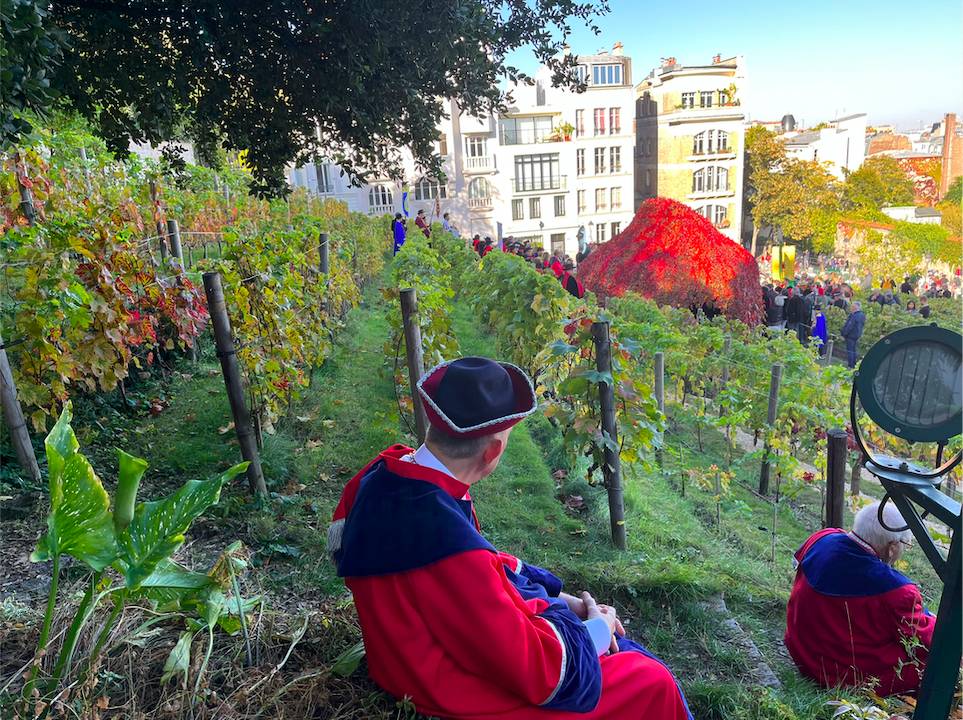
Montmartre is thus a natural wine with an increasingly higher alcohol content due to global warming and greater sun exposure. Growing at the very foot of the Sacré-Cœur, far from the hustle and bustle, relatively sheltered from pollution, these vineyards are thus a hint to the past whilst promising a more peaceful future.