


There is something undeniably theatrical about a bottle of Champagne crossing a crowded nightclub crowned with a fountain of sparks.
It says celebration. Birthday. Victory. Another extravagant night’s celebration.
But from now on, Monaco’s message is rather simpler: the show is not worth the flame.
The Principality has formally tightened its fire-safety rules to prohibit naked flames in public areas of restaurants, bars, dance venues and gaming establishments, turning what had already become good practice among some of Monaco’s biggest hospitality operators into a rule applying across the sector.
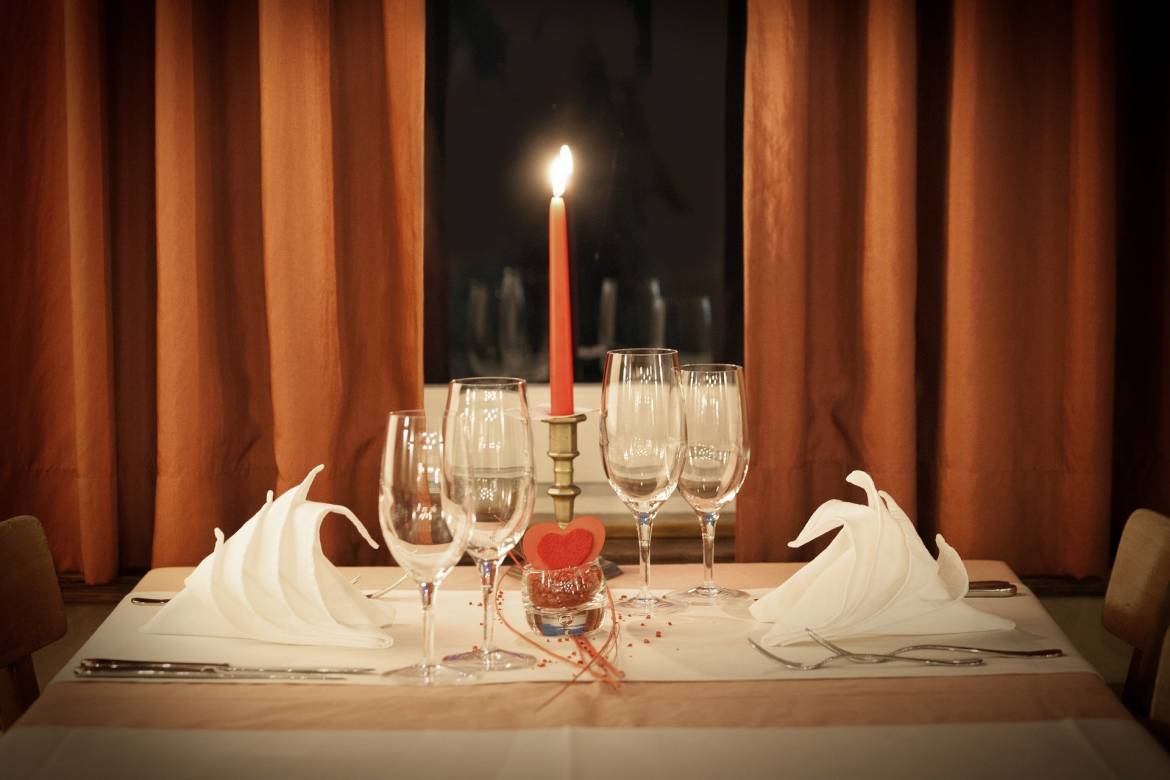
Candles, sparklers, Bengal lights and other devices producing flames, combustion or ignition for decorative, festive or even culinary purposes are caught by the new provisions.
Behind what might appear to be a relatively small change in nightlife etiquette lies a much more sobering story.
When a Spark Becomes a Disaster
On New Year’s Eve, hundreds of kilometres from Monaco, celebrations were underway at Le Constellation in the Swiss ski resort of Crans-Montana.
Within moments, celebration became catastrophe.
Investigators believe sparkling candles carried close to the ceiling ignited soundproofing material. Fire spread with devastating speed through the crowded venue.
The eventual toll was 41 dead and 115 injured, many of them young people.
The tragedy inevitably raised an uncomfortable question far beyond Switzerland: how many familiar rituals inside bars and clubs involve risks that have simply become invisible because we have seen them so often?
Monaco did not wait long to answer.
Within weeks of the disaster, Minister of State Christophe Mirmand called for the Principality’s regulations to be strengthened and for pyrotechnic devices to be prohibited in enclosed establishments.
At the same time, Monaco stepped up inspections of nightlife venues, including visits made without warning while establishments were actually full of customers.
That distinction matters.
An emergency exit that looks perfectly compliant in an empty nightclub may tell a different story at 1am, surrounded by tables, chairs, decorations, staff and hundreds of guests.
Inspectors have therefore been looking not simply at paperwork, but at the conditions in which Monaco’s nightlife actually operates: escape routes, alarms and detection equipment, fire-resistant materials, decorations and the procedures staff would follow if an evacuation suddenly became necessary.
Monte-Carlo Had Already Begun Dimming the Sparks
For Monaco’s largest hospitality operator, the disappearance of the traditional Champagne sparkler is not entirely new.
Société des Bains de Mer President-Delegate Stéphane Valeri revealed after the Swiss tragedy that SBM had largely stopped using Bengal lights in its nightlife establishments some time ago.
Their replacement could hardly be more Monte-Carlo: LEDs.
On the rare occasions when a real pyrotechnic effect was considered indispensable, Valeri said its use had been exceptionally controlled and required the agreement of the Government and the relevant safety commission.
SBM also has an unusually substantial internal fire-safety operation. Valeri has said the group employs around 120 people in its private fire-security service, operating through six control posts.
The significance of Monaco’s latest move, however, is that fire safety cannot depend upon whether an individual operator happens to have SBM’s resources, policies or experience.
What was corporate caution now becomes a Principality-wide standard.
Not Every Flame Is Absolutely Forbidden
Monaco has stopped short of saying that a naked flame can never again appear inside one of the establishments concerned.
Exceptions remain possible, but they will be exceptions in the genuine sense of the word.
Individual authorisation may be granted by the Direction de la Prospective, de l’Urbanisme et de la Mobilité (DPUM), following consideration by Monaco’s Technical Commission for Hygiene, Safety and Environmental Protection and subject to additional precautions.
In other words, the presumption has been reversed.
Instead of a flame being acceptable unless someone identifies a particular danger, it is prohibited unless a convincing case can be made for allowing it safely.
A Restaurant Is Not Always Just a Restaurant
There is another interesting detail in Monaco’s tougher approach, and one that could prove important for operators.
The Government is looking at what an establishment actually does, not simply what it calls itself.
A venue may have “restaurant” written above the door, but if it regularly employs DJs, uses amplified music, accommodates dancing or effectively transforms itself into a late-night entertainment venue, authorities may apply the more demanding safety standards associated with that activity.
That closes an obvious potential loophole.
In a Principality where restaurants, bars, beach clubs, hotels and nightclubs increasingly blur into one another as evening turns into night, the label on the operating licence does not necessarily describe what is happening inside at midnight.
The authorities want the safety regime to reflect reality.
Monaco’s Advantage: Knowing Almost Every Door
There is also a peculiarly Monegasque dimension to the story.
Monaco is small.
For fire prevention, that can be an advantage.
The establishments concerned are known to the authorities; they can be inspected in real operating conditions; and the Fire and Emergency Service, police and technical authorities can work within an exceptionally compact territory.
Monaco’s existing regime was already considerably stricter than simply checking for fire extinguishers and illuminated exit signs.
Following Crans-Montana, SBM stressed that the type of highly flammable material implicated in the Swiss disaster would not be permitted under Monaco’s regulations. Monaco fire officials have similarly emphasised the importance of preventing ignition in the first place, limiting the spread of smoke and flame, and ensuring rapid evacuation.
The new ban adds another layer to that philosophy.
Remove the ignition source wherever reasonably possible.
The End of a Very Small Spectacle
Nobody goes to Monte-Carlo for an absence of spectacle.
There will still be Champagne. There will still be music, birthdays, DJs, dancing and bottles arriving at tables with enough ceremony to announce their progress across the room.
They may simply arrive illuminated by LEDs rather than fire.
The sparkling bottle weaving through a packed room always looked like a harmless piece of theatre.
Crans-Montana demonstrated, with unbearable consequences, how quickly a few seconds of theatre can become something else entirely.
Monaco has decided not to take that chance.