



Every summer the Principality welcomes royalty, superyachts, elite athletes, Formula One stars, cyclists, equestrians and hundreds of thousands of visitors.
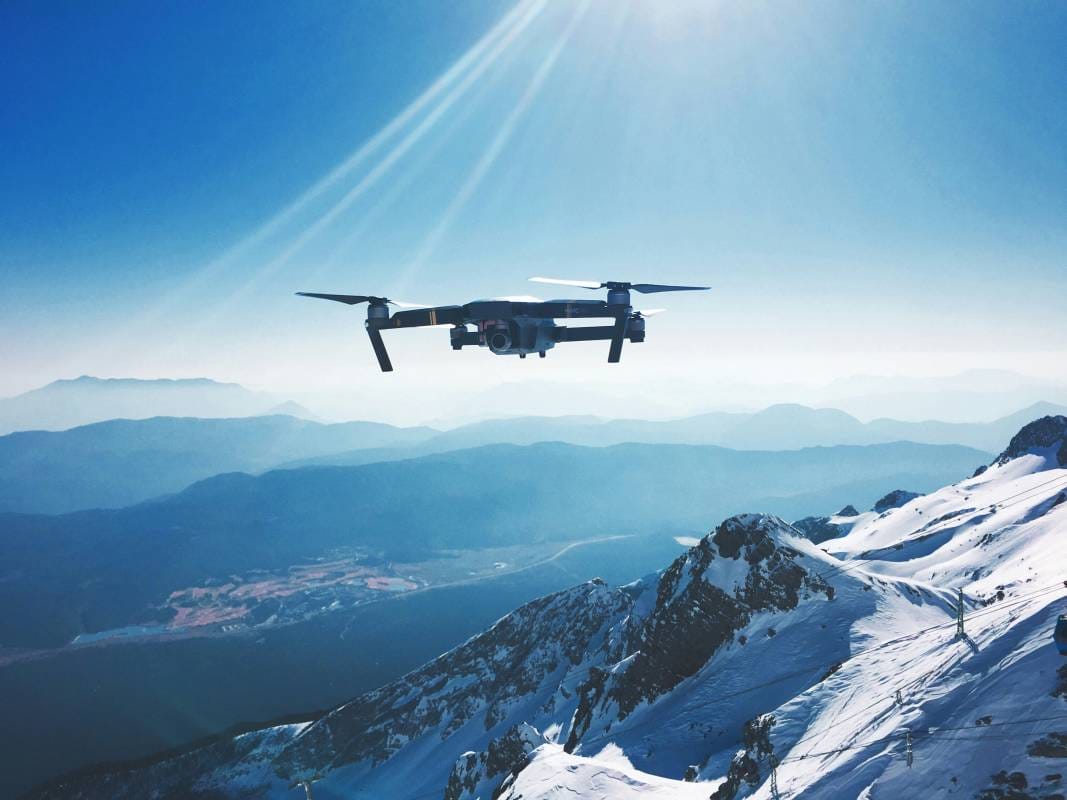
In a move that reflects the growing challenge of managing security in one of the world’s most densely populated countries, Monaco has introduced a new series of temporary drone restrictions covering many of its largest public events throughout 2026. Rather than banning drones outright, the Principality has adopted something far more characteristic of Monaco: carefully controlled access.
The result is a calendar in which the skies will periodically fall silent.
A Small Country with Big Security Demands
Monaco measures barely two square kilometres, yet it regularly hosts events watched by millions around the globe.
That concentration of people, dignitaries and international attention creates unique security demands. A recreational drone flying harmlessly over an empty beach may become an unacceptable risk above a crowded gala, a fireworks display or an international sporting event.
Ministerial Order No. 2026-323, published in the Journal de Monaco on 26 June and signed on 17 June by Minister of State Christophe Mirmand, gives the government the legal authority to temporarily close Monaco’s airspace to remotely piloted aircraft during designated events. The measure builds upon existing aviation legislation dating from 2017 and earlier drone regulations adopted in 2021, rather than creating an entirely new regulatory regime.
The principle is straightforward.
During specified dates, drones may only fly if the operator has received prior authorisation from the Minister of State.
Everyone else stays grounded.
The Calendar of No-Fly Days
Instead of imposing permanent restrictions, Monaco has targeted moments when security requirements are highest.
Among the protected events are:
- The Jumping International de Monte-Carlo (2–4 July)
- The Monaco Red Cross Gala (18–19 July)
- Monaco City Hall’s summer fireworks evenings at Port Hercule (25 July and 1 August)
- The Vuelta a España in Monaco (22–23 August)
- The Monaco Yacht Show (20–27 September)
- Monaco National Day celebrations (18–19 November)
- The Cross du Larvotto
- The U Giru de Natale
- New Year’s Eve festivities stretching into the early hours of 1 January 2027.
The breadth of the list illustrates just how frequently Monaco’s skyline becomes part of its security planning.
More Than Privacy
For many people, drones are synonymous with spectacular aerial photography.
Authorities increasingly view them through a different lens.
Modern drones can interfere with emergency operations, distract helicopter pilots, create hazards over dense crowds or simply complicate policing during high-profile international gatherings. In a country where major events often unfold within a few hundred metres of one another, and where helicopter traffic to and from nearby Monaco Heliport is routine, even small aircraft require careful management.
The new restrictions therefore reflect a broader international trend. Cities hosting major sporting competitions, royal ceremonies and political summits increasingly establish temporary no-fly zones for unmanned aircraft, balancing technological freedom with public safety.
Permission, Not Prohibition
Perhaps the most important point is what the new order does not do.
It does not outlaw drones in Monaco.
Professional operators, broadcasters or organisations with legitimate operational needs may still obtain permission to fly during restricted periods, subject to approval from the Minister of State.
Outside those designated dates, Monaco’s existing drone regulations continue to apply, including wider aviation and safety rules governing unmanned aircraft.
For hobbyists, however, the message is clear.
Before packing a drone for a trip to Monaco, particularly during one of the Principality’s headline events, it is worth checking whether the sky is temporarily closed to drones.
Because in Monaco, the air now keeps a carefully managed guest list.