

This January, Prince Albert II paid a visit to two Piedmont and Liguria communes that have recently joined the Italian Association of Grimaldi Historic Sites of Monaco. Given their long-standing historical connection, it’s amazing it has only just happened in 2026! The commitment in question is not that of years or decades, but that of centuries.
Ceva (Piedmont)
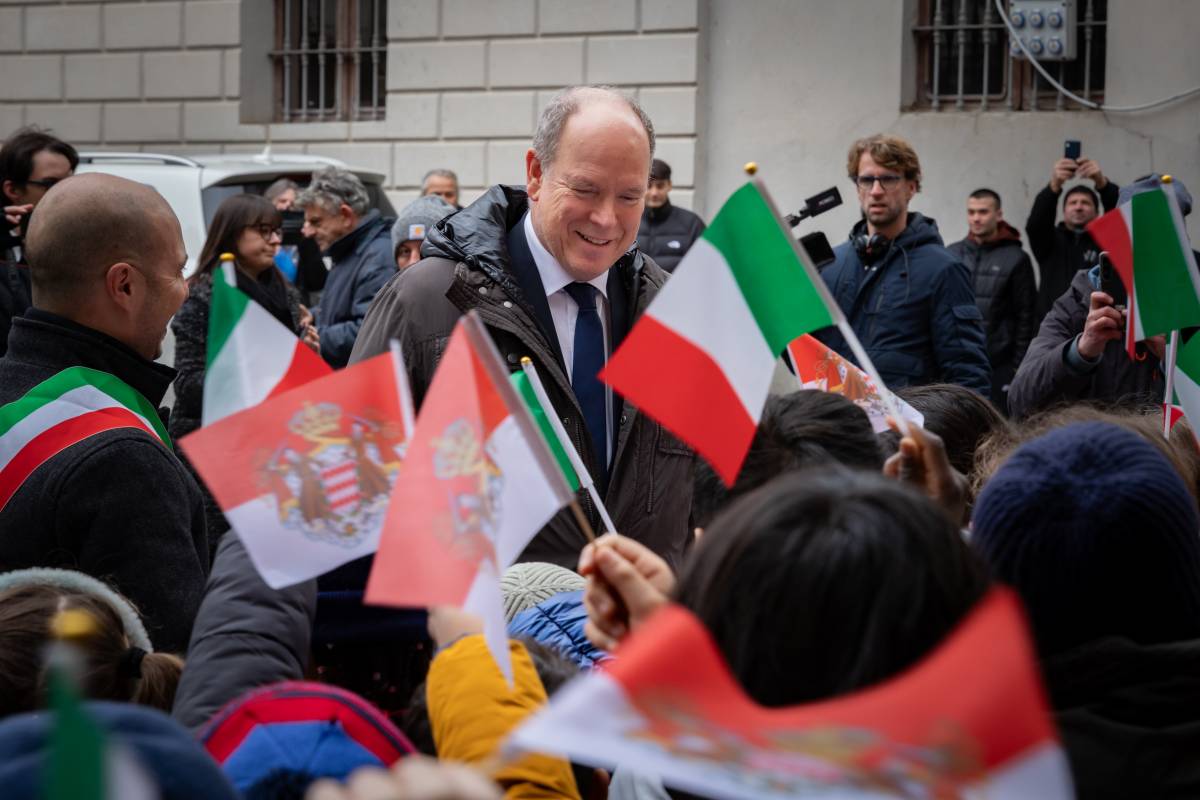
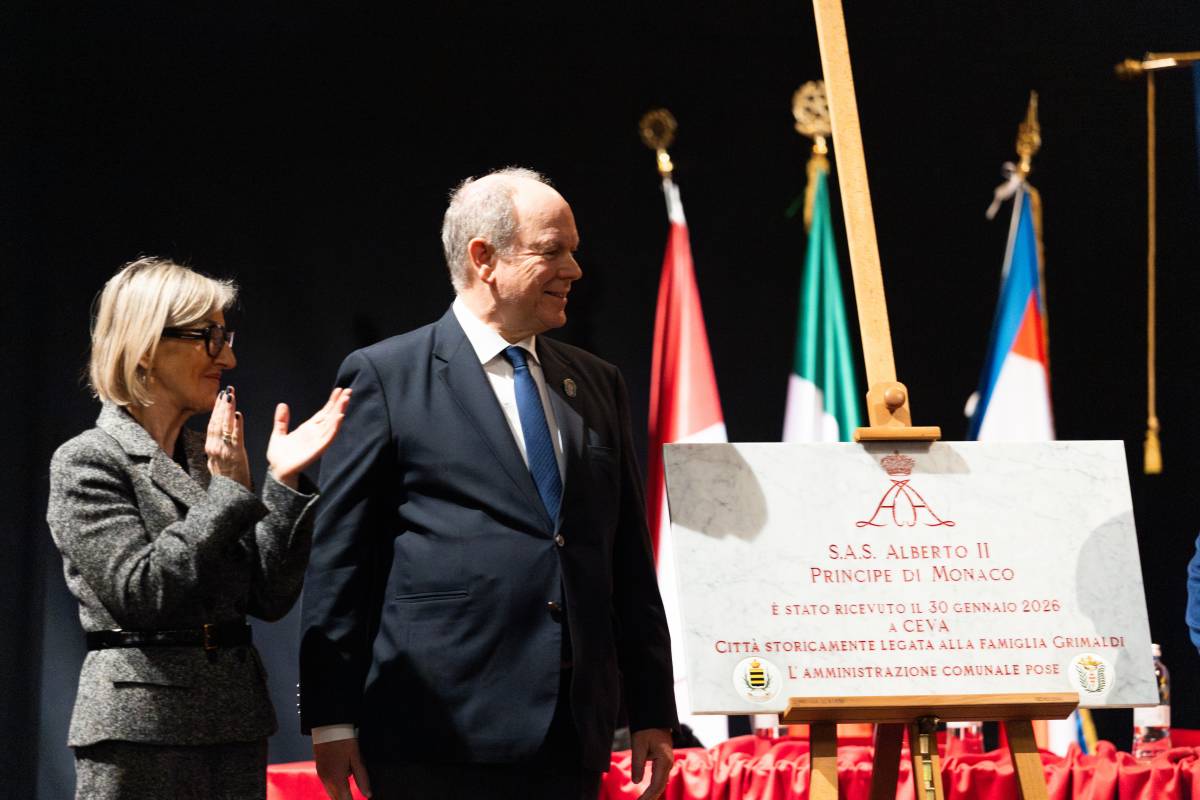
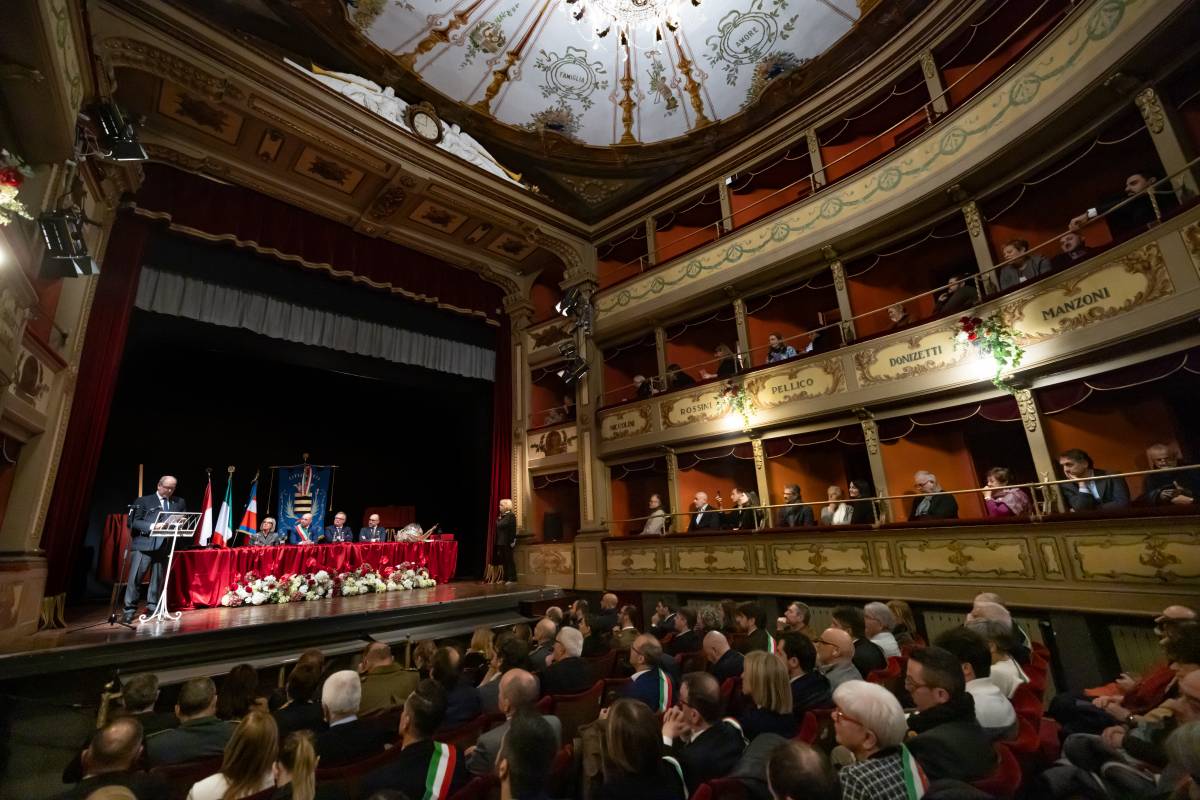
On January 30, 2026, His Serene Highness paid a visit to the commune of Ceva, with its population of 5,700. Prince Albert II first arrived at Piazza Vittorio Emanuele II where he was warmly greeted by Mayor Fabio Montinelli, as well as local schoolchildren and residents. Despite the winter cold, the reception was very hearty, followed by the official unveiling of the commemorative plaque, celebrating this visit, at the Teatro Marenco.
Another plaque, perpetuating Ceva’s membership in the Italian Association of Grimaldi Historic Sites of Monaco, is now installed at the town’s entrance.
The Grimaldi family’s connection to this small village in Piedmont goes back to the 16th century. Back in 1528, under the leadership of Andrea Doria, the Republic of Genoa reformed the clan system, creating 28 different albergi (a union of one or more families). Along with another sixteen, the small Ceva family was thus annexed to the Grimaldi, one of the four main Genoa dynasties. From then on, all its members bear the name of Ceva-Grimaldi. Furthermore, in 1503, the daughter of Lord Lambert of Monaco, Sestarine, got married to Carlo Garessio, Marquis of Ceva.
Coming back to our days, His Serene Highness first visited Ceva in 1994, back as Crown Prince of Monaco. He then took part in a charity football match, supporting those affected by severe local flooding.
Millesimo (Liguria)
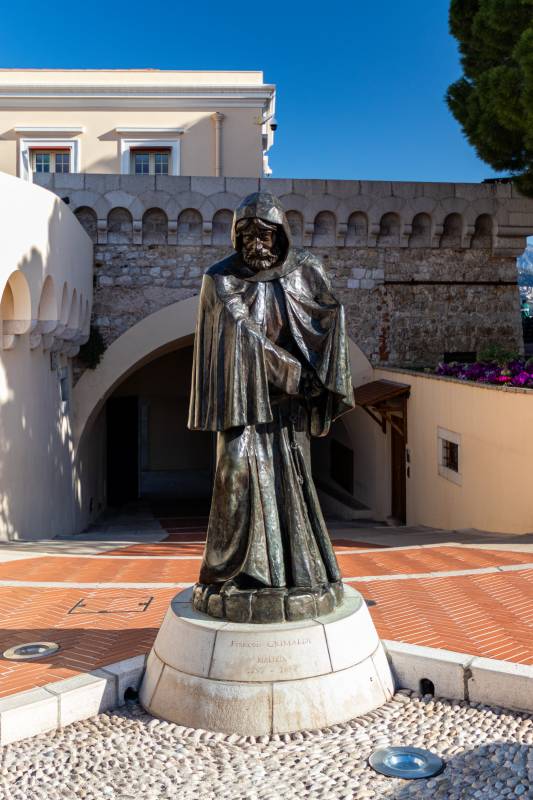
The following day, on January 31, 2026, Prince Albert II paid a visit to the commune of Millesimo, celebrating its 820th anniversary this year. Considered one of the most beautiful villages in Italy, it was founded on November 9, 1206, by Marquis Enrico II del Carretto. His granddaughter Aurelia first married the Vicar of Provence, Lanfranco Grimaldi, and later his cousin, Francesco Grimaldi — exactly the one who captured the fortress on the Monaco Rock in 1297. A native of the Ligurian village, Aurelia del Carretto, she thus happened to be the very first “First Lady of Monaco”.
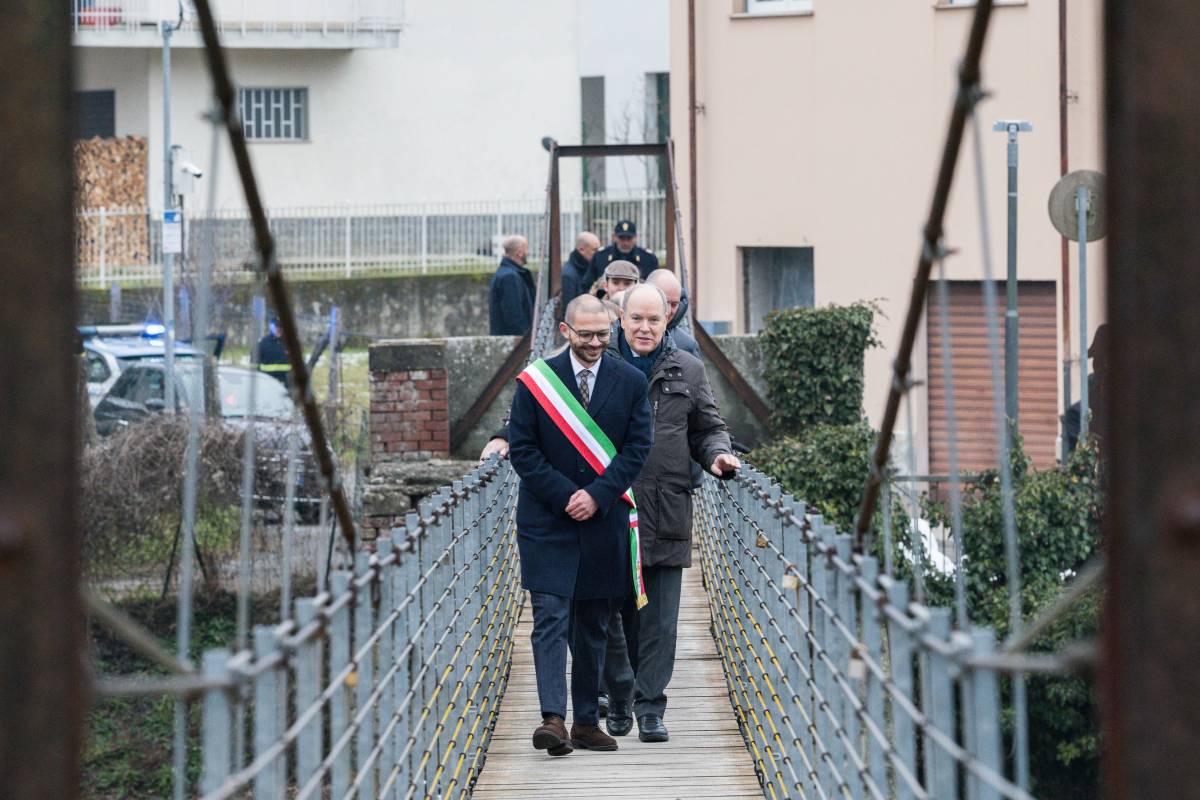
On his arrival, Prince Albert II, accompanied by Mayor Francesco Garofano, crossed the medieval Ponte della Gaietta bridge over the Bormida River (said to be older than the village itself). The Monaco Sovereign then visited the Napoleonic Museum and the 13th-century castle that was inhabited by his direct ancestors, the del Carretto family, up until the 16th century. His Serene Highness then took part in an official ceremony unveiling the memorial plaques at the town hall and walked to the main square of Millesimo. Since it was market day, the sovereign was gifted a large basket of fresh produce by the local farmers.
The Prince of Monaco was thus the first head of state to honour Millesimo with an official visit, warmly greeted by most of its 3.500 population on the main square.
Between XIII and XVth centuries, several generations of Grimaldi thus married women from the del Carretto family.
The great-grandson of the dynasty’s founder, Grimaldo Canella, Lanfranco Grimaldi (1210–1293) was married to and had three sons with Aurelia del Carretto (1254–1307). After Lanfranco passing away, Aurelia wed his cousin Francesco Grimaldi (died 1309) — the Malizia, the one who captured the Ghibelline fortress on the Rock. In that attack, he was assisted by his stepson, the eldest of Aurelia and Lanfranco, Raniero, who subsequently became the first Grimaldi ruler of Monaco, Rainier I (1267–1314).
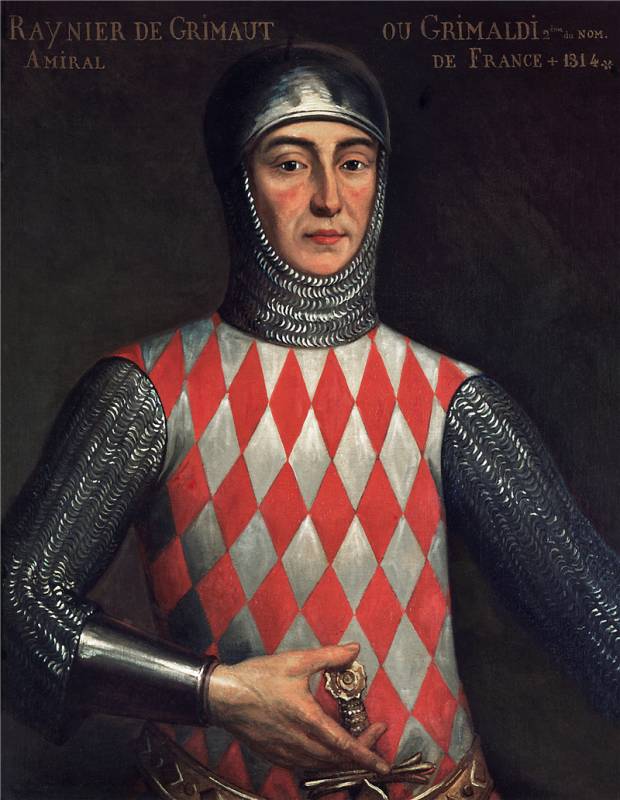
By the time the fortress was under siege, Rainier Grimaldi had already been married to yet another aristocrat, Salvatica del Carretto. After his passing away, their eldest son became Charles I (died in 1357).
Charles I’s son, Rainier II Grimaldi (1350–1407), then married Maria del Carretto, a union that ended up being childless. His second marriage to Isabella Asinari gave Rainier II nine children, including heir to the throne, Jean I (1382–1454).
The son of Jean I and Pomeline Fregoso, Catalan Grimaldi (1415–1457), then married Bianca del Carretto. After two of his sons died in infancy, his daughter Claudine (1451–1515) was declared his heir. Catalan also chose his relative Lambert (1420–1494) from the Antibes Grimaldi branch to be Claudine’s husband.
The two got married in 1465 as soon as Claudine reached the age of 14. Lambert was 45 at the time. Claudine Grimaldi subsequently signed a deed of gift, passing all her hereditary rights to Monaco to her husband and sons. Seigneur of Monaco, Lambert ruled for 37 years, giving the Principality his favourite expression as a motto: “Deo Juvante” (With God’s help).
Lambert and Claudine had more than ten children, including:
– Jean II who succeeded his father;
– Lucien who killed Jean II in a dispute in 1505 and became Monaco’s legitimate ruler;
– Francesca whose son Barthélémy Doria plotted against Lucien in 1523;
– Augustin, Bishop of Grasse, who succeeded Lucien in governing Monaco;
– Blanche who served as regent to her nephew, Lucien’s son, the future Lord Honoré I, after Augustin’s death in 1532;
– Sestarine (or Césarine) who married Carlo Garessio, Marquis of Ceva, in 1503.