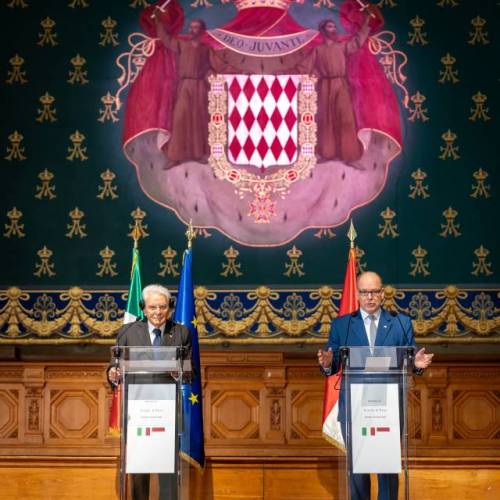
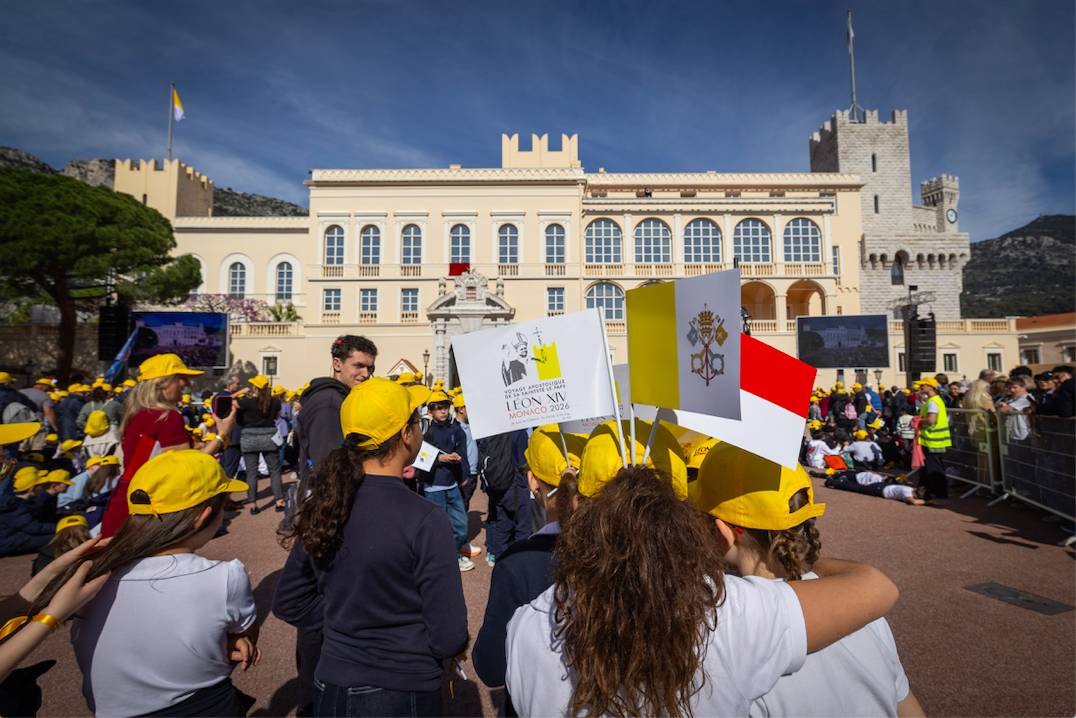


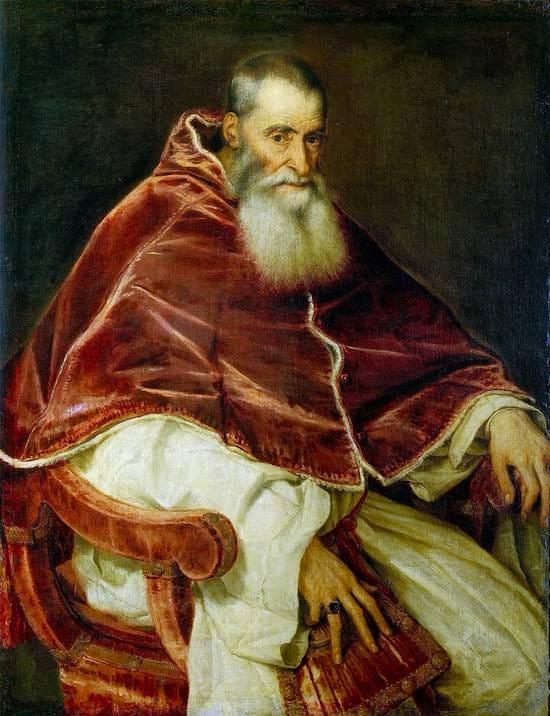
On March 28, 2026, Pope Leo XIV arrived in Monaco, marking a moment without precedent in modern memory. Not since Pope Paul III passed along these shores and was received in Monaco in 1538, had the Principality received a Pontiff. After Pope Paul III’s 1538 visit to Monaco he had continued on with an important mission to mediate the negotiations that would lead to the Truce of Nice, a fragile pause in a long and bitter struggle between Francis I of France and Emperor Charles V that had set much of Europe ablaze.
For Pope Leo XIV’s visit the transformation of Monaco was immediate and unmistakable. Streets, balconies, and public buildings were dressed in the white and gold of the Vatican, their colours shifting in the Mediterranean light. From the Rock to Fontvieille, screens relayed each movement of the visit, while church bells and cannon fire punctuated the day. Monaco presented itself not simply as a destination, but as a state conscious of its identity, prosperous, visible, and still anchored in a Catholic heritage that has shaped its story across centuries.
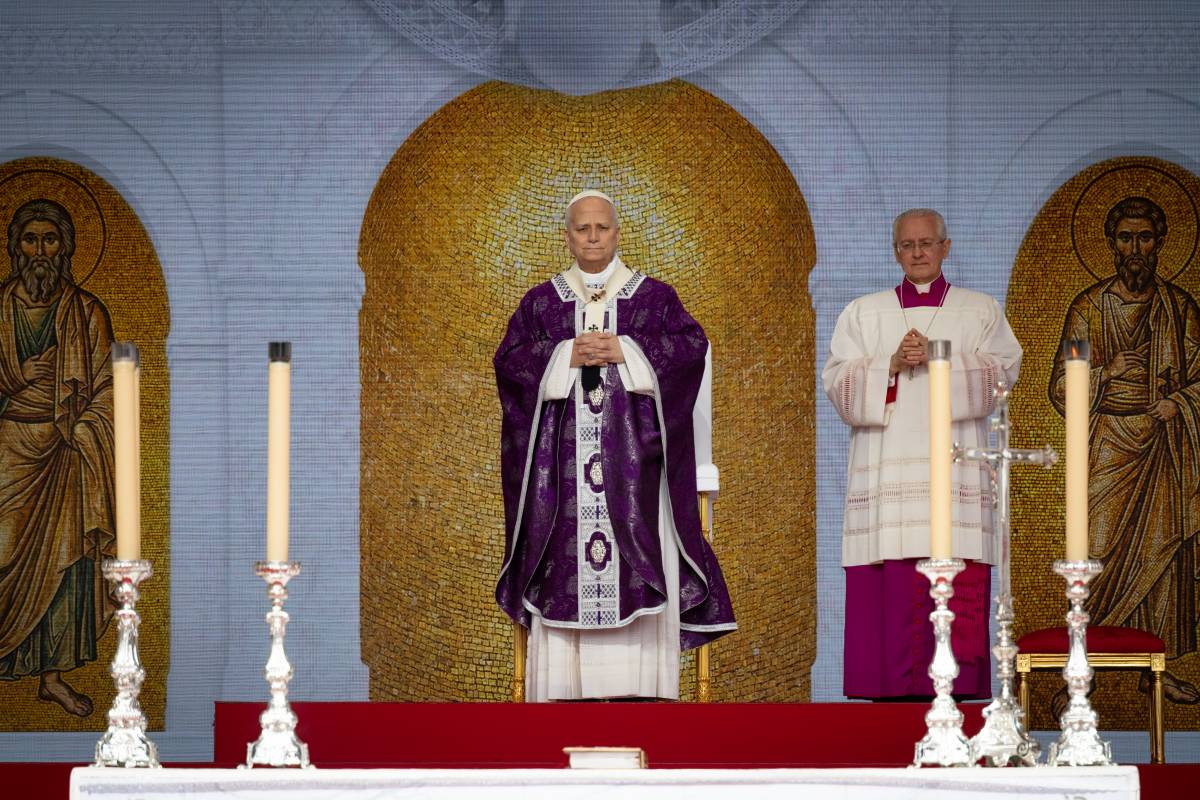
For a few hours, the Principality became something more than itself: a stage where history, faith, and modern statecraft converged. And yet, this image of Monaco, composed, confident, and globally connected, bears little resemblance to the fragile and uncertain territory that existed here at the beginning of the 16th century.
Monaco in the 1500s
In those days, the tiny state, squeezed between more powerful neighbours, literally fought for survival. Borders were constantly shifting, and to maintain independence, the rulers of the Grimaldi dynasty were forced to both strengthen their military might and forge advantageous alliances. The country was protected from invasion not only by impenetrable roads, fortress walls, and artillery, but also by the patronage of powerful political actors interested in the strategically important port of the Rock. The lords of Monaco had only to skillfully manage relationships with both the Pope and the great powers of France and Spain and, most importantly, avoid being swallowed up by them…
At the beginning of the 16th century, it is unlikely anyone could have imagined the economic prosperity that awaited the country in the 19th and 20th centuries. Back then, the primary goal remained maintaining sovereignty.
The Cameo Story from the Sixteenth Century
At the beginning of the 16th century, the Cardinal Louis of Aragon, created Cardinal originally by Pope Alexander VI, discovered Monaco, which at the time was a lordship presided over by a Lord. Monaco’s Vatican visitor, the natural grandson of King Ferdinand I of Naples, held a number of ecclesiastical benefices approved by the Pope in southern Italy and Spain.
Therefore, he travelled a lot and with quite a retinue, exuding grand importance. In 1517, on his way to meet the King of Spain, Charles V, who was barely 17 years old, he passed through Monaco. Cardinal Louis of Aragon left a record of his visit to these very recognizable shores in a written account by his secretary, Don Antonio. This account surfaced and was described again hundreds of years later in the Journal de Monaco.
In November 1517
The cardinal and his impressive retinue arrived in the region in November 1517. After making a pilgrimage to Sainte-Baume, he was received in Cannes by Augustin Grimaldi, the Bishop of Grasse, Abbot of Saint-Honorat de Lérins.
Excerpt from the cardinal’s account (published in the Journal de Monaco in 1915) shows the extent of the Grimaldi network in the region as the Cardinal travelled from Cannes to San Remo passing through Antibes, Monaco, Roquebrune and Menton, all governed by Grimaldis.
“Cannes, where Monsignor the Bishop of Grasse welcomed us very kindly and where we had a very good and abundant meal, with many large and excellent fish, belongs to the abbey of His Lordship called Saint-Honorat… The bishop stays there all of Lent and usually most of Advent and the vigil of each saint. As a good religious man, he fasts on all those days. On November 29, from Cannes, we went with Monsignor Grimaldi to have breakfast in Antibes, which is two leagues away (a league is a unit of length that was common in Europe. — Ed.) In this town, which is very pretty and abounds in excellent muscat, we were very kindly received by the nephew of Monsignor of Grasse who is its lord. From Antibes, we went with Monsignor the Bishop of Grasse and his nephew, a very nice young man of about twenty years old, whose very beautiful and graceful wife shows herself little, to have dinner in Nice, which is three leagues away. A league before arriving, we forded a river, the Var, although there was a boat, which separates Italy from France, or rather from Provence…”
A strategic and very strong fortress
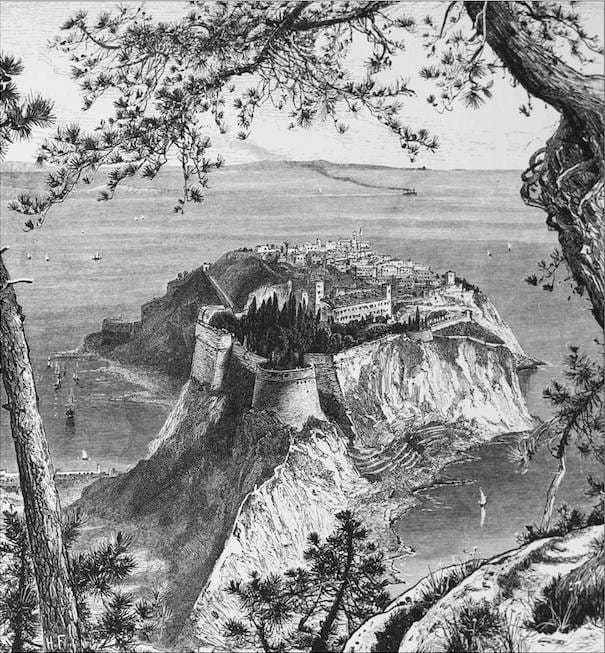
Then comes the arrival in Monaco: “Monaco is nine miles from Nice, along a uniformly bad road where not a single palm of good path can be found, all steep ascents. Along this entire route from Nice to Monaco, one can see a number of carob trees and some olive trees on the mountainsides descending to the water. Monaco, a city that belongs to the brother of the Bishop of Grasse, is situated on a small, rounded, and not very high promontory hill; thus, it is almost entirely in the sea. The city occupies the entire plateau, its very strong walls, well-constructed and admirably equipped with artillery, surround the whole mount. At the entrance gate, for there is only one, there is a beautiful fortress, with numerous and comfortable dwellings; three or four openings have been made in the stone specifically for maneuvering the artillery without endangering the inhabitants. Therefore, both for the location and the fortifications of the castle and the city walls, as well as for the importance of the artillery, the number of culverins, cannons, and falconets, all of bronze, the good order and the good guard maintained by its lord, Monaco is considered very strong. Several years ago, when it was not yet as fortified, it was attacked by the Genoese, and although they were very numerous, they were cut to pieces and ruined by the lord of the city. (In fact, 500 Monégasques repelled 4,000 Genoese attackers and victoriously pursued them into Italy. — Ed.)
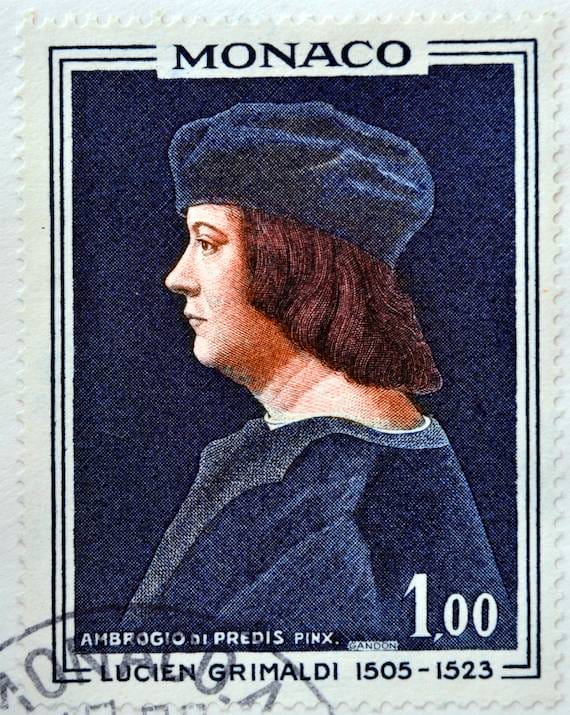
The castle’s guard includes the arming of a very solid small ship, tasked with intercepting all vessels of at least eight hundred tons passing offshore from the west, to make them pay a two percent fee due to the lord of Monaco. This lord (Lucien Grimaldi — Ed.), who is its absolute master, dependent on no prince, made great friendships with the cardinal and all of us and treated us to a very good meal…”
“A sad and detestable road”
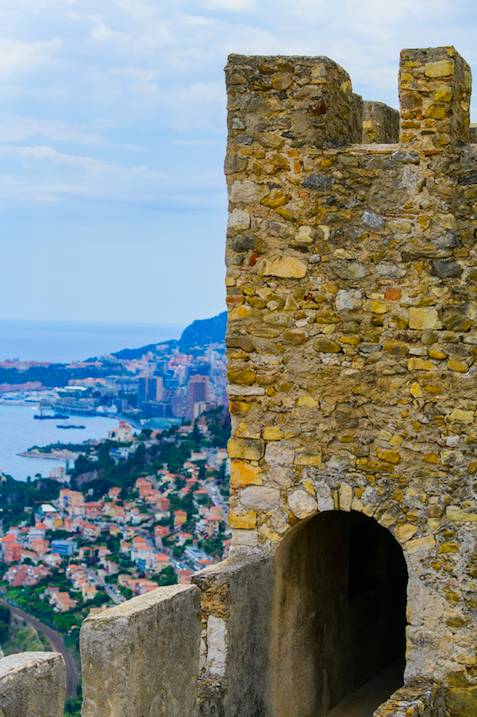
The journey continued: “From Monaco, after lunch, we went, on December 1, twenty miles further to San Remo, along a very sad and detestable road. Three miles from Monaco, one sees on a mountain the castle of Roquebrune, which belongs to the lord of Monaco; two miles away, we passed through Menton, a town that also belongs to him…” (Roquebrune and Menton would be formally integrated into France following negotiations by Monaco’s Charles III resulting in the treaty of 2 February 1861. — Ed.)
Cardinal Louis of Aragon thus left the region and the hospitality of Monsignor Augustin Grimaldi. He cut an important figure with his retinue. Imagine! His retinue reportedly consisted of his secretary, ten gentlemen each with their valet, the Bishop of Anglona (from Sardinia), a doctor, a majordomo, two couriers, two cooks, a steward, an interpreter, two grooms, three stable boys, and musicians to boot… a retinue that would require dozens of horses and a mule to travel around.
Cardinal did not know that six years later his host Augustin would become Lord of Monaco when his brother Lucien would be assassinated and Monaco would be placed under the protection of King Charles V of Spain.
The Personalities And The Events From This Period Of Monaco’s History
Jean II (1468–1505), Lord of Monaco, strengthened the French alliance and put his galleys at the disposal of Louis XII for French expeditions. He also accompanied the King of France in his triumphant entry into Genoa in 1502. However, in October 1505, Jean II was assassinated by his brother Lucien following an obscure dispute.
Lucien Grimaldi (1487–1523) was accepted as the new lord of Monaco by the population following his role in the violent demise of Jean II. His family did not condemn his action, and the Duke of Savoy granted him letters of remission. The King of France, Louis XII, was not as lenient. Seeing the weakened position of the Lord of Monaco, the government of Genoa, always hostile to the Grimaldi, concentrated an army in Ventimiglia to seize the fortress, thinking that France and Savoy would not intervene. Lucien successfully defended against the siege. In August 1523, Lucien met the same fate as his brother, being assassinated by his nephew Barthélémy Doria, son of his sister Francesca.
The Siege of Monaco by the Genoese lasted from December 6, 1506, to March 19, 1507. The struggle was fierce to capture the place and destroy its fortifications, but the Monégasques fiercely defended their city, receiving no aid from France or Savoy in the main battle for Monaco’s fortress. It was a merciless battle, which ended with the victory of the Monégasques, who were under the command of Lucien. He immediately recovered Roquebrune and Menton at that point with some limited help from French troops.
Augustin Grimaldi (1482–1532), then Bishop of Grasse, succeeded Lucien as the lifelong lord of Monaco and sought to have the criminal Barthélémy Doria delivered to him by the King of France, then Francis I. But the King did not satisfy this request, as Barthélémy was also the nephew of Andrea Doria, Admiral of France, and a mercenary serving the new King in his campaigns to reclaim Milan. Faced with this refusal and sensing the King’s weak commitment to the Rock’s security, Augustin began negotiations with Charles V of Spain who represented the rising power in this fragmented and conflict-ridden region.
Charles Quint, Spanish King and European Emperor from 1519 to 1558, who was convinced of the strategic importance of Monaco’s location, established the treaty of Burgos with Augustin Grimaldi, which was modified and amended by the declaration of Tordesillas which, amongst other things, put Monaco under the Spanish protectorate and thus protected it against the Genoese’s appetite for power, recognising Monaco’s eminent sovereignty. The Emperor stayed in Monaco in August 1529 on his way to Bologna, where he would be crowned by the Pope.